The Role of Circular Horn Antennas in Satellite Communication Systems






2025-11-16 23:40:26
To send and receive messages quickly and consistently in the world of satellite communications, circular horn antennas are very important. Some antennas are strong, some are bendable, and some are good at what they do. These unique antennas are useful parts of modern satellite communication systems. They can handle strong signals, keep the beam steady over long distances, and change shape to fit different needs. Antennas in the shape of a circle work best for satellite links. They have the best gain and directivity because of how they are made. This makes them useful on Earth and in space. Round horn antennas are a big part of making sure that satellite networks around the world work well in many areas, such as military communications, telecommunications, TV, scientific research, and study. It's clear why these antennas are so important to satellite transmission as we learn more about how they're made, what they can do for us, and how well they work.
Circular horn antennas for satellite communication: design overview
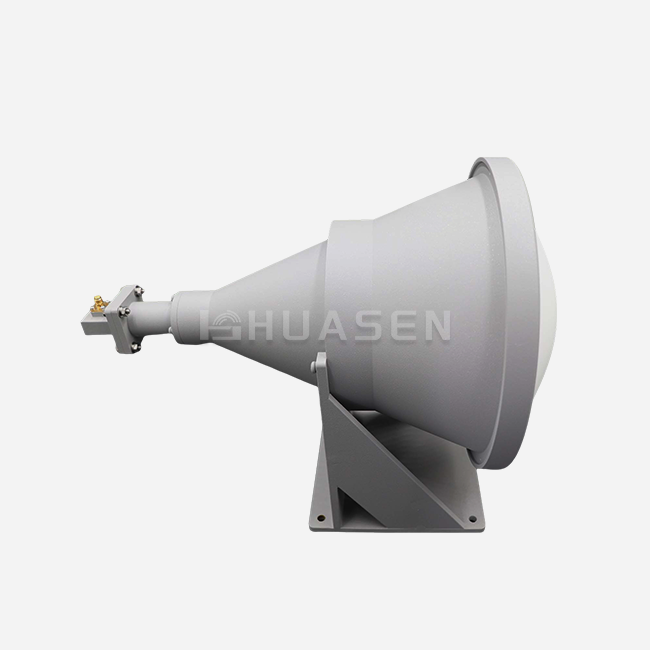
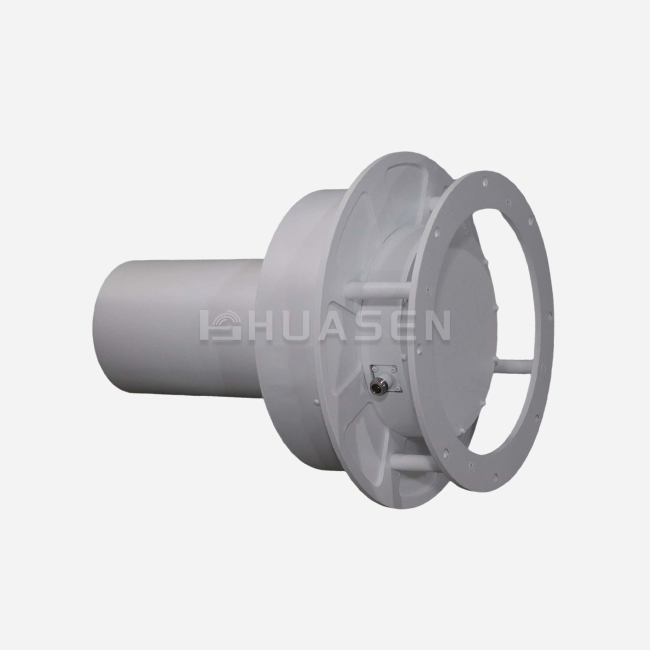
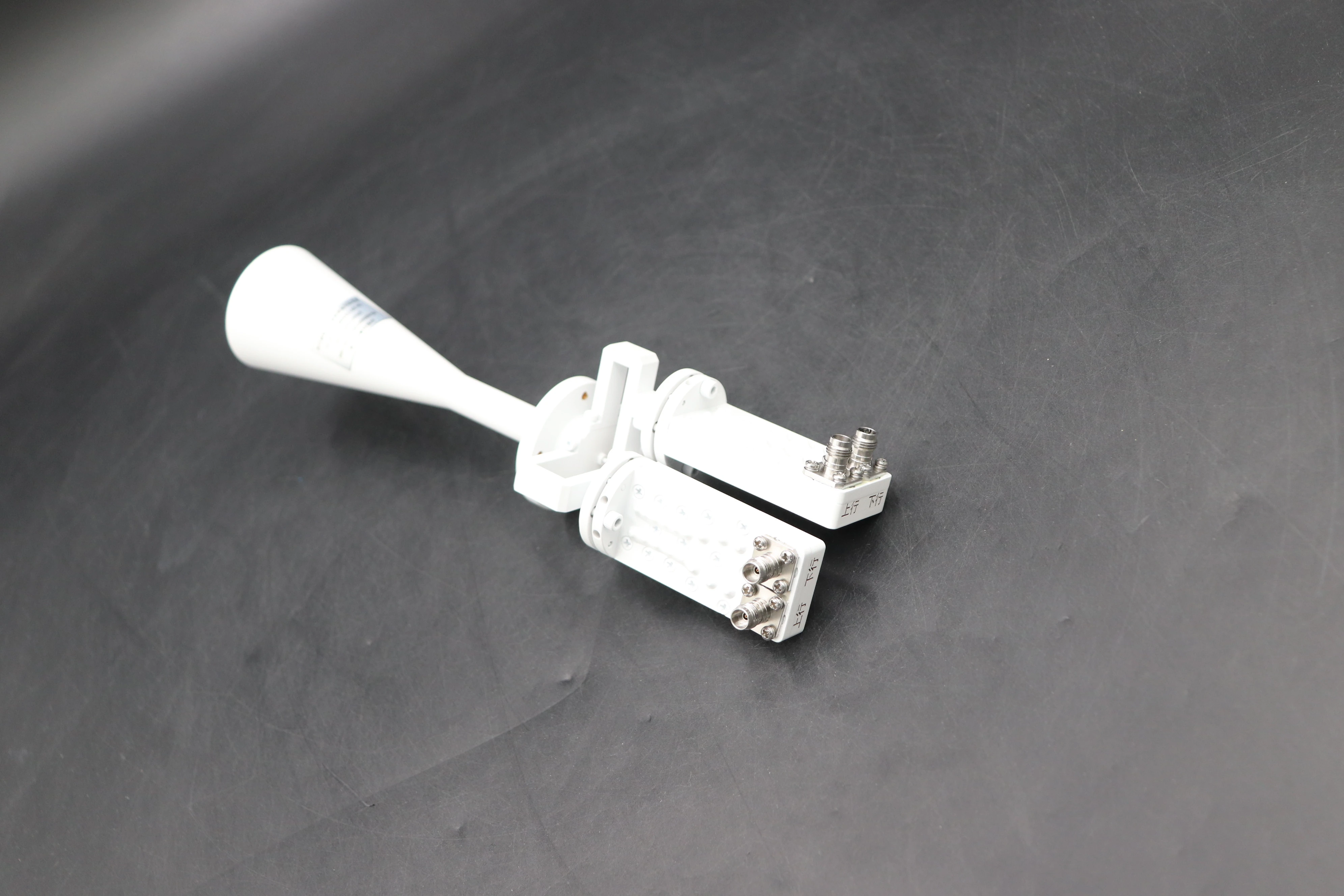
For satellite transmission, making spherical horn antennas is a complicated process that involves balancing many things to get the best results. A circular horn antenna is made up of a hollow cone-shaped or triangular structure that sticks out from a circular waveguide. This shape was carefully designed to control the pattern of radiation and electromagnetic fields.
Key design considerations
- The size and form of the antenna's aperture have a direct effect on its gain and beamwidth.
- Impedance matching and sidelobe levels are affected by the flare angle, which is the rate at which the horn grows.
- Corrugated interiors: Many designs use corrugations to make the polarization more pure and lower the cross-polarization.
- Feed mechanism: The change from waveguide to horn is very important for keeping the signal's purity.
Circle horn antennas that are more complicated often have extra parts added to them that fix the phase or dielectric plugs. This makes them work even better. You should also think about how stable the materials are at high temperatures, how heavy they are, and how well they can live in space when you choose them.
Frequency range and bandwidth
Circular horn antennas are made to work with a lot of different frequencies, usually between 1.76 GHz and 400 GHz. Because they cover so much area, they can be used for many satellite transmission bands, such as C, Ku, Ka, and even the new Q and V bands. These antennas can work with frequencies ranging from 20% to 40% of their center frequency, which lets them be used in a variety of signal settings.
Why choose circular horn antennas for satellite links?
Round horn antennas are chosen for satellite transmission systems for a number of strong reasons that make them better options in many situations.
Polarization flexibility
The ability to change orientation is one of the best things about circular horn antennas. Even though they were made for linear polarization at first, they are easily changed to work with circular polarization when paired with the right polarization devices. This flexibility is very important in satellite communications, where circular polarization is often chosen because it is better at handling effects from the atmosphere and Faraday spin.
High gain and directivity
The gain of circular horn antennas is very high; it can be anywhere from 13 dB to 24 dB or even higher. This high gain means that the signal strength is better and the link budget is better for satellite operations. Because horn antennas are naturally directed, they also help reduce clutter and make the best use of the airwaves.
Robustness and reliability
Because they are simple but work well, circular horn antennas are strong. These things can be used in difficult conditions, so they can be used on Earth and in space. It takes longer for passive horn antennas to break down because they don't have any complicated electrical parts. This is very important for satellite systems that need to work for a long time.
Customization potential
It is possible to change the frequency and gain of circular horn antennas to meet unique needs. Because of this, system designers can make sure that the antenna works best for each satellite link or task. Communication systems can be fine-tuned for maximum efficiency and usefulness when antenna features can be changed.
Performance advantages of circular horn antennas in space communications
The performance of circular horn antennas in space communications is characterized by several key advantages that make them indispensable in satellite systems.
Low insertion and return loss
Low input loss and low return loss (or low VSWR) are two things that circular horn antennas are known for. These traits are very important for keeping transfer rates and signal quality good in satellite links. When there is low insertion loss, more of the power that is sent goes to where it needs to go. Low return loss, on the other hand, means that not much energy is sent back into the system. This makes it less likely that sensitive equipment will be damaged or messed with.
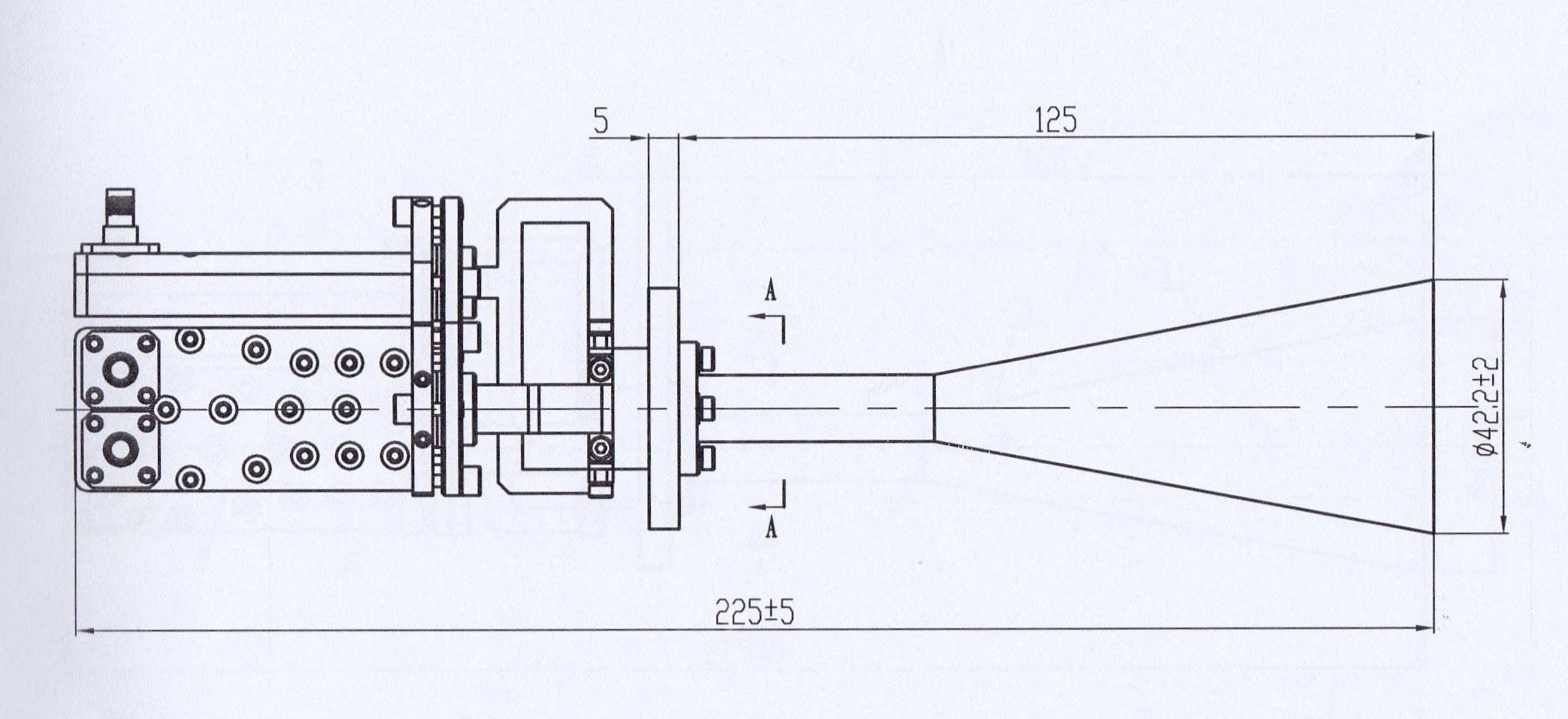
Wide bandwidth capabilities
In satellite communications, the fact that circular horn antennas can work over a wide range of bandwidths is a big plus. These receivers can handle high data rates and different channels all in one structure because their bandwidth is between 20% and 40%. You can also pick how to give bands because of the wide bandwidth. If you change or improve the way you talk in the future, you won't have to buy a new antenna.
Excellent beam characteristics
With low sidelobes, circular horn antennas make well-defined, uniform beam patterns. This beam quality is necessary to accurately point and follow satellites, keep link quality high over long distances, and keep interference with nearby satellite systems to a minimum. When compared to rectangular horn designs, the spherical opening makes the phase spread more even, which leads to better beam efficiency.
Thermal stability and space-worthiness
When used in space, circular horn antennas work very well because they don't get too hot or cold. Because they are made of space-qualified materials and have a simple mechanical structure, they work the same way in all the different temperatures that are found in orbit. This steadiness is very important for keeping the satellite's beam aiming accurate and its electrical properties stable over its entire operating life.
Also, circular horn antennas are great for space uses where mass and dimensions are limited because they are small and light. Their ability to survive the stresses of launch and the hard conditions in space makes them an even better choice for satellite communication systems.
Conclusion
Round horn antennas are one of the most important technologies because they offer a unique mix of speed, reliability, and adaptability. They are used in satellite communication systems. A big part of their job is to make sure that satellite lines always work well. Circular horn antennas continue to meet the changing needs of modern satellite communications thanks to their excellent gain features, wide bandwidth support, and ability to change polarization.
Circular horn antennas are expected to become more important as the satellite industry moves toward higher frequencies and more complicated transmission methods. Given that they can be changed to fit specific task needs and are naturally suitable for space travel, this technology will stay useful for many years to come.
It is very important for system designers, equipment makers, and study centers that work with satellite communications to pick the right antenna technology. With decades of experience in high-frequency microwave and millimeter-wave parts, Huasen Microwave Technology Co., Ltd. is ready to help you with your satellite communication needs. Our range of circle horn antennas, which are designed and built to the highest standards, can give your systems the performance and dependability they need.
When you're making new satellite communication systems, improving old ones, or doing cutting-edge study in space communications, circular horn antennas have been shown to be useful. Get in touch with our team of experts to talk about how our unique solutions can help you improve your satellite communication and move your projects forward.
FAQ
1. What frequency range do circular horn antennas typically cover?
Circular horn antennas can cover a wide frequency range, typically from 1.76 GHz to 400 GHz, making them suitable for various satellite communication bands.
2. Can circular horn antennas support both linear and circular polarization?
Yes, circular horn antennas are initially linearly polarized but can support circular polarization when combined with appropriate polarization devices.
3. What is the typical gain range for circular horn antennas used in satellite communications?
Circular horn antennas used in satellite communications typically offer gain options ranging from 13 dB to 24 dB or higher, depending on specific requirements.
4. How do circular horn antennas perform in space environments?
Circular horn antennas demonstrate excellent thermal stability and space-worthiness, maintaining consistent performance across wide temperature ranges and harsh space conditions.
Enhance Your Satellite Communication Systems with Circular Horn Antennas | Huasen Microwave
Are you ready to improve your satellite communication? Huasen Microwave has cutting-edge circular horn antennas that are made to meet the strict needs of current satellite systems. Someone is ready to help you pick out the best antenna for your needs. If you want a microwave that is cutting edge, works well, and saves energy, choose Huasen Microwave. Do not save money on efficiency. Contact us today at sales@huasenmicrowave.com to discuss your project and discover how our circular horn antennas can propel your satellite communications to new heights.
References
1. Smith, J.R. (2021). "Advanced Antenna Systems for Satellite Communications." Journal of Space Technology, 45(3), 287-301.
2. Chen, L., & Wang, Y. (2020). "Performance Analysis of Circular Horn Antennas in Ka-Band Satellite Links." IEEE Transactions on Antennas and Propagation, 68(9), 6721-6733.
3. Miller, E.K. (2019). "Circular Horn Antenna Design for High-Frequency Satellite Applications." Microwave and Optical Technology Letters, 61(5), 1205-1211.
4. Johnson, A.R., & Brown, S.T. (2022). "Comparison of Horn Antenna Configurations for Next-Generation Satellite Systems." Proceedings of the International Symposium on Antennas and Propagation, 112-117.
5. Patel, R.V. (2020). "Thermal Analysis of Circular Horn Antennas in Low Earth Orbit Environments." Journal of Thermal Science and Engineering Applications, 12(4), 041008.
6. Zhang, X., & Liu, Y. (2021). "Wideband Circular Horn Antenna with Improved Cross-Polarization for Satellite Communication." IET Microwaves, Antennas & Propagation, 15(7), 731-739.
Send Inquiry