
RF Coaxial Adapter Integration in Lab & Field Setups






2026-01-23 23:12:27
Picture this: your critical radar test setup fails mid-measurement because of incompatible connector interfaces. Engineers across aerospace, telecommunications, and defense sectors face this challenge daily when integrating RF systems. The solution lies in properly selecting and deploying RF Coaxial Adapter components that ensure seamless signal transmission across diverse equipment platforms. This comprehensive guide explores how to optimize RF Coaxial Adapter integration in both laboratory and field environments, helping you avoid costly signal degradation and system incompatibilities.
Understanding RF Coaxial Adapter Fundamentals in Test Environments
The foundation of successful RF system integration begins with understanding how RF Coaxial Adapter components function within complex measurement architectures. These precision-engineered components serve as critical interface points between different connector types, enabling technicians to create flexible, adaptable test configurations without compromising signal integrity. In modern laboratory settings, where equipment from multiple manufacturers must communicate seamlessly, the RF Coaxial Adapter becomes an indispensable tool for maintaining consistent impedance matching and minimizing reflection coefficients across the entire signal path.
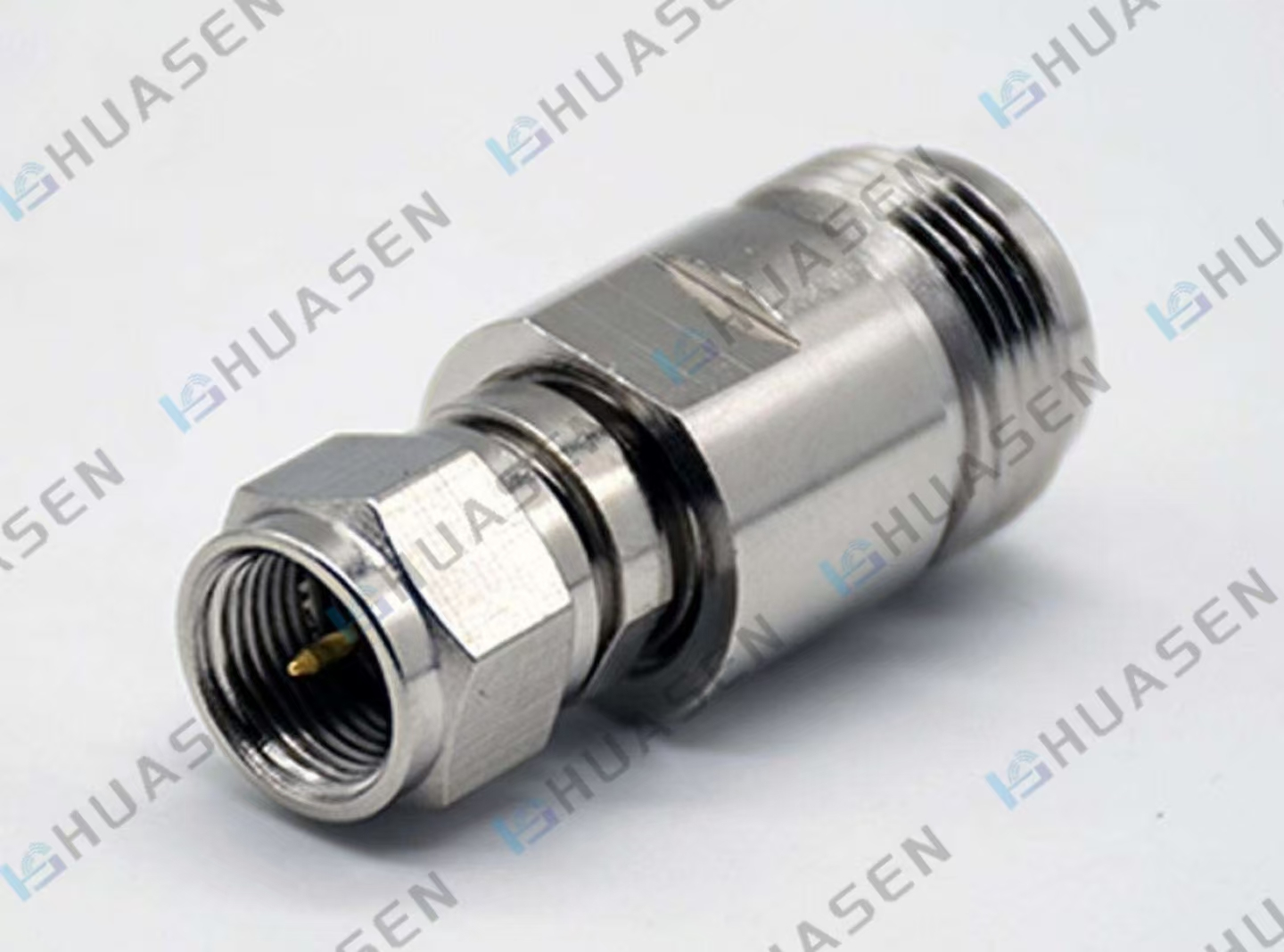
Laboratory environments demand adapters that can withstand repeated mating cycles while maintaining stable electrical characteristics. The RF Coaxial Adapter manufactured by Huasen Microwave supports conversion between N-type, SMA-type, and 2.92mm connector configurations, providing engineers with the flexibility to connect vector network analyzers, signal generators, and spectrum analyzers from different equipment generations. This versatility proves essential when calibrating measurement systems or conducting comparative analyses across multiple frequency bands. The wide frequency range coverage of these adapters, extending from sub-GHz to millimeter-wave frequencies, ensures compatibility with both legacy and cutting-edge test equipment.
Critical Performance Parameters for Laboratory Integration
When integrating RF Coaxial Adapter components into precision measurement setups, engineers must consider several critical performance metrics that directly impact measurement accuracy. Voltage Standing Wave Ratio (VSWR) represents perhaps the most important specification, as even minor impedance mismatches can introduce significant measurement errors in high-frequency applications. Quality adapters maintain VSWR values below 1.15 across their specified frequency range, ensuring that reflected power remains minimal and measurement repeatability stays within acceptable tolerances.
Insertion loss characteristics determine how much signal attenuation occurs as RF energy passes through the RF Coaxial Adapter interface. In laboratory applications where signal levels may already be attenuated through long cable runs or passive components, every tenth of a decibel matters. Premium adapters utilize gold-plated center contacts and precision-machined outer conductors to minimize resistive losses, while hermetically sealed construction prevents moisture ingress that could degrade electrical performance over time. The military-grade adapters from Huasen Microwave achieve insertion loss values typically under 0.1 dB through X-band frequencies, maintaining signal fidelity even in demanding measurement scenarios.
Field Deployment Considerations for RF Coaxial Adapter Systems
Field environments present unique challenges that differ dramatically from controlled laboratory conditions. RF Coaxial Adapter components deployed in tactical communications, remote sensing stations, or mobile radar platforms must withstand temperature extremes, mechanical vibration, and environmental contaminants while maintaining reliable electrical performance. Engineers designing field-deployable RF systems must carefully select adapters with ruggedized construction that meets military environmental specifications such as MIL-STD-810 for temperature shock, humidity resistance, and mechanical stress tolerance.
The precision engineering inherent in military-specification RF Coaxial Adapter designs ensures consistent performance across operating temperature ranges from -55°C to +125°C, accommodating the thermal cycling experienced in aerospace applications or desert deployment scenarios. Stainless steel bodies provide superior mechanical strength compared to brass alternatives, preventing thread damage during field installation when technicians may lack precision torque tools. Captive center contacts eliminate the risk of losing small components during field maintenance, a critical feature when servicing equipment in remote locations where replacement parts may not be readily available.
Environmental Sealing and Connector Protection
Field-deployed RF Coaxial Adapter assemblies require robust environmental protection to prevent performance degradation from moisture, dust, and corrosive atmospheres. Hermetically sealed designs incorporate elastomeric gaskets or metal-to-metal seals that maintain IP67 or higher ingress protection ratings, ensuring reliable operation in maritime environments or high-humidity tropical conditions. The beryllium copper contacts used in premium adapters provide superior spring force retention compared to phosphor bronze alternatives, maintaining consistent electrical contact pressure even after hundreds of mating cycles in field conditions.
Corrosion resistance becomes paramount in coastal installations or marine platforms where salt-laden atmospheres can rapidly degrade unprotected metal surfaces. Gold plating on RF Coaxial Adapter contact surfaces provides excellent corrosion immunity while simultaneously reducing contact resistance for optimal signal transfer. Engineers specifying adapters for long-term field deployment should verify that plating thickness meets MIL-PRF-39012 standards, ensuring adequate protection against galvanic corrosion when mating with connectors fabricated from dissimilar metals.

Impedance Matching and Signal Integrity Optimization
Maintaining precise 50-ohm impedance throughout an RF system represents a fundamental requirement for both laboratory measurements and field operations. The RF Coaxial Adapter serves as a potential discontinuity point where impedance variations can generate reflections that corrupt measurement data or reduce system efficiency. High-quality adapters employ precision manufacturing techniques to maintain impedance tolerance within ±1 ohm, minimizing reflection coefficients that would otherwise introduce measurement uncertainty or reduce transmitter efficiency.
In wideband applications spanning multiple octaves, the RF Coaxial Adapter must maintain consistent impedance characteristics across the entire operating frequency range. This becomes particularly challenging at millimeter-wave frequencies where dimensional tolerances measured in micrometers directly impact electrical performance. Huasen Microwave's precision machining capabilities, utilizing CNC lathes and milling equipment in their 3,000-square-meter production facility, enable tight control over critical adapter dimensions. The company's testing infrastructure, including vector network analyzers operating to 110 GHz and comprehensive anechoic chamber facilities, ensures that every RF Coaxial Adapter meets stringent electrical specifications before shipment.
Multi-Connector System Integration Strategies
Complex RF systems often require multiple RF Coaxial Adapter types to bridge connections between various equipment interfaces. Aerospace avionics systems might necessitate transitions from 2.92mm test ports on millimeter-wave modules to SMA interfaces on control electronics, then to N-type connectors for high-power amplifier stages. Each adapter interface introduces potential signal degradation, making careful system-level planning essential for maintaining overall performance margins.
Engineers can minimize cumulative insertion loss by strategically positioning adapters within the signal chain and selecting the shortest practical adapter configurations. In measurement applications, placing calibration references as close as possible to the device under test reduces the number of adapter interfaces within the calibrated measurement path. For field systems, consolidating multiple connector transitions into single multi-section adapters reduces the total number of mating interfaces, improving reliability while decreasing assembly time during installation or maintenance activities.
Quality Assurance and Testing Protocols
Ensuring RF Coaxial Adapter reliability requires comprehensive testing protocols that verify both electrical performance and mechanical integrity. Every adapter manufactured at Huasen Microwave undergoes 100% electrical testing using calibrated vector network analyzers to verify insertion loss, return loss, and VSWR specifications across the full operating frequency range. Mechanical inspection protocols confirm dimensional accuracy, thread quality, and proper mating force characteristics that ensure consistent performance throughout the adapter's operational lifetime.
Material traceability documentation accompanies each RF Coaxial Adapter shipment, providing complete records of raw material certifications, manufacturing process controls, and final inspection results. This documentation proves essential for aerospace and defense applications where configuration management and failure analysis require detailed component pedigree information. RoHS and REACH compliance certifications verify that adapters meet environmental regulations for hazardous substance restrictions, facilitating international shipments and satisfying procurement requirements for environmentally conscious organizations.
The ISO9001-certified quality management system implemented at Huasen Microwave's manufacturing facility ensures consistent production processes and continuous improvement protocols. Statistical process control monitoring tracks critical manufacturing parameters, identifying potential quality issues before they impact shipped products. This systematic approach to quality assurance, combined with rigorous environmental testing in temperature chambers and vibration test equipment, provides customers confidence that RF Coaxial Adapter components will perform reliably throughout their intended service life.
Conclusion
Successful RF Coaxial Adapter integration requires careful consideration of electrical specifications, environmental requirements, and system-level performance objectives for both laboratory and field applications.
Cooperate with Huasen Microwave Technology Co., Ltd.
As a China RF Coaxial Adapter manufacturer with over 30 years of expertise, Huasen Microwave Technology Co., Ltd. delivers military-grade RF solutions to aerospace, defense, and telecommunications sectors worldwide. Our China RF Coaxial Adapter factory spans 3,000 square meters with advanced CNC machining capabilities and comprehensive testing infrastructure including three calibrated anechoic chambers and 60+ precision measurement instruments. As a trusted China RF Coaxial Adapter supplier, we maintain ISO9001 certification, MIL-STD compliance, and full RoHS/REACH documentation for every High Quality RF Coaxial Adapter we produce. Competitive RF Coaxial Adapter price, rapid customization, and China RF Coaxial Adapter wholesale options support projects from prototype to production. When you need reliable RF Coaxial Adapter for sale backed by responsive engineering support, contact our team at sales@huasenmicrowave.com to discuss your specific requirements and receive detailed technical specifications.
References
1. "RF and Microwave Passive and Active Components: Theory and Applications" - Bahl, Inder J., Wiley-IEEE Press
2. "Microwave Engineering: Passive Circuits" - Pozar, David M., John Wiley & Sons
3. "Military Standard MIL-STD-810G: Environmental Engineering Considerations and Laboratory Tests" - United States Department of Defense
4. "Coaxial Connector Design and Performance Standards" - Institute of Electrical and Electronics Engineers (IEEE)
5. "High-Frequency Measurements and Noise in Electronic Circuits" - Langford-Smith, Fritz, Radio Corporation of America
Send Inquiry
Related Industry Knowledge
- Top Features to Look for in the Best Waveguide Coupler with High Directivity
- What is a Crossguide Coupler and How Does It Work in Industrial Shaft Alignment?
- Custom Waveguide Power Divider Design: Meeting High Power Needs for Radar Applications
- Choosing the Right Waveguide Phase Shifter: Comparing Waveguide and Ferrite Phase Shifters
