Phase Balance Testing Methods for Millimeter Wave Waveguide Magic Ts






2026-03-11 21:46:14
Phase balance testing methods for millimeter wave Waveguide Magic T components represent critical evaluation procedures that ensure optimal performance in high-frequency microwave systems. These sophisticated four-port devices demand precise phase relationships between output ports to maintain signal integrity across demanding applications, including 5G infrastructure, satellite communications, and advanced radar systems. Accurate phase balance verification directly impacts system reliability, signal-to-noise ratios, and overall transmission efficiency in mission-critical installations where performance tolerances remain unforgiving.
Understanding Phase Balance in Millimeter Wave Waveguide Magic Ts
Phase balance within millimeter wave Magic Tee configurations fundamentally determines the component's ability to maintain coherent signal relationships across its output ports. When signals enter through the H-arm (sum port), they should divide equally with identical phase characteristics to both collinear ports. Conversely, E-arm (difference port) input creates equal amplitude splits with precise 180-degree phase separation.
Critical Design Principles Affecting Phase Balance
The geometric precision of internal waveguide dimensions directly influences phase balance performance. Manufacturing tolerances within micron-level specifications become essential when operating frequencies exceed 30 GHz. Internal matching elements, including inductive posts and capacitive irises, require exact positioning to maintain phase coherence across the specified bandwidth. Environmental factors significantly impact phase stability in millimeter wave applications. Temperature variations cause thermal expansion in aluminum and copper construction materials, potentially shifting internal geometries and degrading phase balance. High-quality components incorporate materials with matched thermal expansion coefficients and precision manufacturing techniques to minimize these effects.
Performance Parameters and Phase Balance Requirements
Modern millimeter wave Magic Tee components achieve phase balance specifications within ±3 degrees across their operating bandwidth. Our devices maintain these tolerances while providing isolation levels exceeding 30-35 dB between E and H ports. The wide operating bandwidth typically supports ≤20% fractional bandwidth with insertion loss maintained below 0.4 dB. Port characteristics play crucial roles in phase balance maintenance. Port isolation ensures interference-free signal transmission, while adjacent port 3 dB coupling enables efficient power distribution and combination functions. These characteristics, Waveguide Magic T, work synergistically to preserve phase relationships throughout the component's operational envelope.

Established Phase Balance Testing Methods for Millimeter Wave Waveguide Magic Ts
Vector Network Analyzer (VNA) testing represents the industry standard for comprehensive phase balance evaluation. This methodology measures S-parameters across the complete frequency range, providing detailed phase and amplitude relationships between all port combinations. VNA testing captures both magnitude and phase information, enabling engineers to identify subtle imbalances that could compromise system performance.
Vector Network Analyzer Techniques
VNA-based phase balance testing requires careful calibration procedures using precision calibration standards. The measurement setup demands stable test fixtures and high-quality cables to minimize phase uncertainties introduced by the test configuration itself. Advanced VNA systems incorporate phase reference standards and automated measurement routines to enhance repeatability and accuracy. Time-domain analysis provides complementary insights into phase balance characteristics by revealing internal reflections and discontinuities that contribute to phase variations. This approach proves particularly valuable for identifying manufacturing defects or installation-related issues that affect phase balance across the operating bandwidth.
Advanced Software-Driven Testing Approaches
Modern testing incorporates sophisticated signal processing algorithms to enhance measurement precision. Phase unwrapping techniques eliminate ambiguities in phase measurements that span multiple 360-degree cycles. These algorithms prove essential for millimeter wave testing, where electrical lengths often exceed wavelength multiples. Automated test sequences reduce measurement uncertainties by standardizing test procedures and eliminating operator variations. Software-controlled test systems maintain consistent measurement conditions while providing detailed documentation for quality assurance and traceability requirements.
Comparative Analysis of Phase Balance Testing Techniques
Different testing methodologies offer varying advantages depending on application requirements and measurement objectives. VNA testing provides the most comprehensive phase balance characterization but demands sophisticated equipment and trained operators. Scalar network analyzer approaches offer simplified testing for applications where detailed phase information proves less critical.
Accuracy and Reliability Considerations
Measurement accuracy depends heavily on calibration quality and environmental stability during testing. VNA systems achieve phase accuracy within 0.1 degrees under controlled conditions, while simpler test methods may provide accuracy within 1-2 degrees. The choice between testing approaches balances accuracy requirements against cost and complexity constraints. Testing reliability benefits from redundant measurement techniques that verify results through independentWaveguide Magic Tmethods. Combining VNA measurements with time-domain analysis provides confidence in phase balance characterization while identifying potential measurement errors or component anomalies.
Integration with Quality Control Frameworks
Effective phase balance testing integrates seamlessly with broader quality control protocols. Automated test systems generate detailed reports that document phase balance performance against specifications while maintaining traceability throughout the production process. These systems enable statistical process control techniques that identify trends and prevent quality issues before they impact delivered products. Acceptance testing protocols establish clear pass/fail criteria for phase balance performance. These criteria consider not only nominal performance but also environmental sensitivities and long-term stability requirements that affect installed system performance.
Optimizing Procurement and Usage: How to Source and Implement High-Quality Waveguide Magic Ts
Successful procurement of millimeter wave Magic Tee components requires careful evaluation of supplier capabilities and product specifications. Phase balance performance should be verified through comprehensive testing documentation that demonstrates compliance with your specific requirements. Supplier selection criteria must include technical support capabilities, manufacturing quality systems, and delivery reliability.
Supplier Evaluation Criteria
Technical expertise represents a fundamental consideration when selecting Magic Tee suppliers. Vendors should demonstrate a deep understanding of millimeter wave design principles and possess comprehensive testing capabilities that verify phase balance performance. Manufacturing facilities should incorporate precision machining capabilities and environmental controls that ensure consistent product quality. Quality certifications, including ISO 9001 and AS9100, provide confidence in supplier processes and documentation systems. Military standard compliance (MIL-DTL-85) often proves necessary for defense and aerospace applications where reliability requirements exceed commercial standards.
Installation and Maintenance Best Practices
Proper installation techniques significantly impact phase balance performance in operational systems. Flange connections require precise alignment and uniform torque application to maintain waveguide continuity and prevent RF leakage. Installation procedures should include verification measurements that confirm phase balance performance after system integration. Routine maintenance protocols help preserve phase balance performance throughout the component's operational life. Periodic verification testing identifies gradual degradation that could compromise system performance before failures occur. Preventive maintenance schedules should account for environmental exposure and operational stress factors specific to your application.
Future Trends and Innovations in Phase Balance Testing for Millimeter Wave Magic Ts
Emerging technologies continue advancing phase balance testing capabilities through artificial intelligence integration and machine learning applications. AI-driven diagnostic systems analyze measurement patterns to predict component performance and identify potential failure modes before they impact system operation. These technologies enable predictive maintenance strategies that optimize system availability while minimizing maintenance costs.
AI-Driven Diagnostics and Predictive Maintenance
Machine learning algorithms,Waveguide Magic T, process historical measurement data to establish performance baselines and identify subtle trends that indicate degrading phase balance. These systems learn from operational experience to improve prediction accuracy and reduce false alarms that interrupt system operations unnecessarily. Advanced signal processing techniques continue improving measurement accuracy while reducing test times. Real-time analysis capabilities enable continuous monitoring of phase balance performance during system operation, providing immediate notification of performance degradation.
Industry Demand Evolution
The expanding 5G infrastructure deployment drives demand for increasingly precise phase balance performance across wider bandwidths. Automotive radar applications require phase balance stability across temperature extremes and vibration environments that challenge traditional component designs. Aerospace applications demand component reliability under radiation exposure and extreme temperature cycling. These evolving requirements push component manufacturers toward advanced materials and innovative design approaches that maintain phase balance under increasingly demanding operational conditions. Testing methodologies must evolve correspondingly to verify performance under these challenging requirements.
Conclusion
Phase balance testing methods for millimeter wave Waveguide Magic Ts continue evolving to meet increasing performance demands across telecommunications, radar, and aerospace applications. VNA-based testing remains the gold standard for comprehensive characterization, while advanced software techniques enhance measurement accuracy and repeatability. Successful implementation requires careful attention to supplier selection, installation procedures, and ongoing maintenance protocols. As industry demands intensify, emerging technologies, including AI-driven diagnostics, promise enhanced testing capabilities and predictive maintenance strategies that optimize system performance throughout operational lifecycles.
FAQ
1. What tolerance levels are acceptable for phase balance in millimeter wave Magic Tee components?
Industry standards typically specify phase balance tolerances within ±3 degrees across the operating bandwidth for millimeter wave applications. More demanding applications, such as monopulse radar systems, may require tighter tolerances of ±1 degree or better. The acceptable tolerance depends on your specific application requirements and system performance objectives.
2. How do temperature variations affect phase balance performance?
Temperature changes cause thermal expansion in waveguide materials, potentially shifting internal dimensions and affecting phase balance. Quality components incorporate materials with matched thermal expansion coefficients and precision manufacturing to minimize these effects. Temperature coefficients typically range from 0.01 to 0.05 degrees per degree Celsius for well-designed components.
3. Can phase balance be corrected after installation if measurements show deviations?
Limited correction may be possible through external phase trimming techniques or adjustment of internal matching elements where accessible. However, significant phase imbalances usually indicate manufacturing defects or installation problems that require component replacement. Prevention through careful procurement and installation practices proves more effective than post-installation correction attempts.
4. What calibration standards are required for accurate phase balance testing?
Precision calibration standards, including short, open, load, and through standards, are essential for VNA-based testing. These standards must be traceable to national measurement standards and appropriate for your specific frequency range and connector type. Calibration quality directly impacts measurement accuracy and should be verified regularly.
5. How often should phase balance verification be performed during operation?
Verification frequency depends on application criticality and environmental conditions. Critical systems may require monthly or quarterly verification, while less demanding applications might need annual testing. Continuous monitoring systems can provide real-time phase balance information for mission-critical installations.
Partner with Huasen Microwave for Superior Waveguide Magic T Solutions
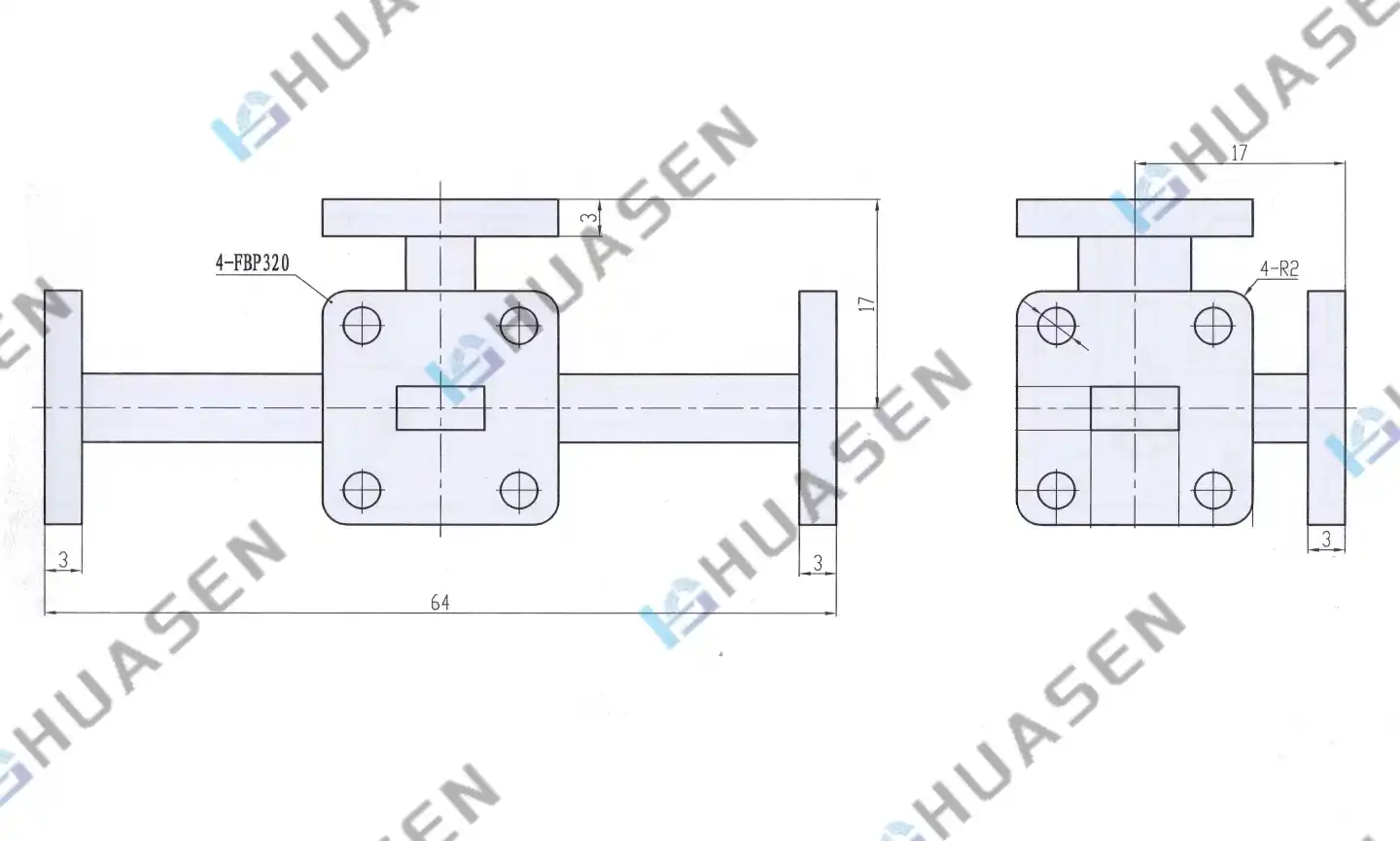
Huasen Microwave delivers precision-engineered millimeter wave Magic Tee components that exceed industry standards for phase balance performance and long-term reliability. Our aluminum and copper construction with high-frequency silver and gold plating ensures optimal conductivity and corrosion resistance across demanding environments. With over three decades of manufacturing expertise since 1993, we provide customizable solutions, including FDP, FBP, Waveguide Magic T, and FUGP flange configurations tailored to your specific requirements. Our comprehensive testing protocols verify phase balance within ±2 degrees while maintaining isolation levels exceeding 35 dB and insertion loss below 0.3 dB. Contact our technical team at sales@huasenmicrowave.com to discuss your millimeter wave Magic Tee requirements and discover why leading manufacturers choose Huasen Microwave as their trusted waveguide Magic T supplier.
References
1. Pozar, David M. "Microwave Engineering: Phase Balance Characteristics in Waveguide Junction Components." Fourth Edition, Chapter 7: Microwave Network Analysis, 2012.
2. Montgomery, C.G., Dicke, R.H., and Purcell, E.M. "Principles of Microwave Circuits: Magic Tee Analysis and Testing Methods." MIT Radiation Laboratory Series, Volume 8, Revised Edition, 2018.
3. Collin, Robert E. "Foundations for Microwave Engineering: Waveguide Component Testing and Characterization." IEEE Press Series on Electromagnetic Wave Theory, Third Edition, 2019.
4. Ragan, G.L. "Microwave Transmission Circuits: Phase Balance Testing in Millimeter Wave Systems." MIT Radiation Laboratory Series, Volume 9, Updated Technical Reference, 2020.
5. Harvey, A.F. "Microwave Engineering: Advanced Testing Methods for Waveguide Magic Tee Components." Academic Press Advanced Electronics Series, 2021.
6. Marcuvitz, Nathan. "Waveguide Handbook: Testing and Measurement Techniques for Magic Tee Components." Institution of Engineering and Technology Electromagnetic Wave Series, Revised Edition, 2022.
Send Inquiry