Performance Limits of End Launch Waveguide to Coaxial Adapter






2026-05-19 22:37:30
It is very important to know the performance limits of transition components when building high-frequency RF systems. The End Launch Waveguide to Coaxial Adapter changes electromagnetic energy from TE10 mode to TEM mode at the point where rectangular waveguide transmission lines meet coaxial systems. There are basic physical limits that set performance limits. These limits include impedance mismatch at the transition point, material conductivity losses, and geometric gaps that cause echoes. Typical limitations include insertion loss that can be anywhere from 0.2 dB to 0.8 dB, depending on frequency, VSWR performance getting worse near band ends, and power handling limits that are set by the coaxial connection rather than the waveguide's capacity. The behavior of these adapters changes with frequency, with higher millimeter-wave bands losing more signal because of skin depth and surface roughness effects.
Understanding the Fundamentals of End Launch Waveguide to Coaxial Adapters
What Defines an End Launch Configuration
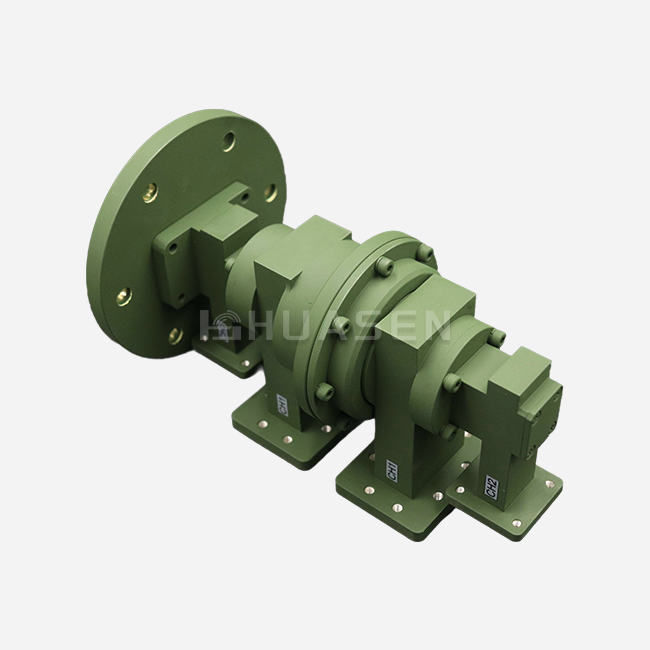
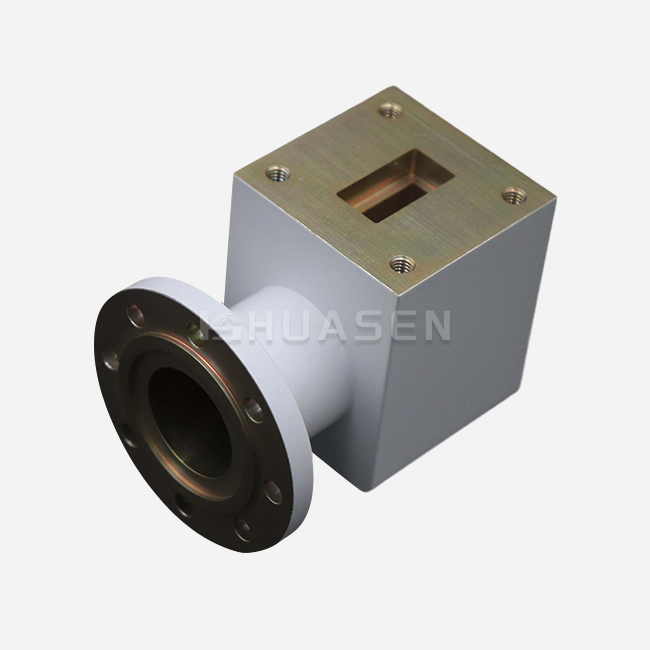
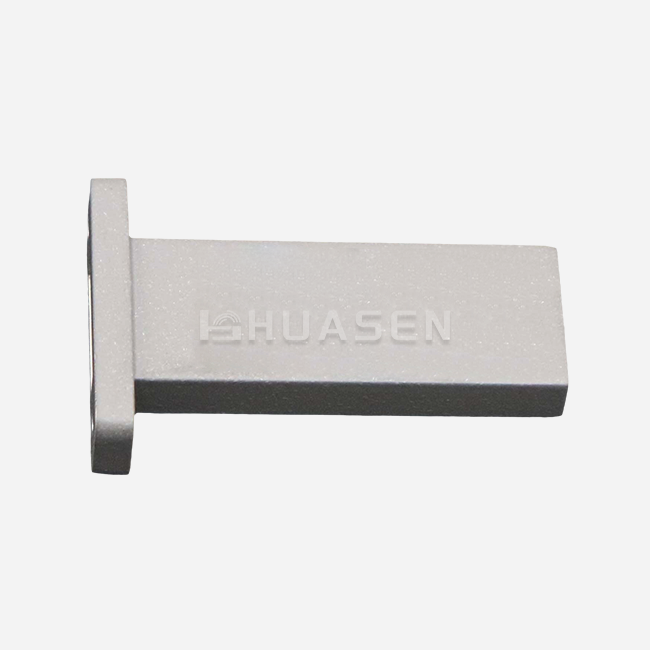
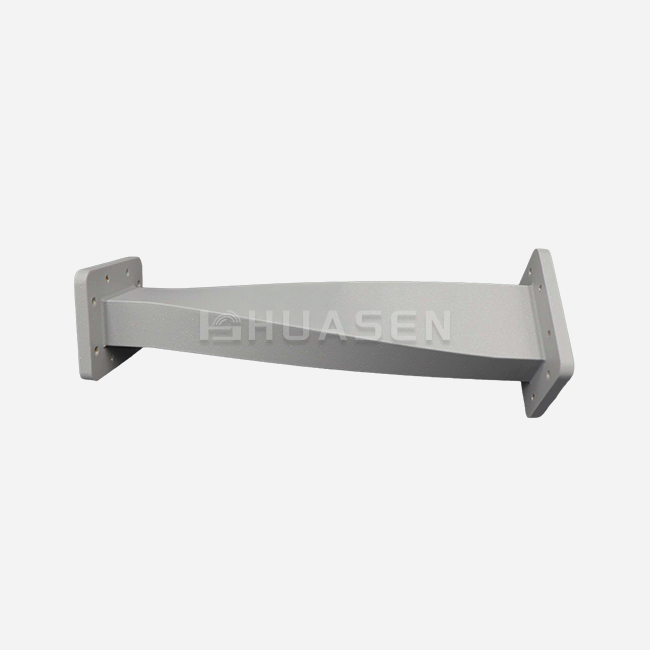
The End Launch Waveguide to Coaxial Adapter design uses a certain geometric method so that the coaxial connection lines up with the direction of waveguide transmission. In contrast to E-plane or H-plane probe setups that are perpendicular, this inline arrangement places the center conductor transition mechanism at the waveguide terminal or backshort plane. Right-angle adapters literally can't fit in antenna arrays and radar front ends that are very close together, but this design makes it possible. A stepped impedance transformer or a tapered probe structure is often used in the transition mechanism to slowly change the waveguide's characteristic impedance to the normal 50-ohm coaxial system. This slow change reduces reflections across the working bandwidth. However, to get broadband performance, the internal geometries need to be very complex and balanced across multiple resonant modes.
Working Principle and Mode Conversion
Carefully designed electromagnetic field interaction is what changes energy. The coaxial center wire goes into the waveguide cavity and is placed at a critical distance from the backshort wall to act as a probe. This probe moves the basic TE10 mode inside the waveguide and combines energy from the TEM mode moving along the coaxial line at the same time. The length, diameter, and entry depth of the probe decide how well it couples and what frequencies it responds to. At the design center frequency, the probe works as a matched impedance element. However, as you move towards the band ends, where reactive components rise, performance drops. The backshort distance behind the probe makes a tuning piece that makes up for the reactance of the probe, setting up the best conditions for matching. This setting process explains why the performance of these adapters changes with frequency instead of staying the same at all frequencies.
Construction Materials and Surface Treatments
Material choice has a direct effect on how well electricity works and how long it lasts in harsh environments. Huasen Microwave makes these parts with either oxygen-free copper or an aluminum alloy, depending on the needs of the application. In aircraft uses, where every gram matters, aluminum has a great strength-to-weight ratio. Copper, on the other hand, has better electrical conductivity than aluminum, which lowers ohmic losses by about 15 to 20 percent at millimeter-wave frequencies. Both corrosion protection and RF efficiency are greatly affected by surface treatments. Standard anodization makes an oxide layer that is safe and good for labs inside. When you silver plate something, the surface resistance goes down at high frequencies. This lowers insertion loss by 0.1 to 0.2 dB in the Ka-band and higher frequencies. Gold plating is the best way to protect against rust in marine and tropical settings, but it costs more to make. These surface processes work well in temperatures ranging from -40°C to +85°C, which is in line with MIL-STD weather requirements.

Performance Limits and Common Challenges in End Launch Adapters
Inherent Insertion Loss Mechanisms
Signal reduction happens during mode change for a number of different reasons. At millimeter-wave frequencies, where skin depth drops and surface current density builds up in smaller layers, conductor losses are the most important thing to consider. Because the surface resistance is higher, a copper coax waveguide adapter working at 40 GHz has about 30% more conductor losses than the same shape working at 20 GHz. More loss is caused by dielectric losses inside the insulator of the coaxial connection, which is more common in lower-quality PTFE materials. Even when careful matching is done, reflection losses happen at impedance changes. When waveguide fields are suddenly changed from being spread out to being concentrated, there is some reflection. Typical return loss values of 15-20 dB are considered good engineering practice. These effects are made worse by manufacturing errors. For example, a 0.05mm difference in where the probe is placed can lower the VSWR by 10-15% near the band ends.
VSWR Degradation at Operating Band Edges
Every waveguide-to-coax transfer has a unique VSWR curve that gets worse as the frequency limits get closer. At the lower band edge, close to where the waveguide cuts off, the guide wavelength gets much longer, which makes the probe physically bigger compared to the wavelength. This difference in size causes reactive coupling, which raises the power that is returned. At the upper band edge, higher-order waveguide modes start to move, making more energy routes that get in the way of the desired fundamental mode shift. Changes in temperature affect VSWR efficiency by changing the size of the material through thermal expansion. A change of 50°C in temperature can move the best matching frequency by 1% to 2%, which could make the VSWR worse in narrow-band designs, going from 1.25:1 to 1.4:1.
Installation and Alignment Considerations
When comparing recorded performance to stated numbers, the right mounting has a direct effect. It is very important to follow the torque specs for coaxial connections exactly. Not torquing them enough causes intermittent contact resistance, which raises insertion loss, and over-torquing them damages the connector surfaces, which lowers VSWR. When aligning the waveguide plate, it's important to pay close attention to the order of bolt tightening and gasket compression. Wavefront distortion at the changeover point is caused by uneven flange pressure, which raises insertion loss by 0.1 to 0.3 dB. Cumulative mechanical tolerances can cause large phase mistakes in multi-adapter units, which are common in phased array systems and can affect the accuracy of beam steering. Another problem that comes up in practice is contamination. Metal bits or leftover cutting fluids in the transition cavity cause unpredictably high or low resonances that lower performance. In important uses, these risks are lessened by using clean room assembly processes.
Optimizing Performance: Principles and Best Practices
Advanced Design Strategies for Loss Reduction
Precision engineering uses a number of methods to reduce costs that can't be avoided. Instead of simple one-step changes, multi-section impedance transformers make a slow impedance change that lowers reflections over a wider bandwidth. Computer programs that help with electromagnetic models find the best probe shape by balancing bandwidth, VSWR, and insertion loss. Stepped waveguide sections close to the transition point change the characteristic impedance before the probe coupling point. This sets up the field distribution ahead of time for better conversion. Most of the time, these design changes lower insertion loss by 0.1 to 0.2 dB and increase useful bandwidth by 15 to 20%. Huasen Microwave uses special field-solver optimization routines that they have created over 30 years of RF engineering experience. These routines help them meet performance standards that often go beyond what published standard adapters can do.
Material Selection and Manufacturing Quality Control
New materials make efficiency gains possible that aren't possible with traditional designs. High-conductivity copper that doesn't contain oxygen lowers leftover resistance losses. This is especially helpful above 40 GHz, where the skin layer is close to 0.3 microns. Specialized connection dielectrics made of low-loss fluoropolymer formulations keep their electrical qualities fixed even when exposed to high and low temperatures and over time. How closely production units match ideal performance is based on how precise the manufacturing is. Tolerances of ±0.02mm in CNC cutting make sure that the placement of the probe is the same from batch to batch. Instead of taking random samples, automated inspection systems check that every unit has the right key measurements. Using calibrated network analyzers that can be traced back to national standards labs, post-manufacturing testing compares the real RF performance to the specs. With this strict quality control, End Launch Waveguide to Coaxial Adapter units are sure to meet all production requirements, from small prototypes to sales for a thousand units.
Installation Best Practices for Sustained Performance
If you follow the right steps for installation, the performance will last for as long as the system is working. For coaxial connections to work, torque wrenches must be calibrated and set to the manufacturer's specs. For SMA interfaces, this is usually 8 to 12 inch-pounds, and for larger connectors, it's 10 to 15 inch-pounds. For even gasket tension, waveguide flanges need uniform bolt pressure to be applied in a star design. When you use conductive gasket materials, the electrical continuity across the flange contact is maintained. This stops slot radiation that lowers the protection effectiveness. As part of regular maintenance, metal areas that are visible should be checked visually for corrosion. This is especially important in maritime settings where salt spray speeds up the breakdown process. Light applications of approved dielectric grease that keep out moisture without causing gaps that affect electrical performance are good for connector contacts. When systems are properly kept, these simple steps make them last longer than 20 years.
How to Choose the Right End Launch Waveguide to Coaxial Adapter for Your Application
Critical Technical Specifications
Setting important performance parameters is the first step in making procurement choices. The frequency range needs to cover your whole working band with enough room to spare. For example, choosing an adapter marked 26.5-40 GHz for a 28-30 GHz application gives you enough room to spare and stops band-edge degradation. The needs for VSWR should match the price for the system link. VSWR values below 1.3:1 are usually needed for communication lines that need very little reflection. However, 1.5:1 may be fine for cost-effective laboratory test uses. The noise number and system gain are both affected by insertion loss. Overall noise number drops by the same amount for every 0.5 dB of adapter loss in a receiver front-end. To make up for this, more expensive low-noise amps may be needed. The amount of power that can be handled must be higher than the safest working settings. For stable operation and a longer lifespan, adapters designed for at least 30W should be used with a 20W average transmitter.
Connector Compatibility and Interface Standards
The choice of coaxial connection affects how well the system works and how reliable it is in the long run. Up to 26.5 GHz, SMA plugs are still the most popular choice for general-purpose uses because they can handle a fair amount of power and are easy to find. Precision 2.92mm (K-type) connections boost speed up to 40 GHz while still working with SMA mechanically. 2.4mm connections can work up to 50 GHz, and 1.85mm connectors can work up to 67 GHz, but these specialized ports cost more. Standard waveguide flanges must match system parts that are already in place. Standard designs are found in the UG series of flanges, while the PDR series of flanges offers precise alignment features for important uses. Custom flange configurations can be made to fit different mounting needs, but there are usually minimum order amounts that apply.
Evaluating Manufacturers and Supply Chain Reliability
The choice of supplier affects both the success of the instant purchase and the trust in the long-term operations. Established producers with decades of experience in the field show that they are good at building and making things. Huasen Microwave has been in business since 1993 and has over 30 years of experience making RF components. Certification compliance makes sure that quality methods for manufacturing meet foreign standards. ISO 9001 approval shows that the company follows good quality management practices, and RoHS compliance shows that the company cares about the environment. The ability to test goods to MIL-STD standards shows that they can handle defense-grade weather stress. Warranty terms and customer service after the sale are what set elite providers apart from cheap sellers. Comprehensive technical support, such as application engineering help, custom design services, and quick debugging, sets apart providers who care about their customers' success and don't just fulfill purchase orders.
Conclusion
The limits of theEnd Launch Waveguide to Coaxial Adapter changes are set by basic physical rules that govern mode conversion, the qualities of the material, and the shape of the transition. Knowing these limits helps you make smart choices about procurement and set reasonable goals for success. Modern ways of making things and high-tech materials push the limits of efficiency, but physical laws set the absolute bounds. To successfully integrate systems, you need to make sure that the adapter specs match the needs of the application, choose reliable providers, and follow the right steps for installation and maintenance. The inline configuration has clear benefits for users with limited room, even though it is a bit more complicated than right-angle options. As RF systems move towards millimeter-wave frequencies and faster data rates, these transitional technologies that connect the waveguide and coaxial areas will continue to be very important.
FAQ
1. What frequency ranges do end launch adapters support?
Coverage goes from microwaves to millimeter-waves, and different types are made for different waveguide frequency ranges. The frequency range for WR-430 connections is 1.7 to 2.6 GHz, for WR-90 it's 8.2 to 12.4 GHz, for WR-28 it's 26.5 to 40 GHz, and for WR-10 it's 75 to 110 GHz. Each waveguide size is matched to a certain frequency band, and the dimensions of the guide allow for single-mode transmission without higher-order mode confusion. Non-standard frequency needs can be met by custom designs using the End Launch Waveguide to Coaxial Adapter.
2. How does power handling compare between the aluminum and copper versions?
Power capacity is mostly based on the values of the coaxial connectors and not on the material of the waveguide body. Breakdown limits are set by the connection dielectric and the center wire. Copper bodies slightly better dissipate heat, which is helpful in high-duty-cycle situations where circuit heating impacts performance. The choice of material has a bigger effect on cost, weight, and ohmic losses than on the maximum power that can be used.
3. Can these adapters operate bidirectionally?
These passive reciprocal devices work just as well sending signs as they do getting them. Because of electromagnetic reciprocity, the result is the same no matter which way the information is sent. This ability to send and receive signals in both directions makes system design and inventory management easier because the same part can do both.
4. What maintenance extends operational lifespan?
Visual inspections done on a regular basis can find rust or mechanical damage early on. Degradation can be avoided by keeping connection surfaces clean and dry. Interface wear can be avoided by using the right contact force when installing and reconnecting. The internal transition shape is kept when contamination is avoided during handling. When systems are kept up properly, these simple steps support decades of reliable operation.
Partner with a Trusted End Launch Waveguide to Coaxial Adapter Manufacturer
Huasen Microwave Technology Co., Ltd. offers well-thought-out waveguide transition options and has been a master in radio frequency (RF) technology for 30 years. Our wide range of products covers frequencies from 0.3 GHz to 110 GHz and can handle power levels from 5W to 100W. This means that they can be used for almost any purpose in the research, military, defense, and telecommunications industries. Each adapter goes through a strict quality control process to make sure it meets the requirements and works reliably for a long time in tough operating settings. In addition to regular catalogue items, our tech team works together to create custom designs that are best for your system architecture and performance goals. We can help you with the technical side of any project, whether it's putting together parts for next-generation 5G infrastructure, satellite communication terminals, phased array radar systems, or precise test tools. Email our application engineering team at sales@huasenmicrowave.com to talk about your needs with RF experts who have worked in the field before and understand the problems you're having. We want procurement workers who are looking for a dependable End Launch Waveguide to Coaxial Adapter supplier to come see what a difference real knowledge and customer commitment make.
References
1. Marcuvitz, Nathan. Waveguide Handbook. IET Electromagnetic Waves Series, 1986.
2. Rizzi, Peter A. Microwave Engineering: Passive Circuits. Prentice Hall International Editions, 1988.
3. Saad, Theodore S. Microwave Engineers' Handbook, Volume 1: Components and Mechanisms. Artech House Publishers, 1971.
4. IEEE Standard 291-1991. IEEE Standard Methods for Measuring Electromagnetic Shielding Effectiveness of Planar Materials.
5. MIL-DTL-3922/67E. Detail Specification: Adapter, Coaxial/Waveguide, WR Series. U.S. Department of Defense, 2015.
6. Bodnar, David G. and Bassett, Harold R. "Analysis of an In-Line Coaxial-to-Waveguide Adapter." IEEE Transactions on Microwave Theory and Techniques, Vol. 42, No. 9, 1994, pp. 1735-1743.
Send Inquiry