Manual Waveguide Switch Selection for RF Systems






2026-05-20 21:46:48
System integrators and RF engineers in telecommunications, aircraft, radar, and laboratory testing must choose the proper waveguide switching component. Precision electromechanical devices like manual waveguide switches transport electromagnetic signals between waveguide ports with user involvement. These switches are dependable in power-off situations, eliminate complex control cabling, and provide tactile switch state confirmation, making them ideal for high-power radar installations, satellite communication redundancy, and calibration-sensitive test setups where dependability trumps automation.
Understanding Manual Waveguide Switches: Basics and Functional Insights
Core Operating Principles
Every manual waveguide switch device has a knob- or lever-operated precision-machined rotor assembly. Internal detent mechanisms lock the rotor into specific positions as the control handle is turned, guaranteeing signal channel integrity with repeatability within 0.05 dB. Mechanical simplicity leads to zero electrical failure points, control signal immunity, and limitless shelf life without battery worries.
Frequency Coverage and Configuration Options
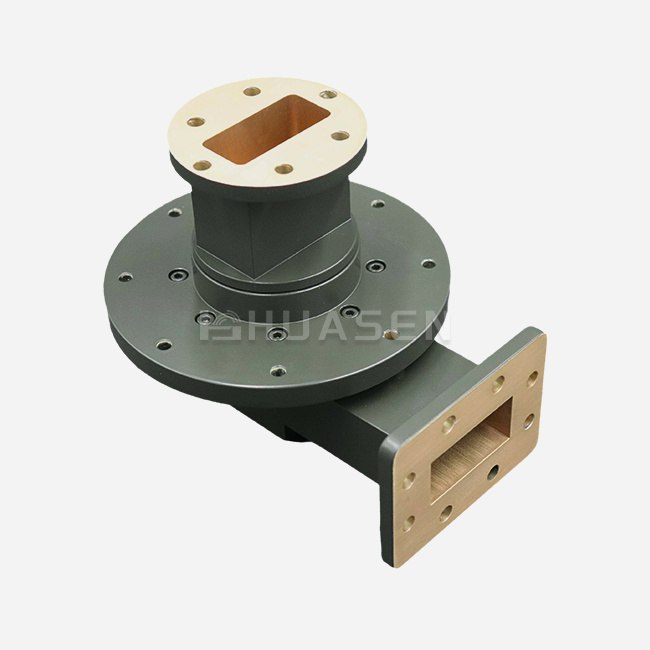
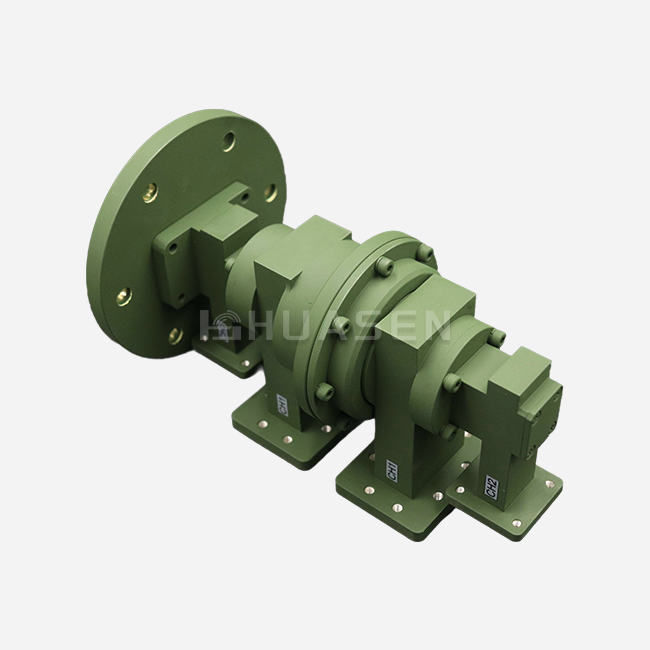
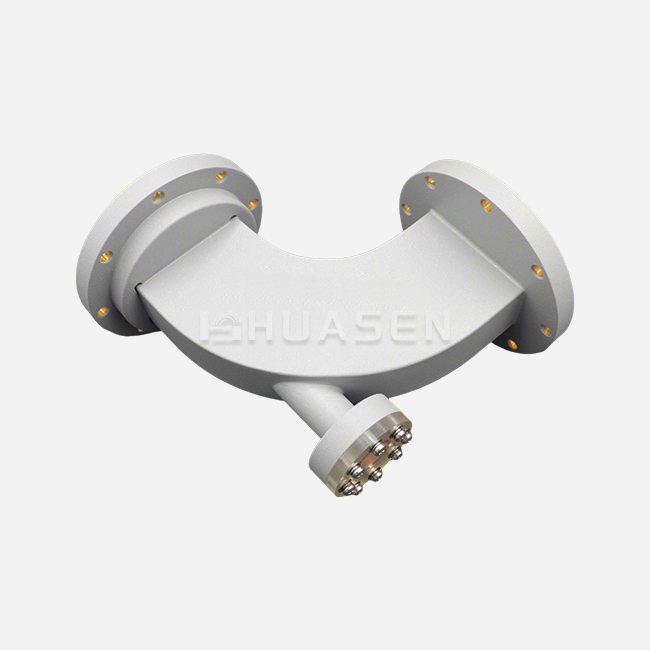
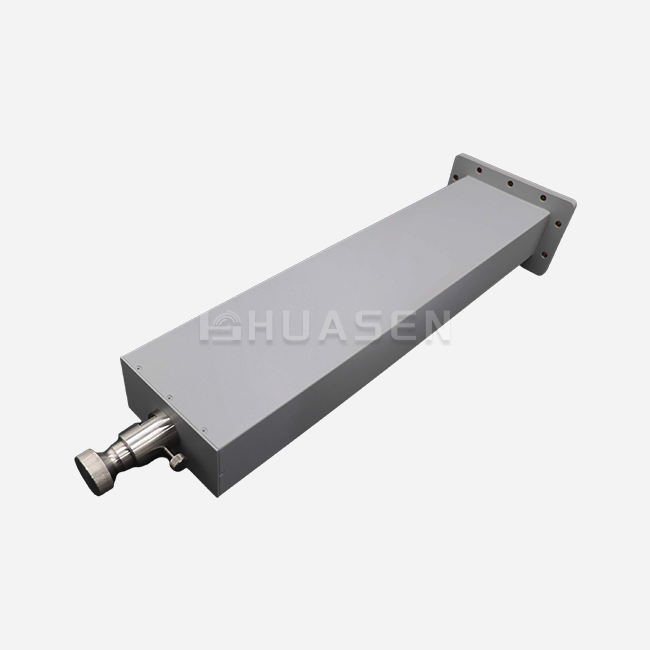
The physical structure uses rectangular or dual-ridge waveguides depending on bandwidth. The switching rotor is perpendicular to the electric field in E-plane (WES) configurations and parallel to the magnetic field in H-plane (WHS) designs, tailored for certain frequency bands and power management. Modern manual waveguide switches support L-band satellite downlinks and millimetre-wave backhaul systems from 1.72 to 112 GHz. SPDT for basic redundancy pathways, DPDT for simultaneous dual-signal routeing, and three-channel six-port setups for complicated test matrix layouts are multi-channel topologies. Material choice affects performance lifespan. High-grade aluminium alloys (6061-T6) dominate aircraft applications where weight is crucial, whereas oxygen-free copper with silver or gold plating minimises ohmic losses in laboratory instruments. UG, CPR, or UBR/PBR flange connections provide waveguide infrastructure compatibility.
Primary Application Domains
Satellite earth stations use these manual waveguide switches for high-power amplifier redundancy to manually transfer transmitter output to backup amplifiers or dummy loads during repair without system shutdown. They may alter signal routes between vector network analysers and devices under test without repetitive flange mating cycles that compromise calibration accuracy, which benefits laboratories. Safety interlocks on military radar installations show that transmitter power is redirected before workers reach antenna arrays.

Comparing Manual Waveguide Switches with Alternative Solutions
Operational Mode Analysis
Electromechanical switches with solenoids or stepper motors provide remote control but include voltage-sensitive and electromagnetic pulse-sensitive active components. Despite microsecond switching rates, electronic solid-state switches have insertion loss penalties (typically 1-3 dB) and power management limits well below manual waveguide switch options. Manual waveguide switches work well in static routeing environments with switching frequencies of a few cycles per hour. Their mechanical contact architecture allows average power levels of 10 kilowatts CW and peak outputs of over megawatts, which semiconductor-based competitors cannot match. Having no bias networks or control circuitry decreases spurious signal creation, which is important in low-noise receiver front-ends and precision measurement systems.
Durability and Lifecycle Considerations
Manual waveguide switches that are well-maintained pass 100,000 mechanical cycles without deterioration. Detent spring fatigue or contact plating wear are usually the limiting problems; however, frequent inspection can fix them. Semiconductor junction deterioration and thermal cycle stress enhance insertion loss in electronic switches. Cost research shows that manual waveguide switch units require no electricity, control infrastructure, or maintenance. While initial purchase prices may seem equal, total cost of ownership calculations over 10-15 year deployment cycles favour mechanical systems in cases where automation delivers little operating advantage.
Material and Connector Compatibility
Standard waveguide interfaces affect system integration complexity. UG-Cover flanges have smooth mating surfaces for common applications, whereas UG-Choke designs have grooved channels to minimise RF leakage at connection points, needed for VSWR standards below 1.10: 1. Mismatched switch and system waveguide flanges cause reflection coefficients that damage signal integrity and invalidate test results. Building materials must match environmental exposure profiles. For inside labs, aluminium housings work, but outside telecommunications installations need corrosion-resistant coatings. For thermal vacuum chamber integration in spaceship payload testing, vacuum-compatible variations use outgassing-compliant lubricants and Viton O-ring seals.
How to Select the Best Manual Waveguide Switch for Your RF System?
Technical Specification Priorities
Selection criteria are based on frequency range compatibility. Engineers must ensure the manual waveguide switch bandwidth covers system operating frequencies with a 10% buffer for temperature drift and manufacturing tolerances. Premium modules achieve ≤0.1 dB loss below 40 GHz and ≤0.5 dB in millimetre-wave bands, whereas inexpensive options may surpass a 1 dB penalty throughout multi-stage systems. The performance of isolation affects measurement accuracy and receiver protection. ≥70 dB isolation guarantees little off-port signal leakage, crucial for switching between high-power transmitters and sensitive low-noise amplifiers. Radar duplexers with poor isolation might damage receiver front-ends during transmission cycles. Average continuous wave (CW) power, peak pulse power, and pulse repetition frequency must be considered when grading power handling. Thermal buildup effects limit a 5 kW CW switch to 50 kW peak if pulse width exceeds microseconds. To avoid internal arcing and contact welding, base station and radar applications require power-profile matching.
Procurement and Supply Chain Factors
Quality is assured by supplier certificates. ISO 9001 and MIL-STD compliance suggest systematic manufacturing process controls and military-grade environmental testing techniques, including vibration, thermal stress, and humidity exposure. RoHS certification is important for European market access and shows contemporary production processes that reduce hazardous compounds. Complex configurations drastically affect lead time. Standard catalogue goods with conventional flanges arrive in 2-4 weeks, while bespoke frequency bands, unusual materials, and testing processes take 8-12 weeks. Volume buyers should negotiate minimum order quantities and assured delivery timelines, especially for manufacturing line integration when component delays stop assembly. Warranty clauses show manufacturer confidence. Premium providers offer 24-36 month mechanical and electrical performance deterioration guarantees with free recalibration. Budget options may cover 12 months with mechanical wear component exclusions—hidden expenditures during prolonged deployments.
Application-Specific Selection Guidance
Compact SPDT manual waveguide switches with high VSWR are needed for 5G base station front-ends to reduce antenna-transceiver module signal reflection. Emerging mmWave bands are covered by 24-40 GHz frequencies, and ruggedised environmental ratings enable durability from desert to Arctic deployments. High-power handling and operational safety are prioritised in satellite ground segment redundancy. Three-channel systems provide routeing between the primary amplifier, backup amplifier, and dummy load. Mechanical detent locations ensure visual/tactile signal route status for personnel safety. Test sets for laboratory vector network analysers benefit from phase-stable waveguide switch designs that retain ±2 degrees of insertion phase repeatability over switching cycles. Stability maintains calibration accuracy during multi-port S-parameter measurements, reducing calibration frequency and enhancing throughput.
Installation, Operation, and Maintenance Best Practices
Installation Guidelines
Rotor mechanisms are protected from gravitational stress by proper mounting. Horizontal installations with ergonomic control knobs reduce operator fatigue during frequent switching. Flange mounting bolt torque parameters must be followed to avoid waveguide aperture deformation and VSWR deterioration, as well as RF leakage and isolation issues. The whole sealing perimeter of waveguide flange surfaces must be metal-to-metal. Even small gaps release electromagnetic energy, degrading isolation. In outdoor thermally cycled installations, thin indium or silver foil gaskets accept small surface flaws, while clean room-grade isopropyl alcohol eliminates machining grease and oxidation. Switch housing and system chassis grounding continuity reduces common-mode noise-causing ground-loop currents. Cleaning RF return lines with dedicated grounding straps with low-inductance connections to star ground points is crucial in multi-channel systems because ground potential discrepancies cause spurious coupling between isolated signal channels.
Operational Procedures
Abrupt impacts promote mechanical wear; therefore, control handle activation should be smooth and deliberate. Detent mechanisms give tactile input verifying rotor alignment; forcing the handle beyond certain settings risks internal damage. Most manufacturers specify a maximum actuation force (generally 5-15 newton-metres) for internal components. Before applying RF power, operators should visually verify switch position with integrated position indicators. This apparently redundant check prevents catastrophic failures in high-power systems where misrouted signals harm sensitive receiver components or expose workers to antenna radiation.
Preventive Maintenance Protocols
Quarterly visual checks reveal flange corrosion, control handle looseness, and position indicator misalignment. Annual performance evaluation using portable vector network analysers ensures insertion loss and isolation parameters are within acceptable limits; trend-based replacement eliminates field failures. Periodically clean contact surfaces with lint-free cleanroom wipes and electronics-grade isopropyl alcohol. An aggressive solvent or abrasive substance can erode plating and cause ohmic losses. To meet low insertion loss requirements, RF contact lubricants minimise friction without dielectric losses. Where implemented, mechanical cycle counters track wear objectively for condition-based replacement. To reduce mission-critical downtime, performance validation testing and spare unit staging are needed for manual waveguide switches nearing 75% mechanical lifetime.
Why Choose Huasen Microwave for Manual Waveguide Switch Procurement?
Huasen Microwave Technology meets worldwide telecommunications, aerospace, and defence needs with over 30 years of high-frequency component production experience. Our vertically integrated manufacturing ensures strict tolerance control from raw material selection to final test, guaranteeing every manual waveguide switch fulfils published requirements with little unit-to-unit variance. Our extensive product offering includes E-plane and H-plane configurations for rectangular and dual-ridge waveguide topologies from 1.72 to 112 GHz. SPDT, DPDT, and three-channel six-port configurations are catalogue offerings, but our engineering team creates bespoke designs for unusual flange interfaces, environmental ratings, or waveguide system integration. 100% unit testing and comprehensive two-port S-parameter characterisation across frequency ranges surpass industry standards for quality assurance. High-dynamic-range measuring techniques identify leakage below -80 dB during isolation verification, and mechanical cycle testing on sample devices verifies durability before production. ISO 9001 certification and RoHS compliance papers simplify customer qualification and meet international regulations. Application engineering help with system integration provides technical support beyond product delivery. Our staff helps with waveguide switching, insertion loss budgeting, thermal control for high-power installations, and field performance troubleshooting. Laboratory instrument calibration and performance re-verification testing maintain measurement accuracy.
Conclusion
Strategically choosing manual waveguide switches balances electrical performance, operational needs, and lifespan costs. Understanding E-plane and H-plane topologies, multi-channel configuration choices, and isolation and insertion loss measurements optimises component matching to system design. Purchasing managers that prioritise supplier certifications, warranties, and technical assistance reduce project risks and maximise long-term value. Proper installation and preventative maintenance enhance service life, ensuring signal integrity and operating safety in demanding telecommunications, aircraft, and laboratory applications.
FAQ
1. What frequency ranges do manual waveguide switches support?
Depending on waveguide size and arrangement, manual waveguide switches cover 1.72 to 112 GHz. Lower frequency units (L-band through X-band) have bigger rectangular waveguide cross-sections, while millimetre waves (Ka-band through W-band) use narrower apertures. Dual-ridge designs provide multi-band coverage with single components and 30-50% higher bandwidth than rectangular guides.
2. How does mechanical lifespan compare with electronic alternatives?
With sufficient maintenance, quality manual waveguide switches outlive semiconductor-degrading electronic switches by 100,000 mechanical cycles. Without active components, voltage-dependent failure modes are eliminated, and precision-machined mechanical detents maintain electrical performance during operation. Mobile platform high-vibration and heat cycle characteristics favour environmental resilience over solid-state alternatives.
3. What lead times should buyers expect for bulk orders?
Standard catalogue configurations arrive in 3-4 weeks for orders under 50. Production scheduling and full-batch testing may take 6-8 weeks for volume orders above 100 units. Engineering approval and tooling preparation take 10-14 weeks for custom requirements with non-standard flanges, environmental treatments, or extended frequency coverage.
Partner with Huasen Microwave for Precision RF Switching Solutions
Huasen Microwave has provided precise Manual Waveguide Switch technology for telecommunications infrastructure, defense radar systems, and aerospace test platforms globally since 1993. Our technical staff can optimize switching solutions for common SPDT setups or sophisticated six-port bespoke designs. Discuss your project details with our technical sales team at sales@huasenmicrowave.com. Detailed specification spreadsheets, CAD flange interface drawings, and performance prediction models aid procurement choices. As a reputable Manual Waveguide Switch manufacturer serving global integrators, we offer prototype and volume manufacturing, complete warranty coverage, and prompt field service. Request your personalized quote today to see why top system integrators choose Huasen Microwave for mission-critical RF components with quantifiable performance benefits.
References
1. Pozar, David M. "Microwave Engineering, 4th Edition." John Wiley & Sons, 2011.
2. IEEE Standard 147-2017: "IEEE Standard for Waveguide and Coaxial Connectors - Measurement Techniques."
3. Liao, Samuel Y. "Microwave Devices and Circuits, 3rd Edition." Prentice Hall, 1990.
4. MIL-DTL-3922: "Military Specification - Switches, Waveguide: Radio Frequency, Manual and Electromechanical."
5. Collin, Robert E. "Foundations for Microwave Engineering, 2nd Edition." IEEE Press, 2001.
6. Jaeger, Greiner. "Waveguide Components for Antenna Feed Systems: Theory and CAD." Artech House, 1993.
Send Inquiry