
Log Periodic Antenna Features Every RF Engineer Should Know






2026-03-20 21:56:26
Log Periodic Antenna technology is one of the most flexible and advanced ways to solve problems in current RF engineering. These broadband directional antennas work great across a wide range of frequencies, which is why they are essential for use in communications, radar systems, and electronic warfare. Their unique logarithmic scaling design makes it possible for stable gain features and great impedance matching across a wide range of operating frequencies. For RF engineers working on complicated communication systems, spectrum tracking gear, and wideband testing applications where frequency flexibility and reliable performance are key, it's important to understand the basic features and functions of log periodic antennas.
Understanding the Fundamentals of Log Periodic Antennas
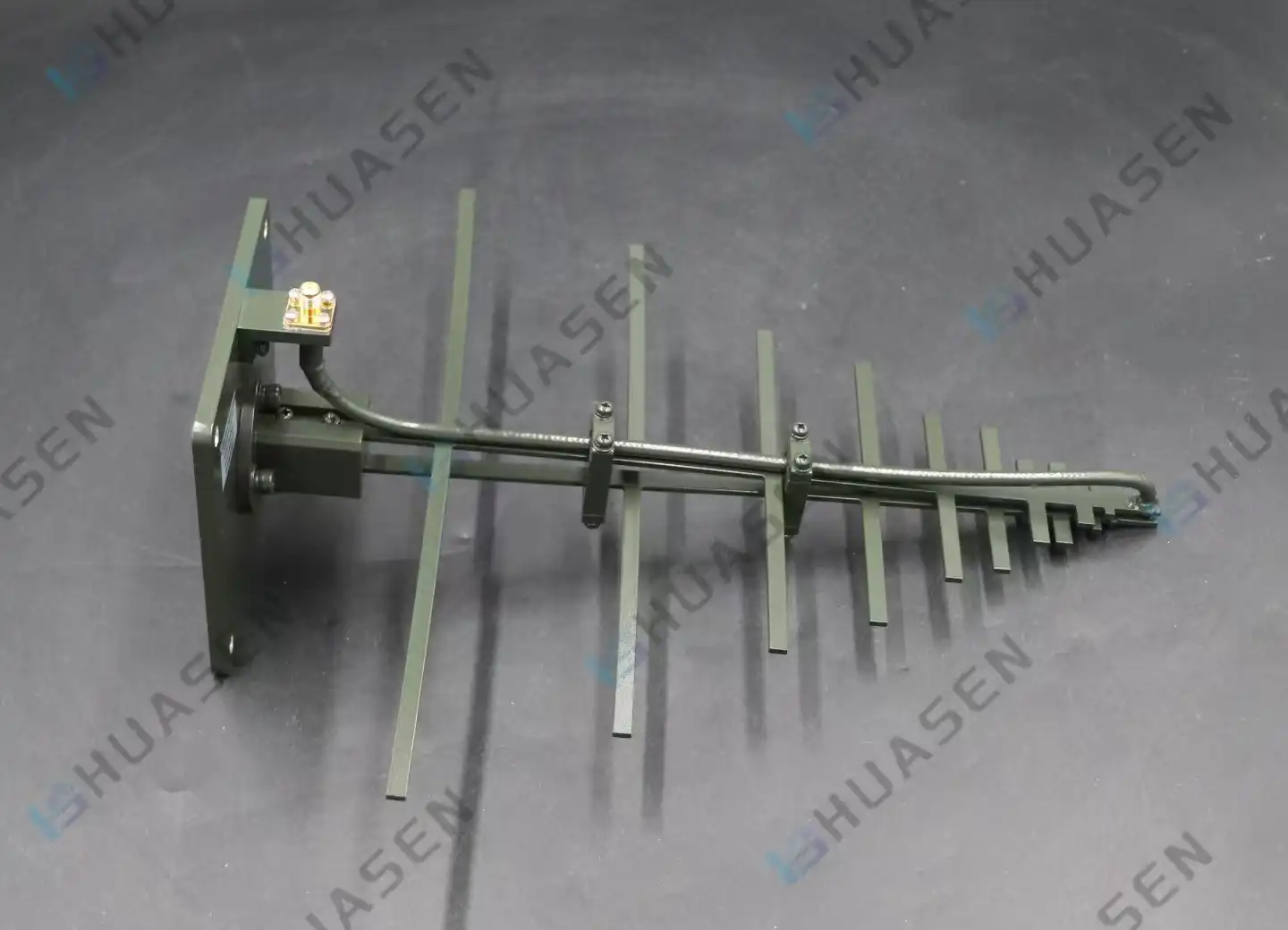
The engineering principles behind log periodic antennas stem from their distinctive geometric configuration, where radiating elements follow a logarithmic scaling relationship. This mathematical foundation ensures that the antenna maintains consistent electrical characteristics across its operational bandwidth, typically spanning frequency ratios of 10:1 or greater.
Logarithmic Scaling and Element Design
The scale factor (ϱ) is what design is all about. It tells us how the different antenna parts fit together. This logarithmic growth is shown by the length and spacing of each piece. At this point, the structure is stable and works well across a large bandwidth range. Because of this scaling method, the antenna can keep its input resistance pretty steady, around 50 ohms, and keep its directionality across the whole frequency range. The scaling factor and the element space factor (π) work together to make things look their best. Engineers carefully balance these things to get the bandwidth they need while keeping the amount of gain stable. When these things work together, they have a direct effect on the antenna's VSWR performance, which stays below 2:1 throughout the working band.
Radiation Characteristics and Pattern Behavior
In log periodic antennas, end-fire radiation patterns can be seen, and the antenna's longitudinal line is where it has the most gain. Different frequency parts excite different parts of the antenna structure, which is what the active area idea is all about. Longer elements are used for lower frequencies close to the feed point, while shorter elements are used for higher frequencies. When frequency-dependent excitation is used in this way, the phase center stays mostly the same across the working span. Most of the time, the beamwidth is between 60 and 90 degrees in both the E-plane and the H-plane. This is wide enough to cover most tracking and communication jobs while still being sharp enough to keep out other signals.
Critical Features and Benefits of Log Periodic Antennas for RF Applications
The exceptionally wideband capability of log periodic antennas addresses multiple pain points in modern RF system design. These antennas eliminate the need for multiple narrowband antennas, significantly reducing system complexity and inventory requirements while improving operational flexibility.
Superior Broadband Performance
Log periodic antennas work the same way across a wide range of frequencies, which would require more than one regular antenna. Most of the time, the bandwidth possibilities are higher than 10:1, LPA, and some custom designs can reach even wider areas. This trait is very useful in situations that require watching the spectrum, fighting electronic warfare, or using multiple communication standards. Because these antennas don't depend on frequency, changes in gain stay within acceptable limits throughout the whole operating band. Gain values usually fall between 5 and 8 dBi, but this can change based on the design parameters and physical limitations. Because it is stable, there is no need for complicated gain compensation methods that are needed with frequency-scanning systems that use many narrowband elements.
Impedance Matching and VSWR Performance
Modern log periodic designs match impedances very well thanks to carefully designed feeding systems. The built-in balun changes the unbalanced coaxial input into balanced antenna elements while keeping the VSWR low over the whole operating bandwidth. This function cuts down on reflected power by a large amount and makes the system as efficient as possible. Quality solutions keep VSWR below 2:1 across the whole frequency range, and many designs do even better, with performance better than 1.5:1. This amount of matching performance makes sure that the most power is transferred and that the transmitter isn't damaged as much as possible in high-power situations.
Mechanical and Environmental Advantages
Log periodic antennas have a lot of benefits when it comes to mechanical design freedom. The planar microstrip implementations offer low-profile options that work well for applications that need to be airborne or have limited space. These designs can handle high-G forces and aerodynamic loads without losing their electrical performance. In outdoor and mobile apps, environmental resilience is very important. Quality log periodic antennas are made with materials that don't break down in bad weather and have strong mechanical construction to make sure they work well for a long time, even in harsh circumstances.
Application Scenarios: Real-World Use Cases in B2B Markets
Log periodic antennas serve critical functions across diverse industrial sectors, addressing specific technical challenges that traditional antenna designs cannot adequately solve. Understanding these application scenarios helps procurement professionals recognize when this antenna technology offers optimal solutions.
Electronic Warfare and Radar Warning Systems
Military and defense applications heavily utilize log periodic antennas in radar warning receivers (RWR) and electronic support measures (ESM) systems. The wide instantaneous bandwidth allows these systems to detect and analyze threats across multiple radar bands simultaneously without mechanical scanning or antenna switching. Airborne electronic warfare platforms particularly benefit from the low-profile characteristics of microstrip log periodic designs. These antennas maintain aerodynamic efficiency while providing the frequency coverage necessary to detect S-band through Ku-band threats. The consistent gain characteristics ensure reliable threat detection across the entire frequency spectrum of interest.
EMC Testing and Compliance Verification
Electromagnetic compatibility testing facilities extensively employ log periodic antennas for both emissions and immunity testing. The broadband characteristics eliminate the need for multiple antenna changes during automated test sequences, significantly reducing test time and improving measurement repeatability. These antennas serve as reference standards in anechoic chambers where their predictable gain patterns enable accurate field strength calculations. The stable phase center characteristics prove particularly important for far-field measurement setups where precise positioning affects measurement accuracy.
Spectrum Monitoring and Signal Intelligence
Telecommunications operators and LPA regulatory agencies rely on log periodic antennas for spectrum monitoring and interference hunting applications. The wide frequency coverage enables simultaneous monitoring of cellular, WiFi, satellite, and broadcast bands using a single antenna system. Portable spectrum analysis systems incorporate these antennas to provide field engineers with comprehensive coverage capabilities. The lightweight construction of microstrip implementations makes them suitable for handheld analyzers and temporary monitoring installations.
How to Choose and Procure the Right Log Periodic Antenna
Selecting the appropriate log periodic antenna requires careful evaluation of multiple technical and operational factors. Procurement managers must balance performance requirements with practical considerations such as environmental conditions, mounting constraints, and budget limitations.
Technical Specification Analysis
Frequency coverage represents the primary selection criterion, but engineers must consider the gain flatness requirements across the operational band. Applications requiring precise amplitude measurements demand antennas with minimal gain variation, while communication systems may tolerate larger variations in exchange for improved directivity. Power handling capability becomes critical in transmission applications. Microstrip implementations typically handle lower power levels compared to wire-based designs due to substrate limitations and thermal dissipation constraints. High-power applications may require specialized designs with enhanced cooling provisions or alternative construction techniques.
Environmental and Mechanical Considerations
The installation environment significantly influences antenna selection. Outdoor applications require robust construction with appropriate weather sealing and corrosion-resistant materials. Temperature cycling specifications become important for systems operating in extreme climates where thermal expansion could affect electrical performance. Mounting flexibility affects system integration complexity. Some applications benefit from the conformal mounting capabilities of flexible substrate designs, while others require rigid mounting for precise pointing accuracy. Connector specifications must match system requirements, with options including SMA, N-type, and various waveguide interfaces.
Supplier Evaluation and Quality Assurance
Reputable manufacturers maintain comprehensive quality control procedures, including dimensional inspection, RF performance verification, and environmental stress screening. These processes ensure that delivered products meet specification requirements and provide reliable long-term operation. Documentation quality indicates manufacturer capability and commitment to customer support. Complete test data, installation instructions, and technical support availability contribute significantly to successful system integration and ongoing operational success.

Maximizing Reliability and Performance: Maintenance and Troubleshooting
Sustained performance from log periodic antenna systems requires attention to installation quality, regular maintenance procedures, and systematic troubleshooting approaches. Proper implementation of these practices ensures that systems continue to meet performance requirements throughout their operational lifetime.
Installation Best Practices
Carefully checking the stability of the mounting and the integrity of the connectors is the first step in a proper fitting. When feed lines are under a lot of mechanical stress, VSWR changes can happen that make the system work less well. Electrical properties and mechanical dependability are maintained by using the right strain relief and keeping bend angles low. Both efficiency and safety are affected by grounding issues. Common-mode currents can change the patterns of radiation, but proper RF grounding stops them. Safety grounding keeps people and things safe from lightning and static electricity. It is important that these grounding devices are made so that they don't have ground loops that could cause noise or interference.
Performance Monitoring and Diagnostic Procedures
Regularly measuring VSWR can help find problems early on, like when moisture gets in or a connection starts to break down. By plotting these data against time, you can see small changes that might not be obvious during normal use. Pattern measurements are more difficult to do, but they give you useful information about the state of an antenna. When beamwidth, sidelobe levels, or pointing accuracy change, it's usually a sign of mechanical damage or environmental degradation that needs to be fixed.
Preventive Maintenance Strategies
During routine checks, the physical condition should be looked at visually, the tightness of connectors should be checked, and simple electrical tests should be done. Things in the environment, like ice loading, wind damage, a Log Periodic Antenna, or rust, need to be fixed right away to stop things from breaking down even more. Scheduling the repair of wearable parts like gaskets and connector seals helps stop problems before they happen. Keeping extra antennas on hand for important uses makes sure that service can be quickly restored when problems arise.
Conclusion
RF experts who work in defence, test, and telecommunications continue to rely on log periodic antennas for important abilities. They are essential for current communication systems because they have a unique mix of wideband performance, stability, and design flexibility. The technology meets important needs in the industry, like frequency coverage, durability in harsh environments, and system integration needs, while still keeping the dependability needed for mission-critical uses. As communication systems keep getting better at handling larger bandwidths and more complicated working conditions, log periodic antenna technology is still an important choice for engineers who want reliable performance and a lot of practical options.
FAQ
1. What distinguishes log periodic antennas from other wideband antenna types?
Log periodic antennas maintain consistent gain and impedance characteristics across their operational bandwidth through logarithmic element scaling. Unlike horn antennas that achieve broadband operation through gradual transitions, or spiral antennas that use continuous curves, log periodic designs employ discrete elements arranged in a mathematically precise pattern that ensures frequency-independent performance.
2. How does power handling differ between microstrip and wire log periodic designs?
Microstrip log periodic antennas typically handle 50-100 watts maximum due to substrate thermal limitations and breakdown voltage constraints. Wire-based designs can accommodate significantly higher power levels, often exceeding 1000 watts, making them preferable for high-power transmission applications. The trade-off involves size, weight, and aerodynamic considerations that favor microstrip designs in space-constrained applications.
3. What environmental factors most significantly affect log periodic antenna performance?
Temperature variations affect substrate properties in microstrip designs, potentially altering resonant frequencies and impedance matching. Moisture ingress can significantly degrade performance by changing the effective dielectric constant. Ice accumulation modifies element dimensions and spacing, shifting operational frequencies. Proper environmental protection through radomes and sealing maintains consistent performance across operational temperature and weather conditions.
Partner with Huasen Microwave for Advanced Log Periodic Solutions
Huasen Microwave Technology brings three decades of RF engineering expertise to your next project requiring high-performance log periodic antenna solutions. Our comprehensive design capabilities span from standard catalog products to fully customized implementations tailored to your specific frequency, gain, and environmental requirements. As a trusted log periodic antenna manufacturer, we maintain rigorous quality standards, including MIL-STD compliance and Log Periodic Antenna comprehensive environmental testing, to ensure reliable operation in demanding applications. Our engineering team provides complete technical support from initial concept through production deployment, helping you optimize system performance while meeting cost and schedule objectives. Contact our technical sales team at sales@huasenmicrowave.com to discuss your wideband antenna requirements and discover how our log periodic antenna solutions can enhance your RF system capabilities.
References
1. Balanis, Constantine A. "Antenna Theory: Analysis and Design - Log-Periodic Antennas." Fourth Edition, John Wiley & Sons, 2016.
2. Carrel, Robert L. "Analysis and Design of the Log-Periodic Dipole Antenna." Technical Report, University of Illinois Antenna Laboratory, 1961.
3. IEEE Standard 145-2013. "IEEE Standard for Definitions of Terms for Antennas." Institute of Electrical and Electronics Engineers, 2013.
4. Rumsey, Victor H. "Frequency Independent Antennas and Their Applications." IRE Transactions on Antennas and Propagation, Vol. 5, No. 4, 1957.
5. DuHamel, Raymond H. and Isbell, Dwight E. "Broadband Logarithmically Periodic Antenna Structures." IRE International Convention Record, Part 1,1957.
6. Milligan, Thomas A. "Modern Antenna Design - Log-Periodic Arrays." Second Edition, McGraw-Hill Professional, 2005.
Send Inquiry
You may like
