Lens Horn Antenna Benefits in Satellite and Radar Applications






2026-03-20 21:56:24
The Lens Horn Antenna technology is a huge step forward in high-frequency transmission systems. It significantly improves performance for satellite and radar uses. Compared to other antenna designs, these high-tech ones have better gain, more precise beam control, and clearer signals because they combine dielectric lenses with horn antenna structures. Modern defence, military, and telecommunications systems face major problems that this technology solves by offering small solutions that are very good at correcting phase and have very little side-lobe interference.
Understanding Lens Horn Antenna Technology
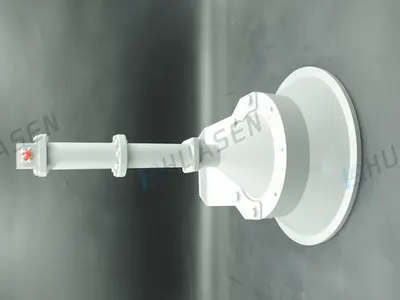
Lens horn antennas work by using a clever mix of advanced dielectric materials, engineering and the rules for how electromagnetic waves travel. The basic design combines a horn-shaped antenna with a carefully made dielectric lens placed at the opening. This makes a system that changes spherical wavefronts into flat wavefronts. This change gets rid of the phase mistakes that normally stop standard horn antennas from working well, especially at higher frequencies where accuracy is more important.
Core Components and Design Principles
The feed horn frame, the dielectric lens assembly, and the waveguide interface are the most important parts of a lens horn antenna. No matter if it's shaped like a cone or a pyramid, the feed horn is the main part that sends electromagnetic energy into space. The dielectric lens, which is usually made of low-loss materials like PTFE, Rexolite, or quartz, is very important because it corrects the phase and shapes the beam. Modern lens horn antenna designs come in a number of complex variations that can be used in a variety of situations. For uses that need uniform radiation patterns, conical Horn Lens (LHA) designs offer great circular symmetry. Pyramidal Horn Lens designs are great for rectangular waveguide systems because they give you more control over the polarisation. Feed-Illuminated Lens designs make the connection between the horn and lens elements work better, while Point-Focus Lens (PLHA) styles focus energy into very narrow beams for long-range uses.
Performance Characteristics and Frequency Considerations
For lens horn antennas to work, the frequency range goes from microwaves to millimetre waves. The best performance is usually seen in Ka-band (26.5-40 GHz), V-band (50-75 GHz), and E-band (60-90 GHz) uses. When it comes to these frequencies, lens horn antennas are much better than other antenna technologies because they are small and can fix phase errors. The better performance of lens horn antenna designs can be seen in their radiation pattern features. By adding dielectric lenses, side-lobe levels can be lowered to as low as -15dB in the E-plane and -26dB in the H-plane. This is a big improvement over regular horn antennas. In practical settings, these outstanding side-lobe suppression abilities directly lead to less interference and better signal quality.
Advantages of Lens Horn Antennas in Satellite and Radar Applications
The deployment of lens horn antennas in satellite Lens Antenna and radar systems delivers measurable performance improvements across multiple operational parameters. These advantages stem from the fundamental design characteristics that address specific challenges encountered in high-frequency communication and sensing applications.
Enhanced Gain and Signal Performance
Lens horn antennas achieve superior gain characteristics through their ability to maintain aperture efficiency while minimising physical dimensions. Traditional horn antennas require extensive physical length to achieve comparable gain levels, making them impractical for space-constrained applications. The dielectric lens corrects phase variations across the aperture, enabling high-gain performance in significantly shorter antenna structures. The improved signal-to-noise ratio capabilities of lens horn antennas prove particularly valuable in satellite communication links where path loss and atmospheric attenuation present ongoing challenges. The concentrated beam patterns and reduced side-lobe levels minimise interference from adjacent systems while maximising the capture of desired signals.
Environmental Resilience and Operational Reliability
Satellite and radar systems operate in demanding environmental conditions that test the limits of antenna performance and durability. Lens horn antennas demonstrate exceptional resilience to temperature variations, humidity exposure, and mechanical stress through their robust construction and sealed design architecture. The dielectric lens serves a dual purpose by providing electromagnetic performance enhancement while simultaneously protecting the internal waveguide structure from environmental contamination. This protection extends operational lifetime and maintains consistent performance characteristics across varying environmental conditions.
System Integration and Customisation Flexibility
Modern satellite and radar systems demand antenna solutions that accommodate diverse integration requirements and performance specifications. Lens horn antennas excel in this regard through their modular design approach and extensive customisation capabilities. The focal length, aperture dimensions, and beamwidth characteristics can be precisely tailored to match specific system requirements. Polarisation options include linear polarisation in standard configurations, with circular polarisation achievable through the addition of circular waveguide phase shifters. These customisation capabilities enable system designers to optimise antenna performance for specific mission requirements without compromising integration constraints.
Comparing Lens Horn Antennas with Other Antenna Types
The selection of appropriate antenna technology for satellite and radar applications requires careful evaluation of performance trade-offs and operational requirements. Lens horn antennas occupy a unique position in the antenna technology landscape, offering distinct advantages over alternative approaches in specific application scenarios.
Performance Comparison with Parabolic Antennas
Parabolic antennas have traditionally dominated high-gain applications due to their excellent directivity and mature manufacturing processes. However, lens horn antennas provide compelling advantages in applications where physical size constraints, mechanical complexity, or environmental exposure present challenges. The compact axial dimensions of lens horn antennas enable installation in space-constrained environments where parabolic antennas would be impractical. The absence of moving parts and complex mechanical structures reduces maintenance requirements and improves long-term reliability in harsh operating environments.
Advantages Over Phased Array Systems
Phased array antennas offer superior beam steering capabilities Lens Antennaand electronic control features, but these advantages come with increased complexity and power consumption. Lens horn antennas provide an optimal solution for applications requiring high gain and precise beam control without the complexity and cost associated with active phased array systems. The passive nature of lens horn antennas eliminates power consumption for beam forming while maintaining excellent pattern stability and low noise characteristics. These features prove particularly valuable in satellite applications where power efficiency and signal purity are paramount considerations.
Comparison with Flat Panel and Helical Designs
Flat panel antennas offer attractive low-profile characteristics but typically struggle to achieve the gain levels and pattern quality available from lens horn antenna designs. Helical antennas provide excellent circular polarisation characteristics but lack the directivity and gain performance required for long-range communication links. Lens horn antennas bridge these performance gaps by combining compact form factors with high gain capabilities and excellent pattern control. The result is an antenna solution that addresses multiple design requirements without the compromises inherent in alternative technologies.
Procurement Guide for Lens Horn Antennas
Successful procurement of lens horn antennas requires an understanding of key performance specifications, manufacturing quality standards, and supplier evaluation criteria. The technical complexity and precision manufacturing requirements of these antennas demand careful supplier selection and specification development.
Supplier Evaluation Criteria and Manufacturing Standards
Reliable lens horn antenna suppliers demonstrate expertise in high-frequency antenna design, precision manufacturing capabilities, and comprehensive quality control processes. Manufacturing facilities should maintain clean room environments for dielectric lens fabrication and possess advanced measurement capabilities for performance verification. Quality certifications, including MIL-STD compliance, ISO standards, and RoHS certification, indicate supplier commitment to manufacturing excellence and regulatory compliance. These certifications become particularly important for aerospace and defence applications where reliability and performance consistency are critical requirements.
Cost Factors and Pricing Considerations
The pricing of lens horn antennas reflects the sophisticated materials and precision manufacturing processes required for optimal performance. Key cost drivers include frequency range requirements, customisation complexity, power handling capabilities, and environmental protection specifications. Volume procurement opportunities can provide significant cost advantages, particularly for applications requiring multiple antenna units with similar specifications. Suppliers often offer development partnerships that include engineering support, prototype development, and testing services as part of comprehensive procurement packages.
Procurement Process and Timeline Management
When you plan your procurement well, you take into account things like design consultation stages, prototype development cycles, and production wait times. Standard lens horn antenna configurations may be offered with shorter lead times for delivery, while custom designs usually need longer development times. When planning international operations, things to think about include customs paperwork, shipping methods, and the ability to track deliveries. Suppliers with a good reputation offer a lot of help during the whole buying process, such as expert documentation, compliance certificates, and installation instructions.

Real-World Applications and Case Studies
The practical implementation of lens horn antennas across diverse satellite and radar applications demonstrates their versatility and performance advantages. These real-world examples illustrate the measurable benefits achieved through lens horn antenna deployment in operational systems.
Satellite Communication System Implementations
Lens horn antennas are used in advanced satellite communication systems for both receivers on the ground and transponders in space, where high gain and small size are important. Better control of the beam allows for accurate pointing and less interference in orbital settings with a lot of people. Lens horn antennas are often used in maritime communication devices because they work well in a variety of environments and don't change much. Because they are sealed and made of materials that don't rust, they can still work in harsh marine environments and provide reliable communication lines.
Radar System Applications and Performance Improvements
Lens horn antennas are being used more and more in modern radar systems for tasks that need precise beam shaping and low side-lobe features. These antennas help air traffic control systems tell the difference between targets better and cut down on ground clutter disturbance. Lens horn antennas are great at controlling patterns and keeping their gain stable, which makes it possible for weather radar systems to measure precipitation and find bad weather more accurately. Because it is small, it can be easily installed in radar installations with limited room without affecting its performance.
Emerging Technologies and Future Applications
As 5G and 6G wireless networks become more common, lens horn antennas can be used in new ways for millimetre-wave backhaul lines and base station tasks. The unique problems of high-frequency wireless infrastructure are solved by the mix of high gain and small size. Lens horn antenna technology is still being improved for use in aerospace applications. However, improvements in lightweight materials and better environmental protection have made it possible for this technology to be used in more situations. Platforms for unmanned aerial vehicles can benefit greatly from improved lens horn antenna designs because they can reduce weight and improve performance.
Conclusion
Lens horn antennas are a developed technology that is still changing all the time. They meet important performance needs in satellite and radar applications. Because they have high gain, good beam control, and small sizes, these antennas are the best choice for high-frequency communication and sensing systems that need to work well. Lens horn antennas are useful in a wide range of operational situations, from space uses to communication networks on Earth. They can withstand harsh environments and can be customised to fit specific needs. When frequency needs keep going up to millimetre-wave bands and beyond, lens horn antenna technology is a tried-and-true way to get great system performance while still having useful implementation benefits.
FAQ
1. What frequency ranges are optimal for lens horn antenna performance?
Lens horn antennas excel in microwave and millimetre-wave frequency ranges, typically from Ka-band (26.5-40 GHz) through W-band (75-110 GHz) and beyond. The dielectric lens correction becomes increasingly valuable at higher frequencies, where phase errors significantly impact antenna performance. Specific frequency optimisation depends on lens material selection and geometric design parameters.
2. How do lens horn antennas differ from parabolic designs in satellite applications?
The primary differences include physical size requirements, mechanical complexity, and environmental protection capabilities. Lens horn antennas achieve comparable gain in significantly shorter axial dimensions, eliminate complex feed positioning requirements, and provide inherent environmental protection through the sealed lens design. These advantages make lens horn antennas particularly suitable for space-constrained satellite installations.
3. What customisation options are available for radar system applications?
Radar applications benefit from extensive customisation capabilities, including focal length adjustment, aperture sizing, beamwidth optimisation, and polarisation configuration. Circular polarisation can be achieved through circular waveguide phase shifters, while linear polarisation orientations can be specified during manufacturing. Power handling requirements and environmental protection specifications can also be customised for specific operational requirements.
Partner with Huasen Microwave for Advanced Lens Horn Antenna Solutions
Huasen Microwave stands as your trusted lens horn antenna supplier with over three decades of expertise in high-frequency microwave and millimetre-wave component development. Our comprehensive product portfolio includes Conical Horn Lens (LHA), Pyramidal Horn Lens, Feed-Illuminated Lens, and Point-Focus Lens (PLHA) configurations designed to meet the most demanding satellite and radar application requirements. With proven capabilities in customisation, rigorous quality control processes, and extensive industry certifications, we deliver reliable solutions that enhance system performance and operational efficiency. Contact our engineering team at sales@huasenmicrowave.com to discuss your specific requirements and discover how our advanced lens horn antenna technology can optimise your next project.
References
1. Silver, S. "Microwave Antenna Theory and Design." MIT Radiation Laboratory Series, Volume 12, Institution of Engineering and Technology, 1984.
2. Stutzman, W.L. and Thiele, G.A. "Antenna Theory and Design, 3rd Edition." John Wiley & Sons, 2012.
3. Balanis, C.A. "Antenna Theory: Analysis and Design, 4th Edition." John Wiley & Sons, 2016.
4. Love, A.W. "Electromagnetic Horn Antennas." IEEE Press Selected Reprint Series, Institute of Electrical and Electronics Engineers, 1976.
5. Milligan, T.A. "Modern Antenna Design, 2nd Edition." John Wiley & Sons, 2005.
6. James, J.R. and Hall, P.S. "Handbook of Microstrip Antennas." Institution of Engineering and Technology, 1989.
Send Inquiry