Key Design Factors of Waveguide Loop Couplers for High-Frequency Use






2026-02-23 19:48:02
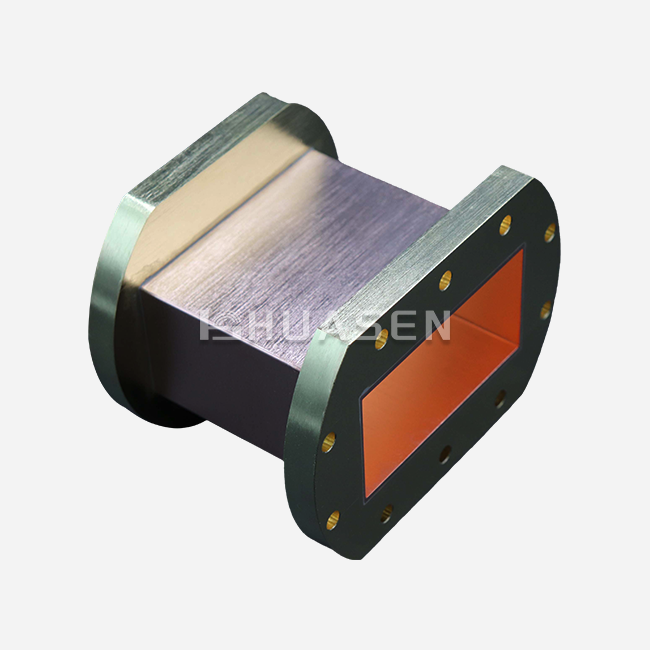
The best way to build a Waveguide Loop Coupler depends on specific engineering factors that have a direct effect on how well the system performs at high frequencies. Some important design factors are keeping the coupling factor stable, improving the directivity, minimizing the insertion loss, and shaping the electromagnetic field interaction. How accurate the signal sampling is and how much power it can handle depend on the loop probe design, the material choice, and how the waveguide is integrated. Advanced designs include coupling devices that can be adjusted and a wide frequency response to meet the needs of demanding industries like aircraft, radar, and telecommunications, while still being very reliable in harsh circumstances.
Understanding Waveguide Loop Couplers and Their Core Functions
Traditional ways of coupling don't work well for modern radio systems that need to be able to precisely watch signals and sample power. Loop couplers are a complex way to recover electromagnetic signals. They work reliably in a wide range of situations by using magnetic field coupling principles.
Fundamental Operating Principles
The waveguide loop coupler works by electromagnetic induction. A small loop antenna picks up the magnetic field component inside the waveguide frame. Compared to electric field-based options, this magnetic coupling system has a number of benefits, such as lower risks of voltage breakdown and better power handling. How the loop probe is positioned and oriented within the waveguide has a direct effect on how it couples and how sensitive it is to direction. Signal extraction happens when the loop picks up a magnetic flux that changes over time, creating a proportional current that flows to the secondary transmission line. How strong the magnetic field is at the probe site, the loop area, and how it is placed in relation to the waveguide walls all affect the coupling factor. This connection lets you precisely manage sample power levels while keeping the main transmission line as unaffected as possible.
Key Performance Metrics
Engineering teams judge loop couplers by a number of important factors that affect how well the system integrates. The coupling factor tells you the power difference between the main line and the linked output. It can be anywhere from 20dB to 60dB, based on the needs of the application. Directivity is a measure of how well the coupler can tell the difference between forward and backward power flow. Values above 15dB are usually fine for most uses. Insertion loss is the amount of power that is lost in the main transmission line because of the coupler. Insertion loss levels below 0.1dB are achieved by better designs, which means they have little effect on how well the system works. Return loss, shown as VSWR, shows how well the impedance matches. On the main line, high-performance loop couplers keep the VSWR value below 1.1:1, and on the linked port, it stays below 1.25:1.
Frequency-Specific Behavior Characteristics
Applications that use a lot of frequency have special problems that affect how loop couplers are designed. As the working frequencies go up, wavelength reduction needs tighter limits on dimensions and a better finish on the surface. The shape of the loop needs to be able to handle field distributions that change with frequency while keeping the coupling constant across the working span. Waveguide mode transmission properties change with frequency, which changes the loop probe's experience of magnetic fields and how strong they are, and how they are spread out. Modern systems use frequency compensation to keep coupling factors steady over a wide range of bandwidths, usually getting ±1dB variation over 20% bandwidth ranges.

Essential Design Principles of Waveguide Loop Couplers for High-Frequency Use
To get the best results out of high-frequency loop couplers, you need to think carefully about electromagnetic principles and Loop Coupler mechanical accuracy. During the planning process, many factors are balanced so that accurate signal sampling can happen with as little system disruption as possible.
Material Selection and Electromagnetic Properties
The materials used to build a coupler have a big effect on how well it works, especially at high frequencies when surface currents and circuit losses become very important. High-conductivity materials, like oxygen-free copper and certain aluminum alloys, work better with electromagnetic fields and are also very stable mechanically. Surface treatments on the surface are very important for keeping low-loss properties for long periods of time. Silver metal is very good at conducting electricity, but it needs to be handled carefully so that it doesn't tarnish. Gold plating is great for aircraft and military uses, where dependability is very important because it resists rust well and stays stable over time. To keep mechanical stress and efficiency from changing over temperature ranges, the thermal expansion ratios of different parts of a material must match. In more advanced designs, materials with similar thermal qualities are used,d or compensation systems are added to keep the dimensions stable when the climate changes.
Loop Geometry Optimization
The electromagnetic interaction properties are directly affected by the coupling loop's size and shape. The size of the loop affects how well it couples, with bigger loops giving better coupling but possibly lower frequency response. The aspect ratio of the loop changes the way the magnetic field interacts with it and helps improve its directional qualities. To place the loop exactly inside the waveguide structure, you need to do a lot of math based on how the fields are distributed. The best place to put something is usually where the magnetic field is strongest, and the electric field is weakest. This placement approach improves coupling efficiency while lowering the risk of voltage breakdown during high-power use. The direction and strength of the link are affected by how the loop is angled in relation to the magnetic field lines. When everything is lined up right, the secondary circuit gets the most power and flux coupling. Designs that can be changed let you calibrate and account for production errors in the field.
Bandwidth and Coupling Efficiency Balance
For high-frequency uses, it's common to need a wide bandwidth that stays stable when connecting. This condition makes it hard to balance the flat frequency response with the best connection efficiency. Advanced systems use more than one method to get good results over a wide range of frequencies. Unwanted frequency peaks that could mess up measurements or make the system unstable can be stopped by resonance control. Careful loop design and filling methods help get a smooth frequency response while keeping the coupling strength high enough across the whole operating band.
Comparative Analysis: Waveguide Loop Couplers vs. Alternative Coupling Solutions
Getting to know the pros and cons of various connection technologies helps buying teams make smart choices that meet the needs of the system. Each way of joining has its own unique qualities that make it better for certain uses.
Performance Comparison Framework
When Bethe holes are used in directional couplers, they offer great directivity and a wide bandwidth, but they need to be longer and more complicated to make. These designs work great in situations where size limitations are low and performance is high. But because they are harder to make, they usually cost more and take longer to deliver. Hybrid couplers are great at isolating signals and handling power, but they usually have set coupling rates that are hard to change. Their four-port design works well for tasks that need to divide power rather than just tracking. Because they are balanced, the output ports are naturally isolated from each other, Loop Coupler which makes them perfect for balanced amplifier setups. When compared to waveguide options, microstrip couplers have higher losses and can't handle as much power. However, they are small enough to be used in integrated circuits. Their flat design makes them easier to make and lets modest performance standards be met at a low cost.
Application-Specific Selection Criteria
Radar systems need to be able to handle a lot of power and direct signals very well, which is why loop couplers are useful for tracking transmitters. Their small size and ability to be adjusted make them suitable for installations with limited room while still giving the required performance levels. It is important for telecommunications equipment to work reliably in a variety of environmental situations with little upkeep. Because loop couplers are mechanically simple and have been shown to be reliable, they can be used in base station and microwave link uses where service loss costs are high. Adjustability and tuning freedom are two things that loop couplers offer that are useful in labs and test tools. Being able to fine-tune coupling factors and account for changes in the system makes it possible to take accurate measurements that are needed for characterizing components and developing systems.
Procurement Considerations: How to Choose the Best Waveguide Loop Coupler Supplier
To choose the right providers, you need to look at their professional skills, quality systems, and support services in detail. Because high-frequency uses are so complicated, they need providers with a track record of success and reliable manufacturing methods.
Technical Capability Assessment
The first step in evaluating a supplier is to look at technical specs and performance data to make sure that the goods meet the needs of the application. Some important factors are the frequency range that is covered, the accuracy of the connection, the ability to handle power, and the environmental requirements. Suppliers you can trust give you thorough specs that include measured performance data instead of just guesses. The ability to manufacture has a direct effect on the quality of the product and the dependability of delivery. Advanced providers use high-precision machines, automatic assembly methods, and thorough testing techniques to make sure that the products always work well. Quality standards like ISO 9001 and AS9100 show that a company has a well-established quality management system that can handle tough tasks. With design freedom and customization options, suppliers can meet the needs of unique applications that standard goods can't. Suppliers who have their own design teams and modeling tools can make sure that their goods work best in certain frequency bands, power levels, or weather conditions.
Quality Assurance and Certification Requirements
In many cases, high-frequency applications need to follow certain industry norms and get approvals. For example, MIL-STD compliance is usually needed for military and aircraft uses, while FCC or CE clearance may be needed for business telephony. Suppliers must show that they are following the rules by testing and documenting properly. When problems happen, traceability systems help figure out what went wrong and make sure the product is of good quality. Advanced providers keep careful records of the parts they use, how they make their products, and the test results for each one. In situations where failure analysis and correction measures are needed, this feature becomes very important. Vector network testers should be used for thorough electrical testing as part of quality control methods to make sure that all parameters are met. High-power testing makes sure that goods can handle the rated power levels without breaking down or losing their performance. Environmental testing confirms how well something works in certain temperature, humidity, and shaking conditions.
Support Services and Partnership Considerations
The ability to provide technical help has a big effect on the success of a project, especially when it comes to complicated applications that need unique solutions. Throughout the lifetime of a product, suppliers with skilled engineering teams can help with creation, application, and troubleshooting. Engineers can check performance before committing to large amounts of a product by using review tools and sample availability. To help customers make decisions, progressive providers offer full evaluation packages that include test data, application notes, and expert consultations. For production plans and pressing needs, the ability to deliver and control the supply chain becomes very important. Suppliers that have been around for a while keep their inventory levels and production capacity at a level that meets customer needs and delivers on time.

Optimizing Waveguide Loop Coupler Performance in High-Frequency Systems
To get the most out of a system, you need to pay attention to how it is installed, how it is used, and how it is maintained. Without the right management and merging, even the best parts can fail to perform as expected.
Installation Best Practices
Paying close attention to mechanical alignment and link quality is the first step in a proper fitting. Waveguide flanges must fit together with the right amount of pressure to keep the electricity flowing and stop RF leaks. Misalignment can cause shadows that aren't needed and slow down the system. Some environmental factors to think about are keeping things safe from water, high temperatures, and mechanical vibrations. Designs that are sealed keep out dirt and other things that could cause arcing or rusting. Using the right attachment methods stops mechanical stress that could change the size and performance of electromagnetic components. When putting together a system, you need to pay close attention to ground lines and match the resistance. To keep up the performance that was agreed upon, the linked output circuit must have the right termination resistance. Ground loop avoidance keeps measurements accurate and stops signals from interacting in ways that aren't wanted.
Performance Monitoring and Maintenance
Continuously checking the system's performance helps find problems before they happen. By measuring the VSWR on a regular basis, you can find mechanical issues or dirt that lowers the electrical performance. Coupling factor checking keeps measurements accurate and the system calibrated. Monitoring the environment finds things that might have an effect on performance or dependability. Temperature logging helps connect changes in efficiency with thermal cycles. Monitoring humidity stops condensation that could damage electronics or lead to rust. Schedules for preventive maintenance should include checking for physical harm, making sure the connections are correct, and testing the performance. To keep sensitive surface finishes from getting damaged, cleaning processes must use the right tools and methods. Troubleshooting and warranty claims are easier to make when upkeep tasks are written down.
Conclusion
When designing and choosing waveguide loop couplers for high-frequency uses, it's important to think about electromagnetic principles, the qualities of the material, and the needs of the application. To be successful, you need to know how the physical design factors affect the electrical performance characteristics. The best performance and dependability of a system are guaranteed by choosing the right provider, installing it correctly, and keeping it in good shape. Huasen Microwave makes the Waveguide Loop Coupler, which is an example of advanced engineering. It has a bandwidth of ≤20%, VSWR specifications of ≤1.1 for main lines, and coupling choices ranging from 20dB to 60dB. It is reliable for high-frequency uses that are hard to do in a wide range of industries.
FAQ
1. What frequency ranges are typically supported by radar waveguide loop couplers?
Most of the time, waveguide loop couplers work in normal waveguide bands from L-band (1-2 GHz) to Ka-band (26.5-40 GHz). The exact frequency range relies on the size of the waveguide and how well the design is optimized. The designs made by Huasen Microwave can work with waveguides BJ9 through BJ140, which cover most of the popular frequency bands used for radar and telecommunications.
2. How does insertion loss affect overall system performance?
It has a direct effect on system performance because it lowers the amount of power that can be sent through the main transmission line. It is usually fine to use values below 0.1dB for most tasks. Higher insertion losses can make the emitter less effective and the receiver less sensitive. With the right design, this effect is kept to a minimum while still meeting the requirements for connection.
3. Can waveguide loop couplers be customized for specific applications?
Yes, a lot of makers let you make changes, like choosing the right coupling factors, frequency, connector type, and weather hardening. Custom designs can work with different power levels, data needs, and technical limitations. Huasen Microwave offers customization services to meet the needs of unique applications.
4. What is the typical directivity specification for high-performance applications?
To correctly tell the difference between forward and reflected power in high-performance systems, directivity values of 20dB or higher are usually needed. Huasen Microwave meets the standards for directivity of ≥15dB, which is good for most radar and telecommunications applications and also ensures accurate measurements.
Partner with Huasen Microwave for Superior Waveguide Loop Coupler Solutions
Huasen Microwave Technology Co., Ltd. has more than 30 years of experience designing and making high-frequency parts, includingWaveguide Loop Coupler,which helps them provide excellent waveguide loop coupler solutions. Our WHC series has the best specs in its class, with specifications like bandwidth ≤20%, main line VSWR ≤1.1, directivity ≥15dB, and coupling choices ranging from 20dB to 60dB. As a reputable waveguide loop coupler manufacturer, we offer full customization options, strict quality control, and quick expert help to make sure your high-frequency systems work at their best. Please contactsales@huasenmicrowave.com to talk about your unique needs and find out how our improved coupling solutions can make your system work better.
References
1. Montgomery, C.G., Dicke, R.H., and Purcell, E.M. "Principles of Microwave Circuits." MIT Radiation Laboratory Series, Volume 8, McGraw-Hill Book Company, 1948.
2. Pozar, David M. "Microwave Engineering, 4th Edition." John Wiley & Sons, 2012.
3. Matthaei, G., Young, L., and Jones, E.M.T. "Microwave Filters, Impedance-Matching Networks, and Coupling Structures." Artech House, 1980.
4. Collin, Robert E. "Foundations for Microwave Engineering, 2nd Edition." IEEE Press, 2001.
5. Ragan, G.L. "Microwave Transmission Circuits." MIT Radiation Laboratory Series, Volume 9, McGraw-Hill Book Company, 1948.
6. Sorrentino, Roberto, and Bianchi, Giovanni. "Microwave and RF Engineering." John Wiley & Sons, 2010.
Send Inquiry