How Waveguide Loop Couplers Work in Millimeter Wave Test Systems






2026-04-08 21:08:22
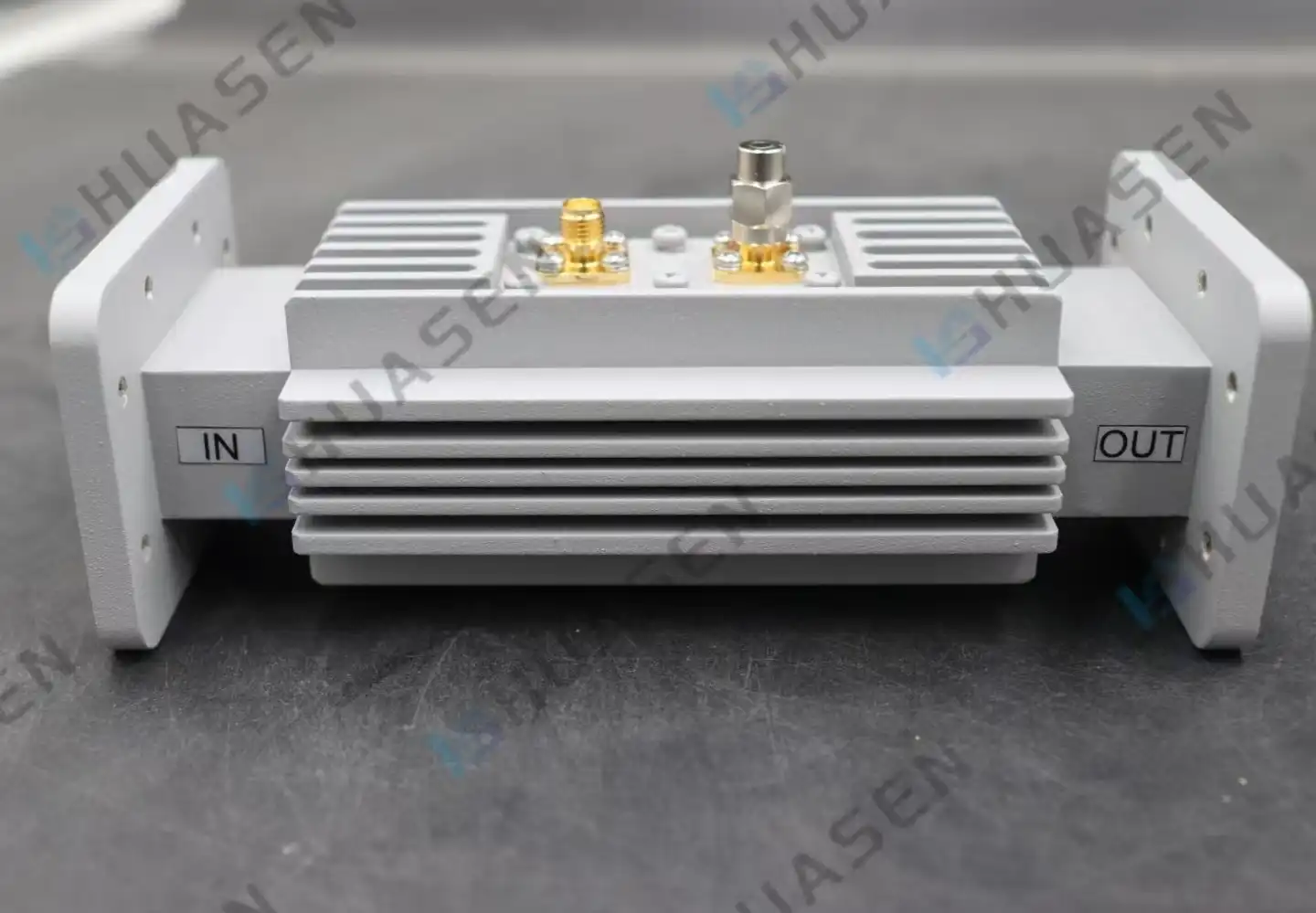
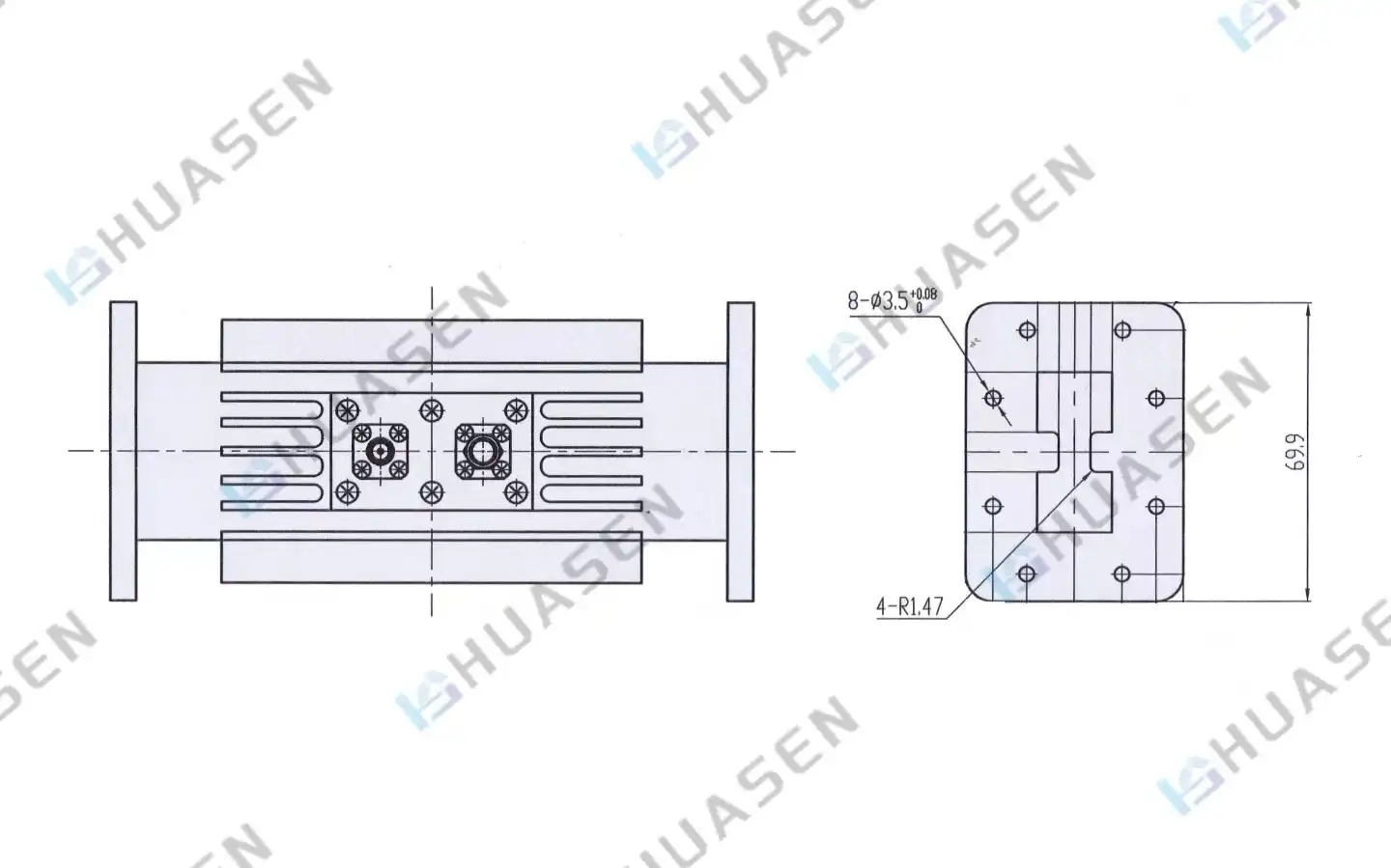
The Waveguide Loop Coupler is an important passive component of millimeter wave test systems that work between 30 GHz and 300 GHz. It lets exact electromagnetic power sampling happen without getting in the way of the main signal path. In these devices, a conductive loop probe is placed inside the waveguide structure in a way that intercepts magnetic flux lines. This creates a linked output signal that is proportional to the main transmission power. This non-intrusive monitoring feature solves the main problem that test engineers have to deal with: getting accurate power readings while keeping the signal's integrity and reducing insertion loss in high-frequency settings where even small impedance mismatches can hurt system performance.
Fundamentals of Waveguide Loop Couplers in Millimeter Wave Systems
When you know how loop couplers work with electromagnetic fields, you can see why they are still the best choice for difficult millimeter wave uses. The working idea is based on magnetic field coupling instead of electric field interaction, which is better in high-power situations by nature.
Operating Principles and Electromagnetic Field Interaction
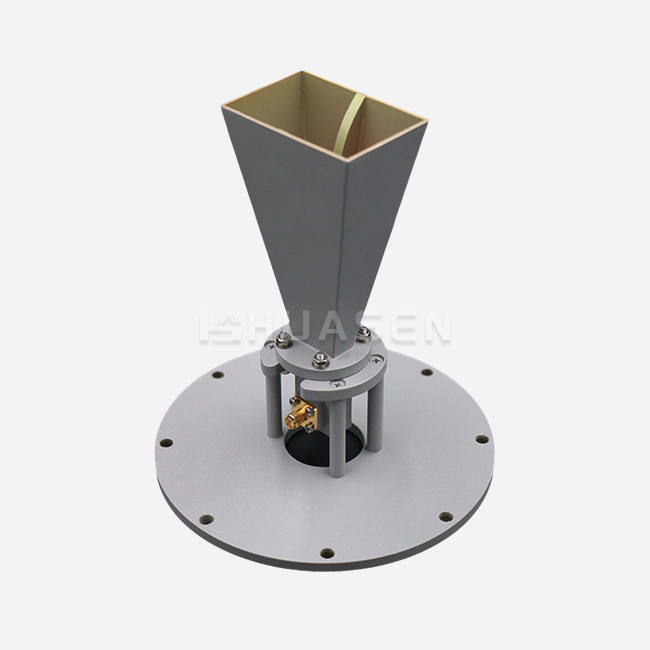
A small conductive loop is put into the waveguide cavity and meets the rotating magnetic field component of the wave that is moving. This is the main process. Faraday's law of electromagnetic induction says that the changing magnetic flux through the loop creates an electric force that flows through the linked port. How strong the coupling is depends on the loop's size, its position in relation to the field lines, and how deeply it is inserted into the waveguide. Compared to electric field probes, this magnetic connection method reduces voltage stress, which lowers the risk of arcing in high-power transmission settings like radar and satellite uplink systems. Huasen Microwave's Waveguide Loop Coupler design makes the best use of this interaction by using a precisely machined loop shape and positioning tools that can be changed. The production process makes sure that the binding factors are the same across all production batches. This solves the problem of repeatability that procurement managers often face when approving parts for large-scale use.
Critical Technical Parameters for Millimeter Wave Performance
Several specs have a direct effect on how well couplers work in test setups. The coupling factor tells you what percentage of power goes to the measurement port. It can be anywhere from -20 dB to -60 dB, so you can use it with different power levels and device sensitivity needs. The device's directivity tells us how well it can tell the difference between forward and reflected waves. This is especially important for calibrating vector network analyzers and keeping an eye on VSWR. Insertion loss is the amount of power that is lost or gained because of the coupler in the main transmission line. Even at millimeter wave frequencies, better systems keep this below 0.2 dB. The precision of measurements is affected by the voltage standing wave ratio on both the primary and secondary ports. A main line VSWR below 1.1 ensures minimal reflection, and an auxiliary port VSWR below 1.25 keeps proper termination characteristics. The main line VSWR of Huasen's loop couplers is ≤ 1.1, and the sub-line VSWR is ≤ 1.25. These specs mean that measurements will be more accurate in calibration labs and on production test floors.
Material Selection and Construction for High-Frequency Operation
As working frequencies rise into theLoop Coupler millimeter wave bands, the qualities of the material become more crucial. To keep ohmic losses as low as possible, waveguide walls need to be made of a material that conducts electricity well. Oxygen-free copper and silver-plated brass are popular choices. It's important that the dielectric materials that support the coupling probe have low loss tangent values and stable dielectric constants across the temperature ranges that are common in field operations. When two parts are mated, their thermal expansion coefficients must match so that there are no air gaps that could hurt the electrical performance during thermal cycling. Huasen Microwave uses aerospace-grade materials and strict closing methods to make sure that their loop couplers keep working as expected in temperatures ranging from -40°C to +85°C. Integrators who put equipment in places where temperatures change often, like outdoor base stations, naval radar systems, and flying communication platforms, don't have to worry about reliability.
Advantages and Applications of Waveguide Loop Couplers
Loop-based coupling methods have special features that make them useful. These features fix some problems in current millimeter wave test architectures. These benefits go beyond simple power tracking and make it possible to use more complex testing methods.
Performance Benefits in Measurement Accuracy
Loop couplers have very high directivity ratios—often more than 15 dB—which lets test tools accurately tell the difference between power that is outgoing and power that is reflected. When measuring antennas, filters, and amplifiers, where return loss data directly show component quality, this feature is very useful. The low main line insertion loss keeps the signal strength even in test sets with multiple stages, so there's no need for compensating amps that would add noise and nonlinearity. Frequency response flatness across working bandwidths (usually ≤ 20% fractional bandwidth) makes sure that coupling factors stay the same. This makes calibration easier and lowers the error of measurements. Huasen's design method focuses on phase stability and amplitude flatness, which are qualities that metrology labs that keep primary standards and calibration service providers that need tracked measures really value. The strong mechanical design can withstand vibration and shock, keeping the electrical performance standards in mobile test labs and field service situations where equipment is stressed by movement.
Critical Applications Across Industries
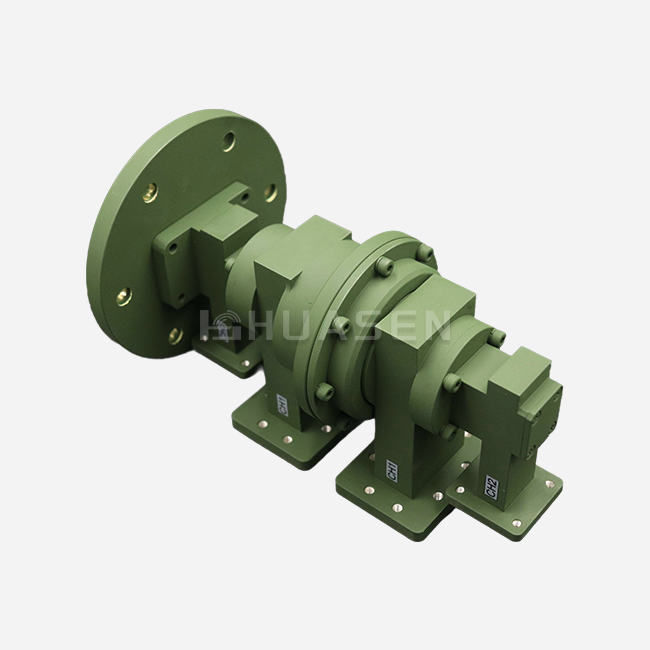
Radar system developers integrate loop couplers into transmitter chains to monitor output power and protect expensive power amplifiers from antenna mismatches. The sampling port feeds safety circuitry that turns on within microseconds when reflected power goes over safe limits. This stops catastrophic failures of solid-state or tube devices. For these uses, coupling levels between -30 dB and -40 dB give detector circuits enough information while drawing as little power as possible from the main transmission line. Engineers who set up 5G millimeter wave base stations use loop couplers to keep an eye on beamforming arrays in real time. The transmission line for each antenna element has a coupler that feeds tracking sensors that change phase and amplitude to keep the beam patterns. The small size makes it possible to place in radio frequency modules with limited room, and the passive operation means there are no worries about power use or heat generation. Operators at satellite ground stations use these parts in high-power uplink amplifier assemblies. These parts allow power monitoring from a distance without disrupting communication lines that are needed for important tasks. Loop couplers are needed for vector network analyzer readings that go beyond W-band and are used by research institutions that characterize materials and build antennas. Huasen Microwave offers a wide range of coupling choices, from 20 dB to 60 dB, so that both high-power transmission testing and sensitive receiver characterization can be done with the same family of Waveguide Loop Coupler components. This makes it easier for lab managers to keep track of their inventory. Waveguide standards BJ9 through BJ140 are compatible with a wide range of frequencies, from the X-band to the millimeter wave band. This means that standard components can be used in a wide range of study projects.
Procuring High-Quality Waveguide Loop Couplers: What Buyers Should Know
Comparing datasheet specs is only one part of Loop Coupler's successful component sourcing. Other things that are needed are to evaluate suppliers, check paperwork, and control supply chain risk. Professionals with a lot of experience in buying use organized methods to make sure that supplied Waveguide Loop Coupler units meet the needs of the program.
Supplier Qualification and Quality Assurance
Checking the certificates of manufacturers gives you faith in the quality management and rules of the production process. ISO 9001 approval means that there are set methods for controlling the design, making sure that the products are consistent, and taking corrective action. For military and aircraft uses, you might need extra certifications like AS9100 or to meet MIL-STD standards for environmental tests and stability approval. Instead of depending only on typical specifications, asking for test results for particular serial numbers proves the performance of each unit. Full datasheets should list S-parameters for the whole frequency range, VSWR for each port, directivity, and the maximum power that it can handle. Huasen Microwave gives thorough test results that can be linked to properly calibrated instruments. This meets the paperwork needs of quality-conscious businesses and regulated industries. The company has been in business since 1993 and has been consistently making things. Over that time, they have gained experience and knowledge that lowers technology risks in important projects.
Procurement Logistics and Customization Options
Custom designs need longer production processes, while regular catalog items usually ship within weeks. Lead times depend on the coupling specs and waveguide sizes. Buyers should let producers know about shipping needs early on in the buying process so that they can properly assign production capacity. Minimum order numbers are usually based on how customized the product is. Standard goods may only ship in single units, but investments in tools for custom designs can only be justified with large orders. Customization options let you meet specific integration needs that normal goods can't meet. Changes to the types of flanges, the kinds of output connectors, the values of the couplings, or the materials used can improve system performance or make mechanical integration easier. The research team at Huasen works with customers to come up with new designs that keep the core performance but meet certain requirements for size, interface, or surroundings. This adaptability is very helpful for OEM developers who are making their own equipment designs or retrofit projects that change old systems to meet new operational needs.
Simulation, Testing, and Performance Optimization of Waveguide Loop Couplers
Checking the performance of the Waveguide Loop Coupler before putting it into use stops expensive failures and measurement mistakes in the field. Comprehensive verification uses electromagnetic simulations during design and tests production units in the real world.
Electromagnetic Modeling and Design Validation
Modern electromagnetic simulation tools let you look closely at field patterns, coupling processes, and parasitic effects before making real prototypes. Three-dimensional models correctly show how the shape, placement, and size of the waveguides and loops affect the coupling factor, directivity, and frequency response. By changing physical factors and looking at performance trends, parametric studies find the best designs by finding configurations that maximize directivity while minimizing insertion loss. Simulations also show possible failure modes, like voltage concentration points that can cause arcing or resonances that make directivity worse at certain frequencies. Thermal analysis predicts how temperatures will spread out when the power is turned up high, which helps with choosing materials and making plans for thermal management. Huasen Microwave uses these computer methods throughout the entire development process. This cuts down on the number of iterations and speeds up the Waveguide Loop Couplertime it takes to get a product to market, all while making sure that the designs are strong and work reliably in a range of situations.
Physical Testing and Quality Control Procedures
Production testing makes sure that the units that were made meet the design requirements and finds process differences that need to be fixed. Vector network testers check S-parameters over a wide range of operating frequencies to make sure that coupling factors are within certain limits and VSWR limits are met. To correctly tell the difference between forward and reverse coupled signals during directivity tests, fixturing and calibration must be done with great care. This is especially true at millimeter wave frequencies, where connection repeatability affects measurement error. As required by standards like MIL-STD-810 or IEC 60068, environmental testing subjects samples to changes in temperature, humidity, shaking, and mechanical shock. These tests show that hermetic seals stay intact, mechanical systems can handle working loads, and electrical performance stays stable in a wide range of environmental conditions. High-power testing makes sure that parts can handle the highest levels of power without arcing, burning, or losing performance. This keeps end users from having to replace parts too soon.
Continuous Improvement Through Application Feedback
Manufacturers who are dedicated to doing a great job actively collect performance data from the field and use what they learn to improve future designs. When you know how parts work in real-world situations, you can find failure modes that weren't expected during lab tests and find ways to make the product better. Huasen Microwave keeps in touch with customers in the radar, telecoms, and aircraft industries regularly. They do this to learn more about their needs and to improve their mechanical designs, material choices, and manufacturing processes. This feedback loop makes sure that goods change to meet new needs in applications and keep up with technological progress.
Conclusion
Waveguide Loop Coupler units are very important for accurately checking millimeter waves in many areas, from 5G infrastructure to military radar systems. They do this by monitoring power and sampling signals. The magnetic field coupling principle works well in places with a lot of power because it keeps insertion loss low and directivity high. Choosing high-quality parts from well-known companies like Huasen Microwave, which has been in business for 30 years and has a wide range of products that meet waveguide standards BJ9 through BJ140, lowers technical risks and guarantees reliable performance. Understanding the operational principles, performance trade-offs against other technologies, and critical specifications that determine suitability for specific test architectures is helpful for procurement professionals. This helps them make smart sourcing decisions that optimize both technical performance and total cost of ownership.
FAQ
1. What insertion loss should I expect from a quality waveguide loop coupler?
Main line insertion loss for premium Waveguide Loop Coupler units is less than 0.2 dB over certain frequency bands. This small loss keeps signal strength in test sets with multiple components, so there's no need for compensating amplifiers that would lower system noise numbers.
2. How do I select coupling values for different measurement scenarios?
Coupling factors between -20 dB and -40 dB work well for high-power transmitter monitoring because they send enough information to monitors while taking out as little power as possible. Values between -40 dB and -60 dB work well with sensitive spectrum analyzers and radios that are sensitive. This keeps the measurement accurate while avoiding overload. Huasen provides connection choices that can be changed in 5 dB steps to meet the needs of different instruments.
3. Can loop couplers be customized for unique system requirements?
Reliable makers offer a range of customization choices, such as different types of flanges, output connections, coupling values, and environmental ratings. Talking about needs early on with providers like Huasen Microwave lets engineers work together to improve both electrical performance and mechanical interaction.
Partner with Huasen Microwave for Your Waveguide Loop Coupler Needs
As a company with more than 30 years of experience making high-frequency parts, Huasen Microwave can provide Waveguide Loop Coupler units that meet the strict needs of millimeter wave test systems. Our product line includes waveguide standards BJ9 through BJ140, with coupling choices ranging from 20 dB to 60 dB, main line VSWR ≤ 1.1, and directivity greater than 15 dB. These specs make sure that measurements are accurate and the system is reliable. The hermetic closing design makes sure stable operation in difficult environments, which is important for outdoor missions and mobile platforms that need to last. Our engineering team is here to help you with all of your technical needs during the whole buying and implementation process, whether you need standard catalog items or unique solutions made to solve specific integration problems. Get in touch with our experts at sales@huasenmicrowave.com to talk about your needs and get full specs, test data, and cheap quotes from a waveguide loop coupler manufacturer that cares about the success of your project.
References
1. Pozar, David M. Microwave Engineering, 4th Edition. Hoboken: John Wiley & Sons, 2012.
2. Balanis, Constantine A. Advanced Engineering Electromagnetics, 2nd Edition. New York: Wiley, 2012.
3. Collin, Robert E. Foundations for Microwave Engineering, 2nd Edition. New York: McGraw-Hill, 1992.
4. Montgomery, C.G., Dicke, R.H., and Purcell, E.M. Principles of Microwave Circuits. London: Peter Peregrinus Ltd., 1987.
5. Saad, Theodore S. Microwave Engineers' Handbook, Volume 2. Dedham: Artech House, 1971.
6. Ramo, Simon, Whinnery, John R., and Van Duzer, Theodore. Fields and Waves in Communication Electronics, 3rd Edition. New York: Wiley, 1994.
Send Inquiry