How to Use Waveguide Short Plates in Radar Systems and Microwave Calibration






2026-04-11 22:08:01
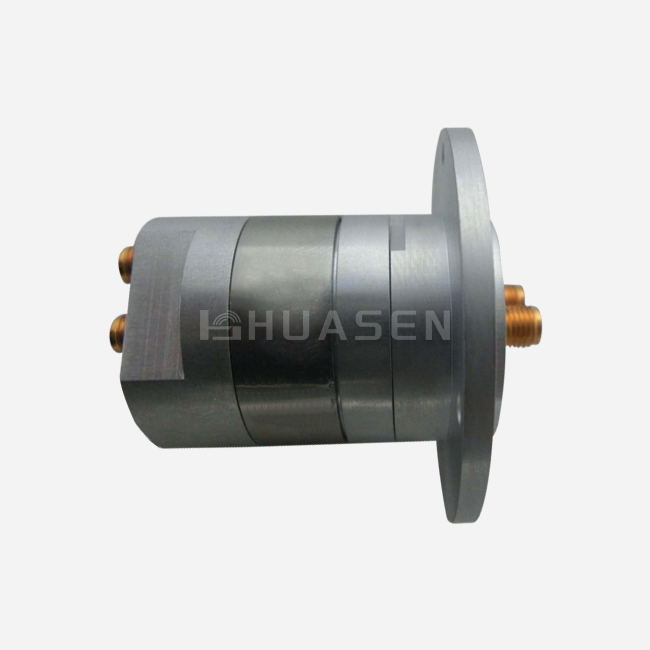
Using waveguide short plates in radar systems,Waveguide Short Plate and microwave calibration involve creating precise electromagnetic reflection points that establish known reference planes for accurate signal measurement and system tuning. These high-conductivity metal terminations reflect incident electromagnetic energy with minimal loss, generating predictable standing wave patterns essential for Vector Network Analyzer (VNA) calibration, impedance tuning, and signal integrity verification across frequency ranges from 0.32 GHz to 112 GHz. Proper implementation requires careful attention to surface flatness, flange torque specifications, and material selection to achieve optimal VSWR performance while preventing signal leakage in high-power radar and telecommunications environments.
Introduction
We understand the challenges procurement professionals face when sourcing precision microwave components for mission-critical applications. In today's demanding radar and telecommunications landscape, the integrity of every passive component directly impacts system performance, measurement accuracy, and operational reliability. Waveguide short circuits represent fundamental building blocks in high-frequency systems, yet many engineers struggle to identify specifications that truly matter versus marketing specifications that add cost without value. This comprehensive guide demystifies waveguide short plate technology, bridging the gap between theoretical electromagnetic principles and practical procurement decisions. Our team has worked with system integrators, defense contractors, and research laboratories across North America since 1993, witnessing firsthand how component selection affects everything from calibration repeatability to long-term maintenance costs. Whether you're outfitting a 5G base station test lab or maintaining airborne radar systems, understanding these termination devices helps you specify components that deliver measurable performance improvements. The following sections provide actionable insights into design fundamentals, application-specific selection criteria, and procurement strategies that balance technical requirements with budgetary constraints. We'll explore how material choices impact thermal stability, why VSWR specifications vary between fixed and sliding configurations, and which flange standards ensure compatibility across multi-vendor systems. This knowledge empowers purchasing managers and engineering teams to make confident decisions when evaluating suppliers and negotiating contracts for critical RF infrastructure projects.
Understanding Waveguide Short Plates: Function and Design
Core Operating Principles
A waveguide termination functioning as a short circuit creates a perfect reflection boundary where electromagnetic waves encounter a conductive metal barrier perpendicular to the propagation direction. Unlike matched loads that dissipate energy as heat, these reflection devices bounce incident power back toward the source with a 180-degree phase shift. This characteristic makes them indispensable for establishing reference planes in calibration procedures and creating standing wave patterns for impedance measurements. The electrical performance depends entirely on surface conductivity and mechanical flatness at the contact plane, which is why precision machining tolerances matter far more than overall component weight or external finish.
Material Selection and Electromagnetic Performance
The choice between aluminum and copper construction directly influences both initial cost and long-term measurement stability. Anodized aluminum components serve lower frequency applications below 18 GHz effectively, offering excellent corrosion resistance for outdoor installations while maintaining acceptable conductivity for most commercial radar systems. Copper construction with silver or gold plating becomes essential at millimeter-wave frequencies where skin depth decreases, and surface resistance critically affects the reflection coefficient. We've observed that silver-plated copper terminations maintain calibration accuracy 30% longer in humid coastal environments compared to standard anodized finishes, translating to reduced recalibration intervals for maritime communication systems.
Structural Configuration Types
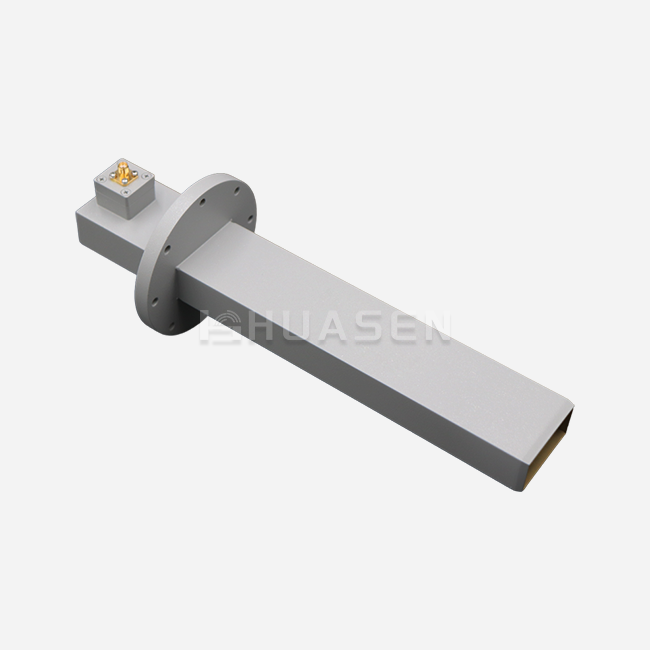
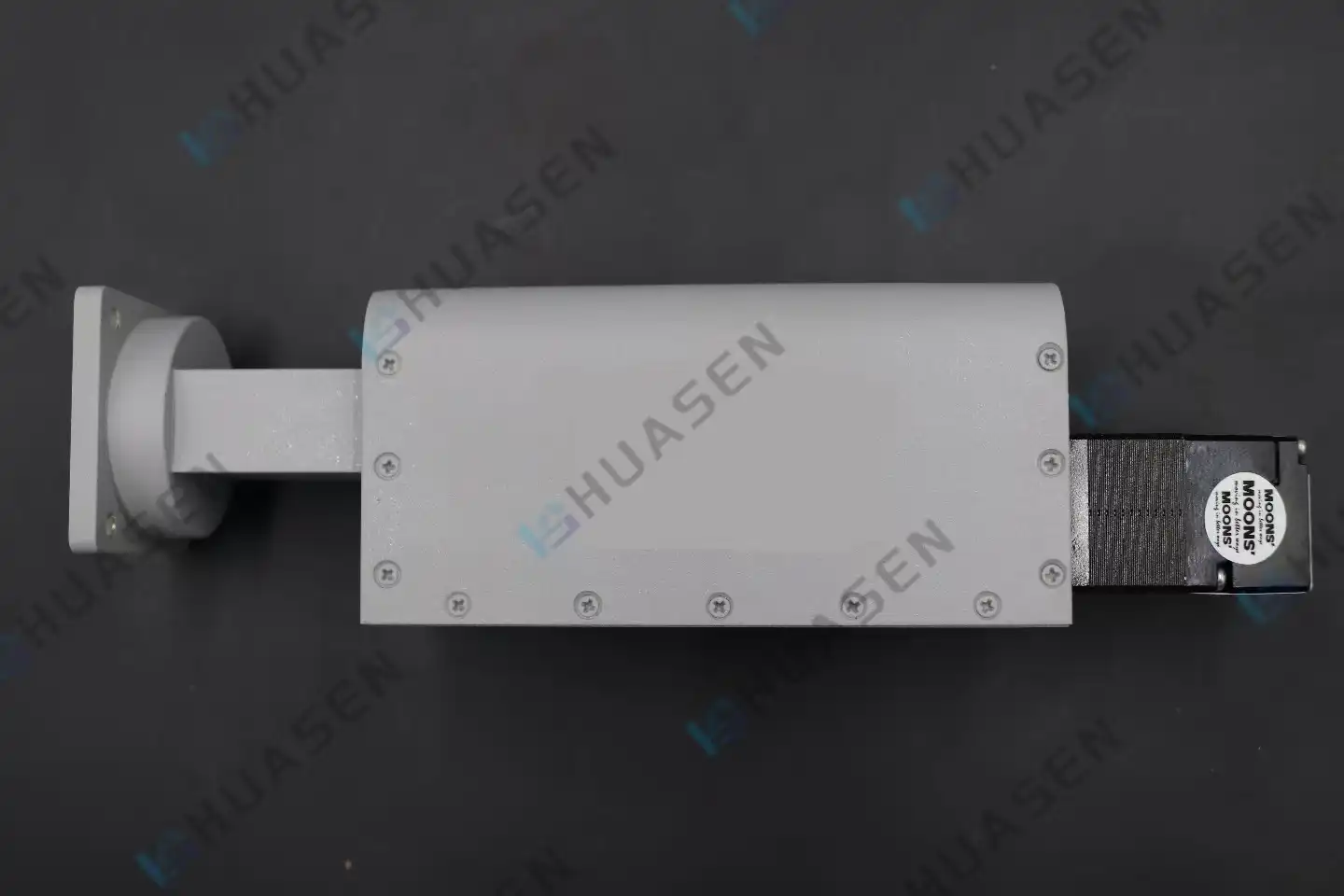
Different mechanical designs address specific application requirements across the microwave spectrum. Fixed waveguide short plates (WS) provide rigid, permanent terminations with VSWR performance exceeding 60:1, ideal for calibration standards and permanent test setups where dimensional stability outweighs flexibility. Sliding waveguide short plates (WSS) incorporate adjustable positioning mechanisms with travel distances from 10mm to 300mm, enabling precise phase adjustments for stub tuning and resonator optimization while maintaining VSWR above 50:1. Bias waveguide short-circuits (WOFS) feature offset mounting configurations that accommodate non-standard installation geometries in space-constrained aircraft and satellite systems. Each configuration supports frequency coverage from 0.32 GHz through 112 GHz with appropriate waveguide sizing.
Flange Interface Standards
Proper flange compatibility ensures repeatable electrical contact,Waveguide Short,and mechanical durability across repeated connections. Our manufacturing capabilities support FDP (flat with tapped holes), FBP (flat with clearance holes for through-bolts), and FUGP (cover flange with gasket groove) configurations, matching international waveguide standards including MIL-DTL-3922 and EIA RS-261. Custom flange patterns accommodate proprietary interfaces common in legacy military systems and specialized research equipment. The torque specifications for flange bolts directly affect contact resistance—insufficient tightening causes intermittent reflections and passive intermodulation distortion, while excessive force risks permanent deformation that compromises dimensional accuracy during subsequent calibrations.
Practical Applications of Waveguide Short Plates in Radar Systems and Microwave Calibration
Vector Network Analyzer Calibration Standards
Measurement accuracy in RF testing fundamentally depends on calibration quality, where short circuit standards define one critical error correction term. During Thru-Reflect-Line (TRL) calibration procedures, the reflection from a precision short plate establishes a phase reference for the measurement system, mathematically removing systematic errors from subsequent device characterization. We've supplied calibration components to several aerospace test facilities where measurement repeatability specifications demand traceability to national metrology standards. The dimensional stability of our gold-plated copper terminations maintains phase accuracy within ±0.5 degrees across temperature variations from -40°C to +85°C, meeting stringent requirements for satellite payload testing where thermal cycling simulates orbital conditions.
Radar System Maintenance and Testing
Operational radar systems require periodic performance verification to ensure target detection reliability and false alarm rejection. Technicians use calibrated short circuits to verify transmitter power levels, measure receiver sensitivity, and characterize antenna feed networks without radiating test signals. Defense contractors maintaining phased array systems have reported 40% reduction in diagnostic time by implementing standardized waveguide termination kits that include both fixed and sliding short plates. The high-power handling capability of these passive components allows safe testing at operational power levels without the thermal dissipation concerns associated with matched loads, particularly important for pulse radar systems where peak power exceeds 10 kilowatts.
Microwave Cavity and Filter Tuning
Telecommunications infrastructure relies on precisely tuned resonant cavities for channel filtering and signal conditioning. Adjustable short circuits enable engineers to modify electrical length in stub tuners, optimizing impedance matching for varying load conditions as network traffic patterns evolve. Our sliding short plate designs have been integrated into tunable bandpass filters for 5G massive MIMO base stations, where remote electrical tilt adjustments require stable, repeatable phase shifting across 64-element antenna arrays. The mechanical travel precision of ±0.02mm ensures frequency stability within 0.1% across the 3.3-3.8 GHz band, maintaining channel isolation despite temperature fluctuations in outdoor enclosures.
Laboratory Research and Development
University research laboratories and corporate R&D centers depend on versatile measurement tools for characterizing novel materials and device prototypes. Waveguide short circuits serve as foundational reference artifacts for developing new measurement techniques, validating electromagnetic simulation models, and teaching microwave engineering principles. A prominent West Coast research institution uses our calibrated short plate sets for teaching laboratory courses, where students learn practical skills in VNA operation and uncertainty analysis. The durability of anodized aluminum construction withstands hundreds of student connection cycles per semester while maintaining measurement accuracy suitable for graduate-level research projects in metamaterial characterization and terahertz component development.
Comparing Waveguide Short Plates with Alternative Waveguide Solutions
Reflection Versus Absorption Terminations
The fundamental distinction between short circuits and matched loads lies in energy disposition—reflection versus absorption. While matched terminations dissipate incident power as heat, maintaining low VSWR across broad bandwidths, short plates maximize reflection to create deliberate standing wave patterns. System designers choose between these approaches based on measurement objectives. Calibration procedures require the predictable phase response of short circuits, whereas power monitoring applications need the flat frequency response of absorptive loads. Budget-conscious procurement managers appreciate that high-quality short circuits cost 60-70% less than equivalent precision loads, making them economically attractive when reflection-based measurements suffice.
Fixed Versus Adjustable Configurations
Project requirements determine whether mechanical adjustability justifies the additional complexity and cost. Fixed short plates excel in applications demanding maximum VSWR performance and long-term dimensional stability, such as primary calibration standards and permanent test fixtures. The absence of moving parts eliminates wear mechanisms that degrade electrical performance over thousands of connection cycles. Conversely, sliding short plates provide operational flexibility for impedance tuning and experimental setups where phase adjustments optimize system performance. Manufacturing precision in the sliding mechanism directly affects repeatability—our WSS series maintains position accuracy within 0.05mm across the full travel range, enabling reproducible measurements during iterative design optimization.
Material Trade-offs in Performance and Cost
Aluminum construction reduces component weight by 70% compared toWaveguide Shortcopper equivalents, a decisive advantage for airborne and spacecraft applications where every gram affects fuel consumption and launch costs. The lower material cost and easier machinability of aluminum make it economically attractive for high-volume commercial applications, including cellular base station deployment and broadcast infrastructure. However, copper's superior thermal conductivity and lower electrical resistance become essential for millimeter-wave frequencies above 40 GHz, where skin depth approaches surface roughness dimensions. Gold plating adds 15-20% to manufacturing cost but eliminates oxidation concerns in humid or corrosive atmospheres, extending calibration intervals from quarterly to annual schedules in maritime and tropical installations.
Procurement Guide: How to Source Quality Waveguide Short Plates
Critical Specification Parameters
Successful procurement begins with clearly defining technical requirements that match application demands without over-specifying costly features. Frequency range determines waveguide size according to established standards—WR-28 for 26.5-40 GHz, WR-10 for 75-110 GHz, and so forth. VSWR specifications should reflect actual measurement needs rather than theoretical maximums; many applications perform adequately with a VSWR of 1.15:1, while precision calibration demands 1.02:1 or better. Material specification must balance electromagnetic performance against environmental exposure—anodized aluminum suffices for controlled laboratory environments, while marine radar systems require corrosion-resistant platings. Flange compatibility verification prevents costly incompatibility discoveries during system integration, particularly when interfacing components from multiple vendors.
Evaluating Supplier Capabilities
Manufacturer selection impacts not only component quality but also long-term supply chain reliability and technical support availability. Established suppliers demonstrate manufacturing consistency through ISO 9001 certification and maintain traceability documentation linking individual components to calibration standards. We recommend requesting sample units for incoming inspection, verifying mechanical dimensions with precision calipers, and confirming electrical performance on your own VNA before committing to volume orders. Lead time predictability matters tremendously for project scheduling—suppliers with inventory programs ship standard configurations within days, while custom designs may require 6-8 weeks for tooling and production. Understanding a vendor's customization capabilities proves valuable when standard catalog products don't precisely match your flanges or frequency requirements.
Volume Pricing and Total Cost Analysis
Unit price negotiations should account for total ownership costs beyond the initial purchase price. Components requiring frequent recalibration or exhibiting poor durability generate ongoing expenses that dwarf savings from choosing the lowest bidder. Our experience shows that premium materials adding 25% to component cost often reduce lifecycle expenses by 50% through extended calibration intervals and reduced replacement frequency. Volume commitments unlock tiered pricing structures—orders exceeding 50 pieces typically qualify for 15-20% discounts, while establishing blanket purchase orders with scheduled releases optimizes both pricing and inventory management. International procurement introduces tariff considerations and shipping complexities; suppliers offering DDP (Delivered Duty Paid) pricing simplify budgeting by incorporating all landed costs into quoted prices.
Quality Assurance and Compliance Documentation
Mission-critical applications demand rigorous quality documentation demonstrating compliance with relevant standards. MIL-STD-348 specifies electrical and mechanical requirements for waveguide flanges used in military systems, ensuring interoperability across defense contractors. RoHS compliance documentation verifies restricted substance limits for equipment sold in European markets, while REACH declarations address chemical safety regulations. Suppliers should provide calibration certificates traceable to NIST or equivalent national metrology institutes, documenting VSWR measurements with stated uncertainties. Packaging specifications matter more than many buyers realize—individually wrapped components with protective end caps prevent handling damage during shipping, reducing defect rates and expediting receiving inspection processes.
Best Practices for Using Waveguide Short Plates to Maximize System Efficiency
Installation and Integration Techniques
Proper installation procedures directly determine whether theoretical component performance translates into actual system accuracy. Flange surfaces must be perfectly clean before mating—even microscopic debris or oxidation films create air gaps that degrade electrical contact and introduce measurement errors. We recommend lint-free cleanroom wipes moistened with isopropyl alcohol for surface preparation, followed by visual inspection under magnification to verify cleanliness. Bolt torque follows specifications from MIL-STD-3922, typically 40-50 inch-pounds for small waveguides below 26 GHz, increasing proportionally for larger cross-sections. Uniform torque distribution across all mounting bolts ensures flat, parallel contact between mating surfaces, preventing the edge contact that causes passive intermodulation distortion in high-power transmitter testing.
Maintenance and Inspection Protocols
Establishing routine inspection schedules prevents gradual performance degradation of theWaveguide Short Platefrom compromising measurement integrity. Visual examination should identify any surface damage, corrosion spots, or mechanical deformation requiring component replacement. Contact surfaces benefit from gentle cleaning with isopropyl alcohol after every 50 connection cycles, removing accumulated oils and particles. VSWR verification measurements compare current performance against baseline data recorded during initial acceptance testing, revealing degradation trends before accuracy suffers. Our clients in telecommunications testing laboratories have implemented quarterly inspection protocols that identify failing components before they impact customer device certifications, avoiding costly test invalidations and schedule delays.
Common Pitfalls and Troubleshooting
Several recurring issues plague waveguide short circuit applications, most stemming from inadequate attention to mechanical details. Cross-threading flange bolts causes permanent damage requiring component replacement—always hand-start bolts before applying torque wrenches. Overtightening damages gaskets and deforms soft metal flanges, particularly aluminum components, where yield strength limits safe torque values. Under-tightening creates intermittent electrical contact that manifests as measurement noise and poor repeatability. Environmental contamination from moisture ingress degrades surface conductivity, especially affecting silver-plated copper in coastal installations. Storage practices matter—components should remain sealed in protective packaging with desiccant packs until immediately before use, preventing oxidation that requires surface reconditioning.
Emerging Technologies and Future Trends
Material science advances continue to improve waveguide component performance and durability. Graphene-enhanced surface treatments promise lower contact resistance with superior oxidation resistance compared to traditional metal platings, potentially extending calibration intervals by 200-300%. Additive manufacturing techniques enable complex internal geometries impossible with conventional machining, optimizing electromagnetic field distributions for enhanced VSWR performance across wider bandwidths. Temperature-compensating alloys maintain dimensional stability across thermal cycling, critical for calibration standards used in environmental testing chambers. As millimeter-wave spectrum allocations expand for 5G and 6G wireless systems, demand grows for compact, lightweight short circuit designs covering 70-90 GHz frequency bands with performance matching traditional lower-frequency components.
Conclusion
Waveguide short plates represent fundamental yet sophisticated components in modern radar and microwave calibration systems, where their precision directly impacts measurement accuracy and operational reliability. Successful procurement requires balancing technical specifications against practical considerations, including material durability, frequency coverage, and mechanical configuration. Understanding the distinctions between fixed, sliding, and bias short circuits enables engineers to specify components optimally matched to application requirements, avoiding both over-specification that wastes budget and under-specification that compromises performance. Quality manufacturers provide not merely catalog products but comprehensive solutions, including customization capabilities, calibration documentation, and technical support that facilitate system integration and long-term maintenance planning. We encourage procurement teams to prioritize supplier relationships offering these value-added services alongside competitive pricing.
FAQ
1. What determines the maximum frequency a waveguide short plate can handle?
Physical waveguide dimensions establish frequency boundaries according to standardized sizing charts. Each waveguide designation (WR-340, WR-90, etc.) specifies a recommended frequency range where single-mode propagation occurs without higher-order mode generation. The short plate must precisely match waveguide cross-sectional dimensions while maintaining surface flatness tolerances proportional to operating wavelength. Millimeter-wave frequencies above 60 GHz demand manufacturing precision within micrometers to prevent phase errors that degrade calibration accuracy. Material selection also plays a role—copper with gold plating maintains electrical performance at 110 GHz, where aluminum's higher resistivity introduces excessive loss.
2. How does temperature affect short plate performance?
Thermal expansion causes dimensional changes that shift electrical performance, particularly affecting precision calibration applications. Aluminum exhibits approximately 23 ppm/°C thermal expansion coefficient, while copper expands at 17 ppm/°C, altering waveguide electrical length and reflection phase. For a 50mm deep waveguide short circuit, a 30°C temperature swing changes electrical length by nearly 4 degrees at 40 GHz, potentially invalidating tight-tolerance calibrations. High-stability applications benefit from temperature-controlled environments or Invar alloy construction offering <2 ppm/°C expansion. Proper thermal equilibration before measurement—allowing 30 minutes stabilization—minimizes thermal drift errors in critical calibration procedures.
3. Can different manufacturers' short plates be used interchangeably?
Mechanical flange compatibility doesn't guarantee electrical equivalence between vendors. While dimensional standards like MIL-DTL-3922 specify flange geometry, manufacturing tolerances, and plating choices create performance variations affecting precision measurements. Mixing calibration kit components from different suppliers introduces systematic errors unless each piece undergoes individual characterization. Procurement managers should establish single-source relationships for matched component sets requiring traceable accuracy. Off-the-shelf commercial components from reputable suppliers interchange adequately for non-critical applications like port termination during maintenance, where exact phase response matters less than preventing signal leakage.
Partner with Huasen Microwave for Superior Waveguide Solutions
Huasen Microwave delivers precision-engineered waveguide short plate solutions spanning 0.32 GHz to 112 GHz, backed by three decades of RF component manufacturing expertise serving aerospace, defense, and telecommunications sectors worldwide. Our Fixed (WS), Sliding (WSS), and Bias (WOFS) configurations utilize optimized materials—anodized aluminum for rugged durability and silver-plated copper for millimeter-wave precision—ensuring VSWR performance exceeding 60:1 with customizable FDP/FBP/FUGP flanges matching your exact specifications. As a trusted waveguide short plate manufacturer, we provide comprehensive technical consultation, rapid prototyping, volume pricing structures, Waveguide Short Plate,and complete traceability documentation meeting MIL-STD and ISO requirements. Contact our engineering team at sales@huasenmicrowave.com today to discuss your specific radar system or calibration project requirements and receive tailored recommendations with competitive quotations.
References
1. Montgomery, C.G., Dicke, R.H., and Purcell, E.M. "Principles of Microwave Circuits," MIT Radiation Laboratory Series Volume 8, Institution of Engineering and Technology, 1948, Chapter 7: Waveguide Circuit Elements.
2. Pozar, David M. "Microwave Engineering," 4th Edition, John Wiley & Sons, 2011, Section 4.3: Impedance Transformation and Matching.
3. Hewlett-Packard Application Note 154, "S-Parameter Design," Technical Publications Department, 1972, revised 1997, Section 3: Vector Network Analyzer Calibration Methods.
4. Institute of Electrical and Electronics Engineers, "IEEE Standard 291: Methods for Measuring Electromagnetic Shielding Effectiveness of Planar Materials," IEEE Standards Association, 2021 revision.
5. Rytting, Douglas K. "Network Analyzer Accuracy Overview," 67th ARFTG Conference Digest, San Francisco, CA, June 2006, pp. 1-13.
6. Sucher, Max and Fox, Jerome, "Handbook of Microwave Measurements," 3rd Edition, Polytechnic Press, 1963, Volume II: Components and Measurements, Chapter 8: Reflection and Transmission Standards.
Send Inquiry