How to Select a Waveguide Loop Coupler for Radar Systems






2026-05-25 22:28:42
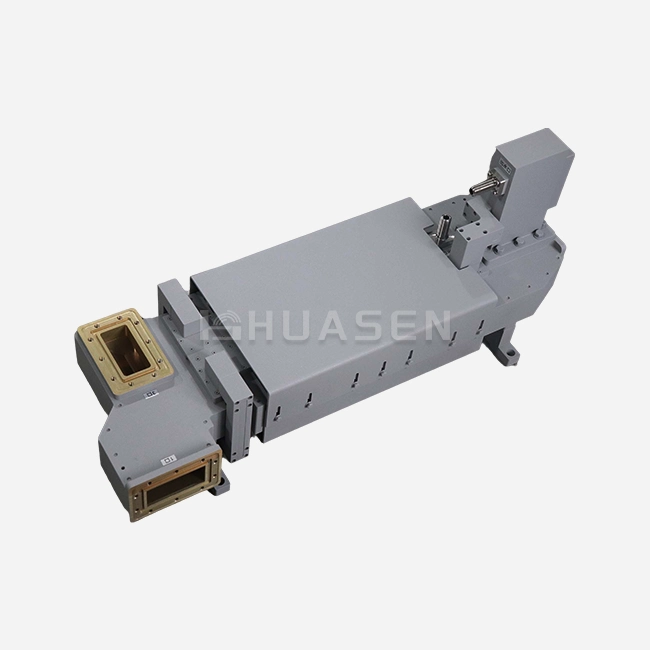
Selection of a waveguide loop coupler for radar systems requires careful consideration of technical parameters, operating environment, and supplier capabilities. These precision-engineered passive microwave components use a magnetic loop probe to check electromagnetic power in waveguide transmission lines without affecting main line operation. Radar engineers maintain defence, aerospace, and telecommunications system dependability by prioritising coupling precision, directivity, and environmental resistance. The proper solution meets strict performance demands while balancing bandwidth, power management, and mechanical compatibility with existing waveguide infrastructure.
Understanding Waveguide Loop Couplers for Radar Systems
What Makes Loop Couplers Essential in Modern Radar?
Radar transmission chains depend on waveguide loop couplers to intercept magnetic field lines and extract a proportional power sample. When handling megawatt-class radar pulses, magnetic coupling is more stable than electric field probes, which risk voltage breakdown. It overcomes operational problems in naval radar systems, aerial fire control radar systems, and ground-based air surveillance installations where constant power monitoring protects expensive transmitter tubes from reflected power damage.
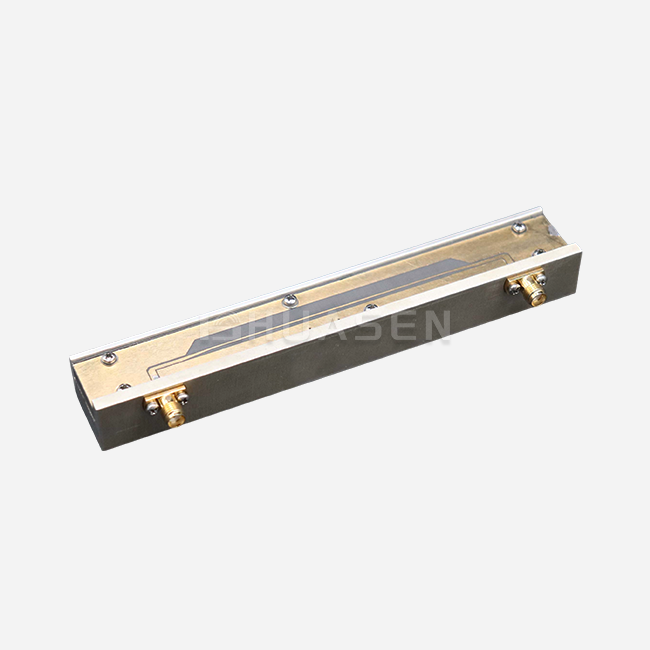
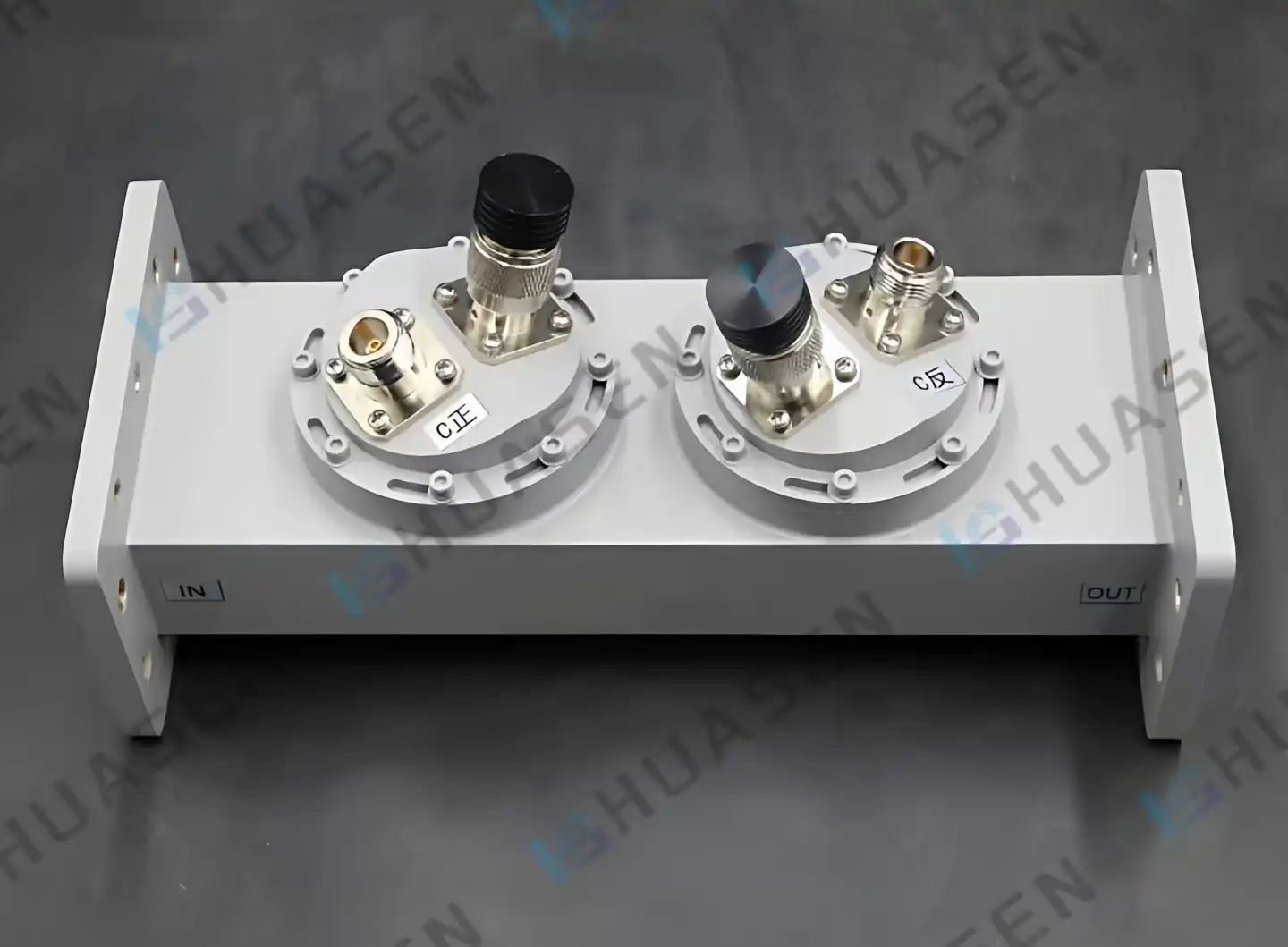
The basic operation uses a strategically placed conductive loop in the waveguide cross-section. According to Faraday's law, the main waveguide's time-varying magnetic field creates a loop current when RF energy passes through. Spectrum analysers, power metres, and automated level control circuits can use the coaxial output port, which includes SMA or N-type connections, to receive this collected energy.
Core Performance Parameters That Define Quality
When choosing a loop coupler, radar system integrators must consider various interrelated parameters. Coupling factor, in decibels, influences the main line power to the coupled port output ratio. Huasen Microwave's loop couplers may be used for high-sensitivity laboratory studies or rugged field installations with coupling levels from 20 dB to 60 dB.
VSWR prevention circuits require coupler directivity to discriminate forward from reflected power. Monitoring systems identify impedance mismatches before they harm transmitter components due to their high directivity (>15 dB in excellent designs). Huasen Microwave maintains transmission efficiency in frequency-agile radar applications by achieving a mainline VSWR of < 1.1, which affects insertion loss and signal integrity.
Operational frequency range depends on bandwidth. Radar systems using S-, X-, or Ku-bands need couplers with bandwidths that match their tuning range. Multiband surveillance systems may require numerous frequency-specific couplers; however, most single-band radar designs may use 20% fractional bandwidth devices.
Electromagnetic Design Considerations
The wire diameter, loop area, and insertion depth of the loop influence coupling strength and frequency responsiveness. Field calibration with adjustable loop designs accommodates installation variances and system needs. Tunability is useful for incorporating couplers into radar designs where coupling values impact receiver dynamic range and noise figure.
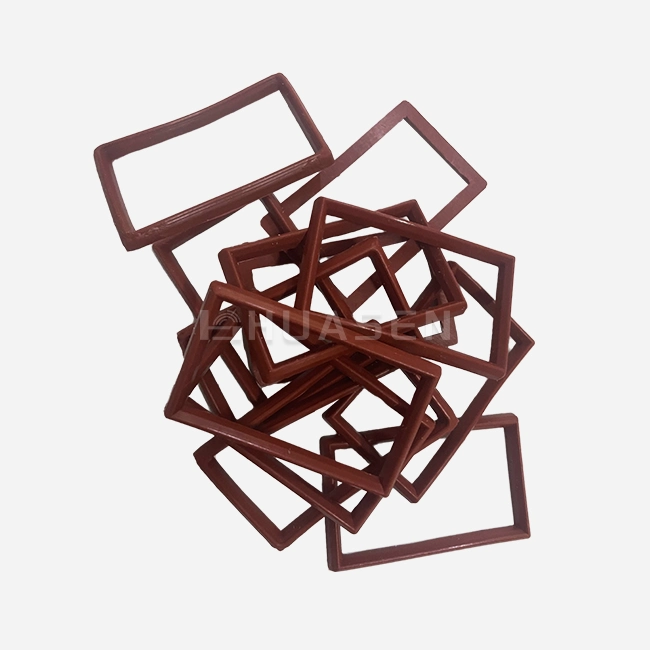
Material choice affects dependability and sustainability. For loop element conductivity, brass and copper alloys are ideal, whereas waveguide bodies use aluminium alloys with protective coatings to save weight. Huasen Microwave uses innovative gasket materials and precise machining to deliver IP65 environmental protection for marine radar systems subjected to salt spray and temperature extremes.
Key Criteria to Consider When Selecting a Waveguide Loop Coupler
Matching Electrical Specifications to Radar Requirements
Receiver sensitivity and monitoring applications determine the coupling value. For high-power transmitter monitoring, loose coupling (40-60 dB) provides enough power for detection circuits with a -50 dB sample. Lower-power signal injection and testing arrangements with high coupled energy benefit from 20-30 dB tighter coupling. Tight coupling removes too much power from the main line, decreasing radar range performance, while inadequate coupling creates weak signals hidden in receiver noise levels.
Non-negotiable frequency band alignment: Waveguide Loop Coupler. Couplers for X-band waveguide standards (WR-90, 8.2-12.4 GHz) are needed for 9.4 GHz radar systems. Huasen Microwave supports BJ9–BJ140 waveguides for millimetre-wave research radars and big-aperture surveillance systems. Operating couplers beyond their design bandwidth reduces directivity, increases VSWR, and changes coupling factors, reducing monitoring accuracy.
Power handling capacity influences pulse radar component selection. The transmitter's pulse amplitude and transient safety margins must be considered in peak power parameters. Thermal dissipation is important for high-duty-cycle radars like weather surveillance systems that broadcast continually. Average power ratings influence this. The loop element proportions and coaxial port structure restrict power handling; however, robust designs avoid thermal runaway with bigger conductors and cooling channels.
Environmental and Mechanical Integration Factors
From climate-controlled equipment rooms to offshore drilling rig antenna platforms, radar installations vary. Through coefficient of thermal expansion matching and temperature-stable dielectrics, quality couplers maintain specifications over -40°C to +85°C working ranges. In coastal or tropical installations, Huasen Microwave's sealed structure minimises moisture penetration that would degrade insertion loss and cause corrosion.
Shock and vibration resistance are crucial for transportable radar platforms. Airborne intercept radars encounter jet engine vibration and carrier landing or missile discharge shocks. Military certification standards like MIL-STD-810 test mechanical integrity under stress. Loop mounting, strengthened coaxial transitions, and strong flange designs minimise mechanical failures that might deactivate radar monitoring equipment during crucial operations.
Physical dimensions constrain installation options in space-limited applications. Compact loop coupler designs with short axial lengths allow integration without affecting array architecture in phased array radar modules. To achieve correct mating and minimise RF leakage at interfaces, UG-series and CPR flange standards must match existing waveguide lines.
Comparing Loop Couplers with Alternative Technologies
Waveguide loop couplers are best chosen when they outperform competitors. Cross-guide directional couplers are better for wideband electronic warfare receivers and test equipment covering many octaves due to their higher bandwidth and flatter coupling. For small and economical single-band radar monitoring, loop couplers are better due to their longer axial length and greater cost.
Bethe-hole couplers link through tiny holes in the common waveguide wall, providing high directivity and predictability. However, they lack the loop designs' field adjustability, limiting calibration flexibility. Multi-hole couplers use staggered aperture arrays to increase bandwidth but lack loop designs' compactness. Radar system architects often choose these components when physical restrictions dominate, and bandwidth needs are within 20%.
Evaluating Supplier Options and Product Availability
Identifying Qualified Manufacturers
Specialised manufacturers with decades of RF technical experience produce waveguide components. Suppliers with military qualifications, ISO 9001 certification, and published test results from many manufacturing batches are credible. Purchasers should check precision machining centres, vector network analyser test stations, and environmental test chambers that meet criteria while assessing vendors.
Huasen Microwave, founded in 1993, has the endurance and technological depth that radar OEMs need. The business has significant process understanding and consistent product quality over 30 years of creating waveguide components for telecommunications, defence, and aerospace clients. They ease vendor management and compatibility assurance by offering waveguide devices, millimetre-wave antennas, and coaxial components for radar subsystem acquisition.
Geography affects logistics costs and supply chain resiliency. For urgent needs, domestic suppliers offer faster lead times and simpler communication, while overseas sources may offer specialised expertise or cost benefits for big production runs. Project schedules and risk tolerance for shipment delays and trade policy changes must be considered.
Assessing Technical Support and Customisation Capabilities
Standard catalogue goods service common radar designs, but many systems require customisation. Flexibility from parametric customisation—adjusting coupling values, flange types, or connection interfaces—speeds radar development. Huasen Microwave's technical team works with clients to optimise coupler designs for frequency plans, power levels, and mechanical restrictions, including loop couplers, supplying prototype samples for validation before production.
Comprehensive technical documentation distinguishes professional from commodity providers. Swept frequency measurements of VSWR, insertion loss, coupling factor, and directivity across the band should be included in detailed datasheets. System-level simulations using S-parameter files forecast cascade performance when incorporating couplers into radar receiver chains. Mechanical drawings with tolerances aid integration planning and prevent assembly fitting difficulties.
Responsive after-sales support ensures radar system readiness throughout its lifespan. Suppliers offering calibration, replacement parts, and troubleshooting provide value beyond component purchases. Radar architecture-savvy applications engineers can solve unforeseen performance difficulties during system integration or field deployment.
Analysing Procurement Logistics and Lead Times
Component availability affects radar programme timelines. Suppliers stocking standard waveguide widths and coupling values enable speedy prototyping and manufacturing. Due to design iteration, manufacture, and testing, custom configurations take 6-12 weeks. Early procurement timeline understanding eliminates scheduling issues that might delay radar system delivery to end customers.
Price structures reflect volume and complexity. Standard catalogue goods have manufacturing economies, but bespoke designs amortise engineering costs across order quantities. For phased array radar module production operations needing hundreds of couplers, volume commitments enable tiered pricing that lowers unit prices. Requesting precise bids that separate recurrent and non-recurring expenditures helps programme budgeting.
Practical Guides and Testing Procedures
Essential Measurement Techniques for Validation
Prevent costly downstream troubleshooting by testing coupler performance before system integration. Vector network analysers (VNAs) with coupler design band frequency coverage characterise it thoroughly. Short-Open-Load-Through (SOLT) standards for waveguide size and coaxial interfaces are needed for precise calibration. Measurement uncertainty depends on calibration accuracy; national-standard calibration kits assure accurate readings.
VSWR tests on mainline and linked ports show impedance matching. Mainline VSWR below 1.1 reduces reflection and maintains radar transmitter stability and receiver noise. Power transmission to monitoring instruments is efficient with a coupled port VSWR < 1.25 to avoid standing wave distortion. Swept frequency VSWR charts reveal resonances or manufacturing faults that must be fixed before deployment.
Directivity testing measures the coupler's forward-reverse power discrimination. Power flowing in the design direction is compared to the opposite way for the linked port output. Monitoring systems correctly record reflected power from antenna mismatches with directivity above 15 dB, allowing protective circuits to protect expensive transmitter components. By hiding faults, poor directivity reduces radar system dependability.
Real-World Applications in Radar Operations
The main waveguide loop coupler use is transmitter monitoring, which measures power to verify radar output and detect deterioration patterns. The linked signal feeds automated level control circuits that sustain radiated power despite transmitter tube age or temperature-induced gain changes. Operators use spectrum analysers to check spectral purity and detect spurious emissions that might violate regulations or degrade electronic countermeasures.
Reflected power protection circuits assess mismatched antenna energy with directional couplers. When weather damage lowers antenna VSWR, or ice detunes resonant parts, increasing reflected power risks transmitter tube failure. Loop couplers sampling the reverse direction activate interlock circuits to limit transmitter power or shut off the radar before costly component failures. This protection is crucial in unmanned radar systems with days-long repair periods.
System testing and calibration use loop couplers to inject signals into receiver channels. Technicians test receiver gain, noise figure, and dynamic range without signal generators by injecting known power levels at certain frequencies. Self-testing simplifies field maintenance and minimises equipment load for remote forward-deployed radar systems.
Troubleshooting Common Performance Issues
Incorrect coupling factors are typically caused by mechanical misalignment or contamination, or by a loop coupler. The electromagnetic enclosure is complete when flange torque matches installation criteria and mating surfaces are in close contact. Lint-free materials and isopropyl alcohol eliminate oxidation and debris that cause gap discontinuities and performance degradation on flange faces. Correct probe depth according to calibration data recovers nominal coupling values for adjustable loop systems.
Performance degrades over time due to environmental deterioration. Ingress of moisture through damaged seals increases insertion loss and reduces directivity by absorbing microwave energy and changing electromagnetic boundary conditions. Visual evaluation of gasket compression and seal integrity during preventative maintenance detects degradation before mission-critical breakdowns. Replace gaskets to prolong coupler life in extreme marine or tropical settings.
Coaxial components and termination resistors are thermally damaged by high-coupled power. To avoid burnout in high-power radar systems, check coupled power within port ratings. Through specified attenuation correction factors, attenuators between the linked port and monitoring equipment limit power levels to acceptable levels while retaining measurement accuracy.
Conclusion
Waveguide loop coupler selection must balance technical performance, operational restrictions, and procurement realities. Successful integration requires understanding electromagnetic principles, supplier capabilities, and rigorous testing of standards. Radar OEMs and integrators trust Huasen Microwave's reliable and customisable designs. Directivity, VSWR, environmental resilience, and supplier partnership strength help engineers develop radar systems that function well throughout long operating lifecycles. Attention to these selection criteria improves radar capabilities, lifetime costs, and mission success.
FAQ
1. Can loop couplers handle high-power pulse radar applications?
Waveguide loop couplers for high-power pulse radar? Magnetocoupling loop couplers reduce voltage breakdown problems associated with electric field probes, making them ideal for pulse radar. A 50 dB coupler sampling a 100 kW transmitter links 1 W to the monitoring port, well within coaxial component specifications. Proper waveguide size and loop architecture allow devices to function with air surveillance radar megawatt-class emitters.
2. How does coupling value affect system performance?
Greater coupling (lower dB values) draws more power from the main transmission line, which may reduce radar range performance due to insertion loss. Although loose coupling (higher dB values) reduces the mainline effect, it provides weaker monitoring signals that may fall below receiver sensitivity limits. Ideal coupling is 40-50 dB for high-power radar monitoring when coupled signals are detectable and mainline loss is low.
3. What maintenance do installed couplers require?
Periodic flange inspection checks gasket compression and surface cleanliness in field-deployed couplers. Annually test environmental protection integrity under hard settings for corrosion or seal deterioration that might let moisture in. Portable VNAs verify electrical performance within tolerance, detecting deterioration trends before they affect radar operation.
Need a Reliable Waveguide Loop Coupler Manufacturer?
Huasen Microwave offers precision-engineered Waveguide Loop Couplers for radar system development with excellent electrical performance and environmental endurance. Our devices have mainline VSWR below 1.1, directivity above 15dB, and flexible coupling from 20dB to 60dB throughout waveguide diameters BJ9-BJ140. Three decades of RF component manufacturing experience assure production consistency and technical assistance that speeds integration. Talk to our applications engineering team at sales@huasenmicrowave.com about your radar monitoring needs and get personalised advice with test results and competitive pricing for prototype to production volumes.
References
1. Pozar, David M. Microwave Engineering, 4th Edition. Hoboken: John Wiley & Sons, 2011.
2. Montgomery, C. G., R. H. Dicke, and E. M. Purcell. Principles of Microwave Circuits. London: Peter Peregrinus Ltd., 1987.
3. Skolnik, Merrill I. Radar Handbook, 3rd Edition. New York: McGraw-Hill Education, 2008.
4. Marcuvitz, Nathan. Waveguide Handbook. London: The Institution of Engineering and Technology, 1986.
5. Collin, Robert E. Foundations for Microwave Engineering, 2nd Edition. Hoboken: Wiley-IEEE Press, 2000.
6. Saad, Theodore S. Microwave Engineers' Handbook, Volume 1. Dedham: Artech House, 1971.
Send Inquiry