How to Choose Log Periodic Antenna for High Frequency Test Systems?






2026-04-05 22:16:27
Engineers have to look at frequency coverage, gain features, power handling capabilities, Log Periodic Antenna, and environmental durability when choosing a log periodic antenna for high-frequency test systems. The best option strikes a balance between wideband performance and measurement accuracy, making sure that it works with existing test equipment and meets the needs of the application. Log periodic antennas work great in test settings because their impedance stays the same and their radiation patterns stay fixed across a wide range of frequency bands.
Understanding Log Periodic Antennas for High Frequency Testing
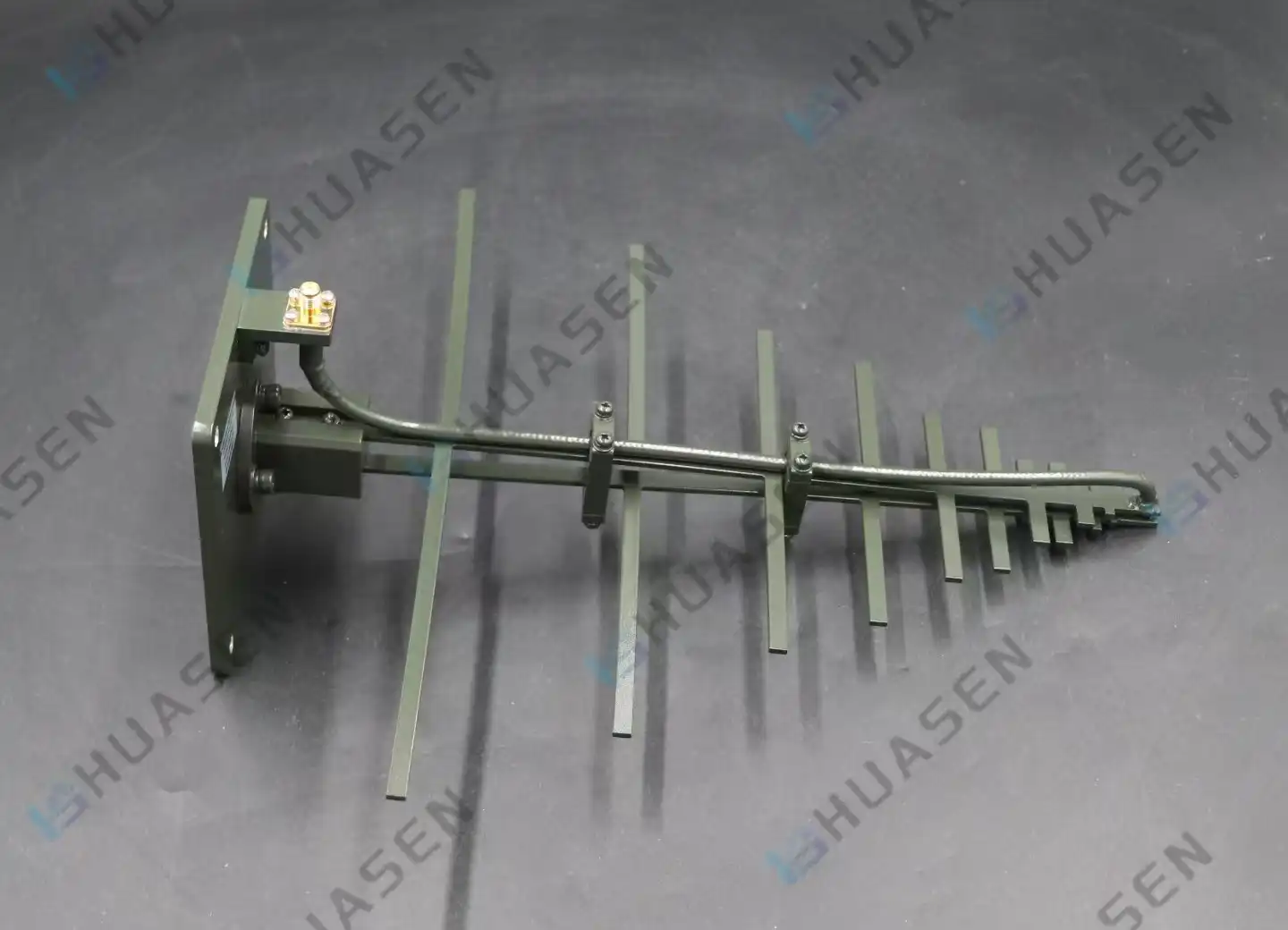
Modern test laboratories demand antennas that deliver consistent performance across broad frequency ranges, and log periodic designs meet these requirements through their unique geometric scaling principles. These antennas utilize dipole elements arranged according to logarithmic ratios, creating frequency-independent behavior that makes them invaluable for electromagnetic compatibility testing, spectrum monitoring, and signal intelligence applications.
Fundamental Design Principles and Operation
The relationship between neighbouring antenna elements is set by the logarithmic scaling factor, which is often written as tau (ϱ). This mathematical connection makes sure that different parts of the antenna work at certain frequencies, keeping the gain and impedance the same across the operational bandwidth. The spacing factor sigma (π) determines how far apart the elements are physically, which has a direct effect on the antenna's beamwidth and direction. This frequency-independent behaviour is useful in professional test settings because it lets engineers take measurements across multiple bands without having to switch antennas. The stable phase center location across frequencies gets rid of the need for complicated calibration adjustments. This simplifies test processes and makes measurements more accurate.
Performance Characteristics in Test Applications
Across their working bandwidth, which usually includes frequency ratios of 10:1 or more, log periodic antennas usually have voltage standing wave ratios (VSWR) less than 2.0:1. Traditional antenna designs, like Yagi arrays or horn antennas, usually work over smaller frequency ranges, so this outstanding bandwidth performance is better. The directional radiation pattern gives great front-to-back ratios, usually between 15 and 25 dB, which lowers interference from unwanted signals while sensitive measurements are being made. Gain values stay stable between 5 and 9 dBi across the frequency range. This makes signal levels reliable for calibrating test tools and making sure that measurements are always the same.
Key Criteria for Selecting Log Periodic Antennas for High Frequency Testing
Successful antenna selection requires systematic evaluation of technical specifications against specific test requirements, considering both immediate needs and future system expansion possibilities. Engineers must balance performance requirements with practical constraints such as physical size, mounting requirements, and environmental conditions.
Frequency Range and Bandwidth Considerations
The working frequency range is the most important factor in choosing an antenna because it describes what it can do at its core. Standard designs work in frequency ranges from 200 MHz to 18 GHz, and some models can even work in millimeter-wave frequencies. The antenna's bandwidth can be seen by dividing the highest frequency by the lowest frequency to get the frequency ratio. Test system designers should think about frequency gaps that are higher than what is needed right now so that they can meet the needs of future tests. A 20% frequency extension above and below the nominal test range gives you more options for how to do your job and takes into account the fact that test signals or tools may lose frequency over time.
Power Handling and Signal Integrity Requirements
Different antenna designs can handle a wide range of power levels, with common values spanning from 50 watts for small lab models to several kilowatts for high-power test applications. Most of the time, the power limit is caused by the design of the balun and the specs of the connector, not by the radiating elements themselves. Some things to think about when it comes to signal integrity are group delay changes and phase linearity across the frequency range. These changes could affect readings of wideband signals. For high-level testing, especially with radar or communication systems, antennas with little phase distortion are needed to keep the signal's integrity.
Environmental and Mechanical Specifications
In the lab, designs that are lighter and better at measuring accuracy are usually okay, but when testing outside, the equipment needs to be toughened up with weatherproofing and LPA materials that don't rust. When making precise readings, temperature stability is very important because thermal expansion can change the distance between elements and affect how well they work electrically. Mounting arrangements need to be able to work with current test sets and have enough adjustment ranges to handle a variety of measurement situations. The requirements for azimuth and elevation positioning change depending on the test methods and measurement standards that are being used.
Comparing Log Periodic Antennas with Alternative Solutions
Understanding the performance trade-offs between different antenna technologies enables informed decisions based on specific application requirements. Each antenna type offers distinct advantages and limitations that must be evaluated within the context of the overall test system architecture.
Advantages Over Traditional Antenna Designs
Log periodic antennas work very well in situations where a wide range of frequencies needs to be covered consistently. A single log periodic antenna can replace several narrowband designs, while horn antennas need more than one unit to cover a wide frequency range. This consolidation cuts down on the cost of inventory, makes it easier to set up tests, and lowers the measurement errors that come with moving antennas. Log periodic designs have a wider bandwidth than Yagi arrays, but they lose peak gain in some frequency ranges. The trade-off works out well in test settings where frequency agility is more important than maximum gain. Log periodic antennas also have a balanced feed structure that makes common-mode rejection better. This means that spurious signals that could mess up readings are fewer.
Performance Limitations and Design Trade-offs
The frequency-independent design theory naturally limits the highest gain that can be achieved in any given frequency range. Specialised high-gain antennas might be useful for applications that need the strongest signal strength in narrow frequency bands, even though it can be hard to manage all the different types of antennas. Another thing to think about is the antenna's physical size. For example, log periodic antennas need to be long enough to fit the biggest emitting elements. The smallest antenna size is directly related to the lowest operational frequency, which could make it hard to use small test facilities because of room issues.
Procuring and Customizing Log Periodic Antennas for B2B Clients
Successful procurement strategies balance technical performance requirements with cost considerations, delivery schedules, and long-term support capabilities. The specialized nature of test equipment often requires custom configurations that standard catalog products cannot address.
Supplier Evaluation and Quality Assurance
Reputable manufacturers maintain rigorousLPA quality control procedures that include dimensional precision inspection using automated optical inspection systems. These processes verify that microstrip line widths and dipole element dimensions remain within specified tolerances, typically ±0.02mm for critical features. Deviations beyond these limits can significantly impact impedance matching and radiation pattern characteristics. Vector network analyzer testing validates return loss performance across the entire frequency range, ensuring that specifications are met under actual operating conditions. Environmental stress screening, including thermal cycling from -40°C to +85°C and vibration testing per MIL-STD-810G, verifies mechanical integrity under harsh operating conditions.
Customization Capabilities and Design Support
Custom antenna designs can optimize performance for specific frequency ranges, polarization requirements, or physical constraints. Manufacturers with strong engineering capabilities can modify standard designs to achieve improved gain in critical frequency segments or reduce size for space-constrained installations. Design support services include electromagnetic simulation modeling, prototype development, and performance validation testing. These services prove particularly valuable when integrating antennas into complex test systems where interaction effects between multiple components could affect overall performance.
Cost Optimization and Volume Pricing
Volume procurement opportunities often provide significant cost advantages, particularly for organizations requiring multiple identical units across different test facilities. Standardization on specific antenna models simplifies maintenance procedures, reduces spare parts inventory, and enables staff training efficiency. Total cost of ownership calculations should include initial purchase price, installation costs, calibration requirements, and long-term maintenance expenses. Higher-quality antennas with superior environmental ratings often provide better long-term value despite higher initial costs.
Trusted Brands and Product Recommendations for High Frequency Testing
The antenna market features several established manufacturers with proven track records in high-frequency test applications. Each company brings distinct strengths in specific frequency ranges, construction methods, or application specializations.
Huasen Microwave Technology has been designing and making high-frequency parts for over 30 years, so they have a lot of knowledge in the log periodic antenna market. The company has a lot of experience with telecommunications, radar, aerospace, Log Periodic Antenna,and defence uses, so they can handle a wide range of test needs. Leading makers always show that they care about quality by using thorough testing methods and customer support programs. Premium suppliers are different from commodity suppliers because they offer warranties on their products, write good technical documents, and offer quick engineering support. Performance specs change from manufacturer to manufacturer. Some focus on maximum bandwidth, while others aim for consistent gain or long-term durability in harsh environments. Instead of relying only on general specifications, procurement teams should compare several options based on individual application needs.
Conclusion
When looking for the best log periodic antenna for high-frequency test systems, you need to carefully consider technical specs, environmental needs, and how the system will work in the long run. These antennas' performance characteristics that aren't affected by frequency give them big benefits in test environments that need to cover a wide range of frequencies while keeping measurement accuracy high. A good procurement process balances immediate technical needs with the chance to expand the system in the future, while also taking into account the total cost of ownership and the supplier's ability to provide assistance. When engineers carefully consider these factors, they can be sure that the antennas they choose will improve the performance of test systems and work well in a wide range of situations.
FAQ
1. What frequency ranges are ideal for log periodic antennas in test applications?
Log periodic antennas excel in frequency ranges spanning from several hundred megahertz to multiple gigahertz, with typical designs covering 200 MHz to 18 GHz. The frequency ratio capability, often exceeding 10:1, makes these antennas particularly suitable for electromagnetic compatibility testing, spectrum monitoring, and communications system evaluation, where multiple frequency bands must be measured without changing equipment.
2. How does power handling compare between microstrip and wire log periodic designs?
Power handling capabilities differ significantly between construction methods. Wire-based log periodic antennas typically handle hundreds of watts to several kilowatts, limited primarily by balun design and connector specifications. Microstrip versions generally accommodate lower power levels, typically 50-100 watts, due to substrate breakdown voltage limitations and thermal dissipation constraints of thin copper traces.
3. What impedance matching considerations are critical for test system integration?
Impedance matching requires verification that antenna specifications align with test equipment input/output parameters, typically 50 ohms for most RF test instruments. The balanced-to-unbalanced transformation in the antenna feed system must be properly implemented to prevent current flow on coaxial cable outer conductors, which could distort radiation patterns and compromise measurement accuracy.
4. Can log periodic antennas be mounted on curved surfaces for specialized applications?
Mounting on curved surfaces is possible using flexible substrates like Kapton or thin PTFE materials for microstrip designs. However, curvature affects phase relationships between antenna elements, requiring sophisticated electromagnetic simulation during the design phase to compensate for geometric changes. Wire-based designs offer more flexibility for conformal mounting applications.
Partner with Huasen Microwave for Superior Log Periodic Antenna Solutions
Huasen Microwave Technology delivers industry-leading log periodic antenna solutions backed Log Periodic Antennaby three decades of expertise in high-frequency component design and manufacturing. Our comprehensive product portfolio addresses demanding test applications across telecommunications, radar, aerospace, and defense sectors with customizable frequency ranges, power ratings, and environmental specifications. As a trusted log periodic antenna manufacturer, we provide complete design support, rapid prototyping capabilities, and volume pricing for procurement teams requiring reliable, high-performance test equipment. Contact our engineering team at sales@huasenmicrowave.com to discuss your specific requirements and discover how our log periodic antenna solutions can enhance your test system capabilities.
References
1. Balanis, Constantine A. "Antenna Theory: Analysis and Design, Fourth Edition." John Wiley & Sons, 2016.
2. Rumsey, Victor H. "Frequency Independent Antennas: Principles and Applications." Academic Press, 1966.
3. IEEE Standard 145-2013. "IEEE Standard for Definitions of Terms for Antennas." Institute of Electrical and Electronics Engineers, 2013.
4. Stutzman, Warren L., and Gary A. Thiele. "Antenna Theory and Design, Third Edition." John Wiley & Sons, 2012.
5. Carrel, Robert L. "Analysis and Design of the Log-Periodic Dipole Antenna." Technical Report 52, Antenna Laboratory, University of Illinois, 1961.
6. MIL-STD-810G. "Environmental Engineering Considerations and Laboratory Tests." Department of Defense Test Method Standard, 2008.
Send Inquiry