High Frequency Circular Straight Waveguides for Radar Systems: Dimensions, Performance, and Applications






2026-01-05 21:05:27
In today's radar systems, circular straight waveguides are very important because they work better for sending high-frequency signals. These specialized parts are made to efficiently direct electromagnetic waves. They are very important for a range of radar uses. Circular straight waveguides are great at handling high power levels and keeping signal loss low. This makes them perfect for both sending and receiving radar signals. Their unique cylindrical shape makes it possible for certain electromagnetic wave types to move through them, which makes it possible to fine-tune the signal's properties. The following article discusses circular straight waveguides used in radar systems. It covers their size, performance benefits, and various uses, emphasizing their importance in making modern sensing and communication technologies better.
Performance Advantages of Circular Straight Waveguides
Circular straight waveguides have a number of useful performance traits that make them very good for radar use.
Low Signal Loss
One of the best things about circular straight waveguides is that they don't lose much information. The cylindrical shape reduces conductor losses, which makes it possible to efficiently send high-frequency signals over short distances. This feature is especially useful in radar systems for which keeping the purity of the signal is important to get the right target information and distance measurement.
High Power Handling Capacity
Dealing with high power levels is very important for many radar applications, and spherical waveguides do this well. Their design lets heat escape and stops voltage breakdown, which means that high-power radar bursts can get through without affecting performance or stability. This feature is great for long-range radar systems and sets that use high-power radar to track weather.
Mode Purity
Because these waveguides are circular, they help certain electromagnetic waves, mostly the TE (Transverse Electric) and TM (Transverse Magnetic) modes, move through them. This mode option helps keep the signal pure and stops mode conversion from happening. This makes the radar system work better and lowers signal distortion.
Broad Bandwidth
Circular waveguides are special because they can work with a lot of different wavelengths when you compare waveguide types. This feature lets radar systems work in a lot of different frequency bands, which makes them more useful and allows them to be used in multi-band radar uses.
Mechanical Stability
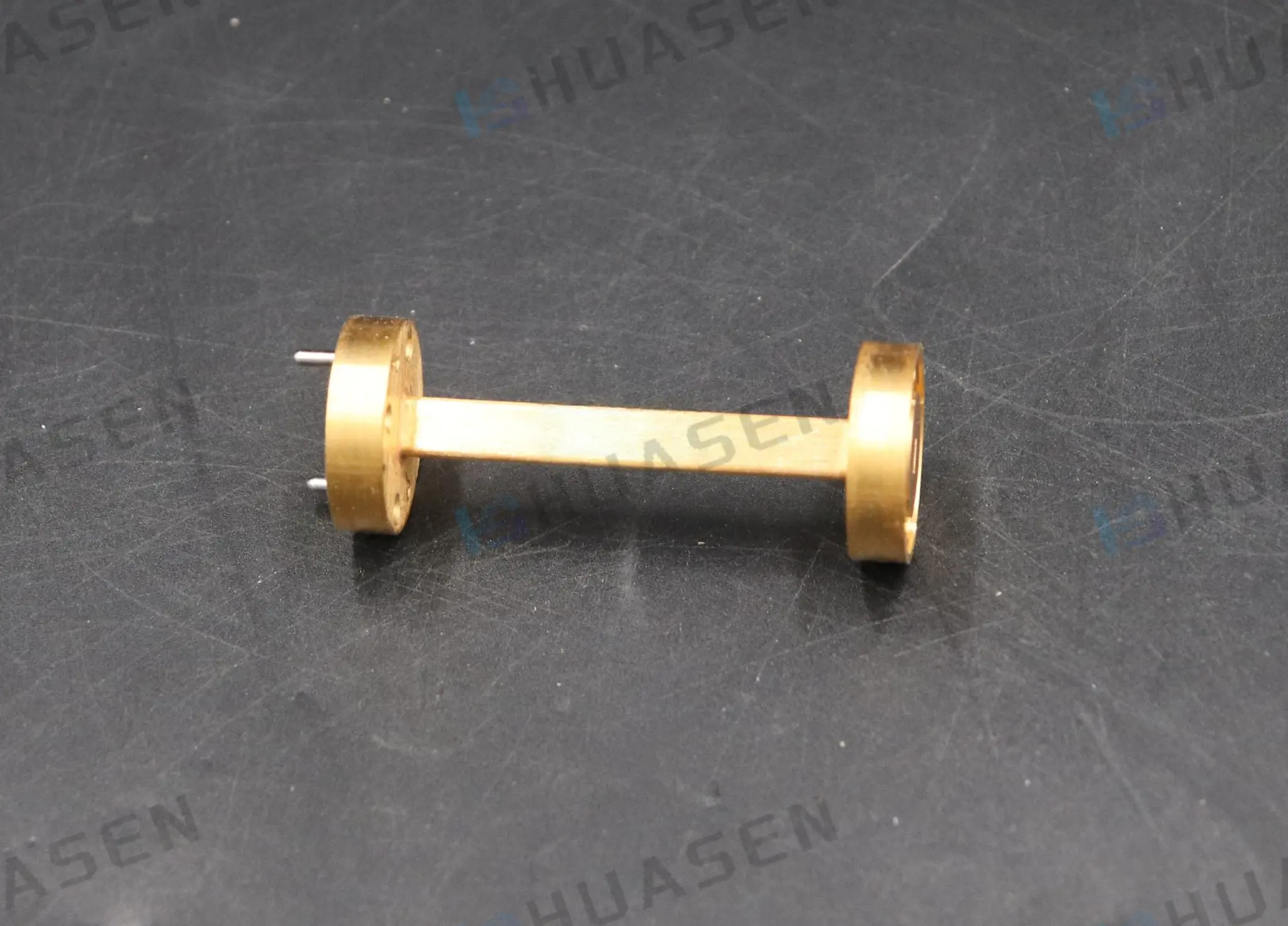
Because circular waveguides are very strong due to their uniform shape, it is important that they always work the same way in different settings. This stability is great for mobile radar systems or sets that can vibrate or change temperature.
Standard Dimensions and Frequency Bands for Circular Waveguides
Circular waveguides come in a range of standard sizes to fit different frequency bands and application needs. When picking the right antenna for different radar systems, it's very important to know these measurements:
Frequency Band Designations
It is normal to use standard frequency band names like C, X, Ku, and Ka to label circular waveguides. Each band is linked to a certain range of frequencies, and the waveguide measurements that work best for those frequencies are linked to each band.
Inner Diameter Specifications
The inner diameter of a circular straight waveguide is an important size that affects its cutoff frequency and operating bandwidth. The inner width is usually a few millimeters for high-frequency uses and several centimeters for lower frequency bands. For example:
- C-band (4-8 GHz): Typical inner diameter of 47.5 mm
- X-band (8-12 GHz): Typical inner diameter of 23.8 mm
- Ku-band (12-18 GHz): Typical inner diameter of 15.8 mm
- Ka-band (26.5-40 GHz): Typical inner diameter of 7.1 mm
Wall Thickness and Material Considerations
The wall thickness of circular waveguides is carefully designed to balance mechanical strength with minimal signal attenuation. Common materials used in the fabrication of circular waveguides include:
- Copper: Has a great ability to carry electricity and doesn't lose much of it
- Aluminum: Offers a light, high-performing choice
- Stainless Steel: Used in situations where the material must be very strong and resistant to rusting
Surface treatments such as silver plating or gold plating may be applied to enhance conductivity and reduce losses further.
Flange Types and Compatibility
Circular waveguides are typically fitted with standardized flanges to ensure compatibility with other system components. Common flange types include:
- Cover flanges (e.g., CMR, CMG series)
- Choke flanges (e.g., CER, CEG series)
- Flat flanges (e.g., CAR, CAG series)
These flanges are designed to maintain proper alignment and ensure a low-loss connection between waveguide sections or other components in the radar system.
Radar and Satellite Applications of Circular Straight Waveguides
Circular straight waveguides find extensive use in various radar and satellite applications, leveraging their unique performance characteristics to enhance system capabilities:
Weather Radar Systems
Weather radar systems often use circular straight waveguides because they can handle a lot of power and work well at the frequencies that are widely used for atmospheric monitoring, like C-band and S-band. Circular waveguides can correctly track precipitation, wind patterns, and other weather-related events over long distances because they have low-loss properties that let them carry strong radar pulses.
Military and Defense Radar
In military radar applications, circular waveguides are utilized in various systems, including:
- Air defense radars
- Maritime surveillance radars
- Airborne early warning (AEW) systems
In these important defense uses, circular waveguides' high power handling and low signal distortion help with target detection, tracking, and total system reliability.
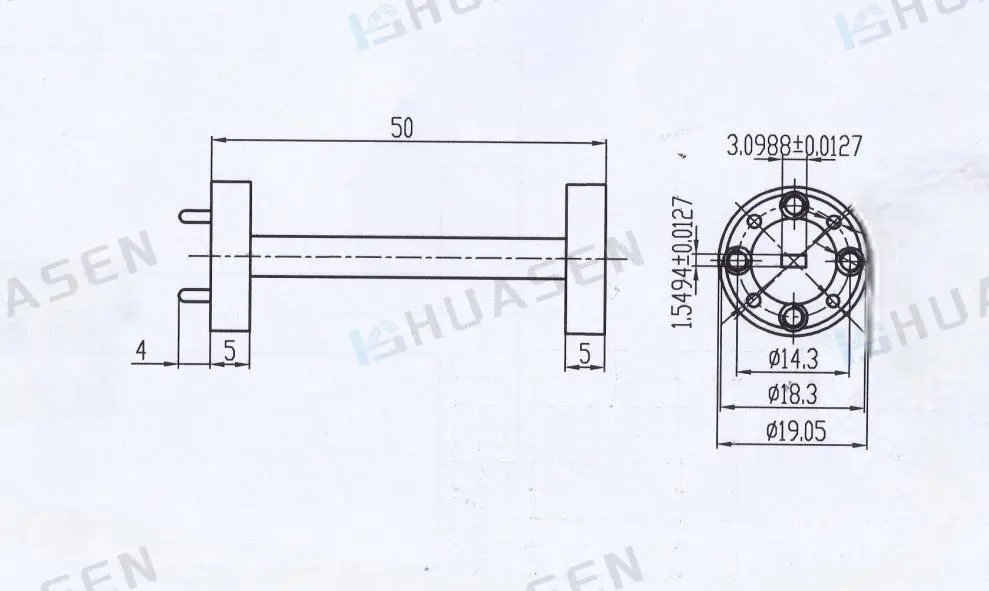
Satellite Communication Ground Stations
In satellite transmission ground stations, circular waveguides are very important, especially when it comes to the feed systems of big parabolic antennas. They're great for connecting the antenna feed horn to send and receive equipment because they support circular polarization and keep the signal strong over long waveguide runs.
Radio Astronomy
In radio astronomy, circular waveguides are used in telescope feed systems and receiver chains. It's very important that they have low-loss properties and can keep the signal purity because that's how you identify and analyze weak radio signals from faraway space objects.
Air Traffic Control Radar
Using circular waveguides in their radio feed networks helps radar systems for air traffic control work better. It's possible for both main and secondary radar functions to work at the same time because of the waveguides' high power and wide frequency capabilities.
Maritime Radar
Circular waveguides are employed in various maritime radar systems, including:
- Navigation radars
- Coastal surveillance systems
- Search and rescue radar
Their robust construction and resistance to environmental factors make them well-suited for the challenging conditions encountered in marine environments.
Automotive Radar
As automotive radar technology advances, particularly for autonomous vehicles, circular waveguides are finding applications in high-frequency (e.g., 77 GHz) radar modules. Their compact size and low-loss characteristics contribute to improved radar performance in obstacle detection and collision avoidance systems.
Conclusion
In today's radar and satellite communication systems, circular straight waveguides are essential components. Low signal loss, high power handling capacity, and mode purity are just a few of the unique performance characteristics that make them perfect for a variety of industries and applications. Circular waveguides are already playing an important role in radar technology, and they will play an even bigger role in the future as radar technology advances.
FAQ
1. What are the main advantages of using circular straight waveguides in radar systems?
Circular straight waveguides are great for radar applications that need effective high-frequency signal transmission because they have minimal signal loss, high power handling capability, mode purity, broad bandwidth, and great mechanical stability.
2. How do the sizes of circular waveguides affect how well they work in radar systems?
The cutoff frequency and operational bandwidth of circular waveguides depend on their inner diameter. Larger diameters work best for lower frequency bands, while smaller diameters work best for higher frequency applications. This makes sure that the radar works best in all frequency ranges.
3. What materials are utilized most often to make circular straight waveguides?
Copper is a good choice for conductivity, aluminum is good for lightweight uses, and stainless steel is good for high durability and resistance to corrosion. You can also improve performance by adding surface treatments like silver or gold plating.
4. Where do circular straight waveguides work best in radar?
In meteorological radar systems, military and defense radar, satellite communication ground stations, radio astronomy, air traffic control radar, marine radar, and new uses like automotive radar for self-driving cars, circular straight waveguides are very common.
Enhance Your Radar Systems with Premium Circular Straight Waveguides | Huasen Microwave
Ready to elevate the performance of your radar or satellite communication systems? Huasen Microwave Technology Co., Ltd. offers state-of-the-art circular straight waveguides engineered for exceptional signal transmission and reliability. Our team of experts is standing by to help you select the perfect waveguide solution for your specific application needs. Contact us today at sales@huasenmicrowave.com to discuss how our high-quality waveguides can optimize your system's capabilities and drive your project's success.
References
1. Johnson, R. C., & Jasik, H. (2019). Antenna Engineering Handbook, 5th Edition. McGraw-Hill Education.
2. Pozar, D. M. (2017). Microwave Engineering, 4th Edition. Wiley.
3. Skolnik, M. I. (2018). Radar Handbook, 3rd Edition. McGraw-Hill Education.
4. Balanis, C. A. (2016). Antenna Theory: Analysis and Design, 4th Edition. Wiley.
5. Collin, R. E. (2015). Foundations for Microwave Engineering, 2nd Edition. Wiley-IEEE Press.
6. Richards, M. A., Scheer, J. A., & Holm, W. A. (2020). Principles of Modern Radar: Basic Principles. SciTech Publishing.
Send Inquiry