Frequency Response Flatness in Broadband Coaxial Detector Performance






2026-07-02 21:00:03
In a Broadband Coaxial Detector, frequency response flatness means how well the device can keep putting out the same DC voltage across all of its working frequency range, which is usually between hundreds of megahertz and tens of gigahertz. This measurement is recorded in decibels and shows how evenly the Broadband Coaxial Detector changes RF power to DC voltage without adding distortions that depend on frequency. A flat frequency response means that signal measurements are always right, whether checking at 2 GHz or 18 GHz. This gets rid of the need for complicated correction factors. Frequency flatness has a direct effect on the accuracy of measurements, the speed of system commissioning, and the trust in long-term diagnostics across wideband communication designs for engineers working on 5G base station rollout, satellite ground terminals, or aerospace radar calibration.
Understanding Frequency Response Flatness in Broadband Coaxial Detectors
The accuracy of measurements in RF power monitoring systems is based on how flat the frequency response is across the operating bandwidth. When we use Broadband Coaxial Detectors in places like lab network analysers and airborne radar tracking, they have to be able to give us the same results no matter what frequency we feed them.
What Flatness Really Means in Practice
Flatness is a measure of how much the Broadband Coaxial Detector's sensitivity changes from one frequency to the next. If a Broadband Coaxial Detector is said to be ±1 dB flat from 0.1 GHz to 18 GHz, it means that its output voltage will not be more than 12% off from the ideal linear response at any frequency in that range. Because the results are always the same, engineers can trust them without having to use frequency-specific correction tables. This speeds up the processes for both R&D prototyping and production tests.
Imagine that your team is testing a broad power amplifier that works with frequencies from 6 to 18 GHz. If the Broadband Coaxial Detector isn't very flat, a 10 dBm output at 8 GHz might read right, but the same power at 15 GHz might show up as 9 dBm or 11 dBm, which could lead to wrong conclusions about the linearity of the amplifier. This measurement drift requires more calibration rounds, slows the qualification of the product, and raises the costs of testing itself.
Why Wide Bandwidth Coverage Matters
These days, transmission systems don't usually use a single set of channels. 5G New Radio works in many frequency ranges, from sub-6 GHz to millimetre waves. Uplinks and downlinks from satellites can use C-band, Ku-band, and Ka-band all at the same time. A Broadband Coaxial Detector that works from 0.1 GHz to 18 GHz has the ability to characterise whole transceiver chains in a single measurement setup. This cuts down on the number of tools needed and makes test setups easier. These changes directly fix problems with buying things like keeping track of supplies and spending a lot of money on unnecessary test tools.
Typical Operating Ranges and Industry Standards
Standard Broadband Coaxial Detectors in the industry usually work from 10 MHz to 40 GHz, and some can even work in W-band. High-performance units from companies like Huasen Microwave work from 0.1 GHz to 18 GHz and have stability requirements of ±1 dB per octave. These units meet the strict needs of defence contractors, telecommunications labs, and aerospace system designers. These standards are the same as MIL-STD-202 for environmental testing and ISO 9001 for quality management. This makes sure that everything is the same in mission-critical situations where measurement errors could threaten system safety or legal compliance.
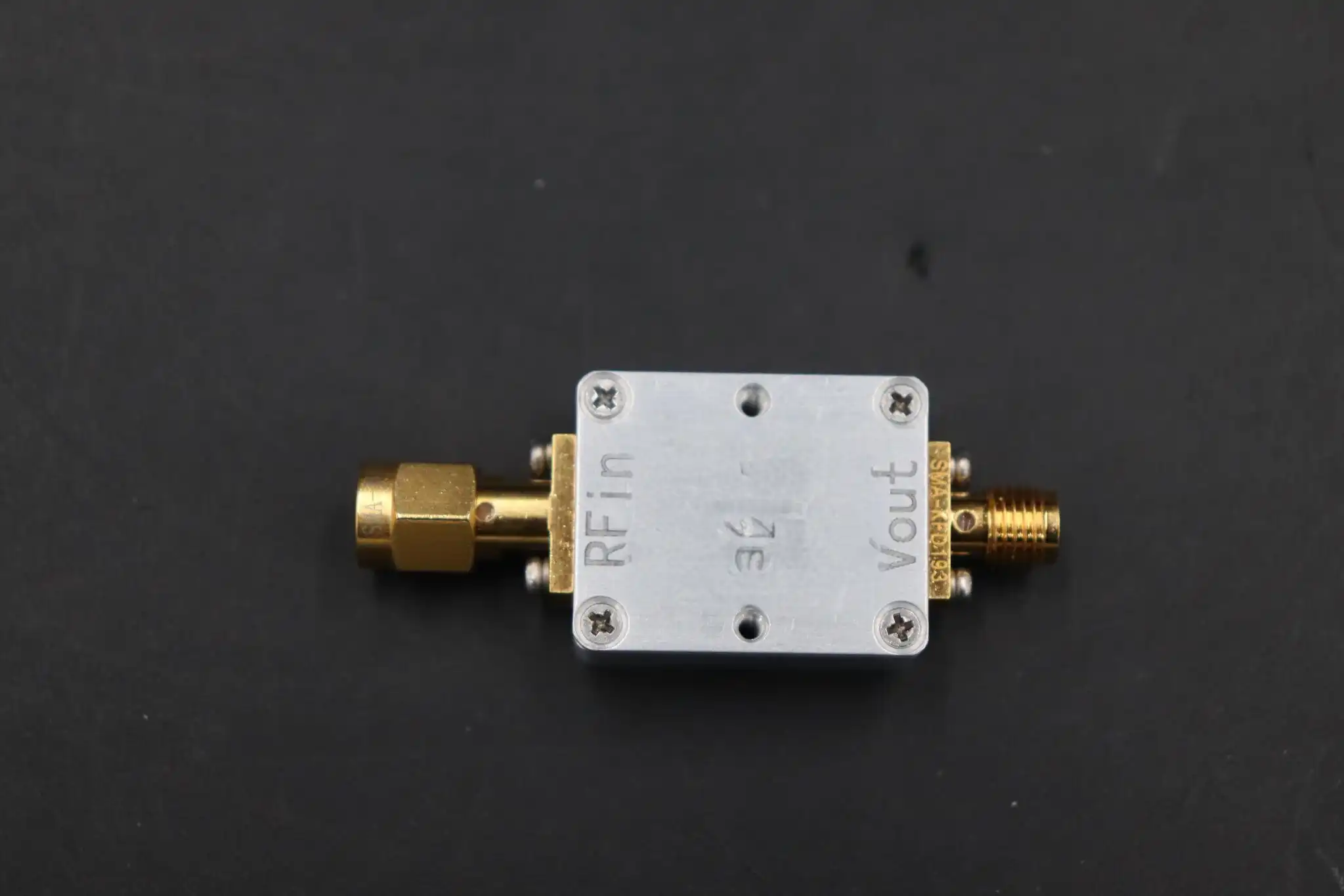
Key Factors Influencing Frequency Response Flatness
To get better flatness, you need to pay attention to a lot of different design features and operational techniques that work together. If a Broadband Coaxial Detector meets strict B2B performance standards, the following things are taken into account.
Internal Design and Component Selection
Different types of Broadband Coaxial Detectors use diodes and matched networks to work together. Point-contact Schottky diodes have great sensitivity and fast reaction times, but their capacitance and junction resistance cause changes in impedance that depend on frequency. To account for these differences, specialised microwave broadband matching circuits use spread-out transmission-line parts that keep the impedance change constant across octave bandwidths.
Long-term security is affected by the quality of the materials used. Connectors made of oxygen-free copper and gold finishing reduce insertion loss and stop impedance shift caused by rust. Rogers RT/duroid 5880 and other internal substrate materials keep their dielectric constants stable across a wide range of temperatures. This keeps the flatness from getting worse during outdoor setups or high-altitude aircraft uses.
Calibration Protocols and Frequency
Setting the standard connection between the RF power input and the DC voltage output is what calibration does. Recalibration on a regular basis makes up for diode ageing and exposure to the environment. Laboratories usually adjust Broadband Coaxial Detectors once a year using power standards that can be tracked. They sweep across the entire frequency range at different power levels to make sure they meet flatness requirements. Organisations that are certified by ISO 17025 must have written down calibration intervals and error budgets that take into account the consistency of measurements across the spectrum.
Environmental Conditions and Operational Stress
Changes in temperature can change the forward voltage features of a diode and the dielectric qualities of the substrate. If temperature adjustment circuits aren't built in, a Broadband Coaxial Detector that was set at 25°C may show a 0.5 dB flatness change when used at -40°C or +85°C. Nearby emitters can send electromagnetic interference into Broadband Coaxial Detector housings, which adds noise that blocks low-level signals and lowers the Broadband Coaxial Detector's sensitivity. Ruggedised designs with hermetic sealing and EMI protection keep working properly in radar stations on navy ships or communications payloads on spaceships, where harsh environments and vibration stress would break down regular units in months.
Broadband Coaxial Detector Performance Optimization Techniques
To get the most out of a Broadband Coaxial Detector, you need to be careful when you're buying it and follow strict operating procedures once it's in place. The following methods deal with common problems that make frequency response flatness worse.
Circuit Design Enhancements
Advanced matching networks use Chebyshev or Butterworth filters with multiple sections that change the resistance over several transmission line lengths. This spread-out method cuts down on reflections at each frequency, which makes the general reaction flatter. Adding low-pass filtering to the video output port stops RF leaks that can lead to false results when pulsed radar envelope detection is being done.
Premium Broadband Coaxial Detectors use special diode biasing methods to move the working point into the best square-law region. In this region, the output voltage stays equal to the input power without being compressed. This linear working zone increases the dynamic range and keeps the level even when the input power changes during automatic level control loops or when satellite links fade.
Maintenance Best Practices
Regular checking of connection contacts stops mechanical wear that raises VSWR and adds loss that depends on frequency. Using isopropyl alcohol and lint-free swabs to clean gets rid of contaminants that change the resistance to touch. Drift can be found before it affects production test results by checking on a regular basis with calibrated signal sources at spot frequencies across the band.
To keep humidity below 60% and keep internal conductor surfaces from oxidising, users should set up weather tracking in test sites. Shock-mounted enclosures keep Broadband Coaxial Detectors safe in mobile test cars or flying platforms. They stop solder joint fatigue, which causes impedance discontinuities that show up as flatness spikes at certain frequencies.
Real-World Performance Gains
A company that makes telecoms equipment cut the time it took to test amplifiers by 40% when they switched to Broadband Coaxial Detectors that were flat within 0.5 dB across 2–18 GHz. This meant that their automatic test software didn't need to include frequency-specific correction factors. An aerospace contractor increased the accuracy of radar cross-section readings by 1.2 dB by recalibrating Broadband Coaxial Detector arrays on a quarterly basis. This stopped the calibration drift that was causing baseline measures to be off. These recorded gains show a measurable return on investment (ROI) from both choosing the right parts and being careful with upkeep.
Comparison of Leading Broadband Coaxial Detectors in Terms of Frequency Response
To choose the best Broadband Coaxial Detector, you need to know how the different makers balance cost, performance, and durability. Well-known names offer tried-and-true solutions, while specialised sellers like Huasen Microwave offer specific features for specific uses.
Performance Benchmarking
Traditional makers of high-end lab Broadband Coaxial Detectors usually get ±0.3 dB flatness from 10 MHz to 26.5 GHz, a sensitivity of about 0.2 mV/µW, and the ability to handle up to +20 dBm of input power. When it comes to measurement, these units work great because they make it easy to track things and figure out how much error there is. But their high prices and long wait times can make it hard to stick to project budgets and schedules.
Huasen Microwave's Broadband Coaxial Detectors use point-contact diode technology combined with their own broadband matching circuits to provide accuracy of ±1 dB/octave from 0.1 GHz to 18 GHz. With an overload capacity of less than 20 mW and a sensitivity of more than 0.15 mV/µW for small-signal detection, these Broadband Coaxial Detectors offer a good mix between accurate measurements and strong power handling, making them suitable for use in the field during base station commissioning or marine satellite terminal installations.
Connector Compatibility and System Integration
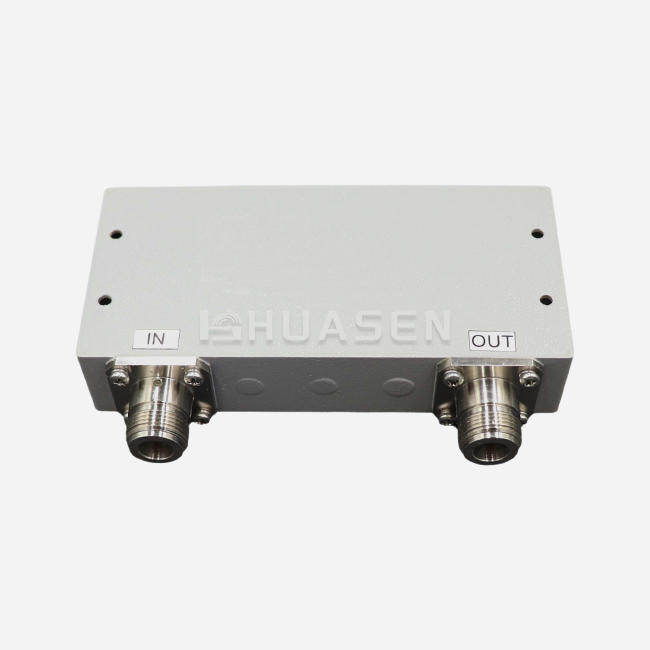
Standardising connectors changes how easily they can be bought and how well they work with other systems. Broadband Coaxial Detectors with various input types, like SMA-J and N-J interfaces, can handle the different wire assemblies that are common in test sets with more than one manufacturer. Oscilloscopes and data collection tools can talk to BNC-K video outputs without the need for special adapters. This widespread compatibility makes integration easier and lets buying teams combine sources, which makes managing supplies and handling warranties easier.
Price vs. Performance Trade-offs
Buyers who are watching their pennies often feel torn between how much something costs to buy and how much it costs to own. Entry-level mobile Broadband Coaxial Detectors are cheaper up front, but they need to be kept up with multiple units to cover wideband systems, which increases the cost of tuning and carrying the inventory. Professional-grade Broadband Coaxial Detectors cost more at first, but they simplify testing infrastructure, lower the number of times that tuning needs to be done because they are more stable, and reduce downtime by having longer MTBF ratings. Instead of just looking at the buying price, businesses should look at the total cost of ownership over three-year deployment rounds.
How to Choose the Right Broadband Coaxial Detector for Frequency Response Needs
Procurement that works well matches technical standards with application needs while keeping track of budgets and source relationships. System programmers and test lab managers can use the following structure to help them make decisions regarding a Broadband Coaxial Detector.
Setting out the technical requirements
First, make a map of the frequencies you need to cover based on the systems being tested. For testing 5G infrastructure, Broadband Coaxial Detectors must work at least between 600 MHz and 6 GHz. For satellite ground equipment, coverage must go all the way up to Ku-band at 18 GHz. Figure out the needed tolerances for flatness by figuring out the allowed measuring error budgets. For a radar pulse profile, ±1 dB smoothness is fine, but for precision scalar network analysis, you need ±0.3 dB or tighter to see small filter passband ripple.
Carefully look at the power handling needs. Continuous wave testing of low-noise amplifiers uses microwatt levels, which need very high sensitivity. On the other hand, characterising base station power amplifiers uses multiwatt signals, which need attenuators or Broadband Coaxial Detectors with a high power rating. By matching specifications to real working conditions, you can avoid both underperformance and over-specification that isn't needed.
Criteria for Evaluating Suppliers
Give more weight to sellers who can show that they have quality standards like ISO 9001 and have passed environmental testing to MIL-STD-810 for defence uses. Ask for calibration papers that can be linked to national metrology institutes to back up claims of accurate measurements. Check out the infrastructure for after-sales support, such as the availability of an expert hotline, fixed response times, and the management of spare parts inventories. When compared to multi-tier distribution methods, suppliers that let you buy directly from the plant offer clearer pricing and easier access to expert support.
Since its founding in 1993, Huasen Microwave has been a leader in high-frequency microwave and millimeter-wave components. The company keeps up-to-date quality systems for users in aerospace, radar, and telecommunications. Their engineering teams help with design, test samples, and make custom calibration data. This takes care of the technical support problems that come up a lot with complicated RF procurement.
Tips for Making the Most of Your Budget
When buying things for production test units or field service teams that are spread out, talk about big discounts for purchases of more than one unit. Including calibration services in buying contracts is a good way to lock in rates and make sure that the plan is followed. Carefully look over the guarantee terms, keeping in mind that longer coverage lowers lifetime costs by including fixes and calibration services. Some makers offer trade-in programs for old equipment that can help pay for the cost of upgrading to Broadband Coaxial Detectors with better flatness specs.
Try to keep purchase dates in line with project plans to avoid having to pay extra fees. Lead times for specialised RF parts are usually between six and twelve weeks, but for custom designs, they may need more engineering rounds. Getting involved with providers early on in the system design process helps improve specifications and set up production schedules that make sure deliveries of parts happen on time and in line with integration goals.
Conclusion
Broadband Coaxial Detectors are used in defence, aircraft, and telecommunications, and their success is measured by how flat their frequency response is. If procurement workers know about the technical factors that affect flatness, such as diode choice, matching circuit layout, calibration discipline, and environmental protection, they can make choices that balance performance needs with budget realities. By systematically comparing the different detector choices based on specific application needs rather than general specs, test infrastructure investments can be made that work best. Companies that focus on working with suppliers that offer strong technical support, traceable calibration, and open customisation will get more accurate measurements and better long-term business efficiency from their RF test and tracking systems.
FAQ
1. How often do I need to recalibrate my device to keep it meeting the accuracy requirements?
Calibration times depend on how often the device is used and how exposed it is to the surroundings. Laboratory tools that work in controlled environments usually need to be recalibrated once a year. On the other hand, units that are used in tough environments may need to be checked every six months. Aerospace and other high-reliability fields often need spot checks every three months at several frequencies to find drift early.
2. Does a better standard for flatness always mean a more accurate measurement?
Flatness affects accuracy, but it also affects other things like sensitivity, predictability, and VSWR. If a Broadband Coaxial Detector is flat to within 0.3 dB but has a low VSWR, signal echoes could cause measurement mistakes that cancel out the flatness benefit. Instead of optimising just one element at a time, look at the specs as a whole.
3. What frequency ranges are most important for trying 5G?
In 5G NR, the FR1 bands go from 600 MHz to 6 GHz, and the FR2 bands go from 24 GHz to 52 GHz. Most sub-6 GHz infrastructure needs and some millimeter-wave study needs can be met by Broadband Coaxial Detectors that cover at least 0.5–18 GHz. For full 5G test sets, you might need more than one detection head that is optimised for different bands.
Partner with Huasen Microwave for Superior RF Detection Solutions
Huasen Microwave Technology makes Broadband Coaxial Detectors that are precisely designed to meet the high standards for flatness and dependability that global telecommunications operators, aerospace contractors, and defence developers demand. Our 0.1–18 GHz Broadband Coaxial Detectors have point-contact diode technology and custom matching circuits that make them very sensitive, more than 0.15 mV/μW, and flat to within ±1 dB/octave. As a reliable company that has been making Broadband Coaxial Detectors for over 30 years, we offer full technical support from the initial specification meeting all the way through production rollout and ongoing calibration services. Get in touch with our engineering team at sales@huasenmicrowave.com to talk about your frequency response needs and get personalised suggestions that will help you get the best performance and lowest total cost of ownership for your mission-critical RF systems.
References
1. Agilent Technologies, "Understanding RF and Microwave Power Measurements," Application Note 64-1A, 2003.
2. Rytting, D., "Network Analyzer Error Models and Calibration Methods," RF and Microwave Measurement Symposium and Exhibition, 1998.
3. Pozar, D.M., "Microwave Engineering, Fourth Edition," John Wiley & Sons, 2011.
4. Maury Microwave Corporation, "Diode Detector Technology and Applications," Technical White Paper, 2015.
5. IEEE Standard 194-1977, "IEEE Standard Pulse Terms and Definitions," Institute of Electrical and Electronics Engineers, 1977.
6. U.S. Department of Defense, "MIL-STD-883K: Test Method Standard for Microcircuits," 2019.
Send Inquiry