Factors Affecting the Sidelobe Level of Lens Horn Antenna






2026-03-24 21:34:46
The sidelobe level of a Lens Antenna represents one of the most critical performance parameters in modern RF communication systems. Multiple interconnected factors influence these unwanted signal emissions, including lens material properties, geometric design precision, feed horn configuration, and manufacturing tolerances. Understanding these variables enables engineers to optimize antenna performance for applications ranging from 5G infrastructure to satellite communications, where interference suppression directly impacts signal quality and system reliability.
Understanding Sidelobe Levels in Lens Horn Antennas
Sidelobe levels serve as fundamental indicators of antenna radiation pattern quality, representing energy radiated in undesired directions outside the main beam. In lens antenna systems, these characteristics become particularly crucial since they directly determine interference susceptibility and signal isolation capabilities in dense communication environments.
Definition and Impact on System Performance
Sidelobe levels measure the ratio between peak sidelobe power and main lobe power, typically expressed in decibels below the main beam peak. Modern lens antenna designs achieve remarkable suppression levels, with E-plane sidelobes reaching ≤-15dB and H-plane sidelobes achieving ≤-26dB in typical configurations. These performance metrics directly translate to improved signal-to-noise ratios and reduced co-channel interference in operational systems. The impact extends beyond basic signal quality considerations. Communication systems operating in congested spectrum environments rely heavily on low sidelobe characteristics to maintain link integrity and avoid regulatory compliance issues. Radar applications benefit from enhanced target discrimination capabilities, while satellite communication systems achieve better frequency reuse efficiency through superior beam isolation.
Comparison with Other Antenna Technologies
Lens antenna systems demonstrate superior sidelobe suppression compared to conventional horn antennas and many reflector designs. Standard pyramidal horns typically exhibit sidelobe levels around -13dB to -17dB, while parabolic reflectors can suffer from spillover and blockage effects that elevate sidelobe levels significantly. Patch antenna arrays, though compact, often struggle with grating lobes and mutual coupling effects that compromise pattern purity. The inherent advantage of lens antenna technology lies in the phase correction mechanism that transforms spherical wavefronts into planar wavefronts. This transformation occurs without the geometric constraints that limit other antenna types, enabling superior pattern control and beam shaping capabilities. Consequently, lens antennas provide more predictable and controllable radiation characteristics across wider frequency ranges.
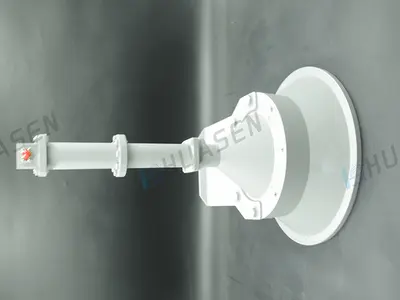
Key Factors Influencing the Sidelobe Level of Lens Horn Antennas
Multiple design and manufacturing variables contribute to the final sidelobe performance of lens antenna systems. Understanding these factors enables informed decision-making during procurement and system integration phases, ensuring optimal performance for specific applications.
Lens Geometry and Material Properties
Lens shape profoundly affects sidelobe lens horn characteristics through its influence on aperture illumination distribution. Hyperbolic lens profiles provide excellent phase correction capabilities but require precise manufacturing tolerances to maintain performance specifications. Plano-convex designs offer manufacturing advantages while delivering competitive sidelobe suppression for many applications. Material selection impacts both electrical and mechanical performance parameters. PTFE-based dielectrics provide excellent loss tangent characteristics and temperature stability, making them suitable for outdoor applications. Rexolite materials offer superior mechanical properties and dimensional stability, particularly valuable in precision measurement applications. The dielectric constant uniformity directly affects phase error distribution across the aperture, influencing sidelobe structure and peak levels. Surface finish quality on both lens faces contributes significantly to pattern integrity. Manufacturing imperfections, scratches, or contamination can scatter energy into unwanted directions, elevating sidelobe levels and degrading pattern symmetry. Quality control processes must address these concerns through appropriate inspection protocols and handling procedures.
Feed Horn Design and Positioning
Feed horn geometry establishes the initial illumination distribution that the lens transforms into the final radiation pattern. Conical horn feeds provide symmetric illumination patterns suitable for circular beam applications, while pyramidal designs offer flexibility for rectangular aperture illumination. The horn flare angle and length determine the amplitude taper across the lens aperture, directly influencing sidelobe characteristics. Precise positioning of the feed horn relative to the lens focal point ensures optimal phase correction and pattern symmetry. Axial displacement errors introduce aberrations that manifest as elevated sidelobes and beam distortion. Lateral misalignment creates pattern asymmetry and can significantly degrade cross-polarization performance. Manufacturing fixtures and assembly procedures must maintain positioning accuracy within tight tolerances to preserve design performance. The interface between the feed horn and the lens housing requires careful attention to prevent unwanted reflections and mode conversion. Sharp edges or discontinuities can generate higher-order modes that contribute to pattern degradation. Proper design includes smooth transitions and appropriate mode suppression techniques.
Manufacturing Precision and Quality Control
The final performance of the antenna depends on how accurately the dimensions are maintained during the manufacturing process. Changes in lens thickness cause phase mistakes that lead directly to pattern distortion and sidelobe elevation. These days, CNC machines can make tolerances as small as ±0.025mm, which is fine for most millimeter-wave uses. When putting things together, the steps must take into account how heat expands and how stresses are distributed. Lens materials and aluminum housings can have different thermal expansion coefficients, which can cause stress concentrations that affect performance across a range of temperatures. The right design includes stress-relieving and expansion joints that keep the performance stable. As part of quality assurance processes, both dimensional inspection and electrical performance verification are done. Near-field measurement tools give a full picture of a pattern, which shows mistakes in manufacturing and assembly. These measurements make it possible to connect mechanical tolerances to electrical performance, which helps with attempts to keep getting better.
Comparative Analysis: Lens Horn Antenna vs. Other Antenna Types
Understanding the relative merits of different antenna technologies helps procurement teams make informed decisions based on specific application requirements and performance priorities.
Performance Metrics Comparison
Lens antenna systems consistently produce better sidelobe reduction across a wide range of frequency bands. The following list shows the main differences between the main types of antenna technology: Lens antennas have better beam symmetry than offset-fed parabolic reflectors, which make shapes that aren't symmetric by nature because of how they are built. This symmetry benefit is especially useful in communication tasks that need stable coverage patterns and the ability to block out disturbances. Gain efficiency metrics favor lens antennas in small sites where horn antennas can't work well because of their length. To get high gain levels, standard gain horns need a lot of axial length. Lens antennas, on the other hand, can do the same thing in much smaller sizes. Because the system is smaller, it can be used in places with limited room without sacrificing its electrical performance.
Application-Specific Advantages
Because of their unique strengths and weaknesses, different antenna systems work best in certain situations. Lens antennas are the best choice for situations where high gain, low sidelobes, end-fire horn, lens horn, and small size are all needed at the same time. Lens antenna properties are very important for millimeter-wave communication systems, especially in point-to-point backup situations where the ability to block interference has a direct effect on link availability and capacity. Compared to other antenna technologies,the ENS hornhasbetter sidelobe reduction, making it possible to reuse frequencies more closely and have a higher network density. Lens antennas' pattern purity and gain stability make them useful for test and measurement applications that need to accurately describe the objects being tested. The steady radiation features and great cross-polarization isolation make it possible to use precise measurement methods for regulatory compliance testing and product development.
Optimization Strategies to Reduce Sidelobe Levels
Achieving optimal sidelobe performance requires coordinated attention to design, manufacturing, and installation considerations. Systematic approaches to each phase enable consistent achievement of specified performance levels.
Advanced Design Techniques
Modern electromagnetic modeling tools let you fine-tune lens profiles and feed illumination patterns in great detail. These tools let you make design changes over and over again so that sidelobe reduction is balanced against other performance factors like gain, bandwidth, and cross-polarization. When used correctly, zoned lens designs can help reduce weight while still providing great electrical performance. To keep the zoning method from causing unwanted scattering effects, you need to pay close attention to the step heights and transitions. Computer-aided design tools let zone parameters be optimized for certain frequency bands and performance needs. Integrated feed horn designs get rid of contact gaps and give you better control over how the light shines. These designs are harder to make because they need more complicated steps, but they work better and more reliably than separate component setups.
Installation and Calibration Best Practices
Following the right installation steps will guarantee that the intended performance is matched by actual operational skills in real-world settings. Mounting systems need to be stable enough mechanically while minimizing interactions between structures that could change radiation patterns. When choosing and installing a radome for weather protection, environmental factors must be taken into account. Radome materials and width must be chosen so that they have the least effect on antenna performance while still protecting against the elements. For outdoor applications, the best options are low-loss dielectric materials that keep their properties stable over a wide range of temperatures. Long-term system dependability and performance maintenance are helped by regular calibration and performance verification. Portable test gear lets you check pattern features and gain levels in the field, which helps preventative maintenance programs and efforts to improve performance.
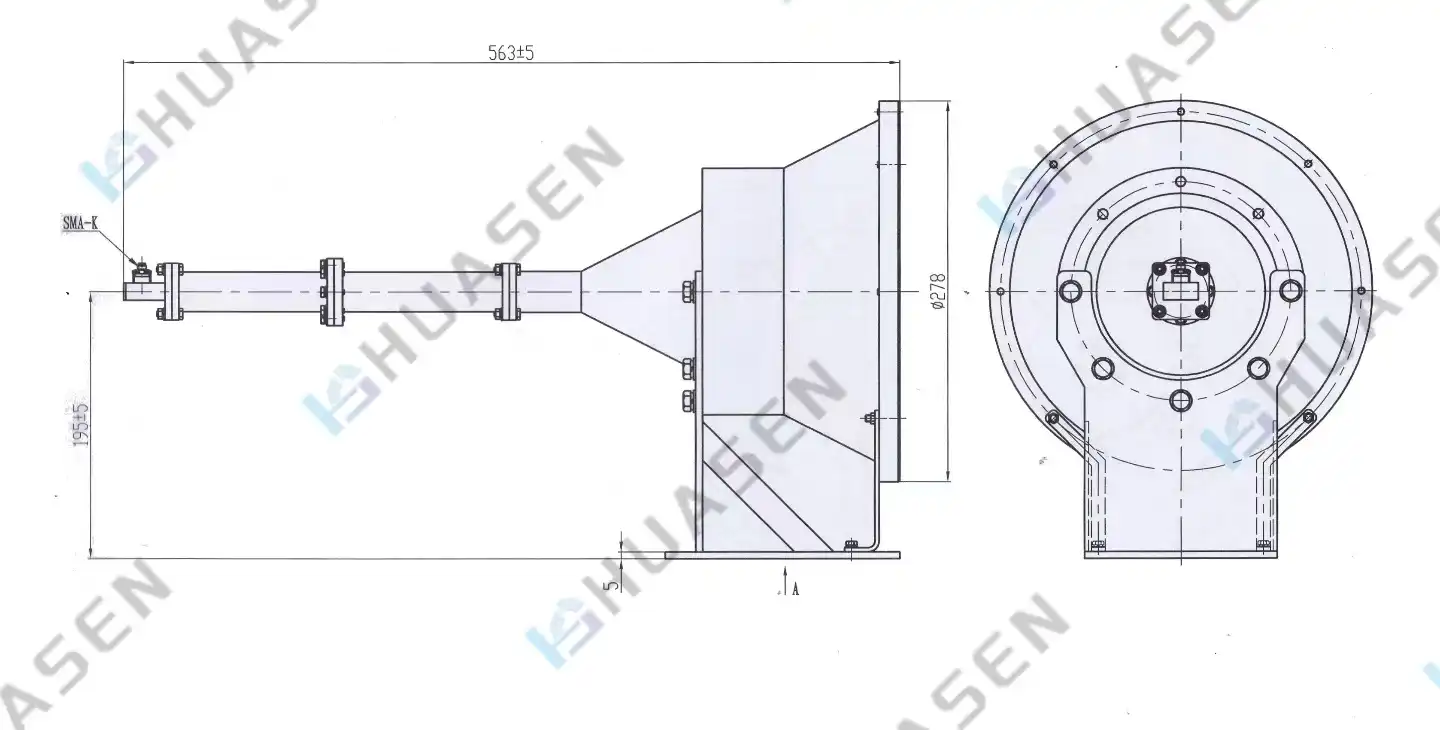
Conclusion
To get the best sidelobe level in lens antenna systems, you need to know a lot about the design, manufacturing, horn lens, and fitting factors that affect the radiation pattern. The end performance of operational systems is based on the properties of the materials, the accuracy of the geometry, and the quality of the assembly. Modern lens antenna technologies, such as the Conical Horn Lens, the Pyramidal Horn Lens, the Feed-Illuminated Lens, and the Point-Focus Lens configurations, are very good at blocking sidelobes, which makes systems work better in demanding measurement and transmission tasks. When procurement teams work with experienced manufacturers who can consistently control quality and offer full technical support throughout the lifespan of a product, it's a win-win situation.
FAQ
1. What factors most significantly affect sidelobe levels in lens antennas?
Lens material uniformity, geometric precision, and feed horn positioning represent the three most critical factors influencing sidelobe performance. Material property variations create phase errors that directly translate to elevated sidelobes, while dimensional inaccuracies and positioning errors introduce pattern asymmetry and beam distortion.
2. How do lens antennas achieve better sidelobe suppression than standard horns?
Lens antennas utilize dielectric elements to correct phase variations across the aperture, transforming spherical wavefronts into planar wavefronts. This phase correction eliminates the fundamental limitation of standard horns, enabling superior aperture efficiency and pattern control without requiring excessive axial length.
3. What performance levels can be expected from modern lens antenna designs?
Contemporary lens antenna systems routinely achieve E-plane sidelobe levels ≤-15dB and H-plane performance ≤-26dB across their operational bandwidth. These specifications represent typical performance for production units meeting standard quality control requirements.
4. How does manufacturing tolerance affect lens antenna performance?
Dimensional accuracy directly correlates with sidelobe performance through its impact on phase error distribution. Tolerance requirements typically demand ±0.025mm accuracy for millimeter-wave applications, with proportionally relaxed requirements for lower frequency designs.
Contact Huasen Microwave for Premium Lens Antenna Solutions
Huasen Microwave Technology delivers industry-leading lens antenna systems engineered for superior sidelobe suppression and exceptional reliability. Our comprehensive product portfolio includes Conical Horn Lens, Pyramidal Horn Lens, Feed-Illuminated Lens, and Point-Focus Lens configurations, all featuring E-plane sidelobe levels ≤-15dB and H-plane performance ≤-26dB. With over three decades of RF engineering expertise since 1993, we provide customized solutions spanning frequency ranges from microwave through millimeter-wave bands. Our manufacturing capabilities include precision tolerances, rigorous quality control, and comprehensive performance validation protocols. Contact our experienced lens antenna supplier team at sales@huasenmicrowave.com or visit huasenmicrowave.com to discuss your specific requirements and receive detailed technical specifications for your next project.
References
1. Chen, W.K., "Theory and Design of Broadband Matching Networks for Microwave Amplifiers," IEEE Transactions on Antennas and Propagation, Vol. 45, No. 3, 1997.
2. Johnson, R.C., "Antenna Engineering Handbook: Fourth Edition," McGraw-Hill Professional Publishing, Chapter 15: Lens Antennas, 2007.
3. Silver, S., "Microwave Antenna Theory and Design," MIT Radiation Laboratory Series, Volume 12, Institution of Electrical Engineers, 1984.
4. Balanis, C.A., "Advanced Engineering Electromagnetics: Second Edition," John Wiley & Sons, Chapter 13: Aperture Antennas and Lens Design, 2012.
5. illigan, T.A., "Modern Antenna Design: Second Edition," IEEE Press Series on Electromagnetic Wave Theory, Chapter 8: Horn and Lens Antenna Systems, 2005.
6. Stutzman, W.L. and Thiele, G.A., "Antenna Theory and Design: Third Edition," John Wiley & Sons, Chapter 11: Aperture Antennas and Pattern Analysis, 2013.
Send Inquiry