Custom Broadband Horn Antenna: What Parameters Need to Be Provided?






2026-03-07 21:53:55
If you want the best results from a custom broadband antenna for industrial use, you need to know what the important parameters are. Custom broadband horn antennas need specific information about their frequency range (usually 1-18 GHz or wider), gain needs, polarisation type, power handling, environmental requirements, mechanical limitations, and connection types. These factors have a direct effect on the antenna's shape, the materials used, and the manufacturing methods. This makes sure that the finished product meets specific operational requirements in radar, defence, aerospace, and telecommunications.
Understanding Custom Broadband Horn Antennas
Custom broadband horn antennas are a sophisticated step forward in RF engineering. They are made to work well across wide frequency ranges while keeping their performance traits stable. These specialised gadgets are very important in modern defence systems, satellite communications, and internet networks that need to be able to change frequencies quickly.
Fundamental Working Principles
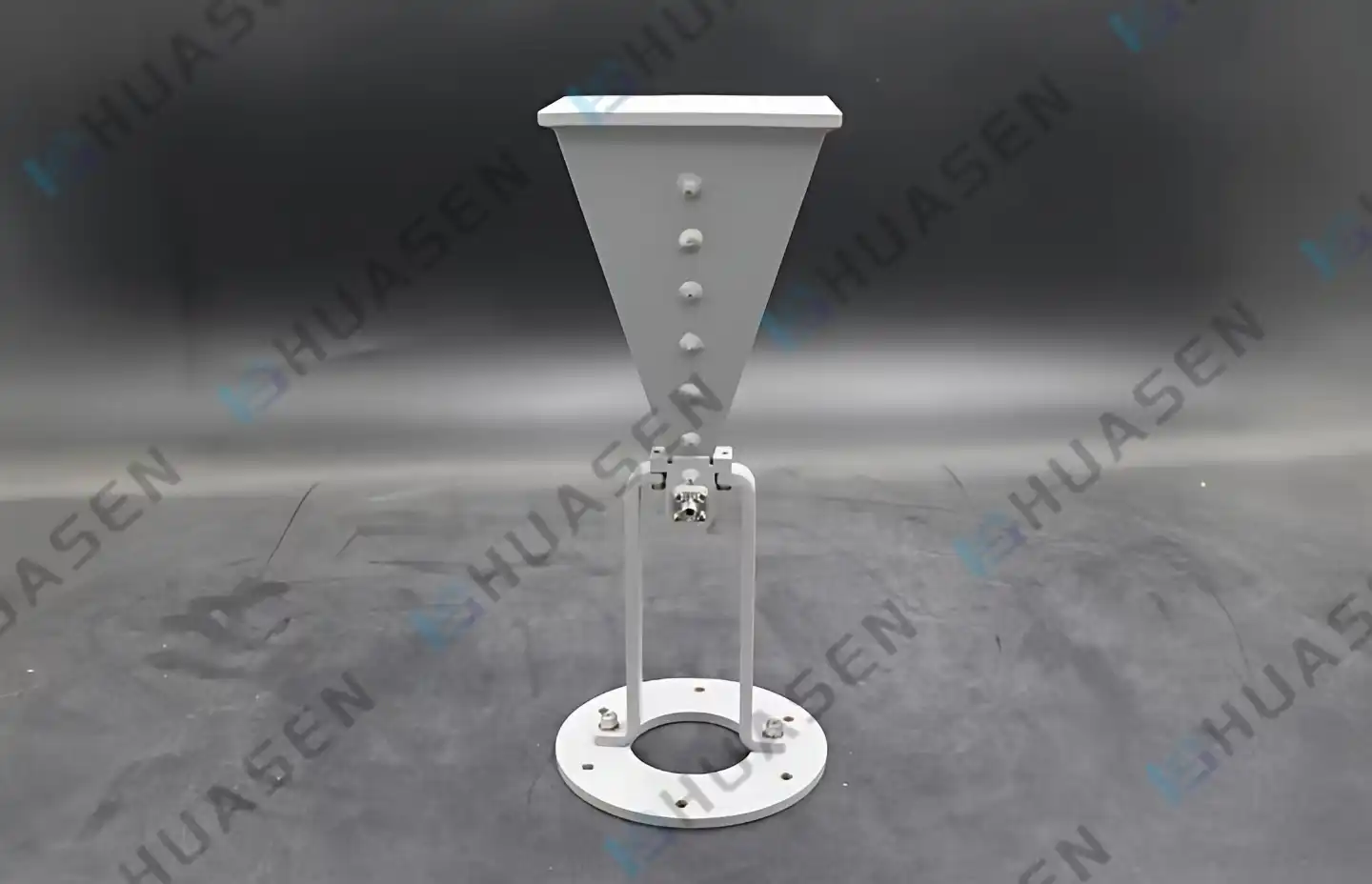
Broadband horn antennas have a unique design that includes flared waveguide structures that move electromagnetic energy slowly between confined waveguide modes and free-space transmission. These antennas are not narrowband like some others; instead, they use carefully designed shapes that keep impedance matching across many octaves of frequency range. The flared form of the horn makes a controlled opening that shapes radiation patterns while reducing reflections and increasing the efficiency of power transfer. More advanced types often have ridged designs, in which metal ridges inside the horn structure drop the cutoff frequency by a large amount and increase the operational bandwidth. This new design solves the important problem in the business of getting wide-spectrum coverage without losing signal integrity or needing multiple antenna systems.
Distinguishing Features from Standard Antennas
Custom broadband horn antennas work great in situations that need to be able to handle a lot of power and a wide range of frequencies. Because they have better phase linearity and predictable radiation properties, they can't be used for EMC testing, measuring radar cross-sections, or spectrum tracking. The strong construction usually includes precision-machined aluminium bodies that have been treated to prevent corrosion. This makes them last a long time in harsh environments.
Essential Parameters to Provide for Custom Broadband Horn Antenna Design
For custom antenna development to go well, theDouble Ridged Horn Antenna, all of the parameters must be clearly defined so that they meet both technical needs and practical limits. Knowing these important design inputs helps procurement teams talk to manufacturers clearly and makes sure the product provided meets all application needs.
Frequency Range and Bandwidth Requirements
The most important thing to know about any broadband antenna design is the operating frequency range. Engineers need to be very clear about what the lowest and highest frequencies are, taking into account both the main operating bands and any possible future needs for growth. For modern 5G uses, coverage is usually needed from sub-6 GHz to millimetre waves. Radar systems, on the other hand, may need certain bands within the 1-40 GHz spectrum. Not only should bandwidth specs list the frequency range, but they should also say how much performance factors can change within that range. Gain changes of 3–4 dB across the band are fine for some uses, but very accurate measurement systems may need much smaller tolerances.
Gain and Radiation Pattern Specifications
Gain needs directly affect the size and complexity of an antenna. Higher-gain antennas usually need bigger holes, which could be a problem in mobile or small installations where room is limited. It's important that the radiation pattern specification covers both azimuth and elevation features, such as the main lobe beamwidth, side lobe levels, and cross-polarization performance. For broadband systems, pattern stability across the frequency range is very important. Engineers should say whether constant gain or constant beamwidth is more important, since meeting these needs often means making design trade-offs that change the general shape of the antenna.
Power Handling and Environmental Constraints
Power specs need to include both average and peak power needs, taking into account the application's unique waveforms. High peak powers and low duty cycles are common in radar systems. On the other hand, transmission systems may need lower but more stable power levels. The working temperature ranges, humidity exposure, vibration resistance, and corrosion protection requirements are all part of the environmental specifications. It's important to pay close attention to weatherproofing and heat cycling effects when installing things outside. The design of the antenna has to account for thermal growth while keeping the same level of electrical performance across the given temperature range.
How to Provide Parameters: Best Practices for Procurement Managers and Engineers
To work together with antenna makers effectively, you need to communicate in a structured way and write down all of your technical needs. This methodical technique cuts down on confusion, speeds up the development process, and makes sure the final product meets all the requirements.
Documentation and Communication Standards
Professional parameter specification starts with standard documentation that makes it clear which characteristics are required and which are chosen. Manufacturers can better understand priority hierarchies and possible trade-offs by making thorough requirement matrices. Include information about the application that explains why certain parameters are important. This will let manufacturers offer improvements or different ways to do things. Documentation that works well should include quality standards, electrical specs, mechanical limitations, and environmental requirements. When it's necessary, use industry standards like MIL-STD or IEC guidelines as references. These give clear standards for checking performance.
Leveraging Manufacturer Expertise
Manufacturers of antennas with a lot of experience can help improve original specifications and spot problems that might come up during implementation. By participating in early technical talks, manufacturers can suggest changes to parameters that could improve performance while also lowering costs or making development easier. Manufacturers can do viability studies that point out difficult requirements and suggest other ways to meet them. Through working together, people often find ways to improve specifications without affecting useful requirements. This results in cheaper solutions that are built faster.
Testing and Validation Requirements
Comprehensive testing protocols make sure that antennas supplied meet all requirements and work reliably in real-world settings. For each important parameter, list the tests that need to be done, the uncertainty in the measurements, and the acceptance criteria. When it makes sense, include both factory acceptance testing and field validation standards. Standard test methods include measuring patterns, figuring out VSWR, and making sure the power handle can handle it. However, for certain uses, extra tests like phase linearity or pulse response testing may be needed. Clear test requirements stop arguments and make sure that the same level of quality is delivered every time.
Case Studies and Comparison of Custom Broadband Horn Antennas
Real-world implementations demonstrate the practical benefits and performance capabilities of custom broadband horn antennas across diverse industrial applications. These examples illustrate how proper parameter specification translates into measurable operational improvements.
Telecommunications Infrastructure Success
A big company that makes telecom equipment needed antennas for testing 5G base stations across the whole band, from sub-6 GHz to millimetre waves. The custom broadband horn antenna system worked across frequencies from 1 to 40 GHz, with gain changes of less than 2 dB in each sub-band. This single antenna replaced a complicated collection of narrowband antennas. This made tests easier, measurements more accurate, and equipment costs much lower. The implementation made test cycles 15% faster by getting rid of the need to switch antennas. It also increased trust in the validity of the product by making measurements more consistent. Environmental tests proved that the equipment would work reliably in a range of temperature and humidity conditions that are common in telecommunications installations.
Aerospace and Defense Applications
A defence contractor working on radar systems for robotic aerial vehicles needed small, light antennas that could handle high peak powers and keep their radiation patterns stable across 8-18 GHz. The custom solution used advanced ridged horn technology and special materials that made it 30% lighter than normal designs while still meeting power handling requirements. Performance evaluation showed that the pattern stayed stable within certain limits across the entire frequency range. This made it possible to accurately find and track targets. The tough design passed vibration and shock tests that were meant to mimic real fly conditions, theDouble Ridged Horn Antennashowing that it is suitable for harsh aerospace settings.
Comparison with Alternative Antenna Technologies
In some situations, broadband horn antennas are clearly better than other types of antennas. More gain and better pattern control are available with horn designs compared to log-periodic antennas, but they may be bigger. Yagi antennas might have about the same gain at some frequencies, but they don't have the consistent broadband performance that is needed for many current uses. Because they can handle more power than other kinds of antennas, horn antennas are needed in high-power situations where other types of antennas would not work. Because their radiation patterns are well-known and reliable,they can be used for accurate measurements in calibration and testing, even though they might cost more.
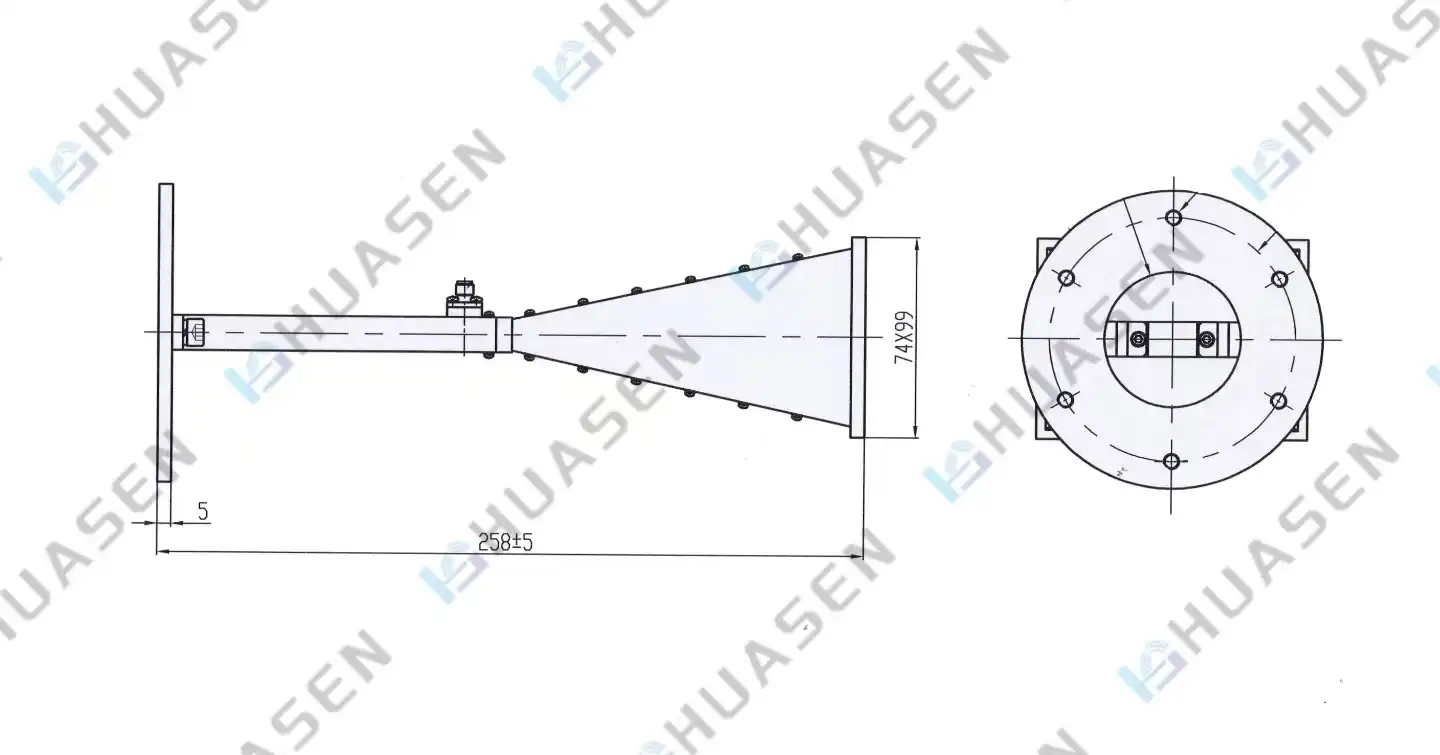
Troubleshooting and Optimizing Custom Broadband Horn Antennas
Even well-designed custom antennas may encounter performance challenges during installation or operation. Understanding common issues and optimization strategies enables users to maximize antenna performance and longevity.
Installation and Integration Challenges
Proper antenna installation significantly impacts actual performance compared to specification sheet values. Common issues include improper grounding, connector interface problems, and near-field obstructions that distort radiation patterns. Systematic installation procedures and post-installation verification measurements help identify and correct these problems before they affect system operation. Mechanical mounting arrangements must accommodate thermal expansion while maintaining electrical connections and structural integrity. Improper mounting can introduce stress concentrations that lead to connector failures or structural damage over time.
Environmental Protection and Maintenance
Outdoor installations require particular attention to environmental protection strategies that preserve electrical performance while protecting internal components. Radome selection involves balancing protection benefits against potential signal attenuation and pattern distortion effects. Regular inspection schedules help identify potential problems before they cause failures. Preventive maintenance procedures should address connector cleaning, structural inspection, and electrical performance verification. Establishing baseline measurements during initial installation provides reference points for detecting performance degradation over time.
Performance Optimization Strategies
Fine-tuning antenna performance often involves adjusting installation parameters rather than modifying the antenna itself. Optimizing feed network configurations, adjusting mounting orientations, and minimizing nearby reflective surfaces can improve actual performance beyond initial measurements. Advanced users may benefit from field pattern measurements that verify actual radiation characteristics in the installed environment. These measurements can reveal environmental effects that impact performance and guide optimization efforts.
Conclusion
Custom broadband horn antenna specification requires careful consideration of numerous technical broadband antenna and operational parameters to achieve optimal performance. Success depends on comprehensive documentation of requirements, effective collaboration with experienced manufacturers, and systematic validation procedures. The investment in proper specification and development pays dividends through superior performance, reduced system complexity, and enhanced operational reliability. Understanding these principles enables procurement professionals and engineers to confidently specify custom antennas that meet demanding application requirements while providing excellent long-term value.
FAQ
1. What is the typical lead time for custom broadband horn antenna development?
Custom antenna development timelines vary significantly based on complexity and specification requirements. Standard modifications to existing designs may require 4-6 weeks, while completely new designs typically need 8-12 weeks for development and testing. Complex military or aerospace applications with extensive qualification requirements can extend to 16-20 weeks. Early engagement with manufacturers helps establish realistic timelines and identify potential schedule risks.
2. Can broadband horn antennas be adapted for specialized applications like amateur radio?
Broadband horn antennas can certainly be designed for amateur radio applications, though they may be oversized for typical ham radio installations. Their primary advantages in amateur applications include excellent pattern control for EME (earth-moon-earth) communications and superior signal-to-noise performance for weak signal work. The broad bandwidth capability supports multi-band operation without antenna switching, though the physical size may limit practical applications.
3. What documentation is required to initiate a custom antenna inquiry?
Comprehensive inquiries should include electrical specifications (frequency range, gain, pattern requirements), mechanical constraints (size, weight, mounting), environmental conditions (temperature, humidity, exposure), power requirements (average and peak), connector specifications, and applicable standards or certifications. Application context information helps manufacturers understand critical parameters and suggest optimizations. Preliminary budgets and timeline expectations facilitate realistic project scoping.
4. How often should custom broadband horn antennas be recalibrated?
Industry best practices recommend recalibration intervals of 12-24 months for measurement and calibration applications, depending on usage intensity and environmental exposure. Critical applications may require more frequent verification, while stable installations might extend intervals to 36 months. Any physical damage, connector replacement, or environmental exposure beyond design limits should trigger immediate recalibration. Maintaining calibration records supports quality management and regulatory compliance requirements.
5. What factors affect the cost of custom broadband horn antennas?
Cost drivers include frequency range, breadth, gain and pattern requirements, power handling specifications, environmental protection needs, mechanical complexity, and required certifications. Custom tooling for unique geometries adds development costs that may be amortized over production quantities. Military or aerospace specifications typically increase costs due to materials requirements and qualification testing. Volume commitments often enable significant unit cost reductions through dedicated tooling investments.
Partner with Huasen Microwave for Superior Broadband Antenna Solutions
Huasen Microwave stands ready to transform your custom broadband antenna requirements into precision-engineered solutions that exceed performance expectations. Our three decades of expertise in microwave and millimeter-wave technology uniquely position us as your trusted broadband antenna supplier for demanding telecommunications, aerospace, broadband antenna,and defense applications. Contact our engineering team at sales@huasenmicrowave.com to discuss your specific requirements and discover how our customization capabilities can optimize your system performance.
References
1. Balanis, Constantine A. "Antenna Theory: Analysis and Design, Fourth Edition." Wiley, 2016.
2. IEEE Standard for Definitions of Terms for Antennas. IEEE Std 145-2013.
3. Milligan, Thomas A. "Modern Antenna Design, Second Edition." Wiley-IEEE Press, 2005.
4. Rudge, Alan W. "The Handbook of Antenna Design, Volume 1." IET Electromagnetic Waves Series, 1986.
5. Stutzman, Warren L. "Antenna Theory and Design, Third Edition." Wiley, 2012.
6. Volakis, John L. "Antenna Engineering Handbook, Fourth Edition." McGraw-Hill Education, 2007.
Send Inquiry