Coaxial Isolator vs Drop-In Isolator: Key Differences






2026-06-30 21:29:01
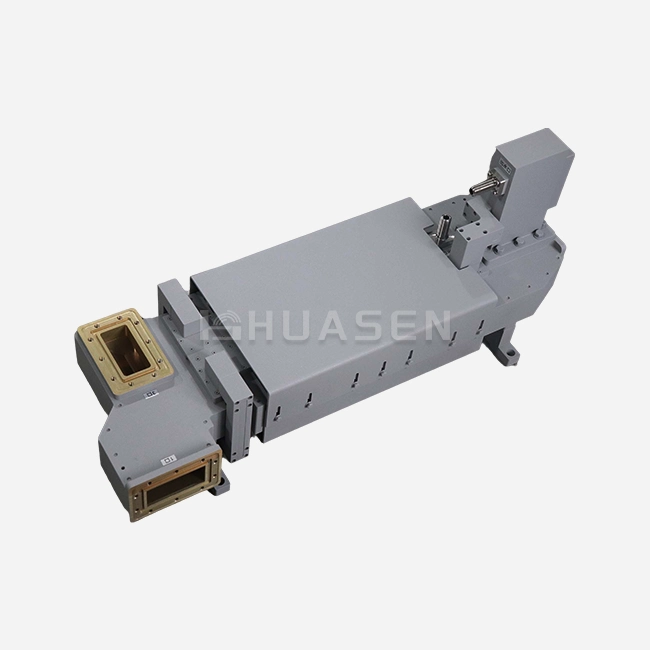
When choosing RF parts for high-frequency systems, knowing the difference between coaxial and drop-in isolators can have a big effect on how well the system works and how much it costs. Signal sources are shielded from reflected power in transmission systems by a Coaxial Isolator, an inactive non-reciprocal device with coaxial connections like SMA or N-Type. Drop-in isolators, on the other hand, are small surface-mount devices that don't have any external connectors. They are made to be directly integrated onto a PCB in situations with limited room. The main difference is in the shape, how they handle power, and how they are installed. Coaxial types work best for high-power outdoor infrastructure, while drop-in types work best for low-power, small lab equipment and transceivers.
Understanding Isolators: Coaxial vs Drop-In
Both types of isolators use ferrite materials and magnetic fields to make non-reciprocal data flow possible, but they are built and used in very different ways. Knowing these differences helps buying teams choose parts that meet the needs of the project.
What Defines a Coaxial Isolator?
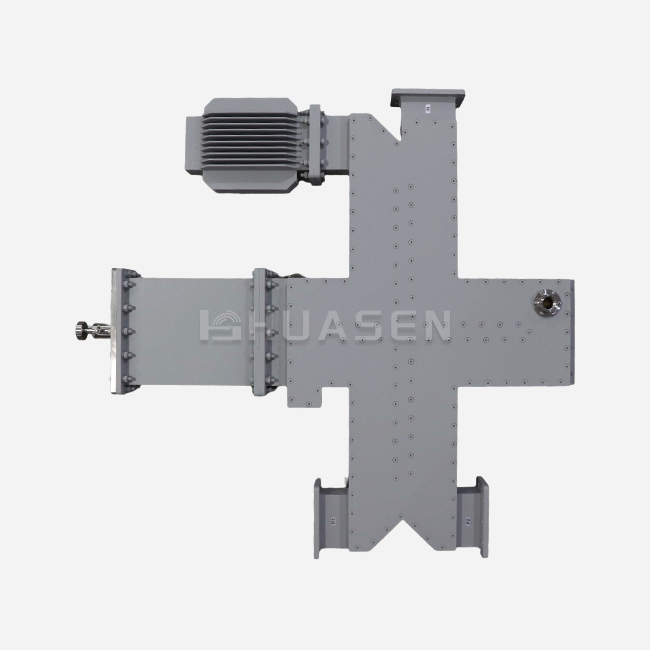
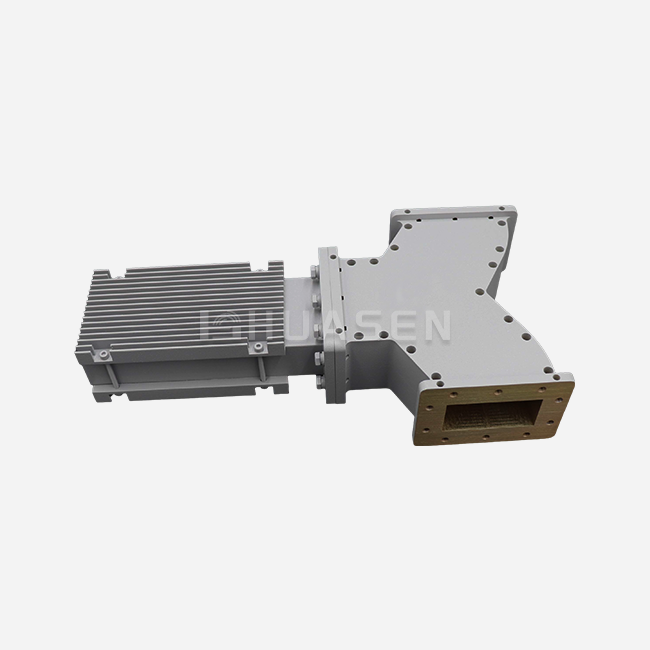
Coaxial Isolators have strong housings with threaded RF connections that make them easy to join to coaxial transmission lines. They are made up of ferrite pucks and permanent magnets inside insulated cases that are usually made of aluminum or nickel-plated steel. This design allows for great heat escape and long-lasting mechanical performance, which is very important for outdoor base stations and powerful radar systems. Huasen Microwave's Coaxial Isolators work with frequencies from 0.33GHz to 3.1GHz. They have all-aluminum bodies that keep them cool and can handle up to 200W of power on average. The connector-based design makes it easier to install and change parts in the field, without having to solder or fix the PCB.
Drop-In Isolator Architecture and Benefits
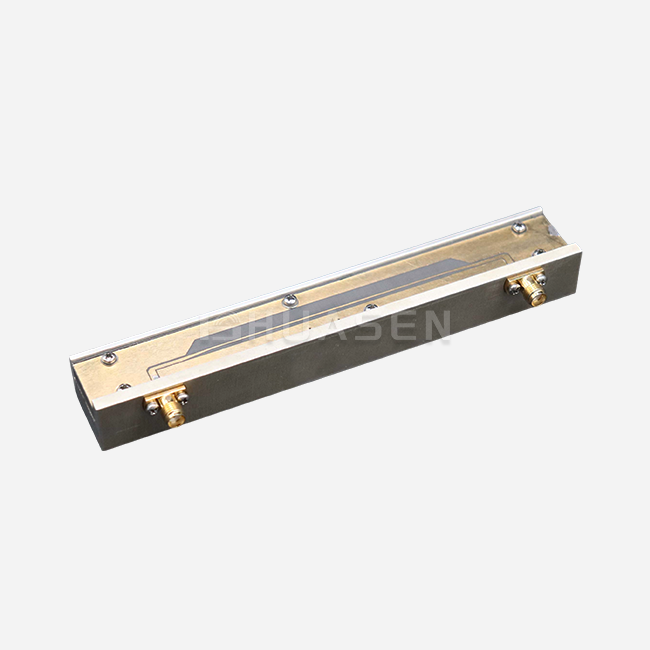
Drop-in isolators are surface-mount parts that don't have any external connections. They are put on printed circuit boards using microstrip or stripline transitions. Because they take up very little space—often less than 1 cubic centimeter—they are perfect for test instruments and transmission units that need to fit on a small board. Not having any connections lowers insertion loss at millimeter-wave frequencies, but it also means that the device can only handle less than 10W of power continuously. Their design works well for signal generators in the lab, low-power satellite packages, and small transmission devices where weight and size limitations are more important than power needs.
Operating Principles and Core Functions
Both types of isolators use Faraday spinning in magnetized ferrite materials to send signals forward while soaking energy backwards. The forward signal goes through with only 0.3dB to 0.5dB of insertion loss, while the reverse signals are sent into an internal termination resistor, which achieves isolation levels above 20dB. This stops impedance-mismatch echoes from hurting power amps or making oscillator frequencies less stable. The main difference between the two types of operation is how the power is lost. Coaxial designs can use bigger termination resistors because they have better thermal paths, but drop-in units depend on PCB copper layers to spread heat, which limits their ability to reverse power.
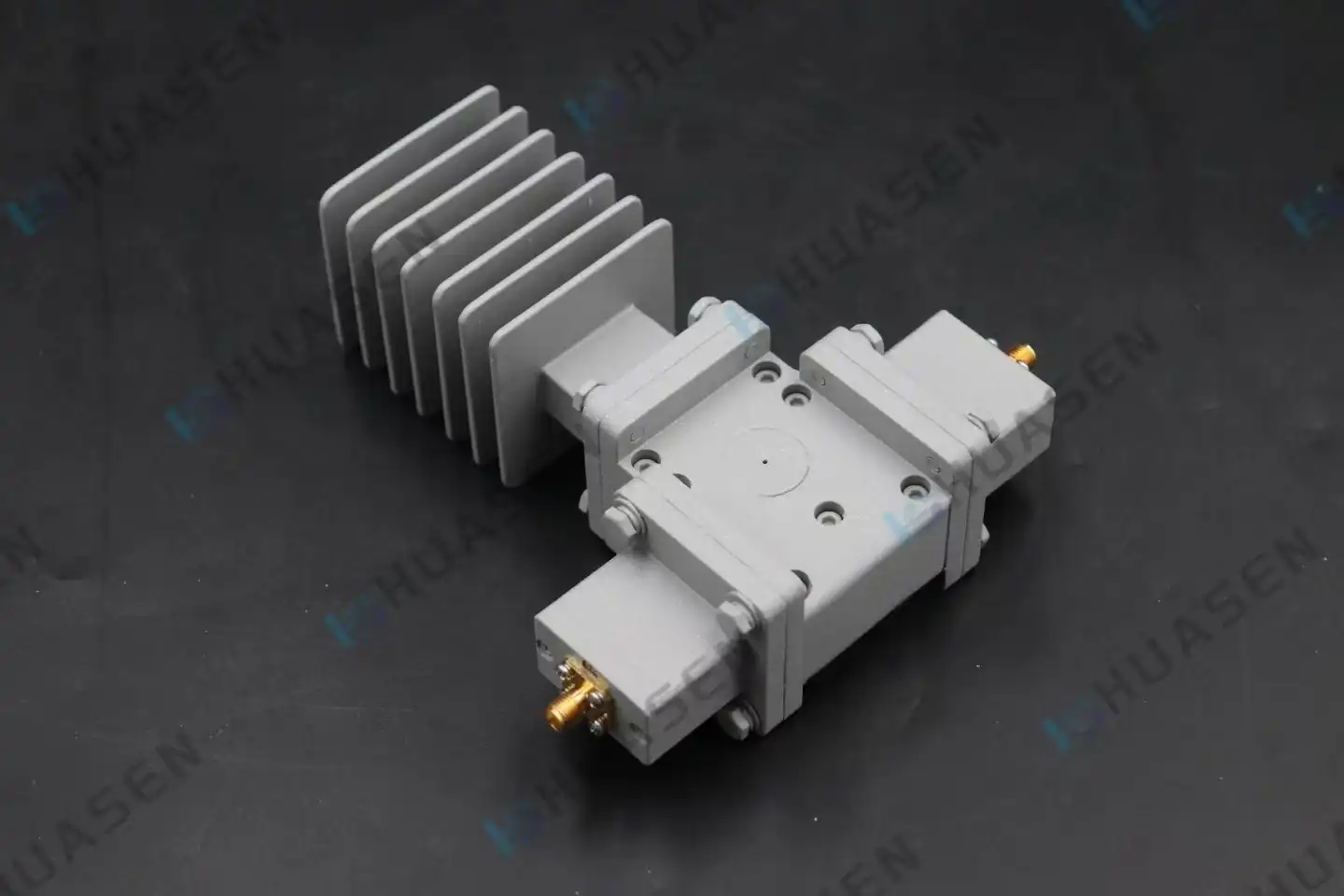
Performance Comparison: Coaxial Isolator vs Drop-In Isolator
To choose between these types of isolators, you need to carefully look at the electricity requirements and the needs of the surroundings. Performance trade-offs have a direct effect on how reliable a system is and how much it costs to own it all.
Insertion Loss and Isolation Characteristics
Coaxial Isolators usually have insertion loss between 0.2dB and 0.5dB over their stated bandwidth, with isolation values between 20dB and 25dB. Their improved magnetic circuits and bigger ferrite amounts keep their performance stable over a wide temperature range. Drop-in isolators have about the same amount of insertion loss (0.3dB to 0.6dB), but their small ferrite elements can be more sensitive to changes in temperature. At 18dB to 22dB, isolation performance stays strong, which is good enough for most lab and low-power uses. Coaxial Isolator versions keep their electrical stability better when they are heated and cooled between -40°C and +85°C, which is a big plus for outdoor phone lines.
Power Handling and Thermal Management
How they handle power is a big difference between these systems. Coaxial Isolators can handle forward power from 50W to 500W continuously, and in some versions, they can handle peak power of more than 1kW. The 200W coaxial types from Huasen Microwave have all-aluminum housings that easily move heat to mounting surfaces or external heatsinks. Drop-in isolators can handle power levels from 1W to 10W continuously, but only up to the temperature difference between the ferrite core and the PCB base. Reverse power limits are even stricter. Coaxial Isolator units can only handle 10W to 50W of mirrored energy, while drop-in types can only handle 0.5W to 2W before the termination resistor fails. Broadcast emitters, high-power radar, and 5G base station amplifiers all need Coaxial Isolator options.
Frequency Range and VSWR Specifications
Coaxial Isolators work with frequencies ranging from VHF (below 500 MHz) to Ka-band (above 26 GHz), with different types being better at working with certain octaves. VSWR is usually less than 1.20:1 across the passband, which means that signals are reflected very little. Drop-in isolators work best in the L-band to Ku-band (1 GHz to 18 GHz), because their small shape lets them handle higher frequencies without any mode activation caused by connectors. At 1.15:1 to 1.25:1, the VSWR performance is the same as coaxial types. Drop-in devices' ability to work without connectors lowers parasitic inductance at millimeter-wave frequencies. They also have benefits above 20 GHz that make up for their low power requirements in test tools and phased array modules.
Application Scenarios and Use Cases
Real-world usage situations show how form factor and power ability affect the choice of isolator. Knowing about these situations helps engineers choose solid parts that don't cost too much.
5G Infrastructure and Base Station Applications
Coaxial Isolators are used between power amps and antenna filters in modern 5G Massive MIMO active antenna units. These isolators keep expensive GaN transistors safe from power reflections that come from antennas that are loaded with ice or changes in the environment. They work at bands n77 (3.3–4.2 GHz) and n78 (3.3–3.8 GHz) and need to be able to handle 100W or more of constant power while keeping the VSWR below 1.20:1 to keep the amplifier linear. The 0.33GHz to 3.1GHz range from Huasen Microwave directly meets the needs of these large and small cell infrastructures. The all-aluminum design meets MIL-STD standards for outdoor temperature ranges and vibration, which means that network uptime is higher than carrier SLAs.
Radar Systems and Defense Electronics
Coaxial Isolators are built into the transmit/receive chains of active electronically scanned array radar modules to stop oscillator pulling and keep sensitive receivers safe from transmit leaks. Azimuth and elevation beam patterns stay fixed during electronic scans because of the high isolation, which is usually at least 23dB. Systems in the air and on ships expose parts to shock, pressure, and salt fog, all of which can damage PCB-mounted drop-in devices. The sealed connector-based coaxial design keeps the shielding and hermeticity intact, meeting the standards of MIL-STD-202 for external stress. Coaxial Isolators' strength and power handling are also crucial for protecting military electronic warfare systems from jammer transmitters.
Laboratory Instrumentation and Test Equipment
Drop-in isolators are built into vector network analyzers, spectrum analyzers, and signal generators to keep tuned RF ports safe from echoes from devices that aren't matched. Power levels in the lab rarely go above 10 mW to 1W, which is well within the range of drop-in capabilities. The small size lets many ports be added to multichannel test sets without having to use big wire setups. Calibration labs like surface-mount design because it can be used over and over again. This is because it eliminates connection wear and torque variations that can affect measurements. Some tabletop instruments use Coaxial Isolators to protect the external ports. These can be easily replaced by the user when higher power or field adaptability is more important than saving space on the inside.
Procurement Considerations for B2B Buyers
Strategic sourcing of RF isolators requires evaluating technical datasheets against system requirements and supplier capabilities. Informed procurement reduces project risks and lifecycle costs.
Technical Datasheet Evaluation Criteria
Important requirements need more than just top numbers to be confirmed. It is important to check the insertion loss at all working temperatures, not just room temperature. This is because ferrite temperature factors can change the center frequency by 1% to 2% from -40°C to +85°C. At the ends of the band, where magnetic resonance is weakest, isolation must meet certain minimum levels. When you test VSWR, you should include data on the repeatability of the connection for coaxial types and the trace impedance tolerance for drop-in types. Power rates need to be made clearer by explaining the differences between CW and pulsed, forward and backward, and duty cycle dependencies. RoHS, REACH, and MIL-STD compliance certifications change the time it takes for defense and aerospace projects to get government permission. Before committing to big orders, ask for S-parameter files to test how the isolator will fit into system models.
Supplier Reliability and Lead Time Management
Well-known companies, like Huasen Microwave, which has been making RF components since 1993, and has a track record of quality and stable supply lines that are important for mass production. Check with suppliers to see how reliable their wait times are. Prototypes (10–50 units) usually ship within 2–4 weeks, while production runs (500+ units) take 6–12 weeks, based on how much customization is needed. Coaxial Isolators usually have MOQs of 10 to 50 pieces because of the cost of the coupler and housing. Drop-in types, on the other hand, may need 100 to 500 units because of the economics of pick-and-place assembly. Distributors can get standard catalogue items to you faster, but they charge more and might not be able to help you with special frequency setting or socket changes.
Cost-Performance Trade-offs and Customization Options
Coaxial Isolators range in price from $50 to $500 per unit, based on the frequency, power rating, and type of connection. High-power terminations and precision K-connectors make the prices much higher. Drop-in isolators cost between $10 and $100, but millimeter-wave models cost more. Most of the time, volume prices start to apply when you buy 100 or more items (5–15% off) or 1000 or more items (15–25% off). Customization options are important for system optimization. These include changing the frequency centering, the gender of the connectors, the shapes of the fastening flanges, and the temperature range that can be used. The engineering team at Huasen Microwave lets you change parameters like frequency band shifting within the limits of the ferrite material, power rating changes by upgrading the termination resistors, and ruggedization for shock and vibration environments. This means that you can get solutions that are just right for you without having to start from scratch.
Installation and Testing Best Practices
The best performance from isolators and no field problems happen when they are installed and checked correctly. Both the component and the host system are safe when you follow tried-and-true standards.
Coaxial Isolator Installation Guidelines
Heat sinking and connection pressure must be taken into consideration when mounting Coaxial Isolators. You can directly change the power derating by using thermal interface material and tightening the fixing screws to the manufacturer's specs, which for aluminum housings is usually 8 to 12 inch-pounds. Tightening tools for RF connectors need to be adjusted. For example, SMA connectors need 7–10 inch-pounds of power, while N-Type connectors need 12–15 inch-pounds. When you over-torque, you damage the dielectrics in the connection and the center pins, which lowers the VSWR. Under-torquing lets vibrations cause links to loosen and break. Make sure the signal is flowing in the right way. Most units have marked input and output ports, and if you place the isolator backwards, it will turn into a high-loss attenuator. When installed outside, waterproof boots keep connectors dry so water doesn't get in and damage the contacts or cause more insertion loss.
Drop-In Isolator PCB Integration Techniques
Surface-mount drop-in isolators need PCB lines with controlled impedance, usually 50-ohm microstrip or stripline, that connect easily to the device's input/output pads. Discontinuities in the trace width cause echoes that hurt the VSWR. Reflow soldering patterns need to stay below 260°C peak to avoid demagnetization and follow ferrite Curie temperatures. If you solder by hand, you could cause a spot to get too hot and damage the magnetic properties permanently. Avoid copper cuts that raise ground loop inductance; instead, make sure the ground plane continuity under the isolator offers RF shielding and heat conduction. Orientation is important. Many drop-in devices have special input/output pad settings that don't work well if they are switched around. Carefully look at the assembly plans and use low-power tests to make sure the directionality is correct before putting them together in full systems.
Testing Protocols Using Network Analyzers
Vector network analyzer readings confirm how well the isolator works after it has been installed. Use the right standards—SOLT for coaxial connectors and TRL for on-wafer drop-ins—to calibrate the VNA to the connection or PCB reference planes that are closest to the isolator. In the given frequency range, you should measure S21 (insertion loss), S12 (reverse isolation), and S11/S22 (return loss). S21 < 0.5dB, S12 > 20dB, and S11/S22 < -20dB (VSWR < 1.22:1) are common standards for acceptance. Testing in a temperature room that goes from -40°C to +85°C shows frequency drift and isolation degradation that tests that only use natural temperature don't show. Power testing uses the rated CW power while keeping an eye on VSWR and joint temperature rise. Isolators that go over their thermal limits quickly break down isolation. Keep track of initial readings so that you can compare them during planned repair periods. This will help you find any changes in performance that are caused by getting older more quickly.
Conclusion
The choice between cable and drop-in isolators depends on how much power is needed, how much space is available, and how the environment needs to be protected. Coaxial Isolators are used in most high-power outdoor infrastructure, like 5G base stations, radar systems, and radio transmitters, where bigger form factors are needed for durability and heat capacity. Drop-in isolators work best in space-critical applications where board area and weight are more important than power handling. These include laboratory equipment, satellite packages, and small transceivers. Huasen Microwave has 30 years of experience in RF engineering and can provide Coaxial Isolator solutions for frequencies between 0.33GHz and 3.1GHz, with the ability to handle 200W of power and all-aluminum heat control. These solutions are used in the defense, aircraft, and telecommunications industries. Isolators protect important system parts while keeping signals intact in harsh working settings, thanks to careful analysis of datasheets, supplier checks, and installation rules.
FAQ
1. Can coaxial isolators be used across different RF applications?
Coaxial Isolators can be used in a variety of RF situations as long as the frequency bands, power levels, and connection types are right for the system. Coaxial Isolator isolation is useful for test tools, radar emitters, and communication infrastructure, but each needs to be tuned in a certain way. Narrowband designs offer the best isolation within octave bandwidths, while broadband designs give up peak isolation for wider coverage. Check the environmental standards. For outdoor use, the device needs to be sealed with IP67 and be able to operate between -40°C and +85°C. For lab use, it can operate in business temperature ranges.
2. What are typical lead times for bulk isolator orders?
Product lead times depend on how many items you order and how customized they are. Within 2-4 weeks, sample numbers (10 to 50 units) of standard catalogue Coaxial Isolators are shipped. Orders of more than 500 units usually take 8 to 12 weeks, but it can take up to 14 to 16 weeks for custom frequency setting or special connections. Similar timelines apply to drop-in isolators, but they may have higher MOQs that make it harder to buy in small quantities. There are extra fees for expedited handling, but shipping can be cut down to 5–7 weeks. Get providers involved early in the planning stages of a project so that lead times don't cause system integration goals to be pushed back.
3. How does insertion loss impact 5G system performance?
Every 0.1dB of insertion loss lowers system gain, which has an immediate effect on service area and user performance. Base station amps make up for it by increasing drive power, which raises running costs and heat stress. Losses from isolators, filters, and cables add up—a loss of 0.5dB per stage times four steps equals 2dB overall loss, which cuts in half the power that is actually being sent out. Isolators below 0.3dB are used in modern 5G Massive MIMO systems to keep insertion loss costs as low as possible. Lowering insertion loss also lowers receiver noise figure, which is important for cell-edge users and IoT devices that need to send data with little power.
Partner with Huasen Microwave for Reliable Coaxial Isolator Solutions
Huasen Microwave Technology can help you with your important building projects because they have over 30 years of experience in RF and microwave engineering. Our Coaxial Isolator line covers frequencies from 0.33GHz to 3.1GHz and has excellent heat reduction thanks to its all-aluminum construction. It can handle up to 200W of power and is perfect for 5G base stations, radar systems, and satellite communications. We help OEMs, system programmers, and research institutions by custom-setting frequencies, giving them choices for connectors, and making sure they meet MIL-STD standards. You can email our engineering team at sales@huasenmicrowave.com to talk about your technical needs, get full datasheets, or look into volume prices as a reputable Coaxial Isolator maker.
References
1. Pozar, David M. Microwave Engineering, 4th Edition. Hoboken: Wiley, 2011.
2. Helszajn, Joseph. Ferrite Phase Shifters and Control Devices. New York: McGraw-Hill, 1989.
3. Baden Fuller, A.J. Ferrites at Microwave Frequencies. London: Peter Peregrinus Ltd., 1987.
4. Collin, Robert E. Foundations for Microwave Engineering, 2nd Edition. New York: IEEE Press, 2001.
5. Adam, J.D., Davis, L.E., Dionne, G.F., Schloemann, E.F., and Stitzer, S.N. "Ferrite Devices and Materials." IEEE Transactions on Microwave Theory and Techniques, vol. 50, no. 3, 2002.
6. Institute of Electrical and Electronics Engineers. IEEE Standard 149-1979: Test Procedures for Antennas. New York: IEEE, 1979.
Send Inquiry