Coaxial Isolator: Isolation, Insertion Loss & Frequency Range






2026-06-25 21:08:14
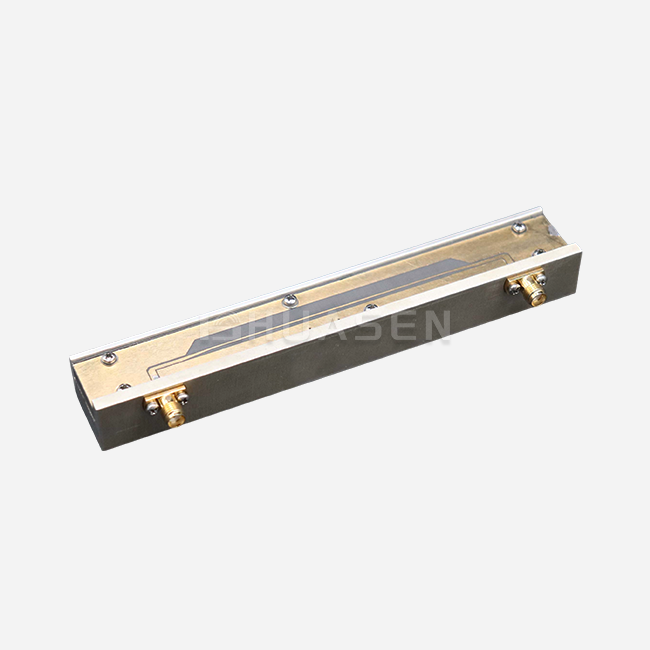
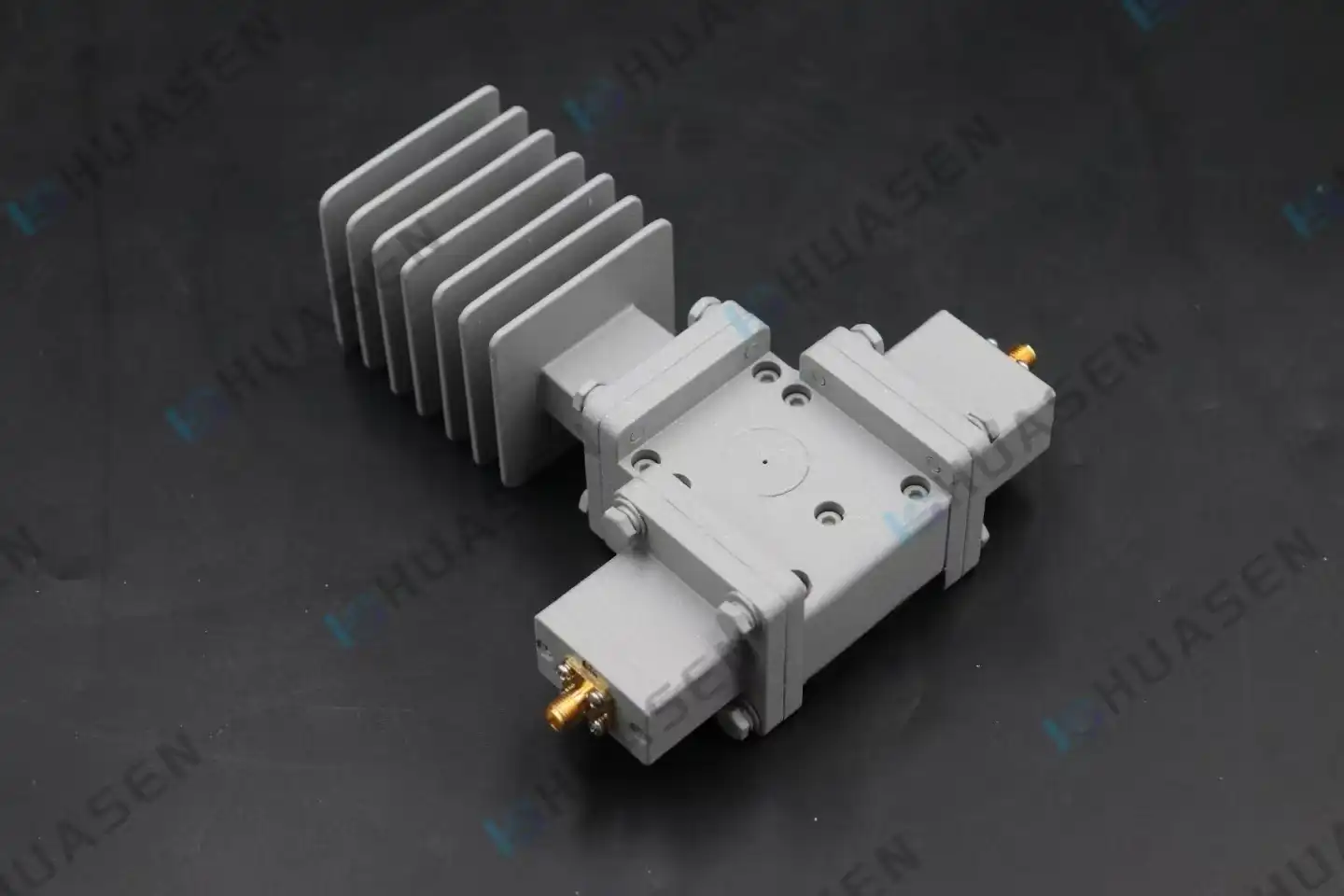
Protecting sensitive parts from reflected power is still one of the most important engineering goals when making RF and microwave systems. A Coaxial Isolator controls traffic in only one way, allowing signals to move forward with little loss while soaking up reverse energy that could hurt power amps or throw oscillators off balance. When buying teams know how isolation performance, insertion loss, and frequency range limitations work together, they can choose devices that offer the best mix of security, efficiency, and bandwidth coverage. Huasen Microwave's Coaxial Isolators work between 0.33 GHz and 3.1 GHz and have high isolation rates. They are housed in all-aluminum cases that can handle 200W of power in tough telecommunications, radar, and test settings.
Understanding Coaxial Isolators: Principles and Performance
How Ferrite Materials Enable Directional Isolation
Coaxial Isolators use ferrite materials in a magnetic field to make behavior that isn't mutual. There isn't much loss of RF energy as it moves forward through the ferrite. When reverse signals hit a phase shift, the energy is redirected into an internal matched termination load. This stops unnecessary echoes from going back to the source and instead turns them into heat. This Faraday rotation principle keeps expensive amplifiers safe from voltage spikes that can happen when antennas don't match up or when loads change.
Key Performance Parameters That Define System Protection
Three factors largely determine the choice of a Coaxial Isolator. When it comes to security against reflected power, numbers above 20dB really mean that the device is blocking reverse signals well. Insertion loss measures how much forward signal degradation there is. Lower numbers keep the transmitter's efficiency and the receiver's sensitivity. The operating bandwidth is set by the frequency range because ferrite resonance limits its usefulness outside of planned bands. The isolators made by Huasen Microwave have isolation levels higher than 20dB and insertion losses lower than 0.5dB across certain bands. They also keep the VSWR below 1.25:1 for great impedance matching.
Narrowband Versus Broadband Design Trade-Offs
Narrowband isolators work best within a certain frequency range, providing better separation and smaller insertion loss for single-band uses like L-band radar or S-band satellite links. Broadband versions give up some top performance for wider coverage, which makes managing goods easier when systems work across multiple bands. When making decisions about what to buy, procurement officials should think about whether the needs of the program require the highest efficiency in a narrow spectrum or middling performance across a wider bandwidth. During the specification step, our tech team helps clients weigh these pros and cons.
Comparing Coaxial Isolators with Related Components
Isolators Versus Circulators in System Architecture
Figuring out how these gadgets work together makes their individual jobs clearer. In full-duplex systems, a circulator sends information in a certain order through three or more ports. This lets the broadcast and receive antennas work together. With the third port closed inside, an isolator works like a circulator, making a two-port safe device. When designing a system that only needs one-way security and not a lot of signal routing, isolators are easier to integrate because they have fewer connection points and a smaller size than external circulators.
When Waveguide Isolators Become Necessary
Coaxial Isolators are used for most tasks below 18GHz, where connection technology is still useful and affordable. Waveguide isolators are used for millimeter-wave frequencies above 26GHz, where coaxial connections cause too much loss and problems with mode conversion. The frequency of the shift relies on how much power is needed and how the machine is built. Coaxial Isolators are the best choice for base station front-ends that work in sub-6GHz 5G bands because they are small, cheap, and perform well.
Directional Couplers Serve Complementary Functions
Directional couplers sample forward and backward signals for tracking, while isolators take in reflected power. Couplers add only a small amount of insertion loss, but they don't protect against reflections. Both parts are often found together in complex RF chains: isolators protect amplifiers, and couplers allow for VSWR tracking and automatic level control. To avoid functional gaps, procurement specs should make it clear what needs to be measured and what needs to be protected.
Technical Specifications and Testing Procedures
Decoding Datasheet Parameters for Real-World Performance
Because ferrite resonance changes performance with frequency, isolation specs usually list the worst-case number across the operating band. A gadget with a minimum separation rating of 20dB may reach 25dB at the center of the band. Insertion loss also changes with frequency, and datasheets show both the average and highest numbers. Power handling is split into two parts: forward power capacity, which is based on the ratings of the connection and internal conductors, and backward power capacity, which is based on the terminal load dissipation. The datasheets for microwaves from Huasen Microwave include full S-parameter sweeps across temperature ranges, which lets you model the system correctly.
Frequency Band Applications Across Industries
Based on how they propagate and how they are assigned by the government, different bands are used for different things. GPS receivers and aircraft tracking systems are kept safe by L-band (1-2GHz) Coaxial Isolators. Devices in the S-band (2-4GHz) protect weather sensors and satellite earth stations. Units in the C band (4-8GHz) protect maritime data and microwave backhaul lines. Our coverage ranges from 0.33 GHz to 3.1 GHz and includes LTE, 5G sub-6GHz, and CBRS private networks. In these cases, base station power amplifiers need strong protection against antenna system reflections caused by weather, physical damage, or mistakes in installation.
Validation Testing Ensures Specification Compliance
For procurement quality assurance, verification goes beyond test records from the maker. S-parameters are checked by vector network testers to make sure that separation, insertion loss, and VSWR performance are correct. Power testing uses the rated forward power while keeping an eye on the temperature rise, and reverse power stresses test the stability of the internal termination. Testing for intermodulation distortion finds inactive nonlinearity that sends out false signals. Going from -40°C to +85°C shows temperature stability, which is important for outdoor setups. These steps are taken by our quality control on production samples, and test data can be given to you upon request.
Procurement Insights for Global B2B Clients
Evaluating Manufacturers and Supply Chain Reliability
Reputable Coaxial Isolator makers keep their promises about long-term supply, controlling the process, and getting the right materials. Companies with strict licensing standards, like Cobham and Skyworks, work in the defense and aircraft industries. Mini-Circuits has a large library that can meet the needs of both businesses and labs. Huasen Microwave was founded in 1993 and has 30 years of experience making RF components. They also offer fast customization options and keep their ferrite and magnet supply lines stable to avoid production interruptions. When looking at providers, make sure they are certified to ISO 9001, follow RoHS rules, and are ready to send you sample units for testing.
Minimum Order Quantities and Customization Flexibility
Standard stock isolators are usually sent in small numbers for testing, and prices drop when you buy 10 to 50 pieces in a row. For custom designs that need to fit certain frequency bands, socket types, or power levels, you usually need to order at least 100 pieces to justify the cost of the tools. Lead times range from being able to ship the same day if the item is in stock to 8 to 12 weeks for fully designed options. Our team helps clients find the right mix between adapting standard products to their needs and fully customizing them. By changing connectors or tuning the frequency of existing platforms, we can often meet 90% of our clients' needs while lowering both cost and delivery time.
Shipping and Handling Best Practices
Rare-earth magnets inside Coaxial Isolators produce outside fields that could affect nearby magnetic materials or sensitive instruments while they are being transported. Magnetic shielding and clearly written handling directions are both parts of good packaging. For international shipments, magnet delivery must follow IATA rules, and correct customs paperwork must be included to show what kind of ferrite is being sent. We work with experienced shipping partners who know how fragile RF components are and what the rules are. This lowers the number of damaged items and the time it takes to clear them. Before a package is shipped, clients get tracking information and test data packages, which help them get ready for the receipt check.
Benefits and Application Scenarios of Coaxial Isolators
System Stability and Component Longevity
When power is reflected, it makes standing waves that cause voltage and current peaks that are higher than what is allowed, even when the average power level is safe. Voltage changes that are the same as 200W of immediate stress happen to a 100W transmitter that is running a 2:1 VSWR antenna. Before it gets to the amplifier, this mirrored energy is absorbed by Coaxial Isolators. This stops temperature runaway, transistor junction breakdown, and failure before it's supposed to happen. Our ability to handle 200W of power on average and our all-aluminum thermal management make it suitable for continuous-duty base station applications where downtime directly affects network income.
Critical Applications Across Industries
The biggest use for isolators is in telecommunications infrastructure, since cellular base stations need safety at every power amplifier output. Our shields protect 5G huge MIMO systems that work in the n77 (3.3–4.2GHz) and n78 (3.3–3.8GHz) bands, where antenna array complexity makes reflection more likely. Isolators are used by satellite ground connections to keep high-power uplink amplifiers safe from changes in resistance caused by weather. Isolators keep magnetrons or solid-state transmitters from getting damaged by target sounds in radar systems. Manufacturers of test equipment build isolators into signal generators and amplifiers so that the accuracy of the calibration stays the same no matter what the device being tested is like. Isolators that meet MIL-STD-202 standards for vibration and shock are needed for avionics and UAV data lines.
Emerging Technology Trends
More bandwidth is being given out in the millimeter-wave 5G bands (24-40GHz), which leads to the creation of higher-frequency isolator designs that are getting smaller. Adopting GaN power amplifiers allows for higher power density, which calls for isolators that can get rid of heat better. Software-defined radio designs make it necessary for isolators that can change frequency response without having to change the hardware. We invest in these areas of technology so that we can offer solutions that will work with new technologies as the needs of the business change.
Conclusion
When choosing a Coaxial Isolator, it's important to strike a balance between system security needs, budgetary restrictions, and separation performance, as well as insertion loss and frequency coverage. Knowing how ferrite-based devices work and how they are different from circulators and directional couplers helps you make smart purchasing choices. Isolators from Huasen Microwave use tried-and-true ferrite technology and a strong mechanical design to work across frequency bands of 0.33 GHz to 3.1 GHz. They provide solid protection for tests, communications, radar, and satellites. Our three decades of factory experience and quick expert support help B2B clients with things like figuring out what specifications mean, doing validation tests, and managing the supply chain.
FAQ
Q1: What distinguishes isolation from insertion loss in practical terms?
Isolation stops backward signals and keeps sources safe from mirrored power. Insertion loss measures how much forward signal is reduced, which changes how well a system works. A gadget with 20dB isolation and 1dB insertion loss is a good way to protect things, but it uses up 20% of the forward power as heat. High isolation with low insertion loss is what superior Coaxial Isolators do, which increases both safety and economy. These factors are clearly separated in our standards so that there is no confusion during the selection process.
Q2: How do I select isolators for high-power microwave applications?
With a 20% safety limit, match the forward power level to the output of the transmitter. Check that the reverse power handling is better than the worst-case reflected situations that can be found by using the maximum VSWR. Make sure that the temperature number takes into account both the outside temperature and the temperature inside the building. Check the power levels of each connection on their own, as they often limit the total capacity. Huasen Microwave helps with temperature research and suggests the right models based on duty cycle and cooling needs.
Q3: Can isolators be customized for specific system requirements?
Customization includes choosing the right radio band, connection type, mounting arrangement, and sealing against the environment. We can change the connectors to SMA, N-type, and TNC types, tune the frequency within the limits of the ferrite material, and coat them in a conformal way for tough settings. Customization lead times usually range from 6 to 10 weeks, based on how complicated the job is. During specification creation, engineering help is provided.
Partner with Huasen Microwave for Reliable Coaxial Isolator Solutions
The stability of a system starts with the parts that are used. We know how isolation performance, thermal management, and frequency precision protect your important infrastructure investments because we are an established Coaxial Isolator provider with 31 years of RF engineering experience. To make sure the best device matching, our expert team helps with specs, sample review, and custom design. Email us at sales@huasenmicrowave.com to talk about your needs, ask for datasheets with full S-parameter data, and find out how our manufacturing skills provide stable quality and quick lead times.
References
1. Baden Fuller, A.J. "Ferrites at Microwave Frequencies." Institution of Electrical Engineers Monograph Series, 1987.
2. Helszajn, Joseph. "Nonreciprocal Microwave Junctions and Circulators." IEEE Press Series on Electromagnetic Wave Theory, 2001.
3. Linkhart, Douglas K. "Microwave Circulator Design, Second Edition." Artech House Publishers, 2014.
4. Pozar, David M. "Microwave Engineering, Fourth Edition." John Wiley & Sons, 2011.
5. Rado, G.T. and Suhl, H. "Magnetism: A Treatise on Modern Theory and Materials, Volume III." Academic Press, 1963.
6. Von Aulock, W.H. "Handbook of Microwave Ferrite Materials." Academic Press, 1965.
Send Inquiry