Coaxial Fixed Attenuator: Power Handling & dB Value Guide






2026-06-29 21:52:46
To choose the best Coaxial Fixed Attenuator, you need to find a balance between two important factors: the reduction value (measured in dB) and the power handling ability. Power handling is the most RF energy that a device can safely give off without getting too hot or losing its performance. It usually ranges from 1 watt for small SMA ports to 500 watts for ruggedised N-type housings. When attenuation is high (30 dB to 50 dB), it saves sensitive receivers from overload, and when attenuation is low (3 dB to 10 dB), it fine-tunes impedance matching in calibration sets. To keep signals strong in telecommunications and radar uses from DC to 18 GHz, engineers must match these specs to the needs of the system, taking into account frequency response smoothness and VSWR performance.
Understanding Coaxial Fixed Attenuators
Core Function in RF Systems
RF signal handling is always a problem in today's wireless systems. A Coaxial Fixed Attenuator is a passive device that lowers the signal's intensity by a set amount on purpose, without changing the way the waveform looks. In contrast to active components, these units don't need any extra power and cause very little phase shift. In base station setups and satellite ground terminals, they keep the power levels stable between amplifier steps. This keeps the receivers from getting too hot, which could make the system less available.
Precision resistive networks, which are usually set up in T-pad or Pi-pad designs, are inserted within coaxial communication lines to make up the device. Through resistive loss, extra power is turned into heat when RF energy goes through. The case and interior thermal management structures safely spread out this thermal energy, so the device can keep running smoothly even when it's constantly drawing a lot of power. This process is very important in places where signal strength changes quickly and unexpectedly, like marine communication systems that have to work in changing weather.
Decibel Values and Power Ratings Explained
Attenuation numbers have a direct effect on how flexible a system design can be. A 3 dB filter cuts the power of a signal in half, so it can be used to make small level changes during measurement correction. On the other hand, a 30 dB unit reduces the signal strength by 1000 times, which protects spectrum analysers from getting high-power broadcasts very well. Huasen Microwave makes Coaxial Fixed Attenuators with reduction ratios between 3 dB and 50 dB, so engineers can choose the exact ratios that work best for their link budget figures.
The ability to handle power is what sets laboratory-grade devices apart from industrial units. For testing on a bench with signal sources, a 1-watt Coaxial Fixed Attenuator is enough, but cellular base stations need 100-watt or 500-watt types to safely handle transmission output. At higher power levels, thermal design is very important. More modern units have beryllium oxide substrates and forced-air cooling ducts. When rated power is exceeded, resistive elements fail, creating reflection factors that lower the total system VSWR and could damage components further up the chain.
Material Composition and Thermal Management
The long-term dependability under stress is determined by the building materials used. Coastal radar sites use passivated stainless steel bodies that don't rust, and gold-plated beryllium copper contacts that keep the electricity working well after more than 500 matching cycles. For frequencies above 6 GHz, internal resistance films use thin-film technology to provide attenuation accuracy within ±0.5 dB over a wide range of bandwidths. Thick-film versions can handle more power, but they give up some frequency flatness.
Continuous wave (CW) vs. pulsed power handling are affected by thermal conductivity ratings. Aluminium nitride ceramic surfaces quickly move heat from resistive parts to heat sinks outside the device, which lets it work at full power for a long time. When internal temperatures rise, devices that don't have enough thermal paths experience attenuation drift, which makes it harder to repeat measurements in automatic test equipment. When engineers look at datasheets, they need to make sure that the derating charts show performance across temperature ranges from -55°C to +125°C, which is very important for aircraft use.
Technical Dimensions and Performance Factors
Frequency Range and Impedance Standards
Modern wireless systems can use a wider range of frequencies. Huasen Microwave's Coaxial Fixed Attenuators work with frequencies from DC to 18 GHz, so they can be used with both old 2G networks and new 5G millimetre-wave bands. Broadband designs keep the attenuation response flat across the whole spectrum. This makes it easier for system designers who support multi-band infrastructure to keep track of their supplies. For point-to-point microwave transport, specialised units go up to 40 GHz, and for new 6G research testbeds, they go up to 67 GHz.
Impedance matching stops standing waves from forming. For RF and microwave uses, the industry norm is 50 ohms of characteristic impedance. For broadcast TV systems, 75 ohms are used. Reflection factors are measured by VSWR, which stands for "Voltage Standing Wave Ratio." Coaxial Fixed Attenuators of good quality keep VSWR below 1.2:1 across all rated frequencies. This keeps return loss to a minimum, which would otherwise lower the effectiveness of attenuation and mess up readings of the signal. In the calibration of a vector network analyser, where measurement error budgets require tight control, this standard can't be changed.
Attenuator Type Variations and Selection Criteria
For different uses, different resistance network designs work best. Vacuum blasting is used to place resistive traces on thin-film Coaxial Fixed Attenuators. This allows for tight tolerance (0.25 dB) and great high-frequency performance with little parasitic inductance. These units are the most common type used for precise measurements, but they can only handle up to 2 watts of power. Wirewound designs twist resistance wire around ceramic cores, giving 50-watt to 250-watt capacity at the cost of bandwidth—mostly useful below 3 GHz in test loads for high-power amplifiers.
Chip attenuators put surface-mount resistor arrays in small packages. This lets PCB-level integration happen in small transmission units for drones and handheld radios. On the other hand, models with coaxial connectors give repair workers more options when they are fixing distributed antenna systems because they can be switched out in the field. There are pros and cons to both fixed and variable designs. Fixed units are more reliable and repeatable because they don't have any moving parts. On the other hand, step attenuators let automated measurement methods extend the dynamic range, but they cost more and have more failure modes.
Measurement Techniques and Verification
For accurate characterisation, instruments must be adjusted. Engineers use vector network analysers to find out the S-parameters across frequencies. S21 measures insertion loss, which is the sum of attenuation and natural transmission loss, while S11 and S22 measure input/output return loss. The insertion loss of high-quality units is very close to the standard attenuation, and the dissipative loss is also less than 0.2 dB. Power meter testing checks thermal handling by sending CW signals at full power for long periods of time and keeping an eye on temperature rise and attenuation stability.
Testing in harsh environments backs up claims of toughness. The MIL-DTL-3933 standards require thermal shock cycling, vibration patterns that simulate aircraft resonance, and humidity exposure that simulates tropical deployment. Coaxial Fixed Attenuators that meet these requirements are used in defence radar systems where a failed part could mean the mission fails. Laboratory units that meet the ISO 17025 calibration standards can be traced back to national metrology centres. This is very important when test data is needed to support regulatory compliance reports for wireless device approval.
How to Choose the Right Coaxial Fixed Attenuator
Matching Attenuation Levels to System Requirements
The way reduction is chosen is based on the design of the system. When protecting a receiver, find the difference between the highest output from the emitter and the damage level for the receiver. This power ratio, when converted to decibels, sets the minimum attenuation that is needed with a safety cushion. In cellular macro sites, antenna feeding systems often put 10 dB to 20 dB Coaxial Fixed Attenuators between tower-mounted amplifiers and remote radio heads. This balances out changes in gain and keeps the signal-to-noise ratios at baseband processing units at their best.
Different thinking is needed for calibration uses. When setting standard power levels for testing on the production line, pick attenuation values that put signal strength in the middle of the dynamic range of the test equipment. This keeps you from getting both noise floor limits and compression artefacts. The 3 dB to 50 dB range from Huasen Microwave lets you make exact decade-step setups. For example, adding a 20 dB and 10 dB unit gives you 30 dB of total attenuation, giving you options without having to wait for custom manufacturing, which can make project timelines longer.
Power Handling Verification and Safety Margins
Field breakdowns happen when power needs are underestimated. To start, compare the average power in continuous-wave lines to the peak envelope power in pulsed radar systems. The datasheets for Coaxial Fixed Attenuators list both the CW and peak values. For higher atmospheric temperature and higher altitude (which means less convective cooling on flying platforms), use derating factors. At sea level and 25°C, a device that is rated at 100 watts might drop to 60 watts at 10,000 feet and 55°C, which is very important for installations in aeroplanes that are not pressurised.
Pulse duty cycle changes how much heat builds up. A 1 kW radar emitter with a 1% duty cycle (10 microsecond pulses at 1 kHz repeat rate) makes 10 watts of power on average but 1 kW of power at its peak. The Coaxial Fixed Attenuator has to handle peak power without arcing over and heat up normal power. Engineers sometimes choose to cascade several moderate-power units instead of one high-power model. This spreads out the heat load and makes the system more reliable by adding redundancy, but it costs more and has more insertion loss.
Environmental and Mechanical Considerations
The installation setting affects the choice of gadget. Outdoor base station cabinets are exposed to temperature changes that range from -40°C at night in the winter to +60°C during the summer. This requires wide working ranges and ports that are tightly sealed to keep moisture out. Coaxial Fixed Attenuators with stainless steel housings and EPDM seals that are rated IP67 work well in these situations. On the other hand, commercial-grade units with standard nickel coating and wider tolerance bands can be used in climate-controlled labs.
Compatible connectors keep you from having to pay a lot to change. N-type connectors are most common in infrastructure uses because they are mechanically strong and can handle up to 500 watts of power. SMA connectors are useful for test tools and small modules, but they usually only allow 10 watts of power. For the millimetre-wave study, the precision 3.5mm and 2.92mm versions increase the frequency range to 26.5 GHz and 40 GHz, respectively. Field installation mistakes that damage joining contacts can be avoided by checking the thread type (standard versus reverse polarity) and gender (male/female pin configuration).
Applications and Benefits of Coaxial Fixed Attenuators
Telecommunications Infrastructure and 5G Networks
Fifth-generation cellular networks have strict standards for how linearly data chains must be. Coaxial Fixed Attenuators help operators keep the power levels even between large MIMO antenna arrays and fibre-optic fronthaul lines. This stops intermodulation distortion, which lowers the efficiency of the spectrum. They make up for differences in cable loss across different coverage zones in distributed antenna systems that serve stadiums and meeting centres. This makes sure that the signal is spread evenly. This accuracy has a direct effect on the quality of experience for subscribers during events with a lot of traffic.
In base station combiners, where multiple bands join onto shared antenna ports, Huasen Microwave Coaxial Fixed Attenuators help with decoupling and matching. When there isn't enough separation between channels, silent intermodulation products are made that mess up the receive bands. Strategically placing Coaxial Fixed Attenuators improves separation between ports, keeping low-PIM performance below -150 dBc, which is what network operators need. In the same way, broadcast TV stations use these devices in transmitter combination networks to let various program channels share antenna equipment without getting cross-modulation artefacts.
Aerospace and Defence Radar Systems
Airborne radar has to deal with a lot of practical stress. Within milliseconds, fighter aircraft systems go from idle to full transmit power, all while suffering 9G manoeuvres and temperatures in the stratosphere below -55°C. Coaxial Fixed Attenuators in these platforms have to go through a lot of tests to make sure they are qualified. These include shock tests at 50G acceleration, vibration sweeps that match the engine's harmonic frequencies, and approval in an altitude chamber at 70,000 feet. During transmit mode, these units keep sensitive receiver front-ends safe and adjust sidelobe cancellation techniques that are needed to find targets that are hard to see.
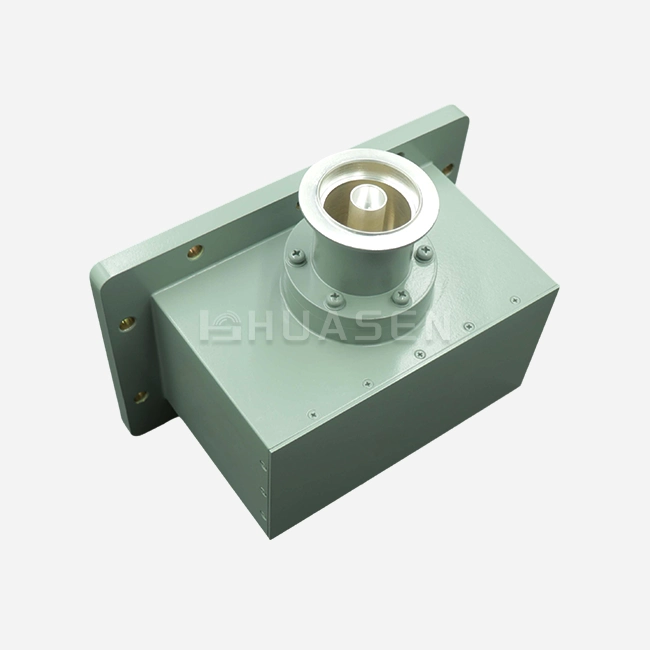
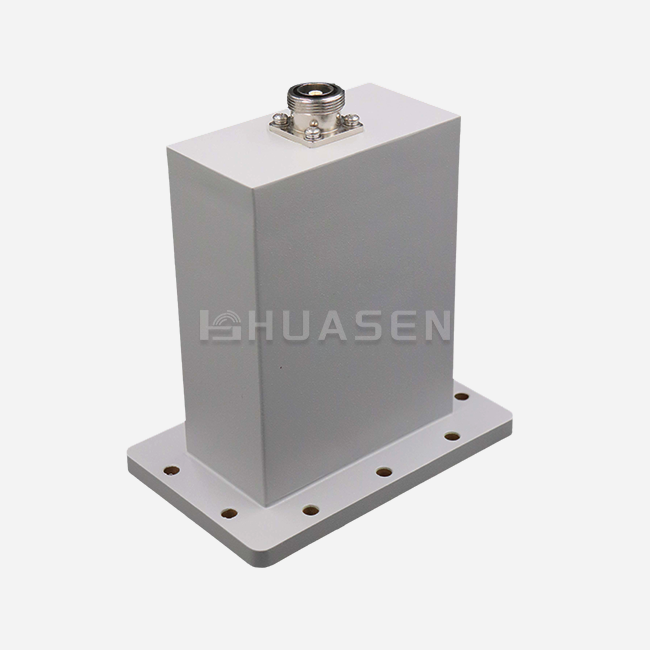
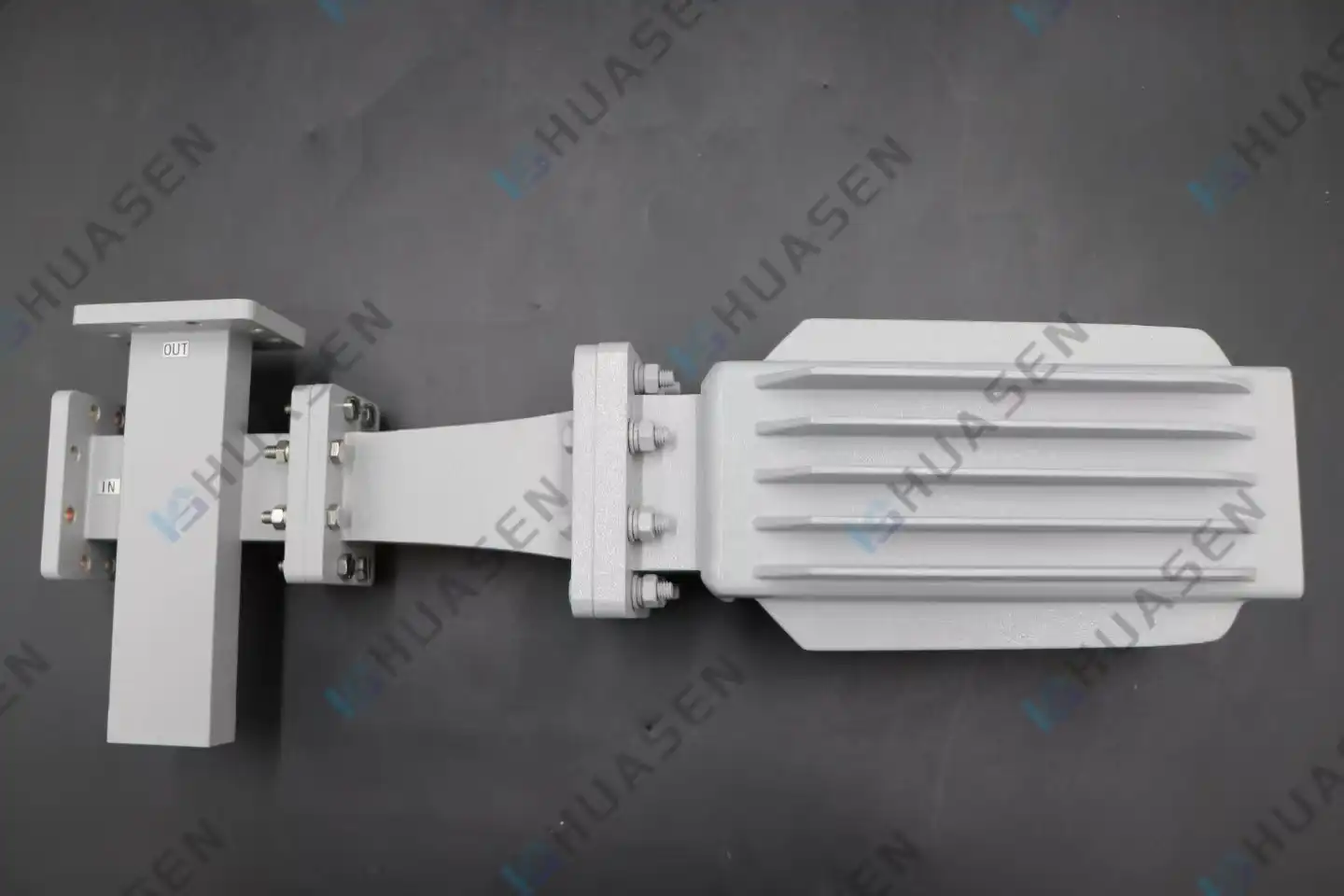
Electromagnetic pulses and salt spray can damage radar stations on ships. Coaxial Fixed Attenuators made of passivated stainless steel and gold-plated contacts keep their attenuation stable even after years of being in the ocean. Waveguide-to-coaxial adapters with built-in Coaxial Fixed Attenuators make it possible to change parts in modules during maintenance processes, which cuts down on the average time it takes to fix something. These parts make the signal stronger, which means they can find things farther away and more accurately, which is useful for surface search and fire control.
Precision Test and Measurement Laboratories
Calibration hierarchies are held together by metrology-grade Coaxial Fixed Attenuators. National standards labs keep key reference standards that can be traced back to basic physical constants. Accuracy is then spread through a system of standards that build on each other. Commercial testing labs use Huasen Microwave Coaxial Fixed Attenuators as working standards to check the accuracy of spectrum analyser amplitudes and signal generator output levels. The Coaxial Fixed Attenuator tolerance, temperature coefficient, and frequency response are all taken into account in the measurement uncertainty analysis. The total uncertainties are less than ±0.15 dB, which means that verified test results can be trusted.
Stable Coaxial Fixed Attenuators are needed for production test units for wireless modules. Every day, automated handling systems connect tens of thousands of devices to network analysers that check the broadcast power and reception sensitivity. All future measures would be off because of the Coaxial Fixed Attenuator drift, which could make good devices fail specifications or bad units pass. Either way, it would cost a lot of money. Devices with attenuation stability better than ±0.05 dB over 10,000 links reduce the number of times they need to be calibrated, which increases production and lowers the cost of quality issues.
Procurement Guide: Buying Coaxial Fixed Attenuators for B2B Clients
Supplier Evaluation and Quality Assurance
Decisions about where to get things go beyond looking at unit prices. Check out the quality management systems of the makers (Coaxial Attenuator). For example, ISO 9001 certification shows that process controls are recorded, and AS9100 certification shows that design verification and supply chain management are done with aerospace-specific rigour. Ask for sample units to be tested in-house for validity. Use your own calibrated tools to compare the measured performance to the specs on the data sheet. Differences in VSWR or attenuation accuracy could mean that there are problems with production uniformity that show up as failures in the field months after they were installed.
Project plans are affected by how reliable lead times are. Huasen Microwave keeps basic setups (10 dB, 20 dB, and 30 dB in N-type and SMA connectors) in stock, so large orders can be shipped within a week. When you need custom attenuation values or power ratings, you have to do production runs, which can take up to four weeks and add to the shipping time. Critical path analysis should take these timelines into account. Set up a framework that deals with your chosen providers to ensure the allocation of capacity and speed up processing when urgent needs arise during the system integration phases.
Cost Structures and Volume Pricing
The price of a Coaxial Fixed Attenuator depends on its performance level. Precision units with a range of ±0.25 dB and a VSWR below 1.15:1 cost more, but they lower system-level uncertainty budgets, which could mean that expensive retesting isn't needed. Commercial-grade devices with a range of ±0.5 dB are 40% cheaper and work just fine in situations where the added tolerance is okay. When you look at the whole measurement chain's costs and benefits, you'll often find that buying precision Coaxial Fixed Attenuators lets you use cheaper supporting equipment, which lowers your overall costs.
Volume deals encourage buying more at once. When you order more than 100 units, the price usually goes down by 15% to 25% because the costs of setting up the factory are spread out over more units. Multiple-year blanket purchase orders with planned releases let sellers see what customers want, which lets them save even more money by buying raw materials in bulk. Some companies offer consignment stock programs, which put stock at customer sites and charge them when it's used. This helps with cash flow and makes sure there is no wait time, so the production line can keep running.
Technical Support and Customisation Capabilities
Manufacturer tech support is helpful for integrating complex systems. Huasen Microwave helps with design by looking at signal flow maps and suggesting the best ways to distribute reduction and handle power. Engineers can check how well a product works in real-world situations with pre-production sample test programs before placing large orders. Post-sales calibration services with NIST-traceable certification keep measurement tracking up to date throughout the lifespan of a product, which helps with quality checks and government inspections.
Customisation meets the specific needs of each person. Catalogue items that are already made cover 80% of uses, but custom engineering is needed for things like military-grade connectors, extended temperature rates, or attenuation values that aren't standard. Huasen Microwave can make changes like adding bias tees, special mounting flanges, and hybrid designs that combine filtering and attenuation. For custom versions, the minimum order quantity is usually 50 units. This is done to balance the cost of the tools with the value that can be created for each user.
Conclusion
Coaxial Fixed Attenuators are important parts of high-reliability RF systems used in places like precise measurement labs, aerospace platforms, and telecoms infrastructure. To choose the right components, you need to find a balance between how much power they can handle and how accurate they need to be in attenuation, all while taking external stresses and socket compatibility into account. The DC to 18 GHz product line from Huasen Microwave has been tested and proven to work well in a wide range of demanding uses. It is backed by 30 years of manufacturing excellence and tech support. System designers can make sure projects are successful while keeping the total cost of ownership low by using procurement strategies that focus on supplier quality systems, volume price optimisation, and customisation flexibility.
FAQ
1. What power rating do I need for base station applications?
Base station Coaxial Fixed Attenuators usually need between 50 and 250 watts of power, but this depends on the broadcast output levels and the way the system is set up. For macro cell sites with 40-watt emitters, 100-watt Coaxial Fixed Attenuators with a 2:1 safety range work well. For small cells using less than 5 watts, 10-watt to 25-watt units work well. Always check the specs for continuous wave versus peak power, and use thermal derating factors for outdoor cabinet setups where the temperature is higher than 40°C in the summer.
2. How does attenuation accuracy affect measurement uncertainty?
Total measurement error budgets are affected by attenuation tolerance in a direct way. Every test with a ±0.5 dB tolerance Coaxial Fixed Attenuator is now ±0.5 dB less accurate. This is on top of the errors caused by wires, adapters, and instruments. To get an acceptable level of combined error in precise tasks like receiver sensitivity tests, the tolerance may need to be ±0.25 dB or tighter. When setting the accuracy of a Coaxial Fixed Attenuator, you should think about the whole signal chain. Sometimes, buying precision units lets you use less expensive supporting equipment while still meeting total uncertainty goals.
3. Can I cascade multiple attenuators for higher attenuation?
It turns out that cascading Coaxial Fixed Attenuators is perfectly fine and often even helpful. When you add up the various numbers, you get the total attenuation, which is 30 dB for a 10 dB and 20 dB unit. This method spreads the loss of power across many devices, which lowers the heat stress on any one part. Check that the VSWR specs are still met when cascading—multiple echoes can slightly lower the effective attenuation. This method also gives configuration freedom, so field techs can get different amounts of attenuation by putting together standard building blocks instead of keeping every possible number on hand.
Partner with a Trusted Coaxial Fixed Attenuator Manufacturer
Huasen Microwave Technology can help you with your RF component needs by providing high-quality Coaxial Fixed Attenuators made for mission-critical uses. Our products are very good at handling power from 1W to 500W, reduction accuracy from 3 dB to 50 dB, and frequency coverage from DC to 18 GHz. We help system builders and OEMs meet tight project deadlines while improving signal integrity. Our manufacturing is ISO-certified, and we offer a wide range of customisation options. Our engineering team can be reached at sales@huasenmicrowave.com to talk about your unique needs, ask for evaluation samples, or get price quotes for large orders. We are a reliable Coaxial Fixed Attenuator provider that wants you to succeed.
References
1. Pozar, David M. Microwave Engineering, 4th Edition. Hoboken: John Wiley & Sons, 2012.
2. Rytting, Douglas K. "Network Analyser Accuracy Overview." 67th ARFTG Conference Digest, San Francisco, June 2006.
3. MIL-DTL-3933. "Detail Specification: Attenuators, Fixed, Coaxial." United States Department of Defence Interface Standard, 2018.
4. Agilent Technologies. "Fundamentals of RF and Microwave Power Measurements." Application Note 64-1A, 2000.
5. Hiebel, Michael. Fundamentals of Vector Network Analysis. München: Rohde & Schwarz, 2008.
6. IEEE Standard 291. "IEEE Standard Methods for Measuring Electromagnetic Field Strength of Sinusoidal Continuous Waves." Institute of Electrical and Electronics Engineers, 2020.
Send Inquiry