Circularly Polarized Horn Antenna Performance in 5G and Radar Systems






2026-03-29 21:46:53
Circularly polarised horn antenna technology is a big step forward in modern RF communications. It works really well in 5G networks and radar uses. When compared to standard linear polarisation systems, these special antennas produce electromagnetic waves with rotating electric fields. This makes the signals more reliable and reduces interference. The fact that they have changing polarisation makes them very useful in communication settings where orientation changes happen a lot.
Understanding Circularly Polarized Horn Antennas
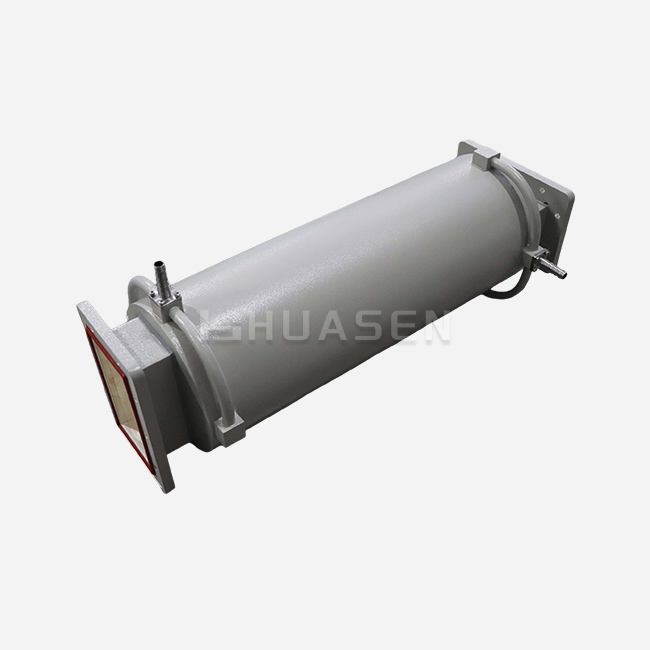
Circularly polarized horn antennas represent sophisticated RF devices engineered to transmit and receive electromagnetic waves with rotating electric field vectors. Unlike conventional linear polarization systems, these antennas create circular polarization through advanced internal mechanisms that convert linear modes into circular modes with exceptional precision.
Fundamental Principles of Circular Polarization
Circular polarisation is based on the coordinated transfer of two linear components that are not parallel to each other and have a phase difference of exactly 90 degrees. To make either right-hand circular polarisation (RHCP) or left-hand circular polarisation (LHCP), this makes an electric field vector that spins continuously as the wave moves. A helical wavefront pattern is made when the spinning keeps the same amplitude while the phase moves forward. Several tried-and-true ways are used in modern horn antenna designs to achieve this polarisation. Linear-to-circular polarisation converters use stepped septa or curved waveguide structures to change the phase between modes that are not parallel to each other. To make circular polarisation, dual linear polarisation orthogonal excitation devices use separate feeds for the horizontal and vertical parts and then combine them with precise phase control.
Technical Parameters and Performance Metrics
Circularly polarised horn antennas work well in tough situations if they meet certain performance standards. The main quality indicator is the axial ratio, which shows how close the antenna is to real circular polarisation. Axial ratios of premium units stay below 1.0 dB throughout their working bandwidth, which means that polarisation distortion is kept to a minimum. The gain ranges from 10 to 25 dB, but it depends on the frequency band and opening size. The frequency response ranges from 0.5 GHz to 110 GHz, which makes it useful for a wide range of uses, from cell phones to millimeter-wave radar systems. The Voltage Standing Wave Ratio (VSWR) performance stays below 1.5:1 throughout the working bandwidth. This makes sure that power is transferred efficiently and that reflection losses are kept to a minimum.

Critical Performance Factors in 5G and Radar Systems
The integration of circularly polarized horn antennas into 5G and radar systems demands adherence to stringent performance specifications that directly impact system capability and reliability. These requirements encompass frequency response, gain stability, and polarization purity across diverse operational scenarios.
Frequency Band Requirements and Gain Specifications
Fifth-generation cell phone networks work in a number of frequency ranges, such as sub-6 GHz and millimeter-wave bands from 24 GHz to 71 GHz. Circularly polarised horn antennas need to work the same way across these wide frequency bands and have stable gain characteristics. Its cone-shaped horn design and broadband dual linear polarisation synthesis make it possible to cover a wide range of frequencies, from narrowband applications with less than 5% bandwidth to broadband setups with up to 67% bandwidth coverage. The need for radar applications is also very high, especially in weather tracking and surveillance systems. For these uses, antennas must be able to keep their polarisation purity even when they're working at high power levels. This method of designing with a step diaphragm improves the bandwidth performance while keeping the important axial ratio requirements for precise target separation.
Polarization Purity and Interference Mitigation
For both 5G and radar uses, it is essential to keep the axial ratio values low across the operational bandwidth. Signal quality is directly affected by polarisation purity, and axial ratios higher than 3 dB make the system work much worse. Advanced horn antenna designs get axial ratios of 0.5 dB or better, which means they can tell the difference between different types of signals better. The circular polarisation property naturally blocks multiple paths of interference, which is very useful for 5G deployments in cities and radar settings with a lot of clutter. Signals that are reflected change polarisation, which helps the antenna that receives them tell the difference between useful and unwanted returns. This feature is very important for weather radar users because it helps get rid of ground clutter, which makes measuring precipitation more accurate.
Selecting the Right Circularly Polarized Horn Antenna for Your Application
Optimal antenna selection requires careful evaluation of thehorn antenna circular polarization of technical specifications against specific application requirements. The decision process encompasses performance parameters, environmental considerations, and integration constraints that vary significantly across different deployment scenarios.
Application-Specific Requirements Analysis
Satellite communication systems need antennas that can keep the link strength even if the spacecraft's attitude changes. Circularly polarised horn antennas are necessary for trans-ionospheric transmissions because they protect against Faraday rotation effects. For monitoring, tracking, and command operations to work reliably, earth station applications usually need gain values between 15 and 25 dB and very stable patterns. Over-the-air testing facilities use these antennas as standards to figure out what a gadget is. Being able to get rid of polarisation mismatch losses makes tests easier and makes it easier to repeat measurements. Testing labs benefit from the wide bandwidth features that let multiple frequency bands work with a single antenna configuration. This cuts down on the need for a lot of extra tools and calibration.
Technical Specification Evaluation
Gaining stability across the operational bandwidth is one of the most important evaluation measures. For precision applications, this should stay within ±1 dB. When the VSWR is less than 1.5:1, power is transferred efficiently, and measurement error is kept to a minimum. To keep interference from happening with nearby systems, the radiation pattern must stay symmetrical and have low sidelobe levels. For outdoor installations and mobile systems, environmental robustness is very important. Temperature stability from -40°C to +85°C makes sure that the device works the same way in all kinds of weather. The mechanical requirements, such as weight, mounting interfaces, and connector types, must match the needs of system integration while keeping the structure's stability during shock and vibration.
Procurement Insights and Best Practices for B2B Clients
Strategic procurement of circularly polarized horn antennas requires a comprehensive evaluation of supplier capabilities, technical specifications, and long-termhorn antenna circular polarization support infrastructure. The complexity of these RF components demands careful supplier selection to ensure product quality and delivery reliability.
Supplier Evaluation and Quality Assurance
Manufacturers that have been around for a while and have a history of making RF components can give you more confidence in the quality of their products and their technical support. Companies that have been around for a long time, like those that started in the early 1990s, have shown that they are dedicated to improving technology and customer service. Manufacturing processes that are very strict are shown by quality control systems that include ISO certifications and MIL-STD compliance. Customisation options that meet the specific needs of each program show that you have technical knowledge. Suppliers that let you change the bandwidth from narrowband to ultra-broadband setups show that they can do advanced design work. Being able to change the gain characteristics, connector types, and mechanical specifications shows that the production process is flexible enough to meet the needs of a wide range of customers.
Cost Optimization and Supply Chain Management
When you buy in bulk, you usually save a lot of money and make sure you have enough inventory for large-scale operations. Long-term partnerships with qualified providers keep prices stable and give customers early access to new products. Finding the right balance between lowering costs and making sure quality is maintained takes a thorough analysis of all the costs involved, such as the initial purchase, installation, and upkeep. Huasen Microwave Technology has been making microwave parts for 30 years, which shows that they have the reliability and expertise needed for important uses. They have a wide range of products, including waveguide components, antennas, and active devices. These all work together to make it easier to buy things and handle suppliers. Because the company is dedicated to customisation and technology innovation, it can make sure that specific application needs are met.

Future Trends and Innovations in Circularly Polarized Horn Antennas
The evolution of circularly polarized horn antenna technology continues advancing through materials science breakthroughs, manufacturing innovations, and integration with smart system architectures. These developments promise enhanced performance capabilities that will enable next-generation communication and sensing applications.
Advanced Materials and Manufacturing Techniques
Emerging manufacturing techniques, including additive manufacturing, enable complex internal geometries previously impossible with traditional machining methods. These capabilities allow for optimized polarization conversion structures that achieve superior axial ratio performance across broader bandwidths. Advanced materials with improved thermal conductivity and lower loss characteristics enhance power handling capabilities while maintaining mechanical stability. The integration of metamaterial structures within horn antenna designs opens possibilities for compact configurations with enhanced bandwidth performance. These engineered materials enable polarization control mechanisms that provide greater design flexibility while maintaining the fundamental advantages of circular polarization.
Smart Integration and Adaptive Technologies
Adaptive polarisation control.Circularly Polarized Horn Antenna will be built into future antenna systems so they can adapt to changing propagation conditions in real time. Software-defined radio designs let you change the polarisation characteristics on the fly to get the best link performance in a variety of operational situations. These features are especially useful for mobile conversation apps that need to work in environments that change quickly. When AI and antenna design optimisation work together, they make it possible for parameters to be changed automatically based on feedback about how well the system is working. It is possible for machine learning algorithms to find the best radiation patterns, polarisation purity, and bandwidth characteristics for each application. This cuts down on the need for human configuration and makes the system work better overall.
Conclusion
Because they are better at controlling polarisation and blocking interference, circularly polarised horn antennas work much better in modern 5G and radar systems. Because the technology is naturally resistant to multipath effects and doesn't depend on orientation, it is necessary for secure communication in settings that change quickly. Advanced designs that can achieve axial ratios of 0.5 dB or better over a wide frequency range (0.5 to 110 GHz) give next-generation users the performance base they need. For the best system integration and operational success, strategic procurement choices should focus on the expertise of the supplier, their ability to customise, and their long-term support infrastructure.
FAQ
1. What advantages do circularly polarized horn antennas offer over linear polarization systems?
Circularly polarized horn antennas provide significant advantages, including immunity to polarization mismatch losses, superior multipath interference rejection, and resistance to Faraday rotation effects. These characteristics ensure consistent link performance regardless of transmitter-receiver orientation changes, making them ideal for mobile and satellite communication applications.
2. How do I determine the appropriate axial ratio specification for my application?
The required axial ratio depends on your application's polarization purity requirements. For precision measurement applications, axial ratios below 1.0 dB ensure minimal cross-polarization interference. General communication applications can typically accommodate axial ratios up to 3.0 dB while maintaining acceptable performance. Consider your link budget margins and interference environment when specifying this parameter.
3. What customization options are available for specific application requirements?
Modern manufacturers offer extensive customization capabilities, including bandwidth optimization from narrowband (≤5%) to ultra-broadband (≤67%) configurations, gain adjustment from 10-25 dB, and various connector types. Mechanical modifications, including mounting interfaces, environmental sealing, and frequency-specific optimizations, address unique installation and performance requirements.
Partner with Huasen Microwave for Superior Circularly Polarized Horn Antenna Solutions
Huasen Microwave Technology stands ready to address your most demanding circular polarization antenna requirements through three decades of proven expertise in microwave component development. Our advanced Circularly Polarized Horn Antenna designs utilize innovative linear-to-circular polarization converters and dual linear polarization orthogonal excitation to achieve exceptional axial ratios of 0.5 dB or better. As a trusted circularly polarized horn antenna manufacturer, we provide comprehensive customization capabilities spanning 0.5-110 GHz frequency ranges with selectable gain configurations from 10-25 dB. Connect with our technical team at sales@huasenmicrowave.com to explore how our cone-shaped horn designs with step diaphragm technology can optimize your 5G and radar system performance requirements.
References
1. IEEE Standard for Test Procedures for Antennas, IEEE Std 149-2021, Institute of Electrical and Electronics Engineers, 2021.
2. Balanis, Constantine A. "Antenna Theory: Analysis and Design," 4th Edition, John Wiley & Sons, 2016.
3. Milligan, Thomas A. "Modern Antenna Design," 2nd Edition, IEEE Press Series on Electromagnetic Wave Theory, 2005.
4. Ludwig, Arthur C. "The Definition of Cross Polarization," IEEE Transactions on Antennas and Propagation, Vol. AP-21, No. 1, January 1973.
5. Zhang, Shuai, et al. "Circularly Polarized Antennas for 5G Communication Systems," IEEE Access, Vol. 8, 2020.
6. Skolnik, Merrill I. "Introduction to Radar Systems," 3rd Edition, McGraw-Hill Education, 2001.
Send Inquiry