Broadband Horn Antenna Features Every RF Buyer Should Know






2026-03-28 21:27:31
Knowledge of the ins and outs of broadband horn antenna technology is essential for successfully purchasing RF parts for mission-critical purposes. These complex devices are an important part of modern RF testing and measurement equipment because they provide excellent frequency coverage across multiple octaves while keeping consistent performance. Broadband Horn Antenna systems give engineers in the defence, aerospace, and telecommunications industries more options than ever before. This is because accuracy and dependability are so important for both operating success and following the rules.
Understanding Broadband Horn Antennas: Core Features and Design Principles
The architecture of broadband horn antennas distinguishes them as essential tools in contemporary RF engineering environments. Unlike conventional narrowband solutions, these antennas employ innovative design methodologies that enable operation across extensive frequency ranges, typically spanning from 1 GHz to 40 GHz, depending on specific configurations.
Fundamental Operating Principles
A carefully designed flared horn structure is at the heart of how it works. It changes electromagnetic energy between guided waves and free-space travel. This change happens because of the exact geometric tapering that keeps impedance matching over a wide range of frequencies. From the feed point to the aperture, the internal waveguide changes smoothly, making a controlled radiation pattern that stays stable over the whole operating bandwidth. Modern designs for broadband often use double-ridged configurations, in which metal ridges are placed on opposite sides to greatly lower the cutoff frequency while keeping the impedance the same. This new idea fixes the main problem with old pyramidal horns: they can't work with wide frequency ranges because of waveguide mode cutoff frequencies.
Material Selection and Construction Quality
Premium broadband horn antennas are made of precisely machined aluminium, which provides the best conductivity while keeping weight to a minimum, which is important for mobile and aerospace uses. The surface treatment usually includes a powder coating that is resistant to corrosion and makes the equipment last longer in harsh environments. Micrometre-level accuracy is needed for internal ridge structures because even small changes in size can cause VSWR spikes that are too high for normal operation.
Key Performance Characteristics
Several important factors make up the technical specifications that describe the performance of a broadband horn antenna. During most of the working bandwidth, the voltage standing wave ratio stays below 2.0:1. At the edges of the bandwidth, it can go up to 2.5:1. Depending on the frequency, gain features change, usually going up from about 6 dBi at lower frequencies to 15 dBi at higher operational limits. Most of the frequency range, the radiation patterns stay the same with a single main lobe, but at higher frequencies, beam splitting is avoided with careful planning. Cross-polarisation detection usually hits 20 dB or higher, which ensures that the signal is pure in measurement tasks that are very strict.

Comparing Broadband Horn Antennas with Other RF Antennas
The antenna selection process requires a comprehensive understanding of how broadband horn antennas perform relative to alternative technologies. This comparative analysis enables informed procurement decisions based on specific application requirements and operational constraints.
Performance Metrics Against Narrowband Solutions
Narrowband horn antennas have better gain characteristics, Double Ridged Horn Antenna within certain frequency ranges, and they can often achieve performance of 20+ dBi. However, because they have limited working bandwidth, they need multiple antenna systems to cover all frequencies, which makes them more complicated and increases the need for calibration. Broadband versions give up some peak gain to be able to work with a wide range of frequencies, but they still provide steady 6–15 dBi performance over many octave ranges.
Comparative Analysis with Yagi and Parabolic Designs
While Yagi antennas have directional characteristics and a moderate gain, their frequency-sensitive element spacing makes them less useful for wideband uses. Parabolic reflector systems have great gain performance, but they need to be precisely aligned mechanically and take up a lot of room. When you think about measurement tasks that need to be able to change frequencies, the benefits of broadband horn antennas become clear. Because they are naturally stable, they don't have to worry about positioning or calibration issues that come with switching antennas. They also keep radiation patterns that are reliable across a wide frequency range.
Directivity and Beamwidth Considerations
When used for EMC tests, horn antennas naturally provide controlled directivity, which is helpful because unwanted reflections need to be kept to a minimum. The beamwidth changes predictably with frequency, which lets measurement engineers use standard calibration methods to make up for changes in coverage.
Procurement Guide: How to Choose the Best Broadband Horn Antenna for Your Needs
Successful antenna procurement requires systematic evaluation of technical specifications, supplier capabilities, and long-term support considerations. The decision-making process encompasses multiple factors that directly influence measurement accuracy and operational reliability.
Frequency Compatibility Assessment
The primary selection criterion involves matching antenna frequency response to application requirements. Standard broadband horn antennas typically cover 1-18 GHz or 18-40 GHz ranges, with specialised variants extending coverage to millimetre-wave frequencies. Procurement teams must verify that the selected antenna encompasses all required test frequencies with an adequate margin for future expansion. Power handling capabilities represent another crucial specification, particularly for immunity testing applications. Continuous wave power ratings typically range from 100W to 500W, with peak power handling exceeding 1kW for specialised variants. Understanding the specific power requirements prevents equipment damage and ensures measurement repeatability.
Connector and Mounting Specifications
Interface compatibility affects system integration complexity and long-term reliability. Common connector types include SMA, N-type, and 7/16 DIN configurations, each offering different power handling and frequency response characteristics. The mounting mechanism must accommodate installation constraints while maintaining mechanical stability during operation.
Here are the key factors that influence mounting system selection:
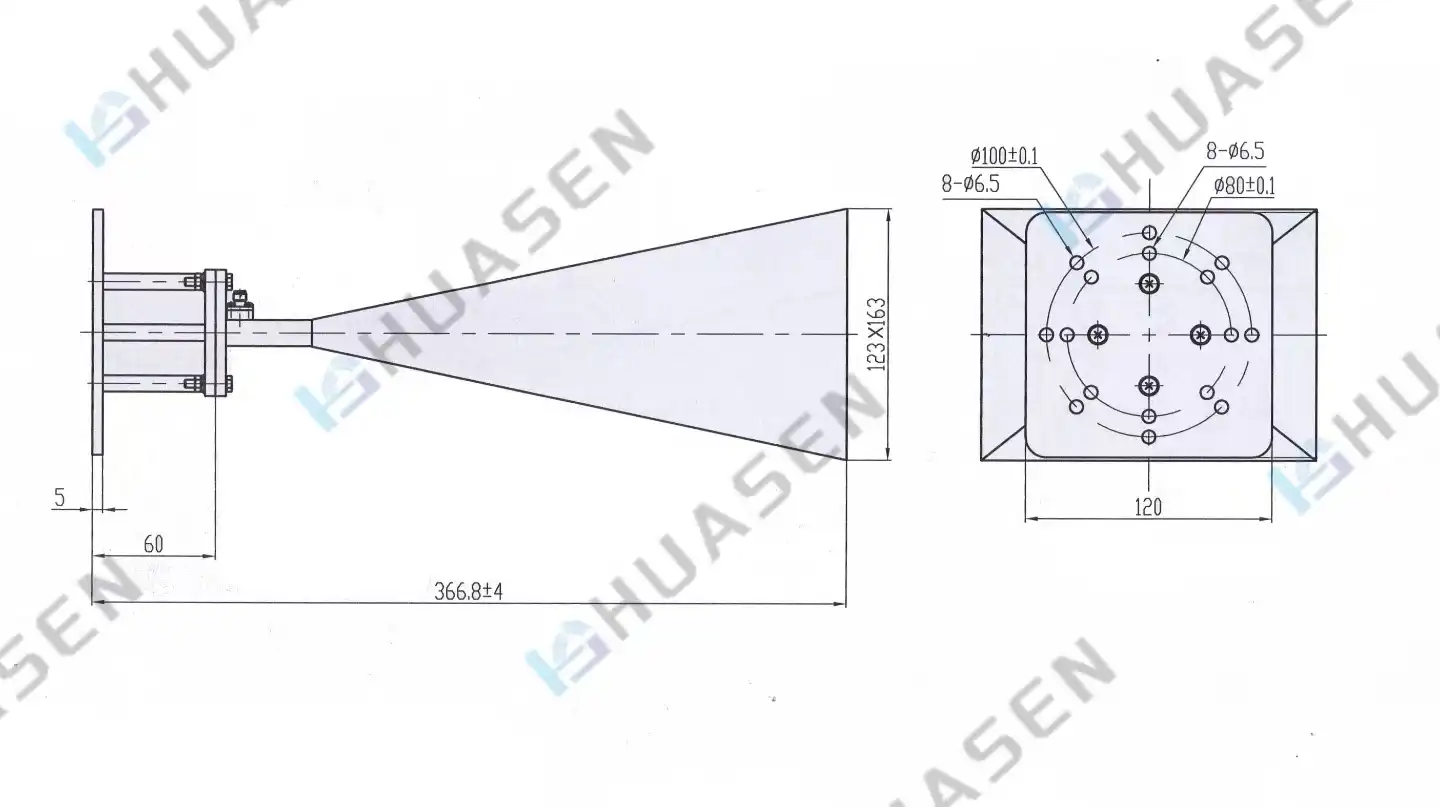
- Physical Dimensions: Horn length and aperture size directly affect near-field measurement distances and installation space requirements
- Weight Distribution: Proper mounting prevents mechanical stress that could alter electrical performance over time
- Vibration Resistance: Aerospace and mobile applications require mounting systems that maintain alignment under dynamic conditions
- Environmental Sealing: Outdoor applications necessitate weatherproof mounting solutions that prevent moisture ingress
These mounting considerations significantly impact measurement accuracy and equipment longevity, making careful evaluation essential for successful implementation.
Supplier Evaluation and Quality Assurance
Reputable manufacturers provide comprehensive calibration data, Double Ridged Horn Antenna including antenna factors and radiation pattern measurements performed using NIST-traceable standards. This documentation enables accurate measurement corrections and regulatory compliance verification. Quality suppliers also offer customisation capabilities for specialised applications requiring modified frequency ranges, polarisation characteristics, or physical configurations. The supplier's technical support infrastructure proves crucial for complex applications. Responsive engineering support, sample evaluation programs, and comprehensive documentation contribute to successful project outcomes and reduced implementation risks.
Applications and Benefits of Broadband Horn Antennas in RF Measurement and Testing
The versatility of broadband horn antennas enables their deployment across diverse measurement scenarios, from regulatory compliance testing to advanced research applications. Understanding these applications helps procurement teams recognise the full value proposition of quality antenna systems.
EMC and EMI Testing Applications
Electromagnetic compatibility testing represents the primary application domain for broadband horn antennas. These devices serve dual roles as both transmitting antennas for radiated immunity testing and receiving antennas for radiated emissions measurements. The wide frequency coverage eliminates the need for antenna switching during compliance testing, reducing measurement uncertainty and improving repeatability.CISPR 16 and MIL-STD-461 standards specifically reference horn antenna characteristics for regulatory testing procedures. The stable radiation patterns and known antenna factors enable accurate field strength calculations required for compliance demonstrations. Modern anechoic chamber installations increasingly rely on broadband horn antennas to streamline testing procedures and improve measurement throughput.
Radar Cross Section and Antenna Pattern Measurements
Compact range facilities utilise broadband horn antennas as illumination sources for radar cross-section characterisation and antenna pattern measurements. The controlled radiation characteristics enable precise target illumination while maintaining measurement repeatability across wide frequency ranges. The high linearity and known gain factors facilitate accurate path loss calculations essential for aerospace and defence applications.
Specialised Applications in Defence and Surveillance
Signal intelligence and spectrum monitoring applications leverage the wide frequency coverage for threat detection and communication analysis. The high power handling capabilities enable deployment in electronic countermeasure systems where broadband jamming requires simultaneous multi-frequency operation.
Here are the primary benefits that make broadband horn antennas indispensable for professional RF applications:
- Measurement Continuity: Eliminates frequency gaps that could mask compliance issues or performance anomalies
- Calibration Stability: Reduces measurement uncertainty through consistent antenna characteristics across the operational bandwidth
- Operational Efficiency: Streamlines testing procedures by eliminating antenna switching and recalibration requirements
- Cost Effectiveness: Single antenna systems reduce inventory requirements and maintenance complexity compared to multiple narrowband solutions
These advantages translate directly into improved measurement confidence and reduced operational costs, making broadband horn antennas essential investments for professional RF testing facilities.
Optimising Your RF Testing Setup with Broadband Horn Antennas
Achieving optimal measurement performance requires careful attention to installation practices, environmental controls, and maintenance procedures. Proper implementation maximises the inherent advantages of broadband horn antenna technology while minimising common sources of measurement error.
Installation Best Practices
The position of the antenna has a big effect on how accurate and repeatable the measurements are. The horn antenna should be placed so that ground reflections and unwanted multipath transmission are as low as possible. This usually means mounting it higher up and making sure it is pointing in the right direction. The distance needed depends on the frequency and type of measurement. For example, for near-field applications, you need to be very close to the item being tested. The environment affects how well an antenna works, especially changes in temperature that can change its mechanical and electrical properties. The most accurate results come from controlled measurement environments. However, for field uses, it may be necessary to account for changes in temperature and atmospheric conditions.
Calibration and Maintenance Requirements
Regular calibration verification ensures measurement accuracy over extended operational periods. Industry standards recommend annual recalibration or immediately following any mechanical shock that could affect internal alignment. Vector network analyser measurements verify VSWR performance and identify any degradation in antenna characteristics.
Future Trends and Technology Developments
Researchers working on advanced materialsbroadband horn antennasare still finding ways to make antennas work better while also making them smaller and lighter. When metamaterials are combined, they promise better pattern control and wider bandwidth, especially for unique uses that need custom radiation properties. Specialised broadband solutions for frequency bands of 60 to 100 GHz are being made because of the growing need for millimetre-wave testing. These new technologies meet the needs of trying 5G and building the next generation of communication systems. Another big trend is digital integration. Smart antennas have sensors and communication features that let you keep an eye on them from afar and have automatic calibration verification. These changes should make measurements more accurate and lower the amount of maintenance that large testing facilities need.
Conclusion
Broadband horn antennas are an important part of current RF testing and measurement equipment because they provide the best frequency coverage and measurement accuracy. Due to their complex design principles that allow for multi-octave operation, as well as their reliable construction and expected performance, these antennas are essential for EMC testing, antenna measurements, and spectrum analysis. It's helpful for procurement teams to know about the technical details, comparison advantages, and optimisation methods that make measurements more accurate while keeping operations as simple as possible. Broadband antenna technology is still changing, but new developments mean that it will be more useful and less expensive in the future for RF tests.
FAQ
1. What frequency ranges do broadband horn antennas typically cover?
Standard broadband horn antennas operate across frequency ranges of 1-18 GHz or 18-40 GHz, with specialised variants extending into millimetre-wave frequencies up to 100 GHz. The specific frequency coverage depends on the antenna design and intended application requirements.
2. How do broadband horn antennas compare to Yagi antennas for RF testing?
Broadband horn antennas offer superior frequency coverage and measurement repeatability compared to Yagi designs, though Yagi antennas may provide higher gain at specific frequencies. Horn antennas eliminate the need for antenna switching during broadband measurements, reducing uncertainty and improving efficiency.
3. What power handling capabilities should I expect from quality broadband horn antennas?
Professional-grade broadband horn antennas typically handle 100-500W continuous wave power, with peak power ratings exceeding 1kW. The specific power rating depends on the antenna size, frequency range, and connector type.
4. How often should broadband horn antennas be recalibrated?
Industry best practices recommend annual recalibration or immediate verification following mechanical shock. Regular calibration ensures measurement accuracy and identifies any performance degradation that could affect test results.
5. What are the key selection criteria for purchasing broadband horn antennas online?
Essential criteria include frequency range compatibility, power handling requirements, connector type, VSWR specifications, and gain characteristics. Additionally, consider supplier reputation, calibration data availability, and technical support capabilities.
Partner with Huasen Microwave for Superior Broadband Horn Antenna Solutions
Huasen Microwave stands as your trusted broadband horn antenna supplier, delivering precision-engineered solutions that meet the demanding requirements of modern RF testing environments. Our comprehensive product portfolio spans frequency ranges from 1 GHz to 40 GHz, featuring exceptional VSWR performance and robust construction designed for mission-critical applications. With over three decades of microwave technology expertise, we provide customised antenna solutions tailored to your specific measurement requirements, backed by responsive technical support and competitive pricing. Contact our engineering team at sales@huasenmicrowave.com to discuss your broadband horn antenna specifications and discover how our proven solutions can enhance your RF testing capabilities while reducing operational complexity and costs.
References
1. Balanis, Constantine A. "Antenna Theory: Analysis and Design." 4th Edition, Wiley, 2016.
2. IEEE Standard 149-2021, "IEEE Recommended Practice for Antenna Measurements."
3. CISPR 16-1-4, "Specification for radio disturbance and immunity measuring apparatus and methods - Part 1-4: Radio disturbance and immunity measuring apparatus - Antennas and test sites for radiated disturbance measurements."
4. Milligan, Thomas A. "Modern Antenna Design." 2nd Edition, IEEE Press, 2005.
5. Rudge, Alan W., et al. "The Handbook of Antenna Design." Institution of Engineering and Technology, 1986.
6. Stutzman, Warren L., and Gary A. Thiele. "Antenna Theory and Design." 3rd Edition, Wiley, 2012.
Send Inquiry