Circular Straight Waveguide for Rotating Joints






2026-04-16 22:03:32
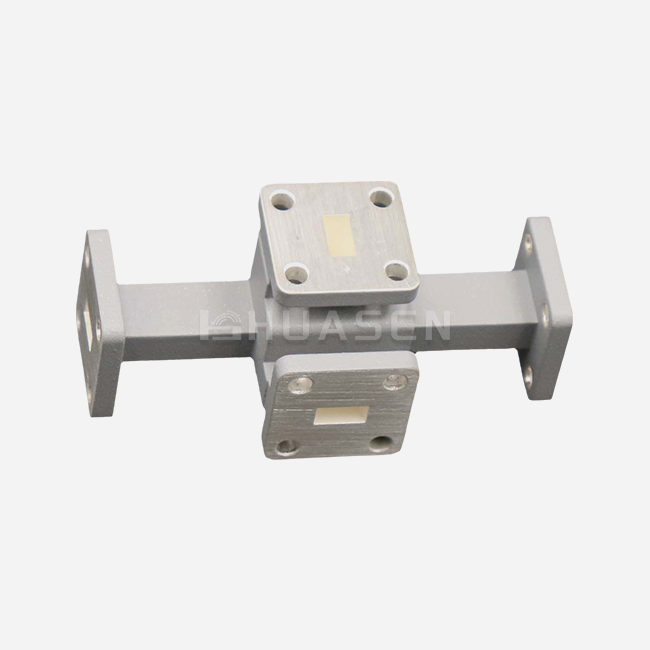
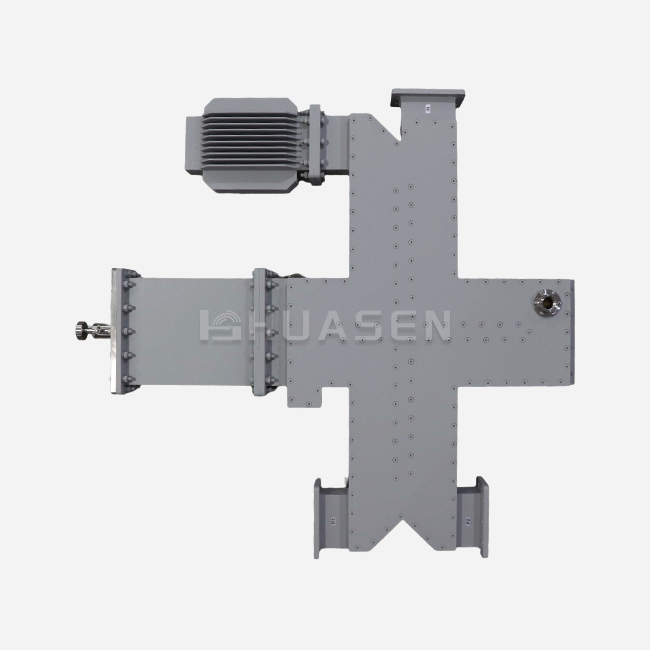
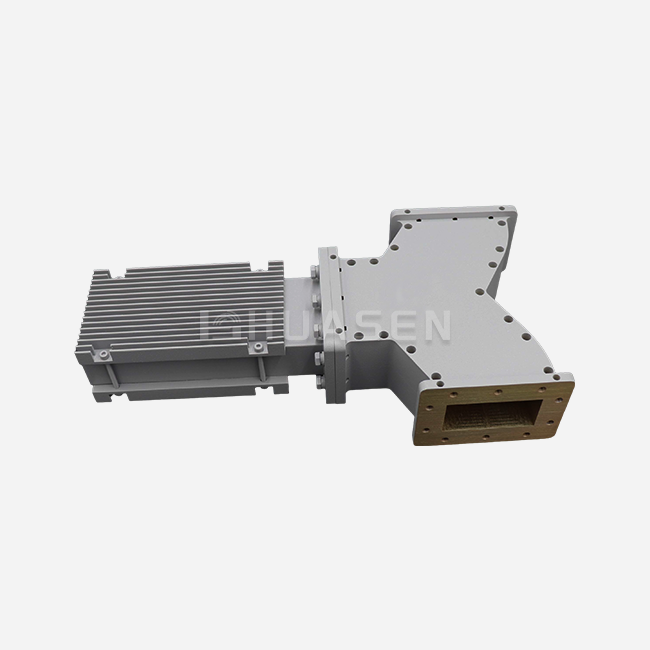
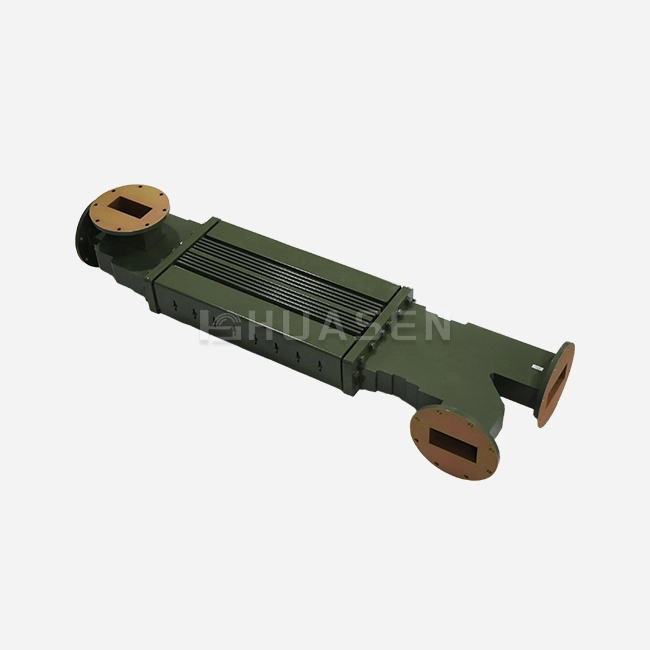
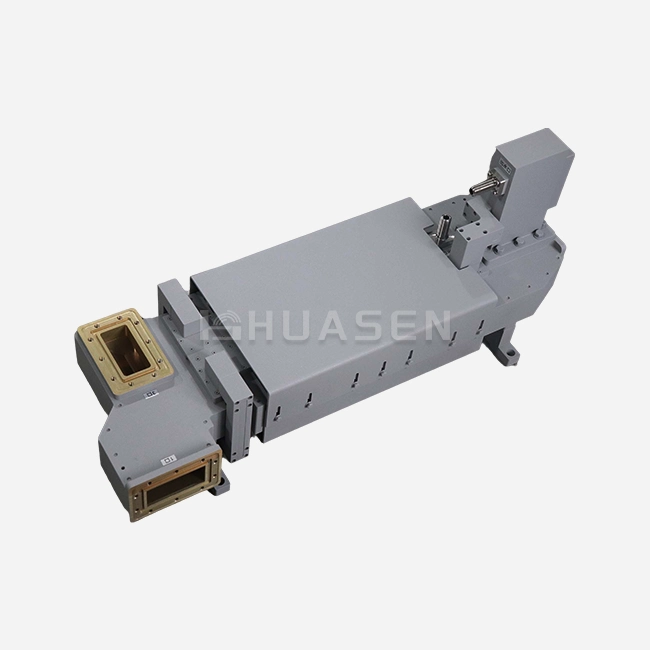
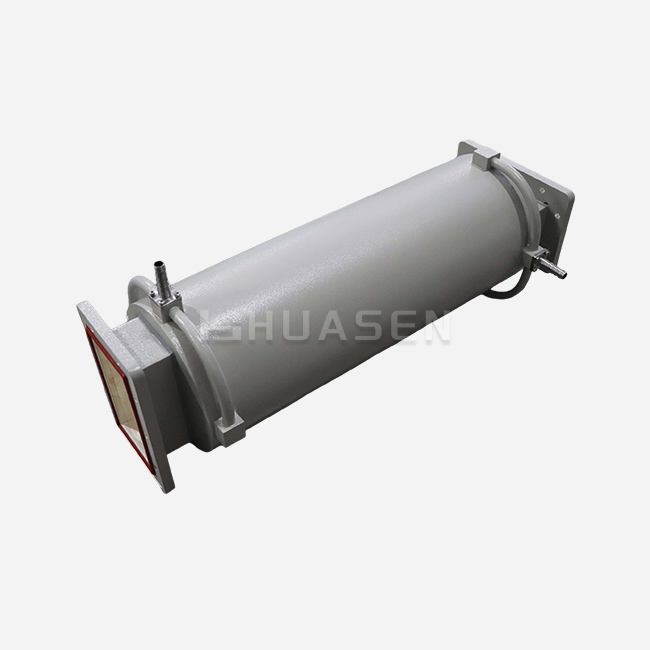
Engineers always have to deal with the problem of how to keep RF signals going while mechanical parts keep turning when they're making spinning joint assemblies for radar tracking systems, satellite earth stations, circular straight waveguides, or naval communications. This need is directly met by the Circular Straight Waveguide, which acts as the center conduit in rotary joint mechanisms. This lets electromagnetic waves travel smoothly during a 360-degree spin without losing power or changing their polarization. Because it is rotationally symmetric, it doesn't have the mode-coupling problems that come with rectangular shapes. This makes it the best choice for uses that need both mechanical freedom and electrical accuracy.
Understanding Circular Straight Waveguides and Their Role in Rotating Joints
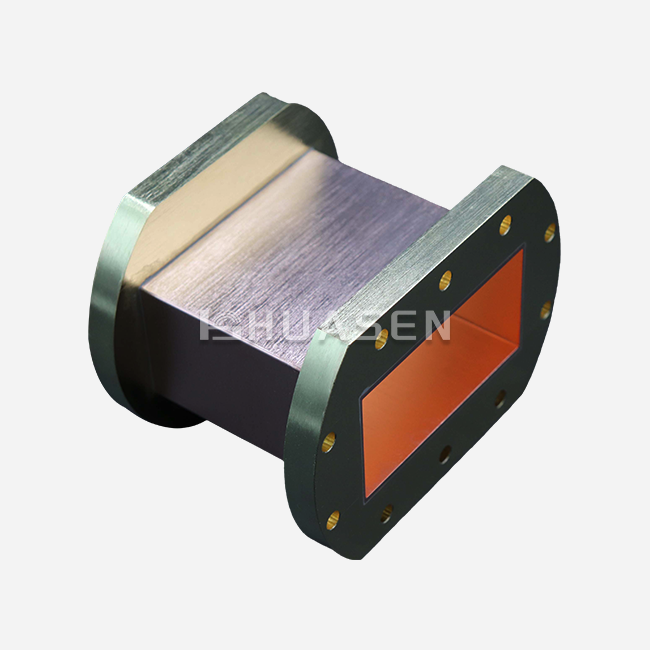
The basic structure of these Circular Straight Waveguides is a hollow metal tube with a circular cross-section that is carefully machined. These tubes are usually made from materials that carry electricity well. Unlike coaxial lines, which have trouble with losses above 10 GHz, this design keeps electromagnetic energy inside metal walls, moving waves through controlled modes with little loss.
Operating Principles and Electromagnetic Modes
Huasen Microwave's Circular Straight Waveguide (CWAL) can handle different electromagnetic modes, such as TE11, TM01, and TE21. Each has its own unique way of propagating waves. The TE11 mode is the most common because it has the lowest cutoff frequency. The TE01 mode, on the other hand, has a special benefit: as the frequency goes up, the attenuation goes down, which is something that no other solid transmission line can do. Because of this, it is necessary for millimeter-wave devices that work between 30 GHz and 100 GHz, where long-distance data transport would lose too much otherwise. The circular shape lets both vertical and horizontal polarizations exist without interfering with each other. This fixes the polarization mismatch issues that happen when antennas follow moving targets or satellites.
Material Selection and Mechanical Design
Copper (C), aluminum (A), and stainless steel (S) are the materials that Huasen Microwave can use, and each one is chosen based on the needs of the operation. Copper is the best conductor of electricity, and in X-band uses, it lowers insertion loss to less than 0.05 dB per meter. Aluminum has a great weight-to-performance ratio, which is important for flying platforms and satellite payload designs where every gram counts when it comes to fuel economy. Stainless steel versions can handle the harsh conditions of the sea, keeping the signal strong even when exposed to saltwater, which would damage metals that aren't protected. The structure is simple, Circular Section,and the production method is also simple. This makes it possible to control the tolerances very closely, which is very important when Circular Straight Waveguide ellipticity needs to stay below 0.1% to keep cross-polarization discrimination degradation from happening in dual-polarized satellite feeds.
Integration Within Rotating Joint Assemblies
Components that keep the electricity flowing while the joint is moving are needed for rotating joints. Because Circular Straight Waveguides are symmetrical along their length, they don't have the angular relationships that cause signal changes in rectangular designs. When flanges are built into radar pedestals or antenna positioners, they need to be centered within micrometers to avoid mode conversion, which happens when wanted TE11 energy pairs with unwanted TM01 modes and messes up the signal. Engineers can get the best impedance matching across the whole transmission chain with Huasen Microwave's length and radius choices that can be changed. This includes the stationary transmitter part, the rotating interface, and the spinning antenna feed.

Key Advantages and Applications of Circular Straight Waveguides in Rotating Joints
By comparing their performance to other transmission line technologies, Circular Straight Waveguides are clear winners in rotating joint uses. These parts solve a lot of problems at once, and their dependability makes them worth choosing for mission-critical systems.
Superior Electrical Performance Characteristics
The benefits show up in a number of technical areas that have a direct effect on how well the system works. Radiation escape is completely stopped by low conductor and dielectric loss properties, which keep signal energy inside the Circular Straight Waveguide structure. This enclosure can handle more than 10 megawatts of peak power for pulsed radar systems, which is high enough to melt coaxial center wires. When using silver-plated copper construction, measured insertion loss stays below 0.03 dB per meter at Ku-band frequencies, and requirements for voltage standing wave ratio (VSWR) always meet or beat 1.05:1 across operating bandwidths. These performance measures directly lead to longer ranges of spotting for radar systems and better signal-to-noise ratios for satellite communication lines.
Real-World Application Scenarios
Real-world applications show how flexible these parts are across a wide range of businesses. In VSAT earth stations, Circular Straight Waveguides connect orthomode transducers to feed horns and handle both right-hand circular polarization and left-hand circular polarization signals at the same time. This dual-polarization feature essentially doubles the bandwidth capacity within the given frequency spectrum. This is a key benefit for satellite operators who want to get the most out of their transponders. Weather radars depend on these Circular Straight Waveguides inside high-speed rotating joints, which let the base spin at 12 RPM while sending multi-megawatt S-band pulses without any arcing or signal interruption. Military shipboard radar systems can handle the pressures of constant spinning, being exposed to salt fog, and being hit by naval gunfire because the Circular Straight Waveguide design protects both the electronics and the structure. For aviation and aircraft uses, the needs are especially high. Broadband connection must be kept up by satellite communication devices on aircraft while the fuselage pitches, rolls, and yaws through rough air. In these systems, the rotary joint relies on Circular Straight Waveguides to keep the quality of the Ka-band signal while the antenna is being stabilized. In research facilities that run fusion reactors, over-moded Circular Straight Waveguides in the TE01 configuration carry millimeter waves from gyrotron sources to tokamak plasma vessels. These waves have to get through strong magnetic fields and thermal radiation that would damage fiber optic or coaxial alternatives.
How to Choose the Best Circular Straight Waveguide for Rotating Joints
To make a procurement choice, you need to match technical specifications to system requirements by systematically evaluating key factors. The picking process starts with figuring out the frequency band and ends with thinking about the mechanical link.
Frequency Band and Mode Selection
The link between wavelength and cutoff characteristics,Circular Section, tells us what the basic Circular Straight Waveguide dimensions are. For X-band (8–12 GHz) systems, Circular Straight Waveguides with an inner diameter of about 22 mm are common. For Ku-band (12–18 GHz) systems, this diameter is cut down to about 15 mm. The frequency cushion above the cutoff impacts both power handling and bandwidth. If you operate too close to the cutoff, dispersion and attenuation get worse, and if you oversize too much, higher-order modes can spread, which lowers the signal clarity. Engineers have to figure out the working frequency as a multiple of the TE11 cutoff frequency. For best performance in military, telecommunications, and aerospace uses, the number should be between 1.3 and 1.8.
Material Properties and Environmental Suitability
There are more reasons to choose between copper, aluminum, and stainless steel than just comparing how well they carry electricity. Copper is a better conductor than aluminum, so it lowers loss but makes the Circular Straight Waveguide heavier—a 1-meter piece of copper WR-90 equivalent Circular Straight Waveguide weighs about 450 grams, while an aluminum equivalent weighs only 150 grams. When the temperature goes from -40°C to +85°C, thermal expansion coefficients affect how stable the dimensions are. Aluminum has a bigger coefficient, so systems that use it need to have features that make up for it. For marine and outdoor systems, corrosion protection is very important. Stainless steel construction stops galvanic corrosion at flange interfaces, even when different metals are joined together. Options for finishing the surface, such as silver plating, gold plating, or passivation, add extra protection but change the cost and wait time.
Customization Capabilities and Interface Standards
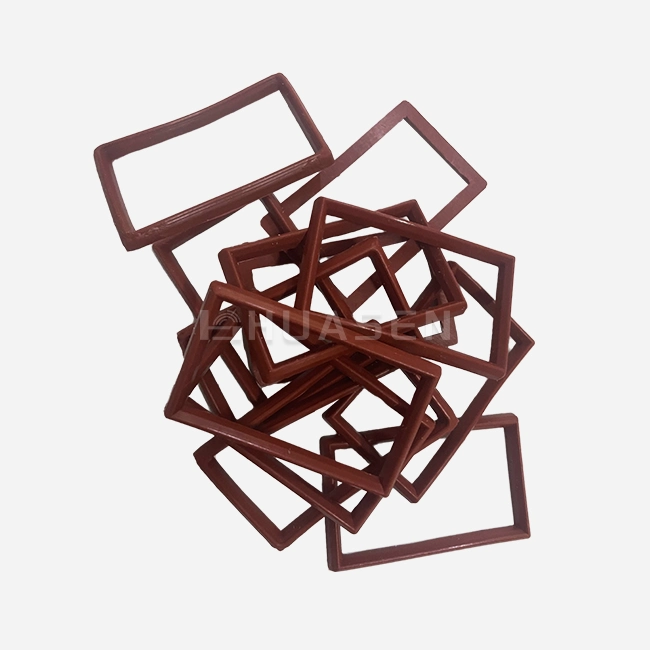
Standard catalog sizes don't always perfectly match the needs of a custom system. Huasen Microwave's length choices can be changed to fit any length requirement. This makes it possible to match the impedance perfectly within tight spaces, without the need for extra adapters that cause insertion loss and VSWR degradation. Customizing the radius improves mode purity in situations where normal sizes would let unwanted higher-order modes happen. It's important that the flange configurations work with the equipment that's already there. Common standards include UG-style flanges for business systems, MIL-DTL specs for defense uses, and custom patterns for unique designs. Checking mating parts for thread types, bolt circle sizes, and gasket grooves is necessaryto make sure they fit properly and are centered after assembly.
Procurement Guide for Circular Straight Waveguides Used in Rotating Joints
A good buying process combines the needs for technical performance with business concerns like cost, delivery times, and the long-term dependability of the supply chain. The choice of manufacturing partners affects both the instant success of the project and its long-term access for operations.
Manufacturer Qualification and Certification Standards
Following industry norms is solid proof of the ability to manufacture and maintain strict quality control. ISO 9001 approval shows that the quality management system is organized, and RoHS compliance shows that there are no harmful materials, which is becoming more and more important for European and North American defense purchases. Defense companies usually need to follow MIL-STD, which includes checking the tolerances for dimensions according to MIL-DTL-3922 and analyzing the materials used according to MIL-DTL-85/3. Labs and research centers often require testing to be traceable to national metrology institutes. This makes sure that measurement errors stay within certain limits. Huasen Microwave was established in 1993 and has a wide range of certifications to meet the needs of the aerospace, defense, and telecommunications industries. They have decades of experience making high-frequency microwave and millimeter-wave components.
Commercial Terms and Supply Chain Considerations
Pricing structures are very different depending on the number of items ordered, the materials chosen, circular straight waveguides, and how complicated the customization is. Volume savings usually start at 50 units and go up in stages until 500 or more units are purchased for large-scale projects like rolling out 5G base stations or building ground infrastructure for satellite constellations. Lead times vary from 4 to 6 weeks for basic settings to 10 to 14 weeks for fully customized designs that need special tools. Just-in-time delivery models work well in production settings where there isn't a lot of room for inventory. However, they require suppliers to be reliable and agree to hold extra stock to keep lines running smoothly. Purchase agreements should clearly spell out payment terms, guarantee coverage, and failure analysis support. Standard warranties cover production defects for 12 to 24 months, and choices for longer coverage protect against premature wear in high-duty-cycle applications.
Technical Documentation and After-Sales Support
Product datasheets that are complete must include measurements of S-parameters across working bandwidths. These measurements are usually shown as plots of insertion loss and return loss versus frequency. When you add GD&T comments to mechanical drawings, you can check the integration before the actual samples come. Material licenses and test records show the makeup of the alloy, the thickness of the plating, and the results of the dimensional inspection. These are important for approval testing and production acceptance. After-sales technical support is what sets competent sellers apart from mere providers. RF engineers can help with design, sample trial programs can be used to test prototypes, and responsive failure analysis services greatly lower project risk. Huasen Microwave offers design advice and help with testing data. They have 30 years of experience in the field, fixing difficult transmission line problems.
Conclusion
In radar, satellite transmission, and aerospace uses, Circular Straight Waveguides are still important parts of rotating joint systems. Because they have circular symmetry, a high power capacity, and low-loss propagation properties, they are able to solve basic problems that other transmission line technologies can't. To do a good job of buying, you need to carefully weigh business factors like cost, lead time, and supply chain stability against frequency compatibility, material properties, and manufacturer capabilities. As communication systems move toward higher frequencies and wider bandwidth needs, Circular Straight Waveguide technology keeps getting better by using new materials and more precise manufacturing methods. When businesses work with experienced providers, they can take advantage of these changes and make sure their systems meet both the needs of current operations and those of future growth.
FAQ
1. What distinguishes circular from rectangular waveguides in rotating applications?
In spinning uses, what makes Circular Straight Waveguides different from rectangular ones? Because rectangular waveguides keep the polarization direction stable, they can't be used in rotary joints because the signal polarization would change in relation to the feed components that stay still. The circular cross-section gets rid of rotational dependencies, which lets the spinning go on forever without changing the polarization or lowering the coupling efficiency.
2. How does mode conversion occur, and how can it be prevented?
Mode conversion happens when gaps in the structure or differences in size allow energy to move between electromagnetic modes. For example, the wanted TE11 coupling into the parasite TM01 mode. To avoid this, you need to keep the concentricity very tight (usually within 0.025 mm), avoid making sharp turns on long-radius curves, and make sure the flanges are lined up correctly during assembly by using precise cutting and controlled pressure.
3. Why select TE01 mode for specific applications?
The TE01 mode is special in that attenuation lowers as frequency rises. This makes it perfect for sending millimeter waves over long distances, where other modes would suffer too many losses. This benefit becomes important above 30 GHz, which lets signals travel farther than 100 meters without losing quality in research centers and high-power radio systems.
Partner With Huasen Microwave for Your Waveguide Needs
Huasen Microwave Technology Co., Ltd. has 30 years of experience making high-frequency microwave and millimeter-wave parts that can be used in your toughest rotating joint projects. We offer a range of Circular Straight Waveguide products that can be made from lightweight aluminum, high-conductivity copper, and corrosion-resistant stainless steel. These products can support TE11, TM01, and TE21 modes across standard and unique frequency bands. We offer full customization options, such as precise length tolerances, optimized radii, and flange setups that meet your unique interface needs. As a well-known company that makes Circular Straight Waveguides for the defense, telecommunications, aircraft, and research industries, we keep our ISO approval and strict quality control procedures to make sure that every part meets the highest performance standards. Throughout the duration of your project, our engineering team helps with design, verifies S-parameters, and helps with integration. Get in touch with our technical experts at sales@huasenmicrowave.com to talk about your rotating joint waveguide needs and find out how our tried-and-true solutions improve system stability while meeting tight delivery deadlines.
References
1. Pozar, David M. Microwave Engineering, 4th Edition. Wiley, 2011.
2. Marcuvitz, Nathan. Waveguide Handbook. MIT Radiation Laboratory Series, McGraw-Hill, 1951.
3. Clarricoats, P. J. B. and A. D. Olver. Corrugated Horns for Microwave Antennas. IEE Electromagnetic Waves Series, Peter Peregrinus Ltd., 1984.
4. Balanis, Constantine A. Advanced Engineering Electromagnetics, 2nd Edition. Wiley, 2012.
5. Saad, Theodore S. Microwave Engineer's Handbook, Volume 1. Artech House, 1971.
6. Montgomery, C. G., R. H. Dicke, and E. M. Purcell. Principles of Microwave Circuits. MIT Radiation Laboratory Series, McGraw-Hill, 1948.
Send Inquiry