Choosing Waveguide Isolator for High Power Systems






2026-06-18 17:10:29
There are a lot of technical and practical factors that need to be carefully thought through when choosing a waveguide isolator for high-power systems. These ferrite devices don't work the other way around, so they keep signals intact in demanding situations while protecting sensitive RF sources from damaging reflected power. When designing a 5G base station, a satellite ground terminal, or a military radar system, the isolator you choose has a direct effect on how reliable the system is, how much it costs to run, and how well it works overall. When engineers and procurement teams understand how power handling, insertion loss, isolation level, environmental resilience, and procurement processes all work together, they can make choices that are confident in their knowledge and that maximize both short-term functionality and long-term value.
Understanding Waveguide Isolators and Their Role in High Power Systems
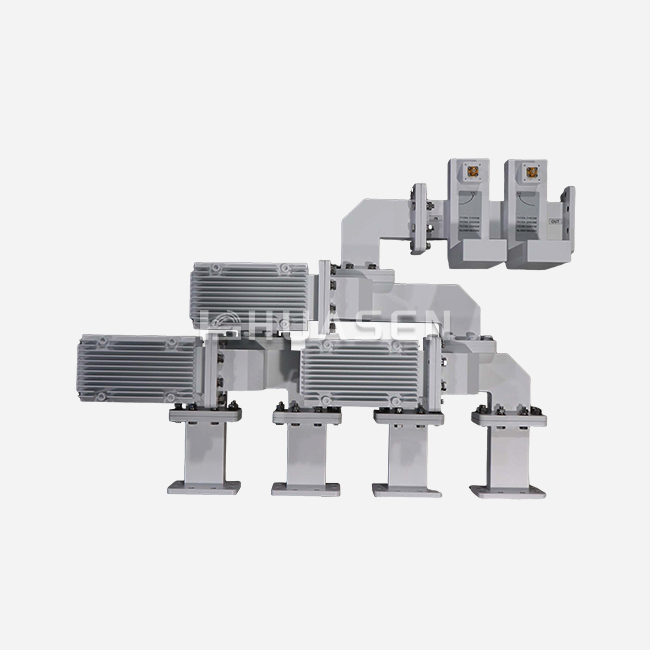
In microwaves, waveguide isolators work like "one-way valves," letting signals go forward while collecting energy going backward. This one-way behavior happens because of how ferrite materials interact with carefully controlled magnetic fields, which usually use Faraday rotation principles. When reverse-traveling energy comes into the device, it is sent to an internal matching terminal load, where it loses heat. This device stops reflected power from getting to amplifiers, oscillators, and emitters that are sensitive and could have frequency pulling, instability, or catastrophic failure if it did.
Operating Principles and Internal Construction
Each isolator has waveguide-mounted ferrite components in the center. Outside, permanent magnets provide a magnetic bias field that polarises ferrite. Ferrite's magnetic properties vary the electromagnetic waves' phase depending on the propagation direction. Attenuation minimally affects forward signals, but turns and absorbs backward impulses. The termination load, generally a resistive vane or absorbent substance, converts undesired RF energy into heat that needs thermal design to regulate.
Key Performance Specifications That Matter
Forward power loss is quantified by insertion loss. This loss is commonly 0.2–0.5 dB for decent devices. Lower insertion loss maintains radio signal strength and efficiency. Professional systems need 20–30 dB isolation to stop reverse power. VSWR indicates a resistance match. Values below 1.20:1 indicate little isolator port echoes. The frequency range determines operational bandwidth. Narrowband designs cover 5–10% of the bandwidth, whereas broadband designs cover the waveguide band. Power handling capacity, measured in CW and peak pulse rates, indicates suitability for high-power emitters. Industrial gadgets can handle kW.
Material Selection: Ferrite Versus Ceramic Considerations
Ferrite composition affects temperature stability, power management, and frequency response. Doping base ferrite materials with gadolinium or holmium improves their performance over a wide range of temperatures and prevents detuning at the Curie point. Housing, generally metal or copper, blocks electromagnetic radiation, supports electronics, and lets heat escape. Precision cutting ensures the flange is flat and the dimensions are proper, preventing arcing and signal leakage.
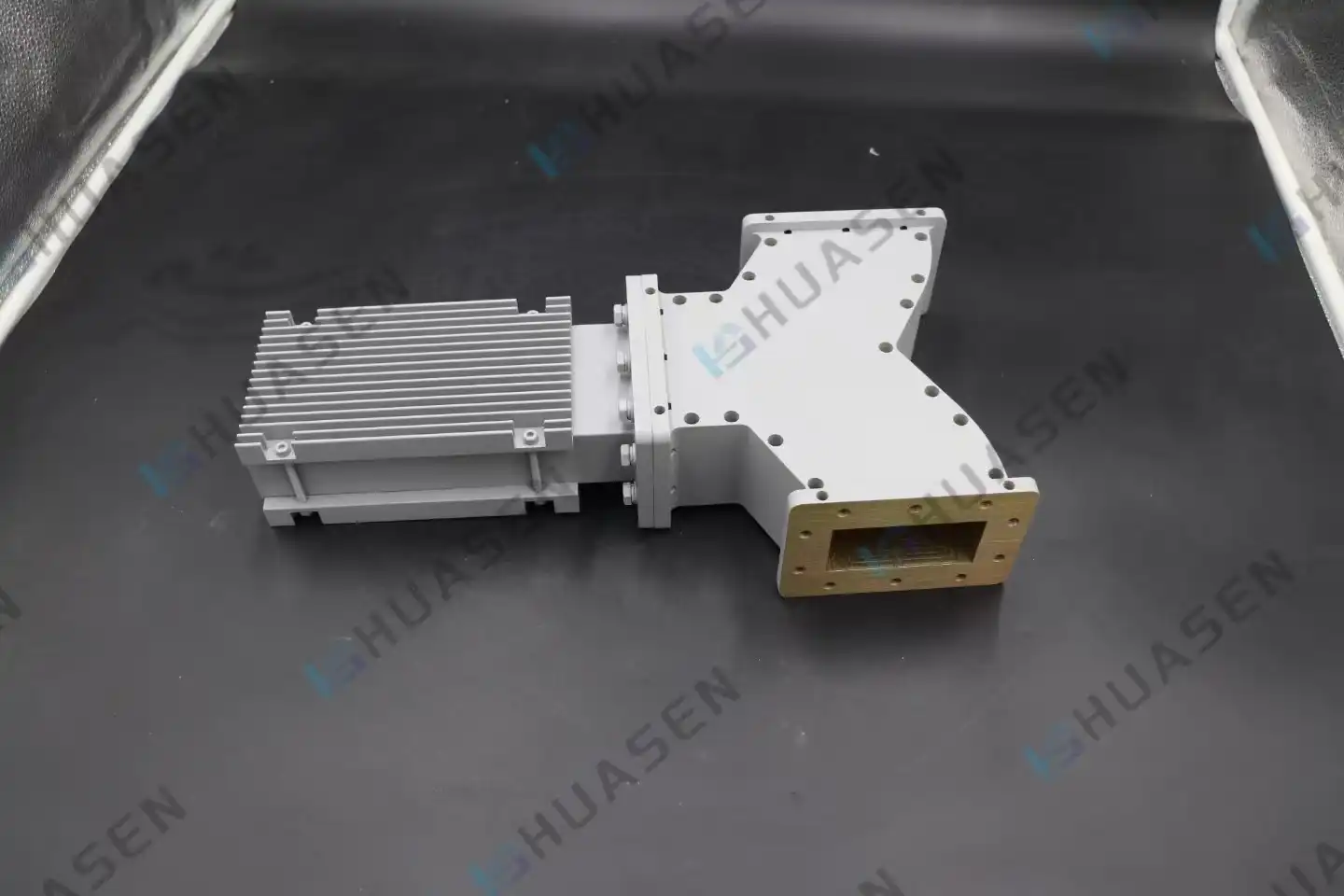
Key Factors to Consider When Choosing Waveguide Isolators for High Power Applications
To choose the right waveguide isolator, you have to weigh a lot of technical factors against the needs of the application and the limitations of the system. Power handling ability is the most important thing to think about, but frequency range, physical format, environmental resiliency, and interface compatibility are also very important.
Power Handling Requirements Across Applications
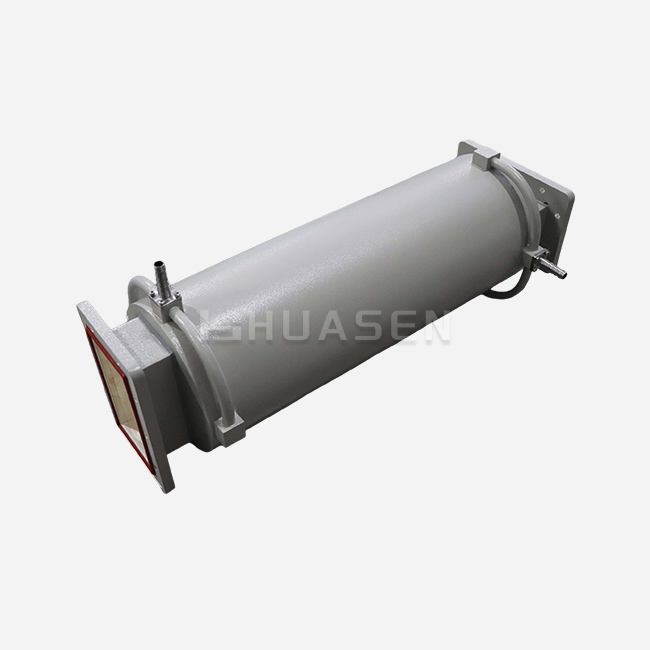
Power needs are different for each industry. Base station transmitters in 5G infrastructure usually run on modest constant power but need to be very stable at high temperatures to work 24 hours a day, seven days a week. For pulsed functions, radar systems need to be able to handle a lot of peak power. Pulse lengths can be anywhere from nanoseconds to milliseconds. Ground stations for satellite communications need to be built to last, so they can keep working even when temperatures change a lot. Industrial heaters and medical linear accelerators push the limits of power, which means that water-cooled isolation designs are sometimes needed. By correctly estimating both normal and peak power needs, you can keep parts from breaking down too soon and keep the system from going down.
Balancing Insertion Loss and Isolation Performance
Insertion loss has a direct effect on the budget and performance of the system. Each tenth of a decibel adds up in RF chains that are complicated, like those with many stages of amplifiers or long transmission lines. But getting a smaller insertion loss can sometimes hurt the performance of separation or make the device bigger. System design tells engineering teams how to weigh the pros and cons of different options. Applications with steady loads and little VSWR variation may be able to handle a little less isolation. On the other hand, settings with dynamic impedance changes, like antenna systems that change with the weather, should have maximum isolation, even if it means a little more insertion loss.
Frequency Band Matching and Bandwidth Considerations
Different waveguide sizes cover different frequency bands. For example, WR-28 covers 26.5 to 40 GHz, WR-90 covers 8.2 to 12.4 GHz, and so on. Narrowband isolators work best at center frequencies but only cover a small area, usually less than 10% of the fractional bandwidth. These work well for fixed-frequency uses, like point-to-point lines or radar bands that are only used for that purpose. Advanced ferrite formulas and dielectric loading are used in waveguide broadband isolators to cover all waveguide bands without the need for mechanical tuning. These flexible gadgets make keeping track of goods easier and allow wideband systems that are used in test tools, electronic warfare, and spectrum tracking. For multi-band systems, you might need more than one isolator or a special design with frequency-specific parts built in.
Physical Format and Interface Compatibility
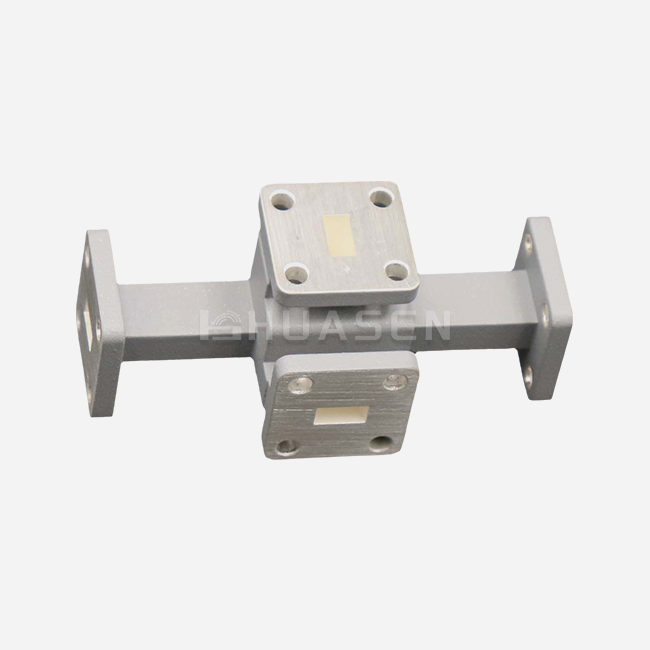
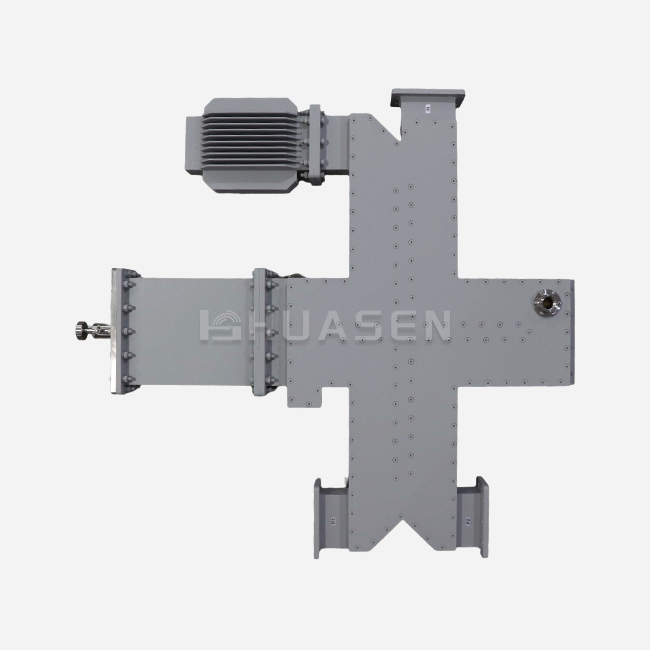
Rectangular waveguide forms are most common in high-power uses because they can handle more power and lose less of it. In certain spinning joint uses, circular waveguides are used. To make sure the mechanical and electrical connections work right, flange standards, such as UG, CPR, and custom forms, must match the gear that is already in the system. Flatness of the flange and quality of the cover stop RF leaks and arcing. Designs that are smaller help setups that are small, but power handling is often limited by physical limitations. Because of weight limits, aircraft and movable systems need to carefully choose their materials and make their structures work best.
Comparing Waveguide Isolators to Alternative Solutions
Understanding when waveguide isolator technology is better than other methods helps buying teams choose the best parts. In some situations, coaxial isolators and circulators can work instead of waveguides, but waveguides work best in places with a lot of power and little loss.
Waveguide Versus Coaxial Isolators
Because they are small and have easy-to-use connectors, coaxial isolators are often used in test tools and low-power RF systems. But their lower ability to handle power and higher insertion loss become problems when the power level goes above tens or hundreds of watts. Waveguide structures don't have any middle wires, so they use air as the main dielectric. This lets them handle kilowatts of power with very little loss. Because of this, waveguide isolators are the best way to protect transmitters in base stations, radars, and satellite receivers. Coaxial designs work well for protecting receivers, setting up labs, and other uses where room is more important than power.
Isolators Versus Circulators in System Design
Circulators have three ports and send data in a certain order around a ferrite joint. They allow emitters and receivers to share antennas or isolate the load with external terminations. In reality, isolators work like two-port circulators with a built-in cutoff. Isolators are easier to use and take up less space when an application only needs safety in one way and doesn't need to be able to change routes. Circulators make things more complicated, but they also let you set up more difficult things like duplexing and signal tracking. Isolators are often the best choice for simple security tasks because they are cheaper.
Evaluating Reputable Manufacturers and Suppliers
Well-known companies have been making ferrite magnets for decades and have a track record of success. Clear datasheets with full S-parameter plots, power curves, and environmental specs show that the engineering is thorough. Full warranties and quick expert help cut down on merger risk and project delays. Suppliers with sample review programs let you check the success of their products before making big promises. Certifications like ISO 9001, AS9100, or MIL-STD compliance are part of manufacturing capability reviews. They give people faith in quality control methods and the stability of the supply chain.
Procurement Considerations for Bulk and Customized Orders
A successful buying process includes more than just technical requirements. It also includes planning finances, managing the supply chain, and building relationships with vendors. Strategic buying practices lower the total cost of ownership while making sure that products are delivered on time and that their performance is checked.
Lead Time and Inventory Management Strategies
Standard stock waveguide isolators usually ship within days or weeks. Custom designs, on the other hand, need to be worked out with engineers and have longer production times, which are often eight to sixteen weeks. Bulk orders may get preferred processing, but they need to be placed in groups of a certain size and paid for in advance. Keeping a planned stock of important parts can protect you from supply problems, especially for systems with long lifecycles in defense and aircraft. Just-in-time purchasing lowers the cost of moving goods, but it makes suppliers more vulnerable to supply changes. If you balance these methods based on how important the application is and how accurate the forecast is, you can get the most out of your working capital while still keeping your operations ready.
Custom Design Parameters and Communication Protocols
Custom isolators are made to fit specific needs in a system, like non-standard frequency bands, higher power handling, special flanges, or extreme weather ratings. The design process goes faster when there is clear specification data. This includes the frequency range with specific edges, the power needs with modulation details, the VSWR limits, the physical envelope constraints, the environmental conditions, and the interface standards. Early involvement with engineering teams helps find limitations on practicality and cost factors. Sample validation checks the performance before committing to production. Protocols for acceptance testing should spell out how to measure and grade performance. This will stop disagreements and make sure that the units provided meet standards.
Cost Analysis and Value Assessment
Prices per unit vary a lot depending on the frequency, power grade, bandwidth, and amount of customization. For lab use, cheap units might be enough, but for mission-critical deployments, you need to pay more for parts with better specs and more reliable performance. The price you pay for something doesn't just include the cost of buying it; it also includes the cost of putting it together, trying it, fixing it if something goes wrong, and keeping it running. Volume discounts encourage bigger promises but raise the risk of running out of stock. When you work with the same source for a long time, you often get better prices and faster service. When you compare cost to speed, stability, and vendor capability, you get a more complete picture of value than just comparing prices.
Best Practices for Integrating Waveguide Isolators into High-Power Systems
Proper construction and ongoing care make the waveguide isolator work better and the system more reliable. Paying attention to mechanical alignment, temperature management, and regular tracking stops performance loss and increases the life of an operation.
Installation Techniques for Optimal Performance
Perfectly aligned flanges make sure that all surfaces make contact and stop gap arcing. The torque requirements keep the tension of the seal constant without putting too much stress on the flanges. Positioning isolators so that the terminal loads are in a way that allows natural convective cooling improves thermal efficiency. Some high-power units need to be actively cooled by moving liquid or pushing air around them. Electrical connection between waveguide parts cuts down on unwanted resonances. EMF and static electricity can't get through if you ground yourself properly. Early checking makes sure that the flanges are not harmed, that the mating surfaces are clean, and that the right sealing materials are used.
Thermal Management and Environmental Protection
In situations with a lot of reflection, internal termination loads give off reverse power as heat, which raises the temperature of the component. If there is enough heat loss or wind in the area, ferrite demagnetization and performance drift can be avoided. Standard designs usually work in temperatures between -40°C and +85°C, but there are models with wider temperature ranges. For setups outside, you need weatherproof shelters that are properly sealed to keep out moisture, dust, and corrosive air. In wet places, pressure purging with dry nitrogen stops mist from forming inside. Vibration separation keeps ferrite elements safe from mechanical stress in moving platforms like cars, ships, and planes.
Routine Monitoring and Preventive Maintenance
VSWR readings taken on a regular basis find impedance differences that are starting to form before they do any damage. Thermal imaging finds hot spots that mean there is too much negative power or not enough cooling. Corrosion, mechanical damage, or seal wear can be seen with the naked eye. The following changes in insertion loss patterns show signs of age or contamination. Maintenance intervals are based on the job cycle and working environment. For example, equipment that is used continuously outside needs more attention more often than equipment that is used in a controlled laboratory. Recording the past of measurements lets you plan for repair and make smart decisions about replacements.
Conclusion
Finding the best waveguide isolator for high-power systems means matching how well it works technically with how easy it is to buy. The amount of power it can handle, its insertion loss, its separation level, its frequency range, and its ability to withstand harsh environments must all match what the application needs. Partnering with experienced makers gives you access to tried-and-true technology and quick help, whether you're looking for standard catalog items or unique design services. When you install and maintain things the right way, the parts last longer and the system works more reliably. This protects your investments and lets mission-critical operations happen in the aerospace, telecoms, and industry sectors.
FAQ
Q1: What insertion loss should I expect from a quality waveguide isolator?
Insertion loss in professional-grade isolators is usually between 0.2 dB and 0.5 dB, based on the frequency, bandwidth, and power level. Broadband designs that cover the whole waveguide band may have a little more loss at the edges of the bands. Values above 0.6 dB should make you think about the quality of the design or whether the frequency is right. Less loss directly leads to more efficient systems and longer communication ranges.
Q2: Can a single isolator operate across multiple frequency bands?
Broadband waveguide isolators cover more than 40% of the bandwidth of a waveguide and can work across full frequency bands without tuning. These devices are flexible enough to work with wideband systems in electronic warfare, test tools, and keeping an eye on the airwaves. Narrowband isolators work best at certain frequencies but only cover a 5–10% bandwidth fraction. Either broadband systems or multiple band-specific units are needed for multi-octave coverage. Whether wideband freedom or narrowband improvement is more important depends on the needs of the application.
Q3: When should I consider custom isolator designs?
When normal catalog goods can't meet specific needs like non-standard frequency bands, high power levels, specialized flange connections, harsh weather conditions, or limited physical envelopes, custom designs are needed. Customization is often needed for aircraft, defense, and specific industrial equipment. Custom approaches are more cost-effective for production plans than for prototypes or low-volume projects because they require larger order numbers and longer wait times.
Partner with Huasen Microwave for Reliable Waveguide Isolator Solutions
Huasen Microwave Technology can help you with your most difficult projects because they have been creating high-frequency parts for 30 years. Our line of waveguide isolators includes both normal and wideband designs that work with frequencies ranging from L-band to W-band. As required by MIL-STD-202, each unit goes through strict quality control measures such as full S-parameter checking using a Vector Network Analyzer, high-power burn-in testing, and external stress screening. This thorough testing makes sure that the infrastructure for telecoms, radar systems, satellite terminals, and aerospace vehicles all work reliably. Custom engineering services take into account particular needs, such as frequency tuning, higher power levels, and special interface needs. With clear lead times and reasonable prices, production skills support both making prototypes and making a lot of them. To speed up the merging process, technical support teams offer design advice, sample evaluation programs, and calibration data. Talk to our experts about your project needs at sales@huasenmicrowave.com and find out why top system designers choose Huasen Microwave as their waveguide isolator maker of choice.
References
1. Pozar, David M. Microwave Engineering, 4th Edition. John Wiley & Sons, 2012.
2. Baden Fuller, A.J. Ferrites at Microwave Frequencies. IET Electromagnetic Waves Series, 1987.
3. Helszajn, Joseph. The Stripline Circulators: Theory and Practice. Wiley-IEEE Press, 2008.
4. Linkhart, Douglas K. Microwave Circulator Design, 2nd Edition. Artech House, 2014.
5. MIL-STD-202G: Test Method Standard for Electronic and Electrical Component Parts. U.S. Department of Defense, 2002.
6. Collin, Robert E. Foundations for Microwave Engineering, 2nd Edition. IEEE Press, 2001.
Send Inquiry