Choosing Between Coaxial Fixed and Variable Attenuators






2025-11-19 23:38:20
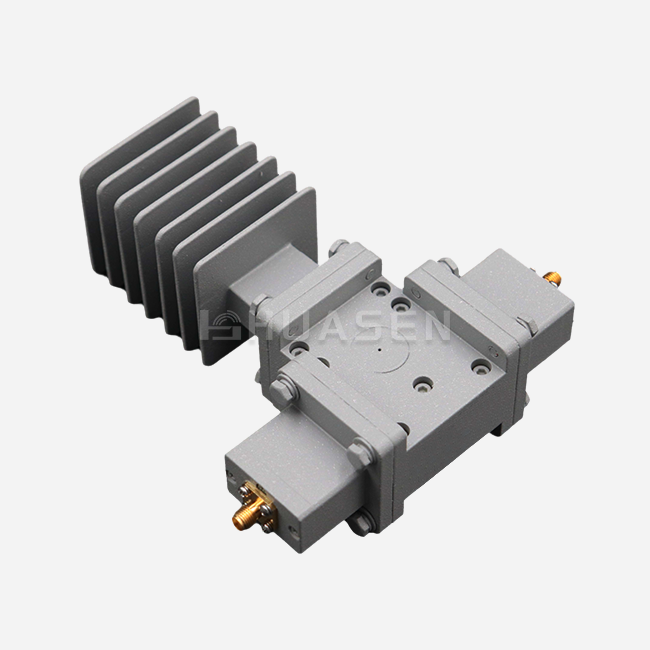
It is very important to pick the right suppressor if you want RF and microwave systems to work at their best. It makes a big difference in how well and how fast your system works whether you pick coaxial fixed attenuators or coaxial changeable attenuators such as the Coaxial Variable Attenuator. Here are the most important things to keep in mind as you choose between these two types of attenuators. That choice will be better for you now that you know this. In microwave and radio frequency (RF) systems, coaxial attenuators are very useful for controlling the amount of data that can flow. Once they are set, fixed attenuators stop sound at a certain level. You can change that amount, though, when they are not set. Choose one based on the bands you need to work with, the power you need to handle, and whether you need direct control. There is no better way to lower the sound than with a set filter. If you need to make changes right away, though, an attenuation that can be changed is best. What makes each type of RF system different? You need to know this to get the most out of your system. It's helpful to have coaxial changeable attenuators because they let you change the reduction right away. Because of this, they work well in test and measurement sets, systems that need to be moved around a lot, and dynamic power control applications. Fixed attenuators, on the other hand, are a better value for money when you need stable, set reduction.
Fixed vs. variable coaxial attenuators: comparison of use cases
Before you pick one, you should know what each kind of coaxial attenuator does and how it can help you. For each type, these times work best:
Fixed Coaxial Attenuators
When a set amount of signal loss is Before you pick one, you should know what each kind of coaxial attenuator does and how it can help you. For each type, these times work best:
- If two devices don't have the same impedance, fixed attenuators can help fix the VSWR.
- Being alone between stages: Cutting down on signal echoes between stages of an amplifier
- To protect the receivers: Keeping parts that are weak from getting too much power
- Cable equalization: Making up for the cable losses that come with long phone lines
Since fixed attenuators, unlike coaxial variable attenuators, are stable and reliable, they can be used in long-term setups where the level of loss needs to stay the same.
Variable Coaxial Attenuators
Coaxial changeable attenuators let you change the attenuation, which makes them useful in many situations:
- Test and measurement: Changing the amounts of signals in lab equipment
- Automatic control of the gain: Keeping output amounts steady in a variety of situations
- Power leveling means distributing power evenly among several routes or ways.
- Setting up the system: Adjusting data levels during setup and care of the system
- Simulation of fading: Simulating signal loss in testing for radio communications
Because they are flexible, variable attenuators are very useful in settings that change quickly and need to make changes to signal levels all the time.
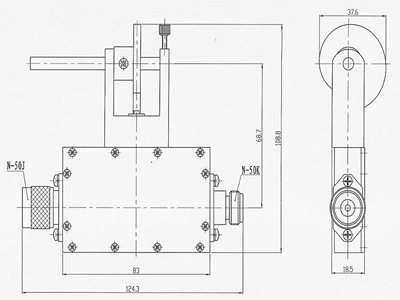
When should you use a variable attenuator instead of a fixed one?
You can choose either a set or a movable silencer, depending on what you need to do. A reduction that can be changed is better in these situations:
Dynamic Signal Control
Variable attenuators are essential for uses that need to change the signal level in real time. They let workers adjust the reduction precisely on the fly, so they can adapt to new test conditions or conditions that change. This skill is very useful in the following situations:
- Places for research and growth
- RF parts are put through production tests.
- Wireless tools that can adapt
Versatility in Test Setups
Variable attenuators give you the most freedom in testing and measuring situations. They allow:
- Signal levels can be changed quickly without having to change the links on the equipment.
- Simulation of different signal situations in the same setup
- It's easy to fix problems by focusing on signal strength issues.
Cost-Effective Solution for Multiple Attenuation Needs
When your system needs different amounts of attenuation at different times, one changeable Coaxial Variable Attenuator can be used instead of several set ones. This can lead to:
- Reduced inventory and component costs
- Simplified system design and maintenance
- Space savings in compact RF systems
Precision Calibration and Alignment
Variable attenuators excel in applications requiring precise signal level control, such as:
- Calibrating sensitive RF equipment
- Aligning complex multi-channel systems
- Making up for changes in RF lines caused by temperature
Variable attenuators let engineers get the best system performance with great accuracy because they let them fine-tune reduction.
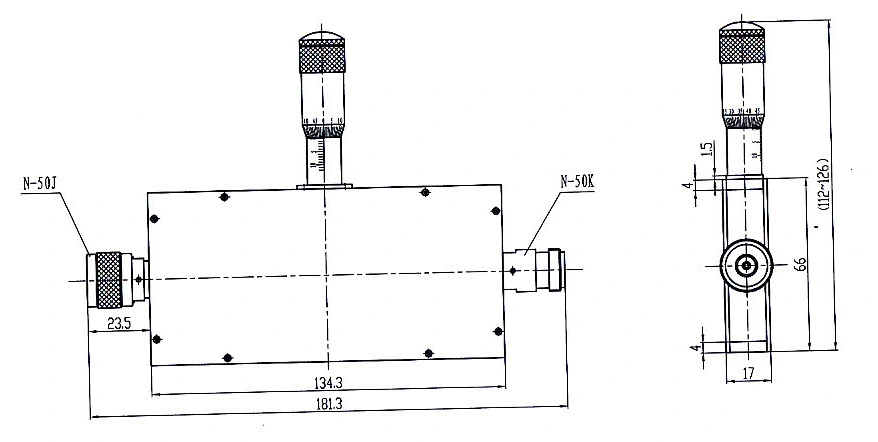
Design implications of variable attenuation in RF measurement and control
Adding changeable attenuation to RF control and measurement systems has pros and cons that need to be thought through when designing them. To get the most out of coaxial variable attenuators in your projects, you need to understand these effects.
Enhanced System Flexibility
RF systems can be changed in new ways with variable attenuators, which let you:
- Changeable range widening in test setups
- Signal paths in complex networks can be changed in real time.
- Better system response to changes in the surroundings
Because of this, RF designs can become more flexible and durable, able to work in a wider range of situations.
Calibration and Accuracy Considerations
Variable attenuators have a lot of benefits, but they also add some extra things to think about when calibrating a system:
- The correctness of the attenuation over the whole range of adjustments
- Changes in frequency response at different levels of dampening
- Attenuation levels that stay the same over time and can be repeated
When numbers need to be very accurate, planners need to keep the coaxial variable attenuator in mind to make sure that the numbers are always right and consistent.
Integration with Control Systems
To get the most out of variable attenuation, it's often necessary to connect it to control systems:
- Automatic changes to the reduction based on feedback loops
- Distributed RF equipment that can be controlled from a distance
- Dynamic reduction is used in software-defined radio systems.
This combination can make RF systems smarter and more effective, but it also makes planning more difficult and might need more software development.
Power Handling and Thermal Management
When dealing with power, variable attenuators bring up some new issues:
- Power loss varies across the absorption range.
- Possible warmth in certain areas at high absorption levels
- Need for strong heat control in high-power uses
Designers need to think about these things very carefully to make sure that the system works well and that performance doesn't drop or parts break.
In conclusion, the choice between set and changeable coaxial attenuators relies on the needs of your application. For needs of steady reduction, fixed attenuators are simple and stable, while variable attenuators are flexible and offer dynamic control. You can make the best choice for your RF system's performance and power by carefully considering the types' use cases, benefits, and design effects.
Conclusion
In RF and microwave system design, picking between fixed and changeable coaxial attenuators is a very important choice. Each type has its own benefits, and the best one for you will depend on the needs of your application. When you need steady reduction, fixed attenuators are stable and easy to use. On the other hand, variable attenuators are flexible and easy to use for situations where you need to make changes in real time.
The Huasen Microwave Technology Co., Ltd. can help you find the best RF products for your needs. Long-wave and microwave parts with high frequencies have been what we do for more than 30 years. We offer a large selection of goods, such as waveguide parts, antennas, and cable devices. We are a great partner for telecommunications, radar, aircraft, and military projects because we are dedicated to new ideas and dependability. Get in touch with our knowledgeable staff right away to talk about how our high-tech coaxial variable attenuators and other RF solutions can improve the performance and features of your system.
FAQ
1. What is the typical frequency range for coaxial variable attenuators?
Coaxial variable attenuators typically operate in frequency ranges from DC to 18 GHz or higher, depending on the specific model and design. Some high-performance attenuators can even extend into the millimeter-wave range, covering frequencies up to 40 GHz or beyond.
2. How does temperature affect the performance of variable attenuators?
Temperature variations can impact the performance of variable attenuators, potentially causing slight changes in attenuation values or frequency response. High-quality attenuators are designed to minimize these effects, often featuring temperature compensation mechanisms to maintain stable performance across a wide temperature range.
3. Can coaxial variable attenuators be used in high-power applications?
Yes, certain coaxial variable attenuators are designed for high-power applications. These models typically feature robust construction, enhanced thermal management, and specialized materials to handle higher power levels. It's crucial to select an attenuator rated for your specific power requirements to ensure reliable operation and prevent damage.
4. What are the key factors to consider when selecting a coaxial variable attenuator?
When choosing a coaxial variable attenuator, consider factors such as frequency range, maximum attenuation range, power handling capability, insertion loss, VSWR, attenuation accuracy, and environmental specifications. Additionally, consider the control method (manual or electronic), size constraints, and compatibility with your existing system components.
Optimize Your RF System with Huasen Microwave's Coaxial Variable Attenuators | Huasen Microwave
Ready to improve your microwave and radio frequency (RF) systems with high-performance cable variable attenuators? They can help you find cutting-edge answers that are made just for you. The staff at our store is ready to help you pick out the best silencer for your needs and make sure it always works perfectly. If you need RF parts, you should call Huasen Microwave. Contact us today at sales@huasenmicrowave.com to discuss your requirements and discover how our advanced coaxial variable attenuators can elevate your system's capabilities.
References
1. Smith, J. (2022). Advanced RF and Microwave Circuit Design: The Ultimate Guide to Superior Design. Wiley-IEEE Press.
2. Johnson, R. C. (2021). Antenna Engineering Handbook, 5th Edition. McGraw-Hill Education.
3. Pozar, D. M. (2023). Microwave Engineering, 5th Edition. Wiley.
4. Chang, K. (2020). RF and Microwave Wireless Systems. Wiley-Interscience.
5. Golio, M. (2022). RF and Microwave Applications and Systems. CRC Press.
6. Ludwig, R., & Bretchko, P. (2021). RF Circuit Design: Theory and Applications, 3rd Edition. Pearson.
Send Inquiry