Benefits of Coupled Fixed Waveguide Attenuator in Radar






2026-04-12 21:48:01
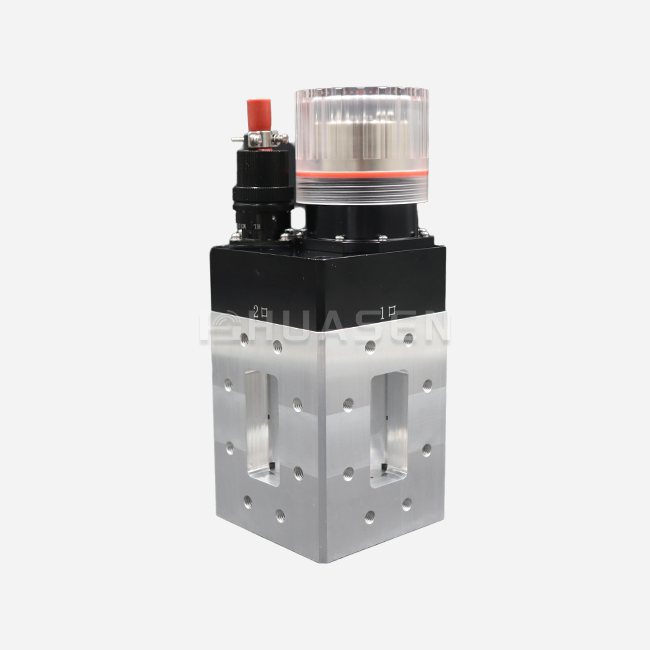
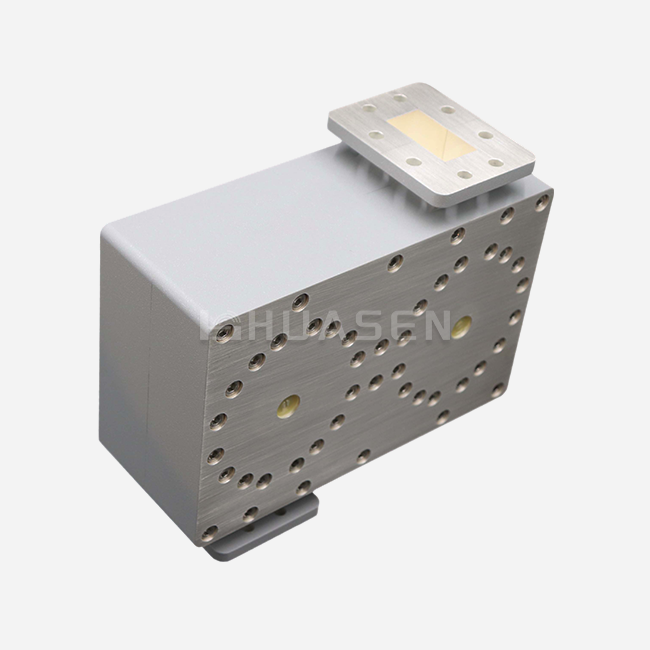
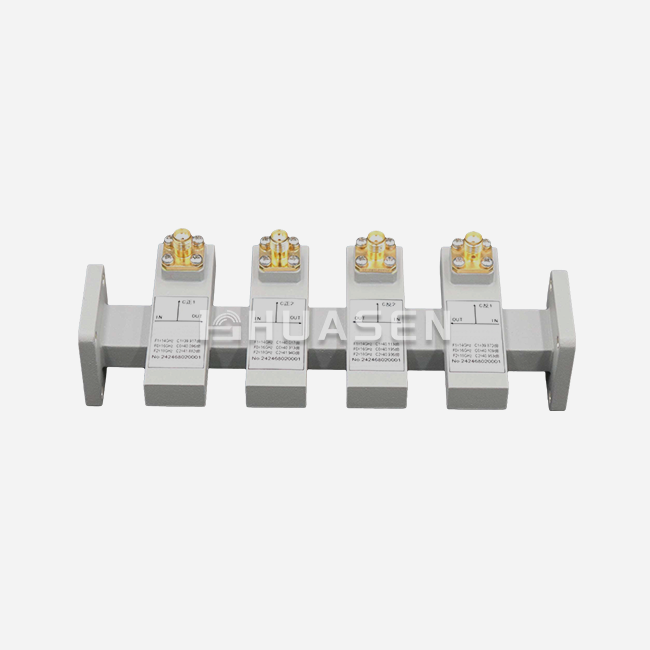
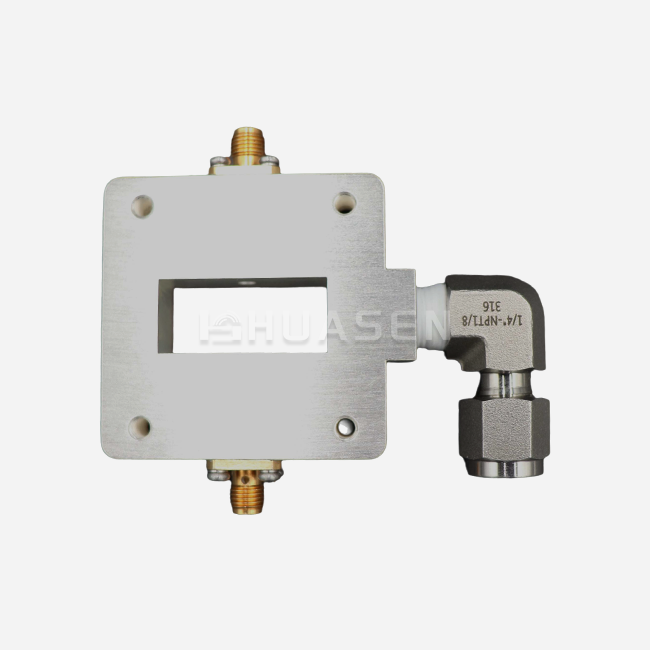
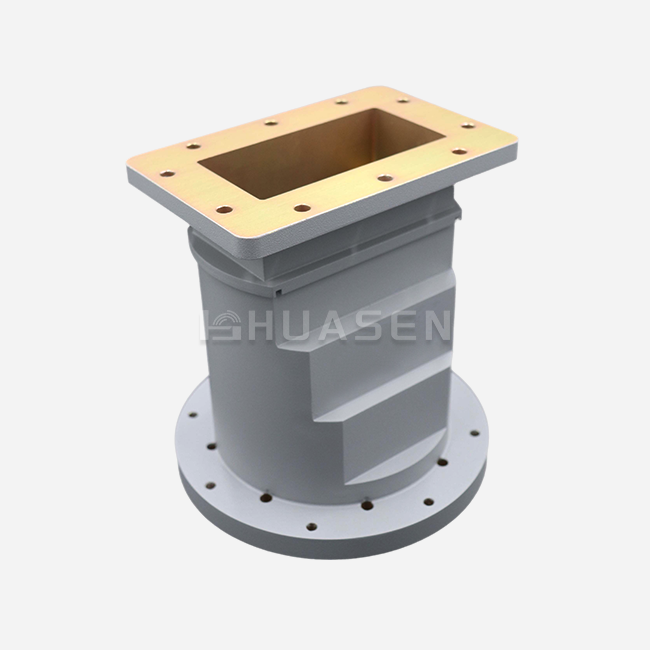
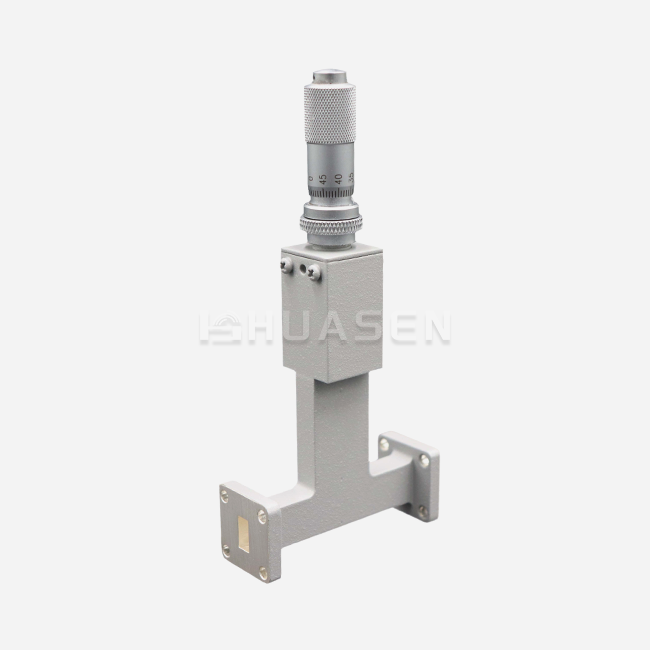
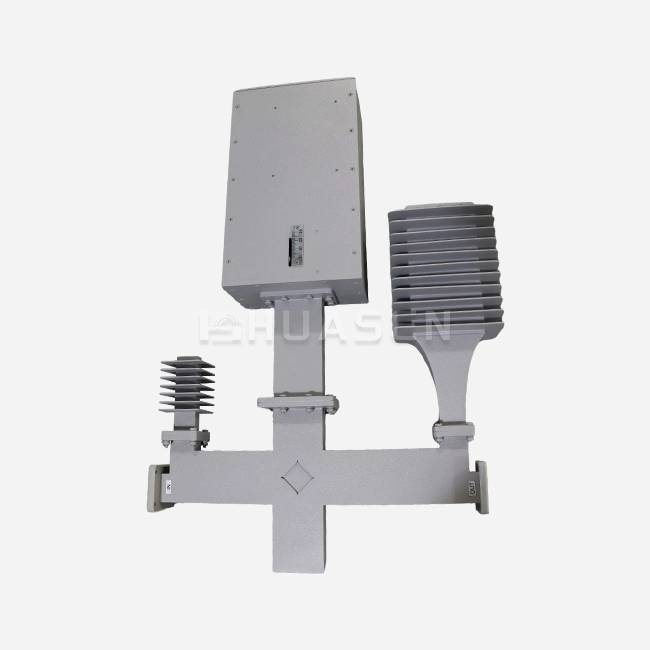
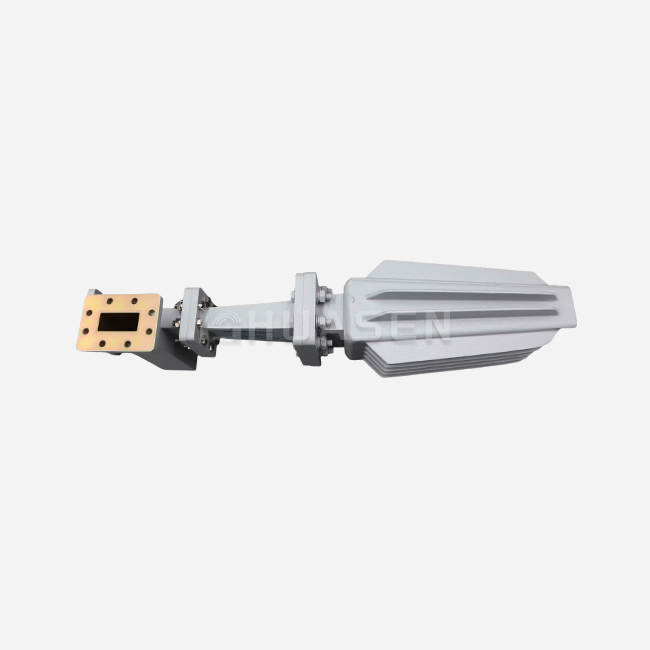
When we talk about radar system performance, precision matters more than almost anything else. The Coupled Fixed Waveguide Attenuator plays an indispensable role in protecting sensitive Coupled Fixed Waveguide Attenuator measurement equipment while maintaining signal integrity across broadband applications. These precision components reduce signal amplitude by predetermined values—ranging from 3 dB to 60 dB—without distorting waveform characteristics or introducing phase anomalies. In radar environments where transmitter power levels can easily destroy downstream receivers or spectrum analyzers, these attenuators act as critical guardians, enabling engineers to monitor, test, and calibrate systems safely and accurately.
Why Radar Systems Rely on Fixed Waveguide Attenuation
In the last few decades, radar technology has changed a lot. Modern phased-array systems, weather surveillance radars, and military tracking sites all have to deal with the same problem: getting useful data from very high signal power. A normal radar emitter could make kilowatts of RF energy. If you put even a small amount of that power straight into test equipment, it would fail horribly. This is why the permanent waveguide attenuator is so important. Engineers can lower the power levels to levels that measuring tools can handle by adding a known, stable loss to the signal line. Depending on the application, this can often mean lowering signals by 30 to 40 or even 60 decibels. Fixed attenuators are the most stable type of design. Variable designs add technical complexity and the possibility of drift. Because they are passive, they don't need a power source, have any moving parts, or have any electronic parts that could break down during important operations. Directional coupling ideas are used a lot in coupled designs. After going through the attenuating element, a part of the main signal is sampled through an auxiliary port and ends in a matched load. This design is very good at directing signals and reducing unwanted reflections, which is very helpful when working with radar bands from L-band to W-band (0.96 GHz to 112 GHz in Huasen Microwave's product line).

Key Performance Indicators That Define Quality
Understanding what separates mediocre components from exceptional ones requires examining several technical parameters. When evaluating any waveguide coupling solution for radar applications, these metrics tell the real story:
- Attenuation Accuracy determines how closely the actual signal reduction matches the specified value. Huasen Microwave's WCFAX series maintains remarkable precision: ±1.8 dB for 3 dB models, ±1 dB for 6 dB variants, and ±0.75 dB across the 10-60 dB range. This consistency ensures that when you're simulating path loss or protecting downstream components, the calculations remain predictable across temperature variations and aging.
- VSWR (Voltage Standing Wave Ratio) indicates impedance matching quality. Poor matching creates reflections that bounce back toward the source, potentially destabilizing oscillators or creating measurement errors. A VSWR of 1.2:1 or better—as found in properly engineered units—means less than 1% of signal power reflects back, preserving both source stability and measurement fidelity.
- Frequency Response Flatness becomes critical in wideband radar systems. Modern surveillance radars often sweep across several gigahertz of bandwidth. If attenuation varies significantly across that range, the system's frequency response becomes distorted. The coupled fixed design naturally provides superiorFixed Waveguide Attenuator flatness compared to resistive-card alternatives, especially at millimeter-wave frequencies where dimensional tolerances become extremely tight.
- Power Handling Capacity encompasses both continuous wave (CW) and peak pulse capabilities. Radar transmitters produce extremely high instantaneous power during each pulse—sometimes megawatts in military applications. The attenuator's internal resistive element must dissipate absorbed energy as heat without degrading or arcing. Material selection matters enormously here: aluminum with hard anodizing for lighter weight, copper with gold or silver plating for maximum conductivity, and carefully selected absorptive materials that maintain stability across temperature extremes.
Core Advantages in Radar Environments
The benefits of implementing quality waveguide attenuation components extend far beyond simple signal reduction. Let me walk through the practical advantages we've observed working with radar engineers over three decades. Equipment Protection ranks as the most immediate benefit. Sensitive receivers, low-noise amplifiers, and spectrum analyzers cost tens of thousands of dollars. A single mistake—accidentally exposing them to full transmitter power—destroys these instruments instantly. Installing appropriate fixed attenuators creates an insurance policy against both human error and system malfunctions. Even if an antenna switch fails or a technician forgets to disconnect a test cable, the attenuator ensures power levels remain within safe limits. Calibration Stability matters tremendously in metrology applications. When radar systems undergo periodic calibration, reference signals must remain constant. Variable attenuators introduce mechanical wear and contact resistance changes over time. Fixed designs eliminate these variables entirely. The same unit that provided 30.0 dB of attenuation during initial installation will still deliver 30.0 dB (within spec tolerances) five years later, assuming proper handling and environmental control. Link Budget Simulation allows engineers to replicate real-world conditions in the laboratory. Suppose you're developing a ground-based radar that must track aircraft at 200 kilometers. The free-space path loss at 10 GHz over that distance exceeds 150 dB. Testing receiver sensitivity requires replicating those weak signals accurately. By chaining multiple fixed attenuators with known values, you can construct precise loss networks that simulate operational scenarios without leaving the test bench. Isolation Between Stages prevents unwanted interactions in multi-channel systems. Phased-array radars contain hundreds or thousands of individual transmit/receive modules. Coupling between adjacent channels creates interference patterns that degrade beam-forming accuracy. Strategic placement of attenuators between stages breaks the coupling paths, maintaining channel independence and preserving the antenna pattern integrity.
How Huasen Microwave Components Stand Apart
Having worked with parts from a number of different manufacturers over the course of my job, it's easy to see the differences. Huasen Microwave's method is based on three main ideas: precise manufacturing, high-quality materials, and customisation based on application. The WCFAX series uses frequency response designs with high directionality and low coupling to get the best results over very wide bandwidths. While other companies' goods might only cover one waveguide band, like WR-90 (8.2-12.4 GHz), Huasen's range goes from sub-GHz frequencies all the way up to W-band at 112 GHz. This wide range of coverage makes buying easier for system integrators who are in charge of various radar platforms. The choice of materials is based on decades of knowledge in the field. The mil-spec hard anodising on aluminium construction makes it very resistant to corrosion for outdoor installations. This is especially important for weather radar and air traffic control systems that are subject to salt spray, humidity, and temperature changes. Copper types that are plated with gold or silver are used in places where very little insertion loss is needed, like in deep-space transmission radars, where every tenth of a dB is important. As buying teams know all too well, flange compatibility solves a real-world problem. Different waveguide standards grew up on their own in different areas and over many years. It doesn't matter if your system was built to European, American, or foreign standards; Huasen makes units with FDP, FBP, and FUGP flanges to make sure they work with existing infrastructure. This interchange gets rid of the need for adapter chains, which add extra loss and failure points. Customisation solves a problem that has been bothering the business for a long time. Standard catalogue parts can meet most needs, but radar systems usually need certain mixes of frequency range, attenuation value, power handling, and mechanical design. Huasen's engineering team works directly with customers to come up with custom solutions. For example, they might change the type of flange, the power rating, the frequency response,Fixed Waveguide Attenuator, or the mounting configuration to fit installations with limited room.
Maximizing Value Through Proper Selection and Implementation
Understanding both your system's needs and the attenuator's abilities is important for getting the most out of these parts. Let me give you some useful advice based on how radar is usually used. Power Budget Analysis should always come before choosing a component. Find the highest power that can reach the attenuator in all situations, not just when it's working normally, but also when the transmission stops working, or the antenna is disconnected. Because things can go wrong, add a safety cushion of at least 3 dB. If your research shows that the peak power is 100 watts, you should choose an attenuator that can handle at least 200 watts. Broadband systems need to give careful thought to frequency coverage. It's possible for one attenuator to work across the whole band you're interested in, but performance factors like reduction accuracy and VSWR usually change with frequency. Carefully look over the shapes on the datasheet. If your radar's frequency range is 8 to 12 GHz, make sure that the attenuation flatness standard is true across the whole range, not just at spot frequencies. In high-power situations, the installation orientation can change how well the heat works. For convection cooling to work best, objects that remove heat should be placed vertically so that hot air can rise naturally. In the event that your mounting setup requires placement on a flat surface, you might need to lower the power handling or add forced-air cooling. In sealed, pressurised radar systems where temperatures are already high, thermal analysis is even more important. Both electrical and mechanical efficiency are affected by flange torque and surface cleanliness. When flanges aren't tight enough, air gaps form between them. These gaps raise VSWR and lower power handling through possible arcing. Too much twisting can bend waveguide holes or break ceramic windows. Stick to the torque recommendations given by the manufacturer. For smaller waveguides, it's usually between 10 and 15 inch-pounds, and for bigger ones, it can go up to 50 inch-pounds. Before putting the parts together, clean the areas that touch with isopropyl alcohol to get rid of any oxidation, dust, or machining oils. When installing something outside, environmental sealing is important. Even though waveguide systems are naturally less likely to get wet than coaxial wires, water can still get in and cause corrosion and performance loss over time. On flange joints, use the right gaskets or sealer. In maritime or tropical settings, you might want to use conformal coating on surfaces that will be exposed and set up regular inspection plans to catch corrosion before it hurts performance.
Critical Considerations Before Procurement
Several things need to be taken into account,coupled with a fixed waveguide attenuator,during the design and buying process so that mistakes that cost a lot of money or poor performance don't happen. You can't skimp on waveguide size compatibility. Each standard waveguide number (WR-28, WR-62, WR-90, WR-137, etc.) is linked to a certain set of internal measurements and cutoff frequencies. Putting an attenuator made for WR-90 into a WR-62 system might work with adapters, but it will cause a lot of multimodal transmission and attenuation that is hard to predict. Always make sure that the size of the waveguide fits your system perfectly. Finding the right attenuation value means finding a balance between signal level and security. Higher attenuation gives equipment more safety margin, but it also lowers the signal that gets to measurement tools, which could lower the signal-to-noise ratio. 40 dB might be right for the spectrum study of a pulsed radar. 10 dB might be best for testing the sensitivity of a sensor. Think about whether you need a single attenuator with a set value or several that can be switched out for different test situations. The temperature coefficient changes the accuracy of measurements in places that aren't heated or cooled. All resistive attenuators change their attenuation with temperature, which is usually given in decibels (dB) per degree Celsius. If you change the value of a 30 dB attenuator by 0.001 dB/dB/°C, it will change by 0.03 dB for every degree Celsius. That's 1.5 dB of error over a 50°C temperature change, which happens a lot in outdoor radar shelters. For accurate calibration work, systems that take temperature into account or environmental control are needed. Peak Power vs. Average Power numbers are hard for many buyers to understand. Most radar devices send out short pulses with low duty cycles. It's possible for a radar to put out 10 kW of peak power but only 100 watts of average power at 1% duty cycle. Both of these numbers are important: average power controls how much heat is lost, and peak power controls whether voltage breakdown (arcing) will happen. Make sure that the barrier you choose meets both of these needs at the same time. The requirements for certification depend on the application. MIL-DTL-3928 standards for mechanical shock, vibration, altitude, temperature cycling, and humidity resistance are often needed for military and aircraft radar systems. For environmental reasons, commercial uses may need to be CE marked or RoHS compliant. Make sure you know what kind of certification you need early on in the buying process, because tests and paperwork take time.
Conclusion
The role of precision waveguide attenuation in modern radar systems extends far beyond simple signal reduction. These components protect expensive measurement equipment, enable accurate calibration, facilitate realistic testing scenarios, and maintain signal integrity across demanding environmental conditions. Huasen Microwave's WCFAX series delivers the performance characteristics that radar engineers need: exceptional attenuation accuracy, low VSWR, broad frequency coverage, and robust construction. Whether you're maintaining existing radar infrastructure or developing next-generation systems, selecting quality attenuators from an experienced manufacturer ensures your investment delivers reliable performance throughout the system's operational life. The combination of technical excellence, customization capability, and responsive support makes the difference between adequate components and truly exceptional solutions.
FAQ
Q1: Can I cascade multiple fixed attenuators to achieve higher total attenuation?
A: Absolutely. Cascading attenuators is common practice, and the total attenuation equals the sum of individual values (in dB). Connecting a 20 dB unit with a 30 dB unit yields 50 dB total attenuation. Be mindful that power handling decreases through the chain—the first attenuator must handle full input power, while downstream units see progressively reduced levels. VSWR effects also accumulate, so maintain high-quality components throughout the chain for the best results.
Q2: How often should waveguide attenuators undergo calibration verification?
A: Calibration intervals depend on application criticality and environmental stress. Laboratory instruments used for precision metrology typically require annual verification. Radar system components in benign environments might extend to 24-month cycles. High-power applications, outdoor installations, or military systems subject to shock and vibration may need more frequent checks—perhaps every 6-12 months. Establish a calibration schedule based on your quality management system requirements and track performance trends over time.
Q3: What causes attenuation values to drift over the component's lifetime?
A: Several mechanisms can affect long-term stability. Resistive element degradation from thermal cycling or high-power exposure slowly changes absorption characteristics. Oxidation of waveguide walls or flange surfaces increases insertion loss beyond the design value. Mechanical stress from improper installation can deform internal structures. Moisture ingress in inadequately sealed units promotes corrosion. Quality manufacturers like Huasen use stable materials and robust construction to minimize these effects, but no passive component is immune to environmental degradation over decades of service.
Partner With a Trusted Waveguide Attenuator Manufacturer for Your Radar Projects
When your radar system demands unwavering performance, choosing the right component supplier makes all the difference. Huasen Microwave brings more than thirty years of microwave and millimeter-wave expertise to every Coupled Fixed Waveguide Attenuator we manufacture. Our engineering team understands the unique challenges radar applications present—from weather surveillance networks requiring salt-fog resistance to military tracking systems demanding MIL-STD qualification. Contact our team at sales@huasenmicrowave.com to discuss your specific requirements, request technical datasheets, or arrange sample evaluation units that prove our quality advantage.
References
1. Pozar, David M. Microwave Engineering, Fourth Edition. Hoboken: John Wiley & Sons, 2011.
2. Skolnik, Merrill I. Introduction to Radar Systems, Third Edition. New York: McGraw-Hill Education, 2001.
3. Baden Fuller, A.J. Microwaves: An Introduction to Microwave Theory and Techniques. Oxford: Pergamon Press, 1990.
4. Saad, Theodore S. Microwave Engineers' Handbook, Volume 2: Passive Components and Systems. Dedham: Artech House, 1971.
5. Collin, Robert E. Foundations for Microwave Engineering, Second Edition. New York: IEEE Press, 2001.
6. Harvey, A.F. Microwave Engineering: Passive Circuits and Systems. London: Academic Press, 1963.
Send Inquiry