Attenuation Accuracy Testing for Millimeter Wave Waveguide Fixed Attenuators






2026-06-08 22:25:09
Tests to see how accurately millimeter wave waveguide fixed attenuators lower signal power at frequencies from 30 GHz to 300 GHz are called attenuation accuracy tests. A waveguide attenuator controls power levels so that signal bounce and insertion loss are kept to a minimum. These parts must be tested carefully to make sure they meet the strict requirements for 5G infrastructure, satellite communications, and tracking systems. Validation uses vector network analyzers, reference standards that have been measured, and controlled external conditions to get measurement errors of less than 0.1 dB. This protects the signal quality in important millimeter wave applications.
Introduction
If your 5G base station prototype has strange signal distortion during field tests, it might not be the amplifier or antenna that's to blame. It could be a set attenuator that wasn't properly described. Millimeter wave systems need to be very precise because a difference of just 0.2 dB in loss can ruin link costs and receiver sensitivity. We know how hard it is for buying teams to choose parts that work reliably at all temperatures, have consistent loss across a wide range of bandwidths, and come with test data that engineering teams can trust.
This guide talks about the practical side of testing the accuracy of attenuation for fixed millimeter wave waveguide attenuators. Our goal is simple: give you useful information that you can use right away to lower risk, speed up the qualification process for vendors, and make sure your projects meet their performance goals. This is for procurement managers, RF engineers, and system integrators working on next-generation wireless infrastructure, defense electronics, and aerospace communication systems. Throughout, we talk about industry standards and testing methods that tell the difference between suppliers whose specs have been checked and those who haven't.
Understanding Waveguide Fixed Attenuators and Their Accuracy
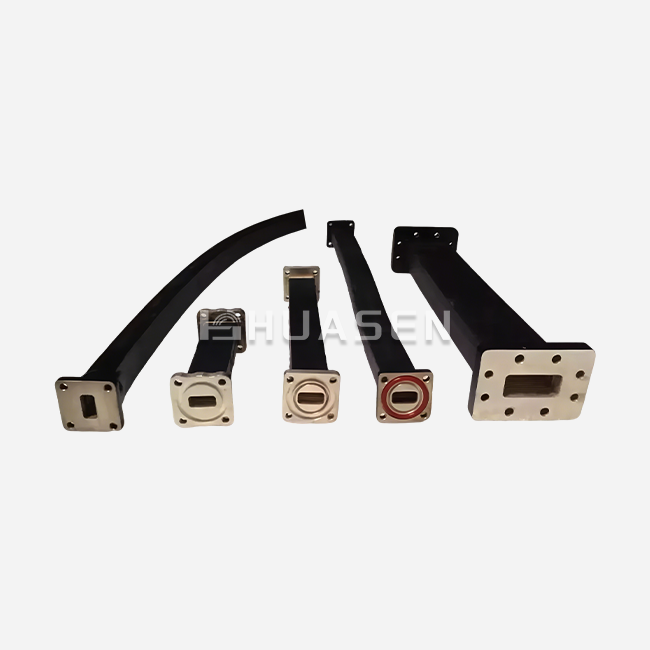
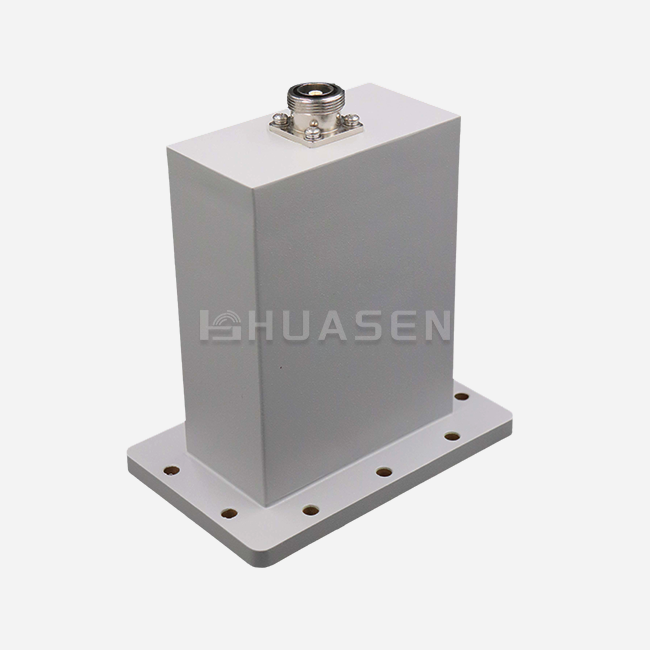
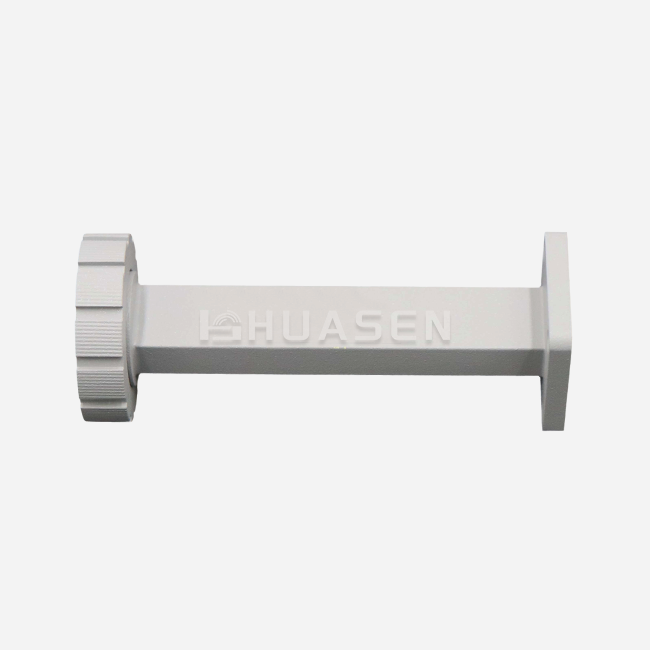
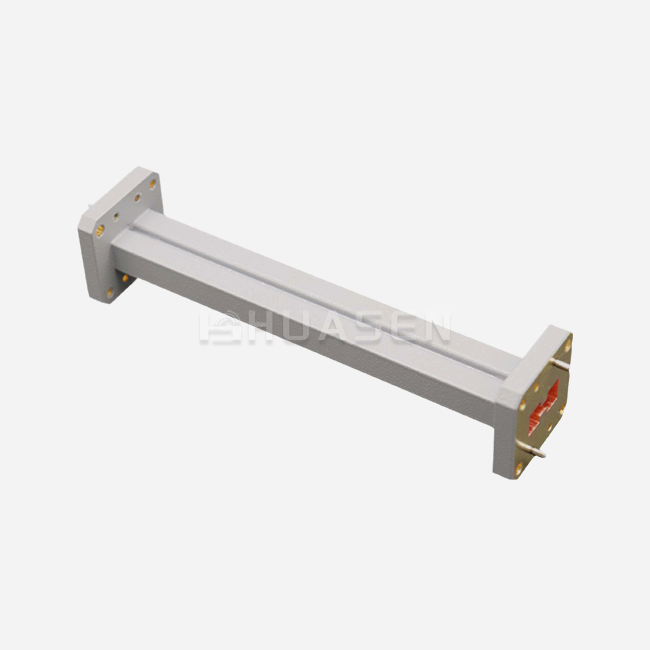
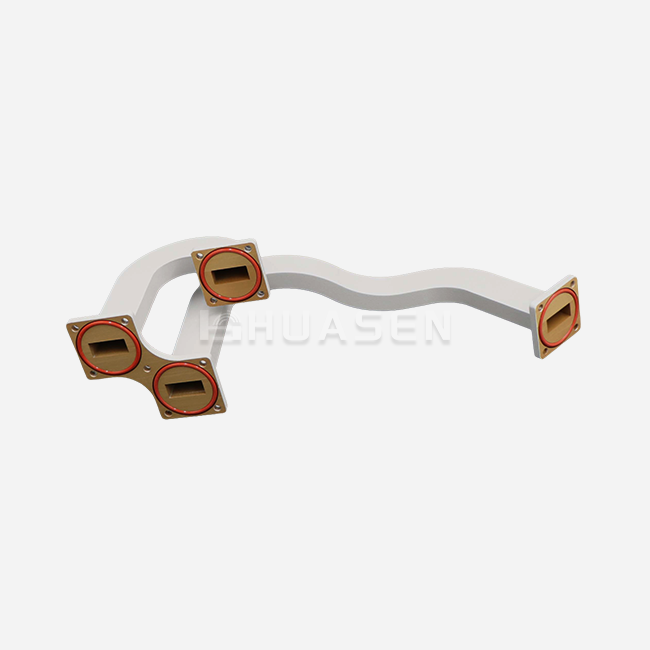
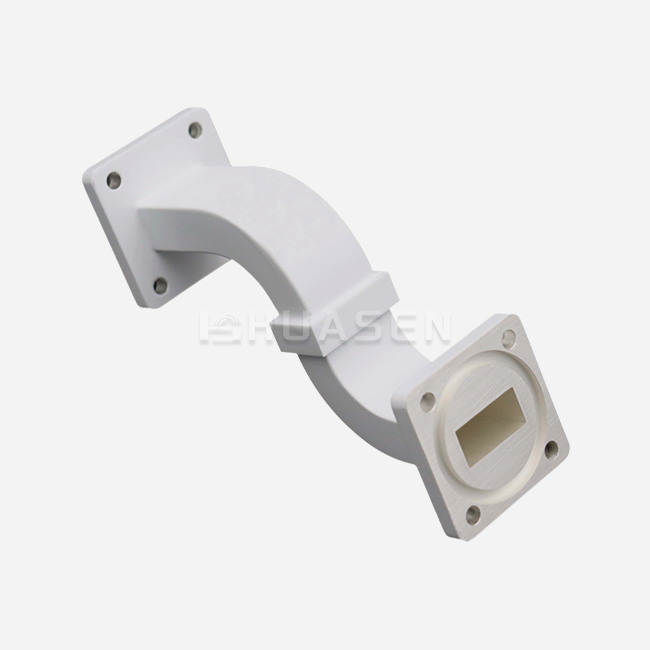
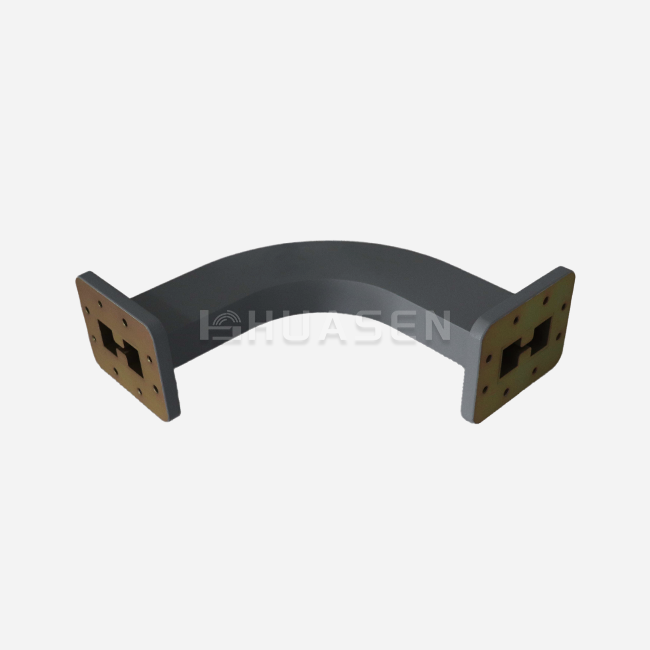
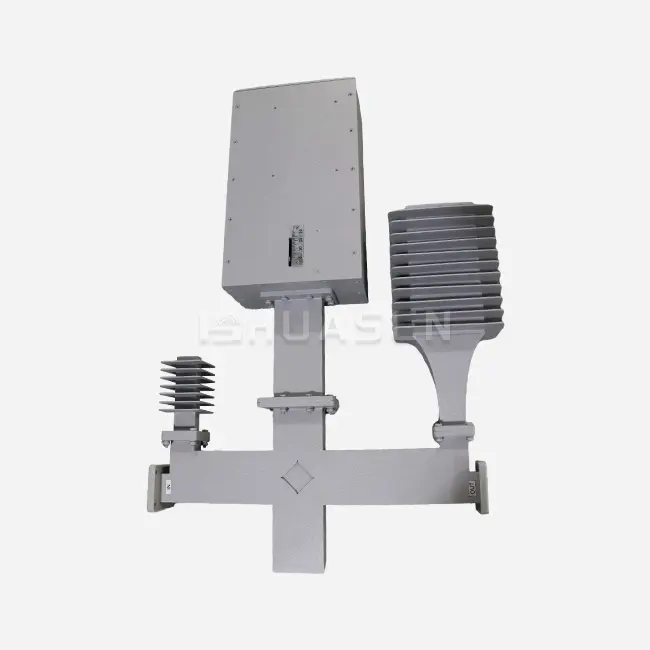
Waveguide attenuators are used to precisely control the flow of power in millimeter-wave transmission lines. Unlike coaxial designs, waveguide designs use circular metal structures with rectangular cross-sections, such as WR-28 for Ka-band or WR-10 for W-band, to send electromagnetic energy with very little loss. The word "fixed" means that the attenuation value stays the same, usually between 3 dB and 40 dB. This is made possible by placing resistance films or absorptive materials exactly inside the waveguide cavity.
How Attenuation Accuracy Impacts System Performance?
Measurement consistency and system dynamic range are directly affected by how accurate the attenuation is. In the case of radar calibration, if a 20 dB attenuator actually only gives 19.7 dB because of production error, your receiver's calibrated noise floor moves by 0.3 dB, which could hide weak target returns. Most specification sheets say that the accuracy is ±0.5 dB or ±5% of the standard number, whichever is greater. Tighter tolerances—±0.2 dB across the full bandwidth—are reached in high-performance units by improving the way they are made and characterizing each unit individually.
Insertion loss is different from attenuation value because it means more power loss than the planned decrease. At the lowest reduction settings, good waveguide-fixed attenuators have insertion loss below 0.3 dB, which keeps the signal energy. Another important factor is the voltage standing wave ratio (VSWR). Values higher than 1.25:1 cause echoes that mess up readings and harm sensitive sources. It doesn't matter what the temperature is; attenuation values that change by more than 0.05 dB per degree Celsius cause trouble in outdoor base stations where the weather is always changing.
Construction Principles and Power Handling
How things are made affects both how accurate they are and how long they last. Thin-film resistive attenuators put down exact designs on ceramic surfaces. They are very repeatable, but they can only handle a small amount of peak power—about 2 to 5 watts on average and 500 watts at their peak. When lossy dielectrics or ferrite materials are used in bulk absorber designs, they can handle higher power levels, usually more than 50 watts constant and several kilowatts peak. This makes them good for testing transmitters and using in high-power radar applications. The frequency response is affected by the material used. Some absorbers have resonance peaks that cause absorption ripple across the working band, which is a problem when the coverage spans several gigahertz.
When buying a waveguide attenuator, you need to pay attention to how compatible the waveguide plate is. UG-387 for WR-28, UG-599 for WR-15, and different EIA flanges, depending on frequency band, are all standard connections. When the attenuator flanges and system waveguide don't match up, they leave mechanical holes that lower the VSWR and let water into outdoor setups. Precision-machined flanges with flatness limits of less than 0.0005 inches make sure that connections are solid and that the electrical performance stays the same during mating cycles.
Challenges in Attenuation Accuracy Testing for Millimeter Wave Fixed Attenuators
When testing the accuracy of attenuation at millimeter wave frequencies, problems come up that aren't usually present at microwave frequencies. It's very important that the measuring tools are very sensitive. For example, commercial vector network analyzers that work above 100 GHz have limited dynamic range and more trace noise, which makes it hard to see small attenuation changes. Another factor is cable stability. At these frequencies, even small movements can cause phase drift in flexible coaxial test cables, so rigid waveguide test stands and vibration separation are needed.
Environmental Factors and Calibration Drift
Changes in temperature have an effect on both the gadget being tested and the instruments used to measure it. A change of 5 degrees Celsius can throw off VNA settings by 0.1 dB, hiding or exaggerating how well the attenuator really works. The dielectric properties of any air gaps in waveguide joints are changed by humidity, which can cause phase mistakes that are hard to predict. Professional test labs keep climate-controlled rooms at 23°C ±1°C and below 45% relative humidity, which is not possible in many real-life testing situations.
The reliability of a number depends on how well it was calibrated. For millimeter wave VNA testing, precision standards like short circuits, matched loads, and through connections are used. These are all measured against known reference values that can be traced back to national measurement centers. In the specs for calibration kits, leftover errors are usually listed as being around ±0.05 dB. When added to the uncertainty of the VNA instrument and the repeatability of the connector, the total measurement uncertainty gets close to ±0.15 dB in ideal conditions. When checking in the real world, mistakes like worn connectors, misaligned flanges, and different ways of doing things by different operators can make this uncertainty even higher.
Instrumentation Limitations and Connector Repeatability
The consistency of connectors turns out to be a secret problem. Every time you separate and rejoin waveguide flanges, small changes in contact pressure, surface contamination, and alignment cause measurements to be off. Studies show that the consistency of connections can be anywhere from 0.03 dB for precision flanges to 0.15 dB for worn interfaces. A lot of the uncertainty budget is used up by connection variability when checking the accuracy of an attenuator to within 0.2 dB of its specs. To keep things consistent, torque wrenches that are set to the manufacturer's suggested values—usually 10 to 15 inch-pounds for small waveguide flanges—help. However, surface rust and particle contamination are still problems.
Broadband testing is hard because of effects that depend on frequency, such as those from a waveguide fixed attenuator. Attenuator performance doesn't usually stay flat over multi-gigahertz ranges; a ripple of ±0.3 dB usually shows up because of internal echoes and material resonances. It should be clear in the procurement requirements whether attenuation accuracy only applies to band-averaged values or needs to be met at every frequency point. When suppliers give engineering teams swept-frequency test results at 0.1 GHz intervals, they show that they are honest and can account for ripple in system link costs.
Step-by-Step Approach to Accurate Attenuation Testing
To improve the accuracy of attenuation measurements, we must first figure out where the current methods are lacking. Many problems with tests are caused by not using the right frequency for calibration, measuring in an unstable setting, or using old equipment. Taking care of these issues raises measurement trust and lowers buying risk over time.
Establishing Controlled Testing Environments
Setting up a safe test setup is the first step. Temperature-controlled enclosures around the test device and key test tools keep thermal drift to a minimum. Vibration-damped optical tables stop mechanical shocks from connecting to waveguides. Controlling humidity with desiccant tanks or dry nitrogen cleaning gets rid of dielectric changes caused by moisture. These steps seem like too much until you see that a 0.2 dB measurement change goes away after the right weather controls are put in place.
Calibration methods should be just as strict. Instead of depending on calibrations done hours earlier, it is better to do a full two-port calibration right before checking the attenuator. This cuts down on systematic mistakes. It is better for the accuracy of the reference plane to use calibration standards made by the same company that makes test port plugs. During the measurement session, intermediate verification checks with a defined airline or precision attenuator make sure that the calibration stays stable. These checks catch drift before it affects the truth of the data.
Advanced Measurement Techniques
Modern VNAs have time-gating features that separate the signal components you want from the echoes you don't want. Technicians can find and stop delayed reflections caused by bad links or internal discontinuities by changing frequency-domain data into time-domain representations. This method works especially well when checking attenuators that don't have perfect VSWR because it lets you get to the true insertion loss from readings that are skewed by standing waves.
Automation cuts down on the differences that people make. Programmable test routines enter the attenuator, check the calibration, take swept readings, and compare the results to the specification limits all without any help from a person. Even though they are pricey, robotic waveguide connection systems get connection forces within 0.5% of being the same every time. This gets rid of problems with reliability in connectors. Companies that handle hundreds of units every month can justify investing in automation because it increases output and lowers measurement error.
Repeatability and outliers for the Waveguide Fixed Attenuator can be found through statistical analysis of data from multiple test rounds. By disconnecting and reconnecting the attenuator ten times in a row, and then recording the results, a dataset is created that measures how repeatable the connector is and shows any regular errors. A standard deviation below 0.05 dB means that the measurement can be repeated without any problems. Values above 0.1 dB mean that the method needs to be improved or the connectors need to be serviced. Subjective testing is turned into objective proof by this data-driven method.
Conclusion
To test the attenuation accuracy of millimeter-wave waveguides and attenuators, you need strict methods, controlled settings, and agreements with suppliers that are based on openness. It's getting harder for procurement teams working on 5G infrastructure rollouts, satellite communication upgrades, or defense electronics projects to choose parts that will work reliably in tough conditions and still meet tight deadlines and cost goals. When you know the technical basics of measuring attenuation, can spot problems with the surroundings and the instruments you're using, and use structured evaluation criteria, you can stop guessing and make smart decisions about buying. The providers you choose become like an extension of your engineering team. Choosing partners who spend on traceable calibration, thorough testing, and quick support has a direct effect on the success of the project and the long-term reliability of the system.
FAQ
1. What factors most significantly influence attenuation accuracy in millimeter wave testing?
The uncertainty budgets are mostly made up of the calibration quality of the measuring tools, the repeatability of the connectors, and the stability of the surroundings. Temperature changes during tests, worn waveguide flanges, and a VNA with too little dynamic range can all cause measurement mistakes of ±0.1 dB or more. Using climate rooms, precision torque wrenches, and recent calibrations to control these factors greatly boosts the reliability of measurements.
2. How often should millimeter wave waveguide fixed attenuators undergo retesting?
When to do a retest depends on how important the application is and how it is being used. Laboratory reference standards say that they should be checked once a year or after 500 link rounds, whichever comes first. Field-deployed units in base stations or transmission lines that work in a wide range of temperatures should be tested every two years or after being exposed to extremes of weather. Keeping track of attenuation drift trends helps with planning maintenance and replacements before performance loss changes how the system works.
3. Can suppliers accommodate custom attenuation accuracy testing to tighter specifications?
To meet strict standards for accuracy, many suppliers offer better ways to try and choose products. Tighter tolerances, like ±0.15 dB instead of the normal ±0.5 dB, usually mean 100% unit testing with assured performance, individual calibration certificates, and price increases of 30% to 50%. When it comes to important tasks like radar calibration or satellite uplink systems, this investment pays off because it lowers error at the system level and increases operational gaps.
Partner with Huasen Microwave for Precision Waveguide Attenuator Solutions
To be sure of the accuracy of your attenuation, you should first choose a Waveguide Attenuator maker that is dedicated to accurate measurements and quick customer service. Huasen Microwave has been making RF components for 30 years and has a wide range of testing tools. They can make waveguide fixed attenuators that meet strict millimeter wave requirements. Our production processes include checking each unit for accuracy across all frequency ranges, keeping test data in a way that can be traced back to international standards, and offering customization services to meet the specific needs of each system, such as non-standard attenuation values or custom weather sealing. Email our expert team at sales@huasenmicrowave.com to talk about your buying needs, get full datasheets with proof of measurement uncertainty, or set up a review of a sample. We can help you find the precise parts and expert support your projects need, whether they're for 5G infrastructure, military radar systems, or lab calibration standards.
References
1. Balanis, Constantine A. Advanced Engineering Electromagnetics, 2nd Edition. John Wiley & Sons, 2012.
2. Institute of Electrical and Electronics Engineers. IEEE Standard 149-2021: Recommended Practice for Antenna Measurements, IEEE Standards Association, 2021.
3. Pozar, David M. Microwave Engineering, 4th Edition. John Wiley & Sons, 2011.
4. Rytting, Douglas K. Network Analyzer Accuracy Overview. Agilent Technologies Application Note 1287-3, 2005.
5. U.S. Department of Defense. MIL-DTL-3933: Detail Specification for Attenuators, Fixed, Coaxial and Waveguide, Defense Logistics Agency, 2018.
6. Warner, Frederick L. Microwave Attenuation Measurement Standards and Techniques. Peter Peregrinus Ltd., 1977.
Send Inquiry