Application of Broadband Horn Antenna in EMC Testing






2026-03-18 21:36:43
Broadband horn antennas serve as essential testing instruments in electromagnetic compatibility (EMC) environments, providing comprehensive frequency coverage and reliable performance for radiated emissions and immunity assessments. These specialized antennas enable testing laboratories to conduct accurate measurements across wide frequency ranges without requiring multiple antenna swaps, significantly reducing test time and calibration errors. The broadband antenna design addresses critical industry requirements for consistent gain patterns, low VSWR characteristics, and robust construction necessary for maintaining measurement precision in both anechoic chambers and open-area test sites.
Understanding Broadband Horn Antennas in EMC Testing
Broadband horn antennas have revolutionized EMC testing methodologies through their exceptional frequency coverage and stable performance characteristics. These antennas operate on fundamental electromagnetic principles where the horn structure gradually transitions from a waveguide to free space, creating an efficient impedance transformation across multiple octaves.
Fundamental Working Principles and Design Characteristics
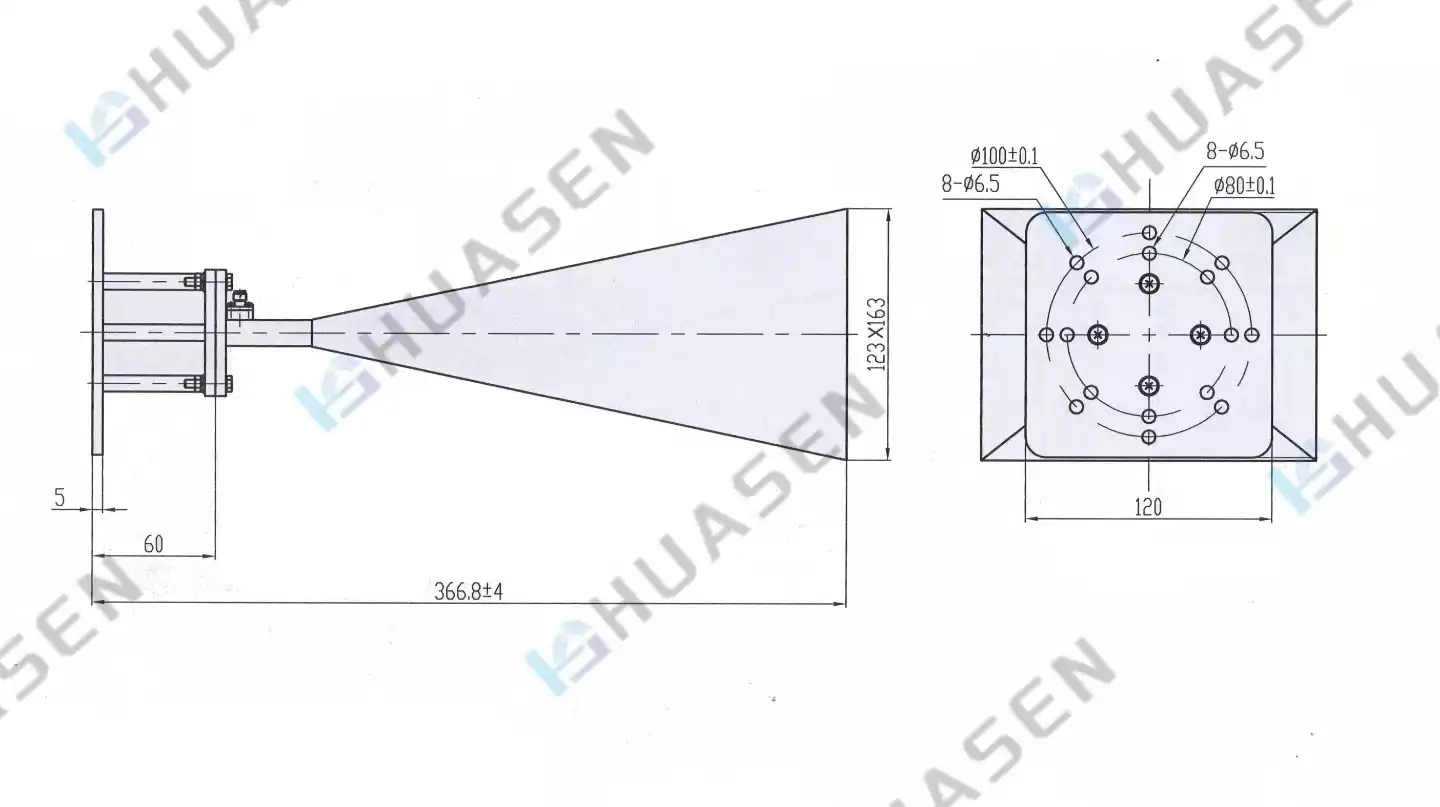
The core design of broadband horn antennas incorporates double-ridged waveguide technology, which significantly extends the operational bandwidth compared to conventional rectangular waveguides. The metallic ridges positioned on opposite walls of the horn structure lower the cutoff frequency while maintaining characteristic impedance stability across the entire operating range. This engineering approach typically achieves frequency coverage from 1 GHz to 18 GHz or even 18 GHz to 40 GHz in high-frequency variants. The radiation mechanism relies on the horn's flared geometry to control beam width and directivity. As electromagnetic waves propagate through the tapered structure, the expanding aperture creates a progressive phase front that results in a well-defined radiation pattern. The antenna factor varies predictably with frequency, enabling accurate field strength calculations when calibrated data is applied during measurements.
Comparison with Alternative Antenna Technologies
When evaluating antenna options for EMC applications, broadband horns demonstrate distinct advantages over narrowband alternatives. Log-periodic antennas offer similar bandwidth but typically exhibit lower gain and more complex radiation patterns that can compromise measurement accuracy. Conical log-spiral antennas provide circular polarization but lack the linear polarization purity required for many EMC standards. Omnidirectional antennas like biconical or discone designs excel in broadband coverage but sacrifice the directivity needed for precise spatial selectivity in immunity testing. Patch antenna arrays can achieve high gain but require complex feeding networks and suffer from inherent bandwidth limitations. The broadband horn antenna effectively balances these competing requirements, delivering moderate to high gain with excellent pattern stability across its operating range.

Application Scenarios of Broadband Horn Antennas in EMC Testing
EMC testing laboratories rely on broadband horn antennas for diverse measurement scenarios that span both compliance verification and pre-compliance screening activities. These applications demand consistent performance across varying environmental conditions and regulatory frameworks.
Radiated Emissions and Immunity Testing Applications
Radiated emissions testing represents the primary application domain where broadband horn antennas excel as receiving elements. During these measurements, the antenna captures electromagnetic energy radiated by the equipment under test (EUT) across the required frequency spectrum. The wide bandwidth capability eliminates the need forDouble Ridged Horn Antenna multiple antenna changes during frequency sweeps, reducing measurement uncertainty and improving test repeatability. Radiated immunity testing utilizes broadband horn antennas as transmitting elements to illuminate the EUT with controlled field strengths. The antenna's directional characteristics enable precise field uniformity control within the test volume, ensuring compliance with international standards such as IEC 61000-4-3. The high power handling capability, often exceeding 300W continuous wave, supports immunity testing at elevated field strengths required for military and aerospace applications. Pre-compliance testing benefits significantly from the antenna's broad frequency coverage, allowing design engineers to identify potential emission issues early in product development. This capability reduces the risk of compliance failures during formal certification testing, ultimately accelerating time-to-market for new products.
Environmental Considerations and Deployment Scenarios
Indoor anechoic chambers represent the controlled environment where broadband horn antennas achieve optimal performance. The absorber-lined walls eliminate reflections that could distort measurements, while climate control maintains stable temperature and humidity conditions. These facilities typically operate the antennas within their specified environmental limits, ensuring consistent electrical performance and mechanical stability. Semi-anechoic chambers with conductive ground planes require careful antenna positioning to manage ground reflections. The broadband horn's directional pattern helps minimize unwanted reflections while maintaining adequate illumination of the test volume. Proper height adjustments and angular positioning become critical factors in achieving measurement accuracy. Open-area test sites present unique challenges where environmental factors significantly impact antenna performance. Wind loading, temperature variations, and precipitation exposure require robust mechanical construction andappropriate protective measures. Some installations utilize radomes to shield the antenna aperture while maintaining electromagnetic transparency across the operating bandwidth.
How to Choose the Right Broadband Horn Antenna for EMC Testing
Selecting appropriate broadband horn antennas requires a systematic evaluation of technical specifications aligned with specific testing requirements and operational constraints. The decision process must balance performance criteria with practical considerations, including budget, delivery schedules, and long-term reliability expectations.
Critical Technical Specification Analysis
The most important thing to look at when choosing a frequency range is compatibility. Most EMC systems need coverage from 1 GHz to 18 GHz to meet current regulatory standards. New testing needs for 5G and millimeter-wave devices are met by choices with extended ranges spanning 18 GHz to 40 GHz. The antenna's frequency response must match the EMC standards that apply to the test uses that are being planned. The amount of gain has a direct effect on how sensitive the measurement is and how much power the amplifier needs. Broadband horns usually have a gain of 6 dBi to 15 dBi across their entire operating range. Because the aperture size is set, higher frequencies usually have more gain. To make sure that the field strength calculations for both emissions and immunity readings are correct, the calibration data must clearly show how the gain changes with frequency. Values below 2.0:1 across most of the operating band are considered acceptable for most uses. VSWR specifications show how well the antenna matches impedance. Lower VSWR values lower reflected losses and raise measurement accuracy, which is very important in labs that need to be very precise. Power handling must be able to handle the highest amounts of transmitted power needed for immunity testing, which are usually between 100W and 500W continuous wave.
Procurement Strategy and Vendor Assessment
To build relationships with qualified antenna suppliers, you need to look at more than just the original purchase price. Quality standards for manufacturing, the ability to calibrate, and technical support resources all have a big effect on the long-term success of a business. You can be more sure that the products and measurements you get from suppliers who are ISO 9001 certified and use traceable calibration methods. Customization options let you get the best performance for certain uses that might need different frequency bands, connector types, or mechanical layouts. When a vendor does both the creation and production of an item, such as aDouble Ridged Horn Antenna, they can often meet special needs while still meeting quality standards and delivery dates. Providing technical support services like application help, interpreting calibration data, and providing advice is very helpful for the antenna's whole working life.
Installation, Calibration, and Maintenance Best Practices
Proper installation procedures and ongoing maintenance protocols ensure optimal performance throughout the antenna's operational lifetime. These practices directly influence measurement accuracy and equipment reliability in demanding EMC testing environments.
Installation Guidelines and Setup Procedures
For mechanical mounting to work, the support structures must be stable and able to keep their precise position even when the surroundings is loaded. When building support towers or chamber mounting fixtures, you need to think about how the antenna's weight is distributed and how it reacts to wind. For outdoor installs, connector interfaces need to be properly torqued and protected from the weather. Cable handling is very important for keeping the system running smoothly. To keep the signal strong across the antenna's wide frequency range, you need high-quality coaxial cables and connectors. Cable routing should keep mechanical stress to a minimum and make sure there are enough service loops for repair workers to get to. When connecting to the ground, the right RF and safety ground paths must be set up, and ground loops that could cause measurement mistakes must be avoided.VSWR testing during installation makes sure the antenna is properly installed and finds any possible problems with the connectors or cables before measurements are made. Baseline readings set standard performance parameters that let you see how performance changes over time through regular verification testing.
Calibration and Verification Protocols
Regular testing keeps measurements traceable and makes sure that they continue to meet all standards. Best practices in the industry say that antennas used in official compliance testing should be calibrated once a year, and installations that get a lot of use should have their calibration checked more often. As part of the calibration process, gain and antenna factor are usually measured at a number of frequencies across the working range. Things in the environment can change the stability of the calibration, especially for antennas that are subject to changing temperatures or mechanical shock. Trending calibration data helps find slow degradation that could mean problems are getting worse and needing to be fixed. Recording the past of calibration gives useful information for fixing problems and making decisions about replacement.
Future Trends and Innovations in EMC Testing with Broadband Horn Antennas
The EMC testing industry continues evolving in response to advancing technology and expanding regulatory requirements. These developments drive innovation in antenna design and testing methodologies that will shape future testing capabilities.
Emerging Technology Integration
Advanced materials research focuses on making compositestructures that are light but still work well electrically, while also lowering the cost of installation and wind loads. Additive manufacturing methods make it possible to make parts with complex internal geometries that improve electromagnetic performance while making production easier. These new ideas help make it possible to make antennas that are smaller, have better pattern features, and have wider bandwidths. Modern test equipment can be connected to software-defined calibration devices that can correct antenna characteristics in real time while measurements are being taken. These systems can make up for changes caused by the surroundings and getting older, which could mean that calibration intervals are longer while measurement accuracy stays the same. Integration with automated test systems lets the system work without a person being there, and the results are the same for all operators and test situations.
Regulatory Evolution and Standards Development
New EMC guidelines for 5G and millimeter-wave broadband antenna applications are driving the need for wider frequency coverage and more accurate measurements. For these standards to work, antennas may need to be changed or totally redesigned to deal with the unique ways that signals travel at higher frequencies. Participating early in activities that create standards helps predict future needs and direct investments in product development.The goal of international harmonization is to make testing easier by making sure that measuring methods are the same across all regulatory areas. Broadband horn antennas support this trend because they offer consistent measurement capabilities that meet multiple standards at the same time. This means that test tools and processes that are specific to a region are not needed.
Conclusion
Broadband horn antennas are now essential in EMC testing labs because they provide the wide frequency coverage, directional characteristics, and reliable performance needed for precise measures of emissions and immunity. Because they can work across multiple octaves, they get rid of the confusion and risk that come with using multiple radio systems while still keeping the accuracy needed to follow the rules. As EMC standards keep growing to include higher frequency ranges and stricter performance standards, broadband horn antennas will stay important parts of full testing capabilities. Investing in good broadband radio systems pays off in the long run by cutting down on testing time, improving measurement accuracy, and making the lab more productive.
FAQ
1. What frequency ranges do broadband horn antennas typically cover for EMC testing?
Standard broadband horn antennas typically operate from 1 GHz to 18 GHz, covering the primary EMC testing bands required by international standards. Extended range models can reach 40 GHz to support emerging millimeter-wave applications and 5G device testing requirements.
2. How do broadband horn antennas compare to log-periodic antennas for EMC applications?
Broadband horn antennas provide higher gain and more stable radiation patterns compared to log-periodic designs. While both offer wide bandwidth coverage, horn antennas deliver superior directivity and pattern consistency, resulting in more accurate and repeatable measurements for both emissions and immunity testing.
3. What power levels can broadband horn antennas handle during immunity testing?
Quality broadband horn antennas typically handle 100W to 500W continuous wave power, with some specialized models supporting even higher levels. The actual power capability depends on the specific design, connector type, and internal construction materials used in the antenna.
4. How often should broadband horn antennas be recalibrated?
Industry standards recommend annual calibration for antennas used in formal compliance testing. High-usage laboratories may require more frequent verification, while occasional-use antennas may maintain calibration validity longer. Any mechanical damage or environmental exposure should trigger immediate recalibration verification.
5. Can broadband horn antennas be used outdoors without protective enclosures?
Standard broadband horn antennas require protection from the weather when used outdoors. Specialized radomes or protective covers maintain electromagnetic transparency while preventing water ingress and environmental contamination that could affect electrical performance and measurement accuracy.
Partner with Huasen Microwave for Advanced Broadband Antenna Solutions
Huasen Microwave stands as a trusted broadband antenna manufacturer with over 30 years of expertise in developing high-performance EMC testing solutions. Our engineering team combines deep technical knowledge with practical application experience to deliver antennas that meet the demanding requirements of modern EMC laboratories. We offer comprehensive customization capabilities, enabling optimization of frequency ranges, gain characteristics, and mechanical configurations to match your specific testing needs. Contact our technical specialists at sales@huasenmicrowave.com to discuss your broadband antenna requirements and discover how our solutions can enhance your testing capabilities. Visit huasenmicrowave.com to explore our complete product catalog and access detailed technical specifications for informed procurement decisions.
References
1. Paul, Clayton R. "Introduction to Electromagnetic Compatibility, 2nd Edition." John Wiley & Sons, 2006.
2. Violette, J.L. Norman, Donald R.J. White, and Michael F. Violette. "Electromagnetic Compatibility Handbook." Van Nostrand Reinhold Company, 1987.
3. Williams, Tim. "EMC for Product Designers, 5th Edition." Newnes, 2017.
4. Montrose, Mark I. and Edward M. Nakauchi. "Testing for EMC Compliance: Approaches and Techniques." IEEE Press, 2004.
5. Schulz, Richard B. and Vincent C. Plantz. "Shielding Theory and Practice." IEEE Transactions on Electromagnetic Compatibility, Vol. 30, No. 3, 1988.
6. Weston, David A. "Electromagnetic Compatibility: Principles and Applications, 2nd Edition." Marcel Dekker, 2001.
Send Inquiry