Antenna Mounting Trends in Modern Communication Projects






2026-06-17 21:24:53
Modern communication infrastructure has made Antenna Mounting a strategic goal because it affects everything from the quality of the signal to the life of the system. Today's mounting systems have to deal with a lot of complicated technical issues, like how to send high-frequency radio waves, protect against weather stress, and support antenna arrays that are getting smaller but stronger. As 5G networks grow and more satellite communication systems are put in place, the hardware that holds these important parts in place has a direct effect on network downtime, beam accuracy, and running costs. To choose the best mounting option, you need to know about new developments in materials science, improvements in mechanical design, and the best ways to place things so that they work reliably in a wide range of settings, from base stations to maritime platforms.
Introduction
The technical framework for communication networks all over the world is the Antenna Mounting Infrastructure. Finding these parts is getting harder for engineers and procurement workers who have to balance things like structural integrity against weight limits, corrosion resistance against price limits, and customization needs against delivery dates. At Huasen Microwave, we've seen how exact mounting parts can change the results of a project. After 30 years of making RF and microwave parts, we learned that mounting gear needs the same level of technical care as the antennas themselves. This guide looks at the latest trends in the Antenna Mounting business. It does this to help system designers, equipment makers, and lab managers make smart buying choices that improve performance and return on investment.
Current Challenges and Evolving Solutions in Antenna Mounting
Environmental Durability and Material Degradation
Environmental factors regularly affect outdoor gearbox systems. Base stations near the coast are corroded by salt, mountain relay sites have freeze-thaw cycles, and desert posts face large temperature changes. Traditional mounting gear sometimes fails too fast when the improper material is used. Land-based sites may be protected cheaply using hot-dip galvanised steel that satisfies ASTM A123 requirements, whereas saltwater locations use marine-grade stainless steel (316). Recently enhanced powder coating technology has produced UV-resistant finishes that prevent corrosion and electromagnetic interference when the coating breaks down.
Mechanical Stability Under Dynamic Loading
Wind vibration constantly threatens antenna alignment and computer equipment. 150-foot-high 5G Massive MIMO panels experience cyclical stress from vortex shedding. This stress can loosen hardware or affect azimuth alignment by several degrees over months. Modern mounting methods include nylon-insert lock nuts, spring washers, and elastomeric isolators to absorb vibrations and maintain tension. When calculating loads, consider ice formation and surviving wind speeds. This requires attaching clamps to meet TIA-222-H specifications for thrust loads and overturning moments for antenna usable projected areas.
Installation Complexity and Labor Efficiency
More tower workers and construction teams desire positioning technologies that reduce climbing time and specialised equipment use. Quick-release clamps and kits have replaced time-consuming bolt-by-bolt installations. Built-in tilt mechanisms allow one person to alter azimuth and elevation, and adjustable throat clamps suit different pole diameters without having to be constructed. These novel approaches immediately reduce safety hazards and labour costs, which benefits procurement managers who worry about installation costs rather than simply parts.
Modern Antenna Mounting Options: Materials, Types, and Technologies
Structural Configurations for Diverse Applications
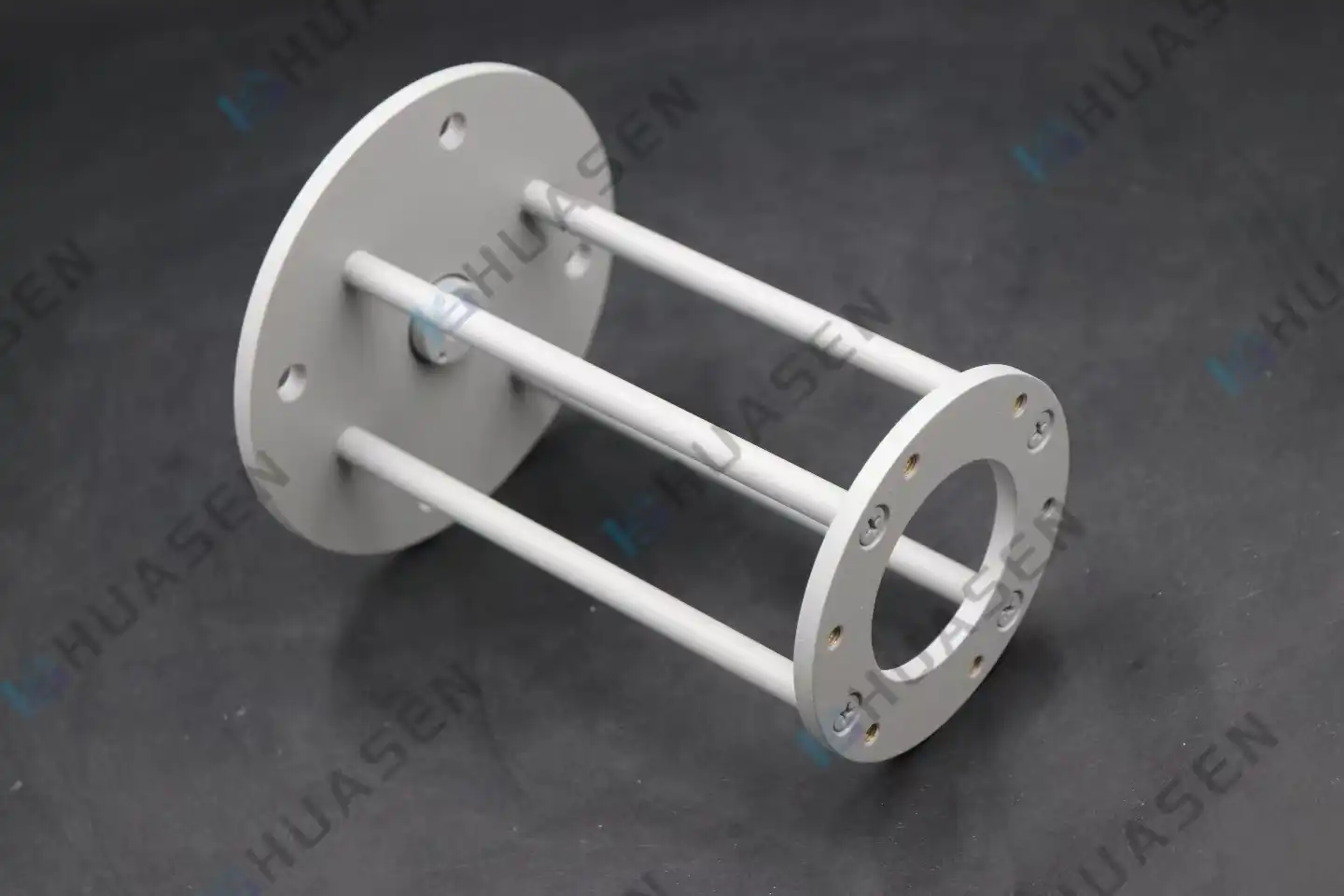
There are now many different types of Antenna Mounting Assemblies. L-type brackets allow antennas that need space from supporting structures to be mounted at an angle. They are often used in microwave backhaul systems where exact placement is needed for line-of-sight links. I-type brackets can be mounted on both sides, which makes them perfect for putting antenna bands on monopoles together. These different options can be seen in Huasen Microwave's mounting assemblies. Our L-type and I-type designs allow for free elevation change across a continuous range, so there are no steps that get in the way of beam optimization. Each bracket has a small shape without lowering its load-bearing capacity. It can hold antennas ranging from small panel arrays to extra-large parabolic dishes thanks to its modular size options.
Material Science Driving Performance
In recent years, the move toward materials that are strong but not heavy has sped up. High-tensile aluminum metals keep the strength-to-weight ratios needed for heavy antenna installs while lowering the load on towers. Carbon fiber composite clamps are used in aircraft and the military, where the extra weight is worth the extra cost. Advanced surface treatments, such as zinc-nickel electroplating and ceramic-enhanced anodizing, make things more resistant to corrosion and increase their service life beyond standard galvanization. When procurement teams are looking at different materials, they should think about the costs over their whole lifetime. For example, stainless steel costs more up front, but it doesn't need to be replaced for 20 years, which is a usual deployment time for telecoms infrastructure.
Integrated Adjustment Mechanisms
Controlling polarization is very important now that communication systems use cross-polarized and dual-polarized broadcast modes to make better use of the spectrum. Modern mounting kits include polarization adjustment hardware built right into the brackets. This lets techs in the field turn antennas by exact angles without having to take off the mounting hardware. Height-adjustable features allow for staged deployments, in which antenna designs change as networks grow. The assemblies made by Huasen Microwave can be adjusted for polarization and height without using any tools. This means that they can be quickly reconfigured without the need for special tools. This is especially useful for research labs that are comparing antennas or system integrators who are in charge of rolling out systems to multiple sites with different installation requirements.
Best Practices and Safety Guidelines for Antenna Mounting Installation
Precision Alignment and Signal Optimization
Positioning of antennas has a direct effect on how well a transmission system works. In directional microwave links, an azimuth error of just two degrees can cut the detected signal strength by 3 dB, which means that the range is cut in half. To account for differences in local declination, installation teams should use digital inclinometers and compass points that are checked against true north instead of magnetic north. When figuring out the mounting height, you have to take into account the Fresnel zone clearance. This is the elliptical area around the radio beam path where obstacles cause diffraction losses. Professional setups write down the alignment tolerances that were reached and take pictures of the mounting settings for future teams to look at and see if the performance drop is due to mechanical changes or electronic failures.
Grounding and Lightning Protection
Proper electrical grounding keeps signals safe and saves both people and equipment. Mounting clamps, including the antenna mounting bracket, need to make sure that there are continuous electrical lines from the antenna bodies to the tower grounding systems. This is usually done with grounding lugs that have star screws that go through protective coatings. The National Electrical Code (NEC) and NFPA 780 rules say what sizes of conductors to use and how to connect them. For most installs, grounding jumpers must be made of at least #6 AWG copper. Electrochemical corrosion weakens both the electrical connection and the mechanical strength. Electrochemical compatibility between radio housings, mounting brackets, and structural steel stops this from happening. Checklists for installations should make sure that all grounding connections meet the torque requirements, since joints with too little tension fail during lightning strikes.
Weatherproofing and Connector Protection
Connection points are weak spots where wetness can get in and make things work less well. Drip loops in coaxial cables, self-amalgamating tape, and heat-shrink boots at all RF interfaces should be used in mounting setups to keep water from getting to the connections. Stainless steel hardware doesn't seize up from rust, which makes upkeep harder in the future, and anti-seize additives on the threads keep them from galling when taking the hardware apart. As temperature changes and vibrations weaken connections over time, mounting hardware should be checked every three months to make sure it stays at the right torque level. Mounting assemblies go from being passive parts to actively managed system elements that keep the network reliable when repair plans are written down.
Procurement Insights: Choosing and Sourcing the Right Antenna Mounting Solutions
Specification Development and Requirement Analysis
Complete recording of requirements is the first step to a successful purchase. Minimum structural capacity is set by the antenna's weight, wind loading factors, and useful estimated area. Physical compatibility is determined by the types of connectors and mounting holes. The working temperature ranges, humidity exposure, and salt fog protection (as defined by ASTM B117) help choose the right material. In specialized uses, customization needs often come up. For example, research labs may need non-magnetic mounting hardware to keep measurements from getting messed up, and flight platforms need FAA-certified parts with proof of material certifications and tracking. By involving suppliers early on in the planning stages of a project, mounting designs can change as the antenna is chosen, rather than having to make adjustments during installation.
Supplier Evaluation and Quality Assurance
Differentiating between sellers of standard tools and those who focus on engineering has a big effect on how well a project turns out. Integration risks are lower when manufacturers offer expert support, such as structural load estimates, 3D mounting models, and help with application engineering. Quality certifications like ISO 9001 show that the process is mature, and agreement with military specifications (MIL-STD) shows that the company can meet strict performance standards. For thirty years, Huasen Microwave has been making RF components. During that time, they set up quality systems that are now used on our mounting kits. These systems include dimensional standards, material certifications, and galvanization thickness checks to make sure that all production runs are the same. Before making large purchases, purchasing managers should ask for test samples to make sure the units fit and can handle the load. This is especially important for custom configurations that need to fit specific installation shapes.
Total Cost Analysis Beyond Unit Price
The price of a component is only one part of the total cost of purchase. Lead times affect project plans. Stock kits can be shipped within days, but special fabrications may take 6 to 8 weeks. Bulk purchasing methods get savings for buying in bulk, but they need to be managed and stored. Installation work costs are often higher than hardware costs. This means that features that make something easy to install are useful even when the prices of the parts are higher. The terms of the warranty and the availability of expert help lower the risk during the deployment stages. There are pros and cons to both fixed mounting clamps and adjustable assemblies. Fixed mounts are cheaper and more rigid, while adjustable types offer installation freedom and the ability to be reconfigured in the future, which justifies higher prices for networks that are changing. Huasen Microwave helps with procurement planning by offering customization choices that fit the needs of each project, whether it's a small lab order or a large-scale infrastructure operation that needs deliveries spaced out to match building stages.
Future Trends in Antenna Mounting for Communication Projects
Advanced Materials and Modular Architectures
Composite materials made of carbon fiber and engineered plastics are being used more and more in the Antenna Mounting business. These materials have strength-to-weight ratios that were previously unattainable with conventional metals. These high-tech materials make it possible to make very light parts for communication systems on drones and satellite platforms, where every gram counts when it comes to payload capability. Through interchangeable interface plates, modular mounting layouts make it possible for single bracket designs to work with different types of antennas. This makes inventory management easier for system designers who deal with a wide range of equipment. Additive manufacturing (3D printing) is now used for prototypes and small-scale production. It makes it possible to make complicated shapes that distribute strength efficiently while using as little material as possible. This is especially useful for custom aerospace uses that need to make design changes quickly.
Smart Mounting Systems and Condition Monitoring
The Internet of Things is turning attached hardware from inactive structures into active system parts. Embedded sensors send real-time data to network operations centers about changes in structural stress, shaking intensity, and tilt. Predictive maintenance algorithms look at mounting condition trends to find hardware that is becoming loose or showing structural wear before they happen. These smart assemblies are especially useful in offshore platforms, mountain relay sites, and equipment placed on top of buildings, where it would be too expensive to do a physical check. The sensor data also verifies guarantee claims and keeps track of the quality of the installation, which protects both the companies that make the equipment and the people who do the installation from responsibility.
Regulatory Evolution and Sustainability Requirements
Environmental laws have a bigger impact on choosing materials and getting rid of them when they're no longer useful. RoHS compliance gets rid of dangerous materials from mounting hardware, and REACH rules limit some coatings and treatments. When it comes to recycling, aluminum and steel parts are better than mixed materials that are hard to separate and process again. Keeping track of your carbon impact makes people more interested in buying materials from nearby and making things in your area, which cuts down on pollution from shipping. Sustainability standards are now often included in procurement specs along with technical parameters. This puts pressure on suppliers to keep records of how their products affect the environment throughout their entire life cycles. As more government infrastructure projects and business procurement policies require environmental responsibility along with technical success, it's good for manufacturers who invest in sustainable practices.
Conclusion
Antenna Mounting Assemblies have changed from straightforward clips to highly precise parts that have a big impact on the performance, dependability, and lifetime costs of communication systems. Today's buying needs go beyond simple mechanical specs and include things like material science, installation efficiency, environmental resilience, and managing a product's whole life. Using flexible mechanisms, high-tech coatings, and modular designs together meets a wide range of needs, from 5G base stations to satellite ground ports. As communication networks get more complicated and performance standards rise, equipment that supports them should get the same strategic attention as active RF parts. By choosing the right suppliers and doing a total cost analysis, successful projects find a balance between technology needs and budget limits.
FAQ
Q1: What mounting height optimizes performance for microwave backhaul antennas?
The success of a microwave link rests on how far away the Fresnel zone is, not on how high it is. A line-of-sight path analysis that takes into account geography, vegetation, and buildings is needed for calculations. Most sites put antennas so that the first Fresnel zone is at least 60% clear at the middle point between the terminals. This means that the antennas are placed at heights of 30 to 100 feet, based on the link distance and the types of obstructions that are in the way.
Q2: How do adjustable mounts compare to fixed brackets regarding long-term stability?
Adjustable mounting systems add more mechanical connections that need to be set up correctly and maintained on a regular basis. When placed properly, high-quality adjustable mounts with nylon-insert lock nuts and captured hardware keep alignment the same as fixed brackets. Fixed mounts don't have any way to move them, so they are very rigid and best for fixed installs where the layout probably won't change in the future. The needs for the application should guide the choice.
Q3: Which grounding practices prevent mounting-related RF interference?
Effective grounding establishes continuous DC conductivity between antenna elements and earth ground while maintaining RF current paths that prevent common-mode noise. Star washers penetrating surface coatings, copper grounding straps of adequate cross-section, and single-point grounding architectures minimize ground loops. Bonding all metallic components within the antenna system—including mounts, waveguides, enclosures—to a common ground bus prevents potential differences that generate intermodulation products.
Partner With Huasen Microwave for Your Mounting Assembly Needs
It is Huasen Microwave's specialty to make precisely engineered mounting systems for tough RF uses in the research, aircraft, and telecoms industries. Our L-type and I-type bracket designs give current communication systems the adaptability, load capacity, and environmental robustness they need. We can make changes to fit your exact needs, whether you need special materials, custom geometries, or to meet certain certification standards. Our sizes range from small lab setups to extra-large infrastructure deployments. Our engineering team works with system installers and equipment makers to come up with fitting options that improve both performance and the speed of installation. As a well-known company that has been making Antenna Mounting assemblies for 30 years and has ISO-certified quality processes, we know how mechanical accuracy affects the integrity of signals. Email our technical sales team at sales@huasenmicrowave.com to talk about the needs of your project, get technical models, or set up a sample review. Let Huasen Microwave's mounting parts give your transmission systems the strong base they need.
References
1. Telecommunications Industry Association. (2018). TIA-222-H: Structural Standard for Antenna Supporting Structures and Antennas. Arlington, VA: TIA Publications.
2. Balanis, Constantine A. (2016). Antenna Theory: Analysis and Design, 4th Edition. Hoboken, NJ: John Wiley & Sons.
3. Federal Communications Commission. (2020). Guidelines for Evaluating the Environmental Effects of Radiofrequency Radiation. Washington, DC: FCC Office of Engineering and Technology.
4. International Electrotechnical Commission. (2019). IEC 60721-3-4: Classification of Environmental Conditions - Stationary Use at Non-Weather-Protected Locations. Geneva: IEC Publications.
5. American Society of Civil Engineers. (2017). ASCE 7-16: Minimum Design Loads and Associated Criteria for Buildings and Other Structures. Reston, VA: ASCE Press.
6. National Fire Protection Association. (2020). NFPA 780: Standard for the Installation of Lightning Protection Systems. Quincy, MA: NFPA Publications.
Send Inquiry