90° Waveguide to Coaxial Adapter Installation Guide for RF Applications






2026-04-06 21:24:41
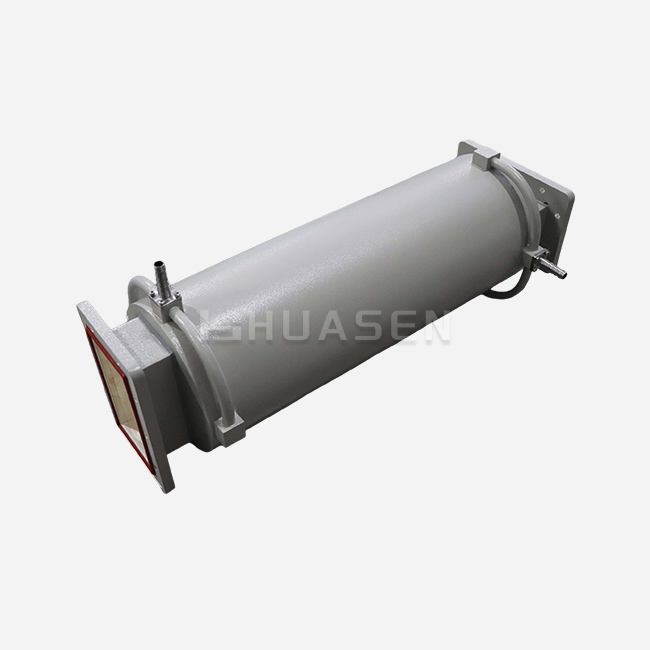
When putting together an RF system, 90° waveguide to coaxial adapters are very important because they make it possible for signals to go from waveguide transmission lines to coaxial links without any problems. These special waveguide adapters are made to keep the signal's integrity while giving sites limited by space the angular configuration they need. Knowing the right way to put something together makes sure that it works well in demanding situations like 5G base stations and satellite communication systems.
Understanding 90° Waveguide to Coaxial Adapters
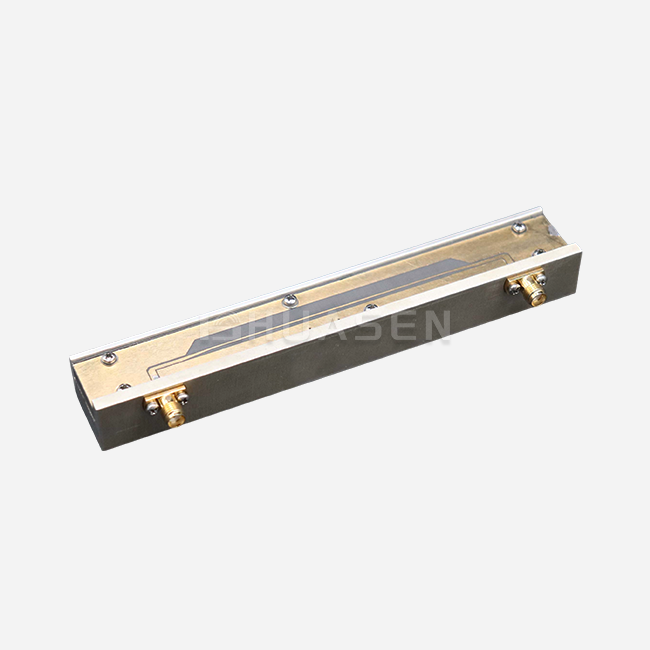
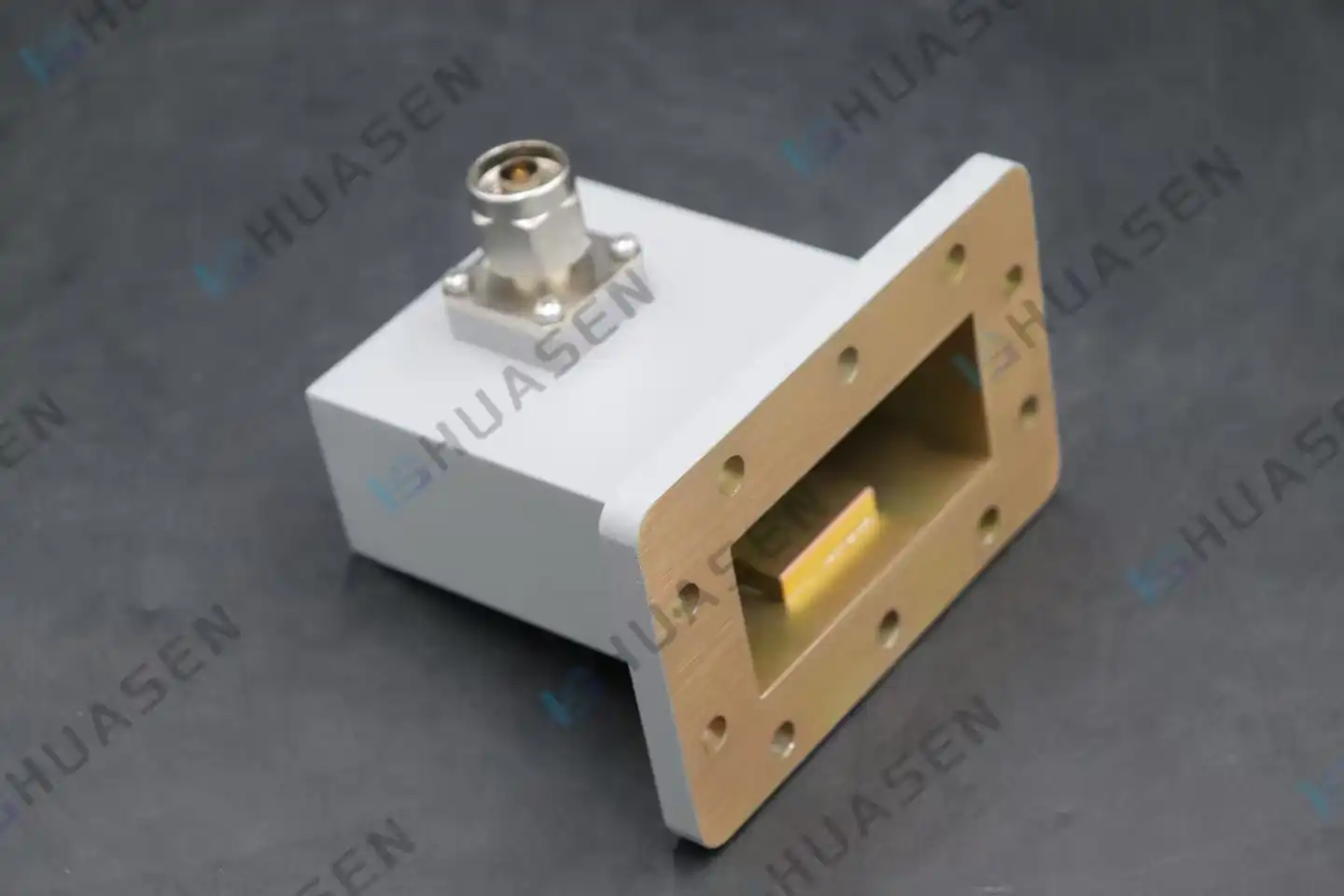
90° waveguide to coaxial adapters' main job is to change electromagnetic energy from square or round waveguide shapes to normal coaxial connections while keeping the angle. This geometric arrangement is very useful in situations where straight linear connections are not possible because of limited space or the need to route cables.
Core Function and Working Principles
The way these adapters work is by changing the electromagnetic field structure from the TE10 mode that is common in rectangular waveguides to the TEM mode that is common in coaxial transmission lines. The 90-degree bend has carefully designed internal geometries that keep impedance matching throughout the shift and reduce reflections. Usually, the design has a probe or loop coupling device that takes energy from the waveguide and sends it to the coaxial connector with very little loss. Precision-machined parts inside the frame make sure that the field is transformed correctly. Engineers have come up with complex modelling methods to make the transition region work better, lowering VSWR to acceptable levels while keeping internet performance. In certain frequency bands, modern designs have insertion loss values below 0.3 dB, which means they can be used in high-performance situations.
Types and Material Considerations
There are different waveguide adapter designs that can be used for different tasks. Most of the time, rectangular waveguide adapters are used for standard frequency bands. On the other hand, circular waveguide adapters are used in rotating joint systems and in certain radar uses. These adapters are different from straight-through designs because they are angled at 90 degrees. This gives you more options for how to set up your system and control your cables. The choice of material has a big effect on how well something works. The main building blocks are made of high-conductivity materials like copper, aluminium, and brass. Due to its high resistance to rust and ease of working with, brass is a good choice for use in laboratories. Aluminium is lighter and better for use in aerospace, while copper is better for high-frequency processes because it conducts electricity more efficiently. Surface solutions are very important for long-term dependability. Gold plating is very resistant to corrosion in harsh settings, while silver plating lowers skin effect losses at microwave frequencies. These processes must be of a certain thickness to make sure that the part works the same way throughout its useful life.
Performance Advantages and System Benefits
The best thing about 90° waveguide adapters is that they can be designed to take up less room. Straight-through adapters usually need a lot of space for cables to go through, but the right-angle design makes system integration easier. This benefit is especially useful in equipment racks or mobile platform setups that are already full, such as awaveguide to coaxial adapter,where every inch counts. In these systems, signal integrity is still very important. When properly designed, 90-degree adapters keep their VSWR performance very high, usually staying below 1.25:1 across the frequency range they are meant for. This level of performance makes sure that signals don't get too weak and stops unwanted echoes that could hurt system performance.
Step-by-Step Installation Guide for 90° Waveguide to Coaxial Adapters
To get the best results from 90° waveguides to coaxial adapters, you must follow the right installation steps. For long-term reliability, the installation method needs to pay attention to mechanical accuracy, environmental concerns, and electrical continuity.
Pre-Installation Preparation and Safety Considerations
Before starting the installation, experts have to make sure that the system works with each other by looking at the frequency requirements, power handling needs, and connector types. The waveguide flange's measurements must match those of other parts in the system, and the coaxial connector must work with equipment further down the line. VSWR specs, insertion loss data, and environmental ratings should all be part of the documentation review. Getting precision torque wrenches, alignment fixtures, and ESD safety gear is part of getting tools ready to use. Standard tools for installing waveguides include flange alignment pins, gasket placement aids, and the right fasteners. To make sure that coaxial connections work properly and don't hurt anything, you need torque wrenches that have been calibrated. Both electricity and mechanical dangers must be covered in safety rules. During installation, power sources must be turned off and locked out. When working with sensitive RF parts, ESD protection is very important, and you need to follow the right grounding and handling methods. Safety glasses and the right kind of work gloves should be part of your personal protective equipment.
Installation Methodology and Alignment Procedures
The first step in the assembly process is to prepare the waveguide flange. Mating surfaces need to be clean and free of any rust or other things that could stop the flow of electricity. Gaskets or O-rings should be checked for damage and put in the right place according to the manufacturer's instructions. Alignment pins help make sure that the flanges fit together correctly and stop screws from cross-threading. Pay close attention to direction and support when mounting the adapter. Moment loads are created by the 90-degree configuration and must be properly supported to keep the connected hardware from being stressed. Support brackets or clamps should be put in place so that mechanical stress is kept to a minimum while thermal growth is allowed. To make sure the seal works right, the torque specs must be carefully followed without putting too much stress on the adapter body. The steps for making a coaxial link need to be just as precise. Cleaning the centre conductors and the outer conductor areas is part of getting a connector ready. Before mating, the dielectric stability must be checked. To make sure that the pressure is spread out evenly and to keep the joint from breaking, the torque should be applied in a way that tightens gradually.
Testing and Validation Procedures
Post-installation testing validates proper adapter performance and system integration. VSWR measurements using calibrated test equipment provide immediate feedback on installation quality. Measurements should be taken across the full operating frequency range to identify any resonances or impedance discontinuities that might indicate installation problems. Return loss measurements complement VSWR data by providing detailed information about reflection characteristics. Modern vector network analysers can identify specific frequency ranges where performance deviates from specifications. These measurements help troubleshoot installation issues and verify compliance with system requirements. Insertion loss testing quantifies signal attenuation through the adapter connection. Baseline measurements should be compared against manufacturer specifications to confirm proper installation. Significant deviations may indicate contamination, improper connector mating, or component damage requiring investigation.
Comparing 90° Waveguide Adapters with Other RF Interface Solutions
Understanding the relative merits of different RF interface solutions enables informed decision-making for specific application requirements. Each interface type offers distinct advantages and limitations that must be evaluated against system needs.
Mechanical and Electrical Performance Differences
Standard coaxial adapters provide excellent flexibility and ease of installation, but are limited in power handling capability and frequency range compared to waveguide solutions. Coaxial interfaces typically handle power levels up to several hundred watts, while waveguide adapters can accommodate kilowatt-level signals without breakdown concerns. The frequency range advantage becomes significant at higher microwave frequencies, where coaxial losses become prohibitive. Waveguide flanges offer superior power handling and lower loss characteristics but lack the flexibility provided by 90-degree adapters. Direct flange connections require precise mechanical alignment and often impose constraints on system layout. The rigid nature ofthe waveguideto coaxial adapter can create installation challenges in space-constrained environments. Flexible waveguide sections provide mechanical flexibility but introduce additional insertion loss and VSWR degradation compared to rigid adapter solutions. The trade-off between mechanical convenience and electrical performance must be carefully evaluated for each application.
Integration Scenarios and Performance Impact
Base station applications often benefit from 90-degree adapter implementations where antenna feed networks require compact routing solutions. The ability to redirect signal paths while maintaining low-loss characteristics proves valuable in tower-mounted equipment where space and weight constraints are critical factors. Performance impact remains minimal when properly selected adapters are used within their specified parameters. Laboratory environments frequently employ these adapters for test equipment connections where reconfiguration flexibility is essential. The right-angle orientation allows convenient cable management while maintaining measurement accuracy. Calibration procedures must account for the adapter's electrical characteristics to ensure measurement precision. Satellite communication systems utilise 90-degree adapters in ground terminal applications where outdoor unit connections require weatherproof sealing combined with compact mechanical configurations. Environmental protection becomes a critical factor requiring careful attention to gasket materials and sealing procedures.
How to Choose the Best 90° Waveguide to Coaxial Adapter for Your RF Application
To choose the best adapter options, you need to carefully look at technical needs, environmental factors, and buying factors. During the selection process, performance goals should be weighed against cost concerns, and long-term dependability should be ensured.
Technical Specification Analysis
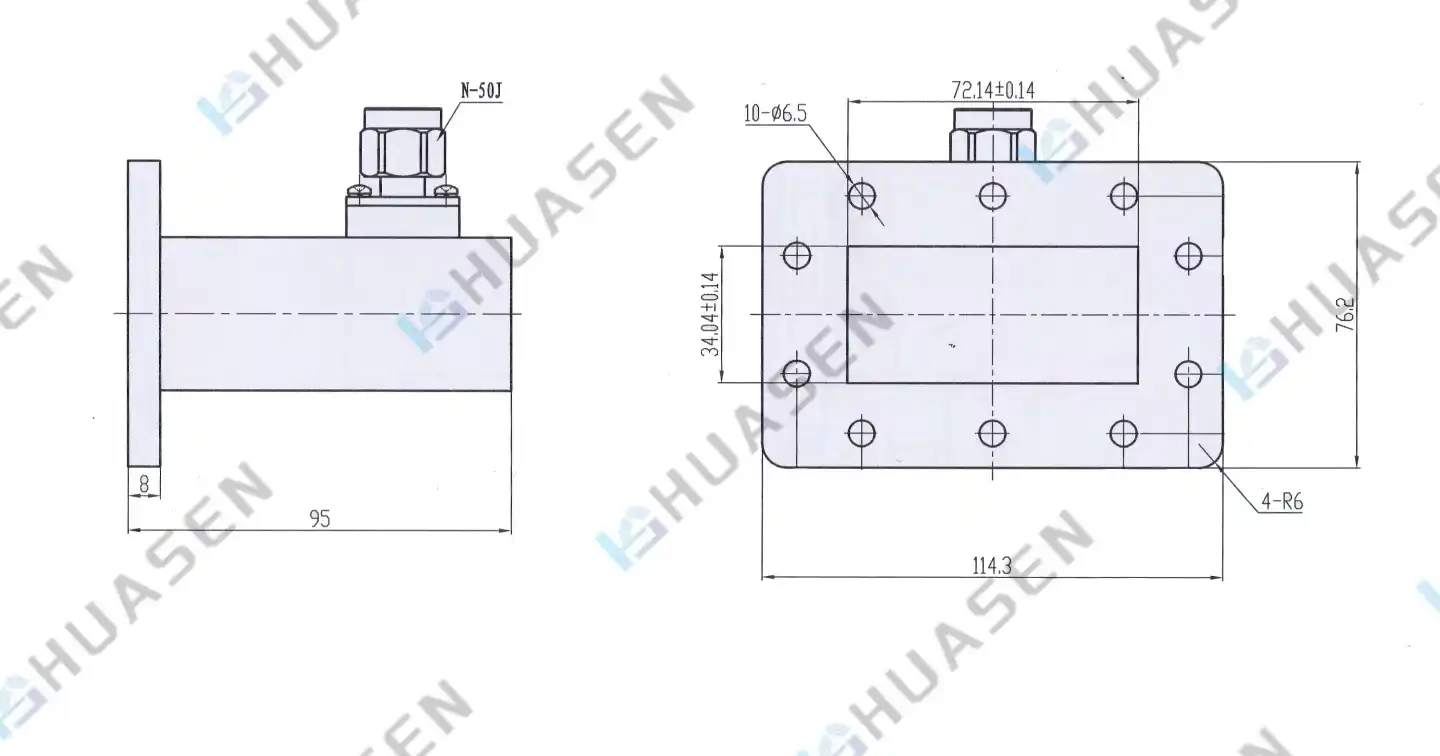
Choosing an adapter is based on the frequency range that is needed. Operating bandwidth must include all necessary frequencies plus enough room for changes in the system and the effects of ageing. VSWR specs should meet or beat system needs across the whole frequency range, paying extra attention to the edges of bands where performance usually drops. Power handling must be able to handle both normal and peak power levels while still leaving enough room for error. Continuous wave power ratings take into account the need for heat management, and peak power ratings make sure that breakdown voltage margins are kept. Power handling skills are affected by things like altitude and temperature in the environment, which must be taken into account during the selection process. When it comes to connector compatibility, both mechanical and electrical issues need to be considered. The types of flanges must match the parts of the system that are already in place, and the coaxial connections must work well enough for the job. Standard kinds of connectors include SMA, N-type, and 7/16 DIN. Each can handle a different amount of power and frequency.
Supplier Evaluation and Quality Assurance
Customers can be sure that products made by well-known companies with a history of making microwave parts will work reliably and consistently. Companies that have ISO 9001 approval and meet military specifications show that they are dedicated to quality management systems and standard ways of making things. When working with custom or specialised applications, being able to provide technical help becomes very important. Suppliers who offer design help, application engineering support, and professional service after the sale go above and beyond the basic product. Access to detailed technical literature and test data is needed to properly integrate systems and help with troubleshooting. Things to think about in the supply chain are lead times, the availability of inventory, and the production capacity. To make sure there is a steady supply of goods for important uses, qualified supplier lists and multiple source approvals may be needed. Long-term relationships with dependable providers lower the risks of buying things and allow people to work together to make products that meet specific needs.
Cost Optimisation Strategies
When you buy a lot of waveguide adapters, volume pricing systems often give you big cost savings. Knowing where the price tiers break down lets you plan smart purchases and make the best use of your inventory. But unit price savings must be weighed against the costs of keeping the item and the chance that it will become obsolete. When deciding between custom and standard products, you need to carefully look at the technical needs and costs. Standard goods are available right away and have been shown to work well in the past, but they may have features or capabilities that aren't needed. Custom solutions offer the best performance for certain uses, but they usually have longer wait times and cost more per unit. The initial buy price, installation costs, maintenance needs, and expected service life should all be included in the total cost of ownership analysis. Even though they cost more at first, higher-quality parts that are more reliable tend to be worth it in the long run.
Conclusion
Installing and choosing the right 90° waveguide to coaxial adapters has a big effect on how well and reliably an RF system works. To get the best results from the installation process, care must be taken with mechanical accuracy, electrical continuity, and environmental safety. When comparing 90-degree adapters to other interface solutions, it becomes clear which situations they work better in than others. Systematic selection processes that take technical specifications, supplier capabilities, and cost into account allow for the best procurement choices that balance the need for performance with the available budget.
FAQ
1. What frequency ranges are typically supported by 90° waveguide adapters?
Most 90° waveguide to coaxial adapters support specific waveguide band frequencies, ranging from L-band applications around 1-2 GHz up to millimetre-wave frequencies exceeding 40 GHz. The frequency range depends on the waveguide size and internal design characteristics. Standard rectangular waveguide bands include X-band (8.2-12.4 GHz), Ku-band (12.4-18 GHz), and Ka-band (26.5-40 GHz). Custom designs can extend these ranges based on specific application requirements.
2. How do I prevent common installation mistakes that affect performance?
The most critical installation factors include proper flange alignment, appropriate torque application, and contamination prevention. Use alignment pins during flange mating to prevent misalignment that creates gaps and degrades electrical continuity. Apply specified torque values gradually and evenly to prevent warping. Keep all surfaces clean and free from oils, fingerprints, or debris that can affect RF performance. Verify connector compatibility before installation to prevent damage from improper mating.
3. What VSWR performance should I expect from quality 90° adapters?
High-quality 90° waveguide to coaxial adapters typically achieve VSWR ratios of 1.25:1 or better across their specified frequency range. Premium designs may achieve 1.15:1 or better for narrowband applications. VSWR performance tends to degrade near band edges, so adequate frequency margin should be maintained for critical applications. Actual performance depends on manufacturing precision, material quality, and installation techniques.
4. Can these adapters handle high-power applications safely?
Power handling capability varies significantly based on frequency, waveguide size, and adapter design. Most adapters handle several hundred watts of continuous power, while larger waveguide sizes can accommodate kilowatt-level signals. Peak power handling is typically much higher than average power ratings. Environmental factors such as altitude, temperature, and humidity affect power handling capabilities. Always consult manufacturer specifications for specific power ratings and derating factors.
Partner with Huasen Microwave for Premium Waveguide Solutions
Huasen Microwave stands as your trusted waveguide adapters supplier, delivering precision-engineered 90° waveguide to coaxial adapters that meet the most demanding RF application requirements. With over three decades of expertise in microwave component manufacturing, our engineering team combines advanced design capabilities with rigorous quality control to produce adapters that consistently exceed industry standards for VSWR, insertion loss, and power handling performance.
Our comprehensive product portfolio includes standard and custom waveguide adapters for sale, supporting frequency ranges from L-band through millimetre-wave applications. Each adapter undergoes extensive testing to verify compliance with MIL-DTL specifications and customer requirements. When you choose Huasen Microwave, you gain access to technical support specialists who provide application engineering assistance, waveguide adapters,optimal adapter selection and integration success for your specific system requirements.
Contact our sales team at sales@huasenmicrowave.com to discuss your waveguide adapter requirements and receive detailed technical specifications tailored to your application needs.
References
1. Pozar, David M. "Microwave Engineering, 4th Edition." John Wiley & Sons, 2012.
2. Institute of Electrical and Electronics Engineers. "IEEE Standard for Rectangular Metallic Waveguides and Their Interfaces for Frequencies of 110 GHz and Above." IEEE Std 1785-2013.
3. Marcuvitz, Nathan. "Waveguide Handbook." McGraw-Hill Book Company, 1951.
4. Ragan, George L. "Microwave Transmission Circuits: Volume 9." Massachusetts Institute of Technology Radiation Laboratory Series, 1948.
5. Collin, Robert E. "Foundations for Microwave Engineering, 2nd Edition." McGraw-Hill, 1992.
6. Montgomery, Carol G. "Technique of Microwave Measurements: Volume 11." Massachusetts Institute of Technology Radiation Laboratory Series, 1947.
Send Inquiry