Why Use Water Cooled Coax Waveguide in Radar?






2026-04-24 17:23:47
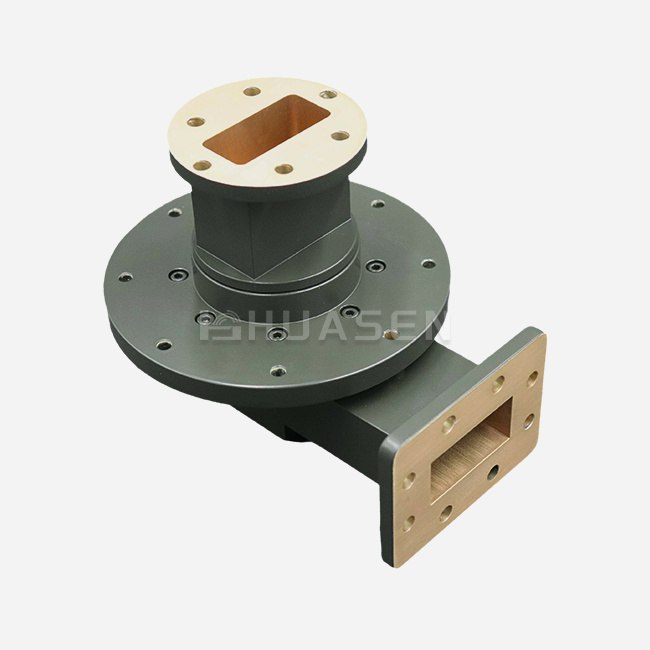
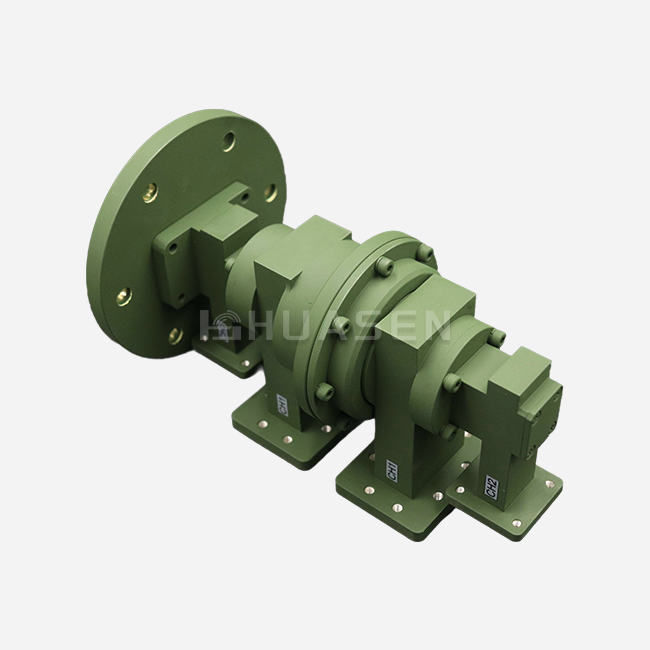
Water-cooled coax waveguides are specialized RF parts that handle high temperatures in high-power radar systems. They can usually handle continuous wave operations from 30 kW to over 100 kW. Unlike other options that use air cooling, these devices use built-in cooling channels to move deionized water around the inner conductor. This keeps catastrophic failures from happening due to resistive heating and dielectric breakdown. The active liquid cooling system keeps the impedance matching stable and the signal strong even when the duty cycle is high. This directly addresses the important problem of thermal runway, which lowers radar accuracy and shortens the life of parts in environments that are used 24 hours a day, seven days a week.
Understanding Water-Cooled Coax Waveguides in Radar Systems
The Core Principle of Liquid Cooling in RF Transmission
Skin effect losses and dielectric heating at ceramic transition windows cause high-power radar transmitters to make a lot of heat. When the average power goes over a few kilowatts, traditional air-cooled designs have trouble because the heat expands and changes the impedance characteristics. Water-cooled coax waveguides have brazed copper tubing or machined jackets that stay in touch with surfaces that generate heat. Deionized water moves at steady speeds, usually between 2 and 10 liters per minute, taking heat away before it builds up. This method keeps the critical junction temperature below 60°C even when the load is full. This protects the structural integrity of the solder joints and stops voltage breakdowns from happening.
Technical Specifications That Matter for Procurement
When procurement teams look at these parts, they should look at a number of performance metrics. The Voltage Standing Wave Ratio (VSWR) shows how well power flows through the adapter. Good units keep their VSWR below 1.10:1 throughout their working range. The composition of the material is very important. Oxygen-Free High Conductivity (OFHC) copper with silver plating reduces surface resistance and increases heat transfer. The cooling system's ability to keep working without boiling or cavitating depends on its pressure rating and flow capacity. When connecting atmospheric coaxial lines with evacuated waveguide systems in particle accelerators or industrial plasma uses, maintaining the vacuum at the ceramic window becomes very important.
Industry Standards and Certification Requirements
Compliance with regulations affects buying decisions, especially when radars are used for defense or space. MIL-STD-202 testing proves that the environment is resistant to vibration, shock, and changes in temperature. ISO 9001 certification means that the quality of the manufacturing process is always being checked, and RoHS compliance means that the rules about dangerous substances are being followed. For systems that work in maritime settings or coastal radar installations, ASTM B117 salt fog resistance is a must. Professionals in procurement can figure out how reliable a system will be in the long term and see if it meets current system qualification requirements by learning about these certifications.

Advantages of Water-Cooled Coax Waveguide Over Air-Cooled Solutions
Superior Thermal Management at Scale
The main benefit is its ability to get rid of heat. Air-cooled parts use convection and radiation, which don't work as well as the power density goes up. Liquid cooling has a thermal conductivity that is about 25 times higher than air. This lets small designs handle peak powers of megawatts. This feature is very important in phased array radar systems that can't use heat sinks that are too big for the system. Water-cooled coax waveguides let polarization rotate in equipment racks that aren't very big while keeping the temperature stable, which isn't possible with air-cooled versions.
Extended Component Lifespan and Reduced Maintenance
Material wears out faster when it is under thermal stress, especially at solder joints and brazed interfaces. When compared to air-cooled designs that are running at their thermal limits, liquid cooling increases the mean time between failures (MTBF) by three to five times because it keeps the operating temperatures stable. Radar operators in weather surveillance networks say that maintenance checks can happen anywhere from three times a year to once a year after switching to water-cooled coax waveguide paths. Less unplanned downtime directly leads to higher system availability, which is a key metric for facilities that need to run all the time, like air traffic control radar.
Cost-Benefit Analysis for Large Deployments
When bought for the first time, water-cooled parts are usually 40–60% more expensive than air-cooled ones of the same type. When operational factors are taken into account, however, the total cost of ownership calculation changes in a big way. Less failure means less need for spare parts, which means no more emergency replacement costs. Cooling water removes heat before it radiates into equipment enclosures, which lowers the amount of air conditioning that needs to be done in those enclosures. In a case study from a European weather radar network, the system paid for itself in 18 months by saving money on maintenance labor, part replacements, and cooling costs across 30 sites.
How to Choose the Right Water-Cooled Coax Waveguide for Industrial Radar Procurement?
Critical Selection Criteria for System Integration
The amount of power that can be handled must match the average and peak power needs, plus safety margins for pulse applications. It's not enough to just check the range of frequencies that work together; insertion loss characteristics across the operational bandwidth also affect how sensitive radar is. The cooling system needs to meet certain requirements, such as the temperature of the water coming in, the flow rate it needs to have, and the pressure drop it needs to work with the rest of the building's infrastructure. It's very important that connector standards are met. Waveguide flange types (WR-28, WR-90, etc.) and coaxial interfaces (Type N, 7-16 DIN, and EIA flanges) must match without the need for extra adapters that add loss and reflection points.
Evaluating Suppliers and Manufacturing Quality
Companies that have been around for a long time and have a history in aerospace and defense usually have better process control and documentation practices. Procurement teams can be sure that vendors meet specifications if they offer full RF test data, such as swept frequency VSWR plots and power handling verification reports. For big contracts, it's useful to be able to check out manufacturing facilities or look over quality management certifications. Some integrators like working directly with original equipment manufacturers because they give them more freedom to make changes, while others prefer working with authorized distributors because they keep stock on hand and can deliver standard configurations faster.
Customization Options and Engineering Support
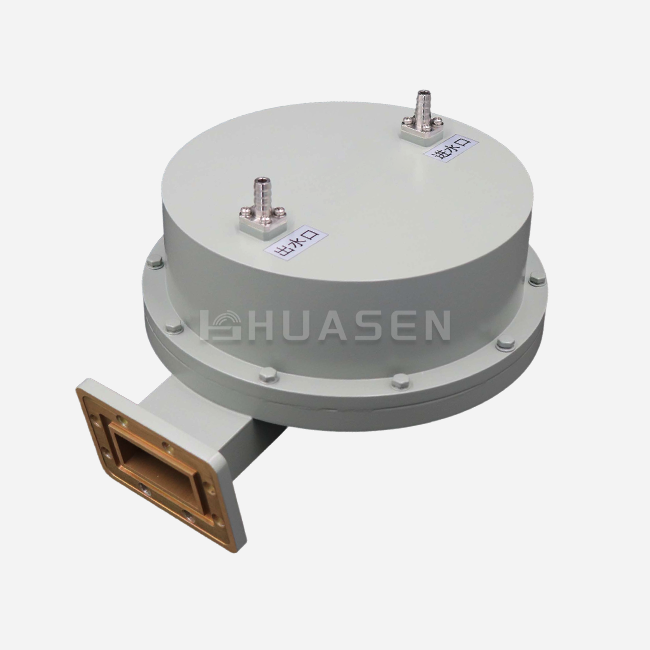
Standard catalog parts don't always work perfectly with every radar architecture. To make system integration easier, reputable manufacturers offer frequency band optimization, custom flange orientations, and custom cooling port locations, such as for a water-cooled waveguide to coaxial adapter. Having engineering help during the design phase helps find any possible thermal bottlenecks or impedance mismatches before the hardware is built. Sample trial programs let new radar configurations be tested in real-world operating conditions, which lowers the risk of buying them. Having access to detailed CAD models and thermal simulation data speeds up the planning of mechanical integration and lowers the uncertainty about when the installation will happen.
Best Practices for Installation, Maintenance, and Performance Optimization
Installation Guidelines to Ensure Optimal Performance
Properly preparing the coolant stops parts from breaking down too quickly. Galvanic corrosion is slowed down by deionized water with a resistivity above 1 megohm-cm, and corrosion inhibitors keep copper surfaces safe during long-term use. Flow direction is important; to get the most thermal gradient, the inlet connections should feed directly into the junction points that are the hottest. It is very important to follow the torque specs for waveguide flanges and water fittings exactly. Not torqueing them enough can cause leaks, and torqueing them too much can damage the sealing surfaces. RF power should be turned off during the first flow of coolant to get rid of air bubbles that cause hot spots and make cooling less effective.
Preventive Maintenance Protocols
Visual checks every three months catch early warning signs like coolant seeping out of fittings or changes in color around areas that are getting too hot. By measuring resistivity and pH, coolant quality testing finds contamination before it leads to internal corrosion. Flow rate monitoring finds partial blockages caused by mineral deposits or the buildup of debris. Using thermal imaging during operation shows developing hot spots that mean the cooling system isn't working as well or there is damage inside. Many radar facilities keep extra assemblies that have already been tested so that they can be quickly swapped out during scheduled maintenance windows. This keeps the system running as smoothly as possible while broken units are fixed and recertified on the bench.
Leveraging Monitoring for Predictive Maintenance
At important points in modern installations, temperature sensors send data to supervisory control systems. Trend analysis shows that performance is slowly getting worse. For example, a slow rise in temperature over weeks means that fouling is starting to form and needs to be cleaned. When flow meters and differential pressure sensors work together, they can find problems with the coolant system or worn-out pumps before they cause parts to get too hot. Advanced radar facilities connect thermal data with RF performance metrics like VSWR drift. This allows condition-based maintenance, which replaces parts based on how worn they are instead of just when they need to be replaced.

Applications and Case Studies: Water-Cooled Coax Waveguide in Radar Technology
Military and Aerospace Radar Deployments
Early warning radar systems on the ground that work in harsh environments show how reliable the technology is. After switching to liquid-cooled RF transitions, a naval surveillance radar station in the Mediterranean went from very hot during the day to very cool at night for five years without any thermal failures. Even though the temperature changed more than 50°C between operational extremes, the water-cooled waveguide to coaxial adapter kept the VSWR specifications. Vibration and G-forces can make it harder for radar platforms that are in the air. For example, water-cooled parts in fighter aircraft fire control radar have been reliable through thousands of flight hours and high-G maneuvers.
Industrial and Scientific Applications
Particle accelerators are one of the most difficult uses because they need RF power to keep the accelerating cavities going. A synchrotron facility replaced air-cooled adapters because they kept breaking down, which made beams unavailable. Over the course of three years, the water-cooled coax waveguide replacements increased uptime by 98%, which directly increased research productivity. Industrial microwave heating systems in places that make semiconductors use water-cooled coax waveguides to move CW power of many kilowatts through complicated equipment layouts. In chemical vapor deposition systems, where process uniformity depends on stable RF delivery, it is important to be able to keep polarization under control while removing thermal loads.
Performance Data and Scalability Evidence
There are measurable outcomes of a program to update weather radar networks. Over the course of 18 months, 30 sites switched from air-cooled to water-cooled coax waveguide paths. Across the network, system availability metrics went up from 94.2% to 99.1%. The number of maintenance calls dropped by 67%, and the cost of replacing parts dropped by 58% per year. The standardization of liquid-cooled components made it easier to get spare parts and train technicians. These results show that the system can be expanded from pilot installations to deployments across the entire fleet. They also show that the purchase was worth it because it gave a clear return on investment.
Conclusion
Water-cooled coax waveguides have been shown to be a good way to deal with heat problems in high-power radar systems. Compared to alternatives that use air cooling, this technology is much more reliable, runs more efficiently, and has a lower total cost of ownership. When making a purchase decision, it's helpful to look at how much power the radar needs, what the supplier can do, and how the system will fit together with other parts. The lifespan of components and the availability of the system are both increased by following the right installation and preventative maintenance procedures. As radar systems keep getting better at handling higher power densities and running all the time, liquid cooling technology is still needed to keep up performance standards in military, aerospace, industrial, and scientific settings.
FAQ
1. What makes water-cooled coax waveguides necessary for radar systems?
When the average power is higher than what air cooling can handle for heat management, usually above 5–10 kW continuous wave, depending on frequency, these parts are needed. Water-cooled coax waveguide stops thermal runaway, keeps impedance stable, and allows for small designs in radar architectures with limited space where big heat sinks wouldn't work.
2. How does cooling capacity compare between water and air?
When it comes to cooling, water is about 25 times better at transferring heat than air. In real life, this means that a small water-cooled coax waveguide can continuously dissipate 50 kW, while an equivalent air-cooled design would need too many large radiating surfaces and forced airflow, which might not be enough to keep the heat from breaking down.
3. What are the most important things to consider when buying things for large radar installations?
Standardization makes spare parts easier to find and lowers the amount of training that is needed at multiple sites. Stable suppliers make sure that parts will always be available and that the quality will stay the same. The ability to customize lets specific radar architectures be optimized. Full technical support during integration and commissioning lowers the risks of deployment and the uncertainty of when things will be done.
Partner with Huasen Microwave for Reliable Water Cooled Coax Waveguide Solutions
Integrators of radar systems and people who work in procurement know that thermal management has a direct effect on the success of operations. Huasen Microwave has been making RF parts for more than 30 years and can now design and make water-cooled coax waveguides. Our engineering team works with clients to make custom solutions that meet their specific needs for power handling, frequency bands, and mechanical limitations. As a well-known company that makes water-cooled coax waveguides, we keep strict quality control in line with the MIL-STD and ISO standards that aerospace and military programs require. Before it is shipped, every part goes through a lot of RF testing and thermal validation to make sure it meets the specifications and will work well for a long time. Our responsive technical support team is here to help you from the first design consultation through post-installation optimization, whether you need standard configurations or custom-engineered assemblies. Get in touch with our experts at sales@huasenmicrowave.com to talk about your radar's thermal management needs and get detailed quotes that show how our liquid-cooled RF solutions improve system performance while lowering operational costs.
References
1. Pozar, David M. Microwave Engineering, 4th Edition. Wiley, 2011.
2. Saad, Theodore S. Microwave Engineers' Handbook, Volume 1. Artech House, 1991.
3. Skolnik, Merrill I. Radar Handbook, 3rd Edition. McGraw-Hill Education, 2008.
4. IEEE Standard 291-1991. IEEE Standard Methods for Measuring Electromagnetic Field Strength of Sinusoidal Continuous Waves. Institute of Electrical and Electronics Engineers, 1991.
5. Collins, Robert E. Foundations for Microwave Engineering, 2nd Edition. Wiley-IEEE Press, 2000.
6. Balanis, Constantine A. Advanced Engineering Electromagnetics. John Wiley & Sons, 2012.
Send Inquiry