Why Use Antenna Near Field Measurement Probe for RF Diagnostics






2026-04-30 22:41:40
Accurate RF diagnostics are a must when making cutting-edge antenna systems for 5G networks, satellite payloads, or radar applications. An antenna near-field measurement probe gives you the accurate measurements and high spatial resolution you need to check antenna performance in controlled settings. In contrast to far-field testing, which needs long outdoor ranges of hundreds of meters, near-field diagnostics collect electromagnetic field data close to the antenna under test (AUT), usually within three to ten wavelengths. Because they are so close, engineers can easily find gain problems, polarization errors, and phase distortions. This makes these probes essential for RF testing labs, base station manufacturers, and aerospace integrators who need to quickly and accurately characterize something.
Understanding Antenna Near-Field Measurement Probes
Defining Near-Field Measurement Technology
The radiative near-field region, which is also called the Fresnel zone, is where antenna near-field measurement probe tools work. Electromagnetic wavefronts in this area behave in both reactive and radiative ways. Vector field data, such as amplitude and phase, are collected by the probe along a systematic scan plane. This near-field data can be turned into far-field radiation patterns using advanced algorithms mainly based on Fast Fourier Transforms, so test ranges that are kilometer-long are not needed.
This method solves a major problem that companies have when they are making electrically large antennas, like massive MIMO arrays for 5G base stations or reflector antennas for Ka-band satellite links. For such systems to be tested in the far-field, facilities would have to be too big. With near-field testing, this process is sped up by putting it in small, soundproof rooms. This cuts down on the cost of infrastructure and speeds up the development process.
Key Advantages Over Traditional Methods
Near-field probes are used by engineers in the defense, aerospace, and telecommunications industries because they provide better spatial resolution than far-field techniques. Because the probe can map field distributions at sub-wavelength spacing, it is possible to precisely find problems like feed misalignment or element failures in phased arrays that would not be seen with regular far-field measurements.
The ability to move quickly is another clear advantage. Full-sphere antenna characterization can be done in hours instead of days with automated scanning systems equipped with near-field probes. This efficiency directly leads to faster prototype iterations and a shorter time to market for companies that build communication systems and make equipment.
Application Across Critical Industries
Near-field probes are used by phone companies to check the accuracy of beamforming in millimeter-wave active antenna units that are set up at urban cell sites. Manufacturers of satellites use these probes to make sure that the polarization is pure and that the cross-polarization isolation is greater than 30 dB, which is important for frequency reuse schemes. They are hired by defense contractors to describe electronically scanned arrays (ESAs) for radar systems on ships and planes, where beam steering is very important for mission success.
Near-field diagnostics are used by people who make automotive radar to calibrate 77 GHz sensors that are built into car bumpers. Because the probe is small, quality assurance testing can be done right on production lines, without the need for separate test tracks outside.

Core Principles and Measurement Techniques
Electromagnetic Foundations
Electromagnetic reciprocity and near-to-far-field transformation theory are used to make the measurements. When a near-field measurement probe measures the electric or magnetic field distribution across a closed surface that surrounds the AUT, it collects enough data to reconstruct the whole radiation pattern. The mathematical transformation takes into account both cross-polarized and co-polarized components, which gives a full picture of the antenna.
It is very important that probe correction algorithms work. High-performance probes have well-defined gain patterns and phase centers, which lets software separate the probe's effect from the raw measurements. This fix makes sure that the accuracy levels reach ±0.05 dB in gain and ±1 degree in phase, which is what research centers and calibration labs need.
Scanning Methodologies
Near-field antenna testing is mostly done with three scanning geometries. Planar scanning works best with antennas that are moderately directed and have clear boresight directions, using an Antenna Near Field Measurement Probe. This makes it perfect for base station panel antennas and horn feeds. The probe moves across a flat grid while staying in the same position.
Cylindrical scanning works with arrays and antennas that are omnidirectional and have azimuthal symmetry. These are common in wireless bridging applications and broadcast tower antennas. The probe moves up and down and rotates around the AUT.
The most complete data is gathered by spherical scanning, which records radiation patterns all around the sphere. This method is useful for high-gain satellite reflectors and phased arrays that need to check sidelobe structures and null depths that are important for reducing interference.
Probe Categories and Selection Criteria
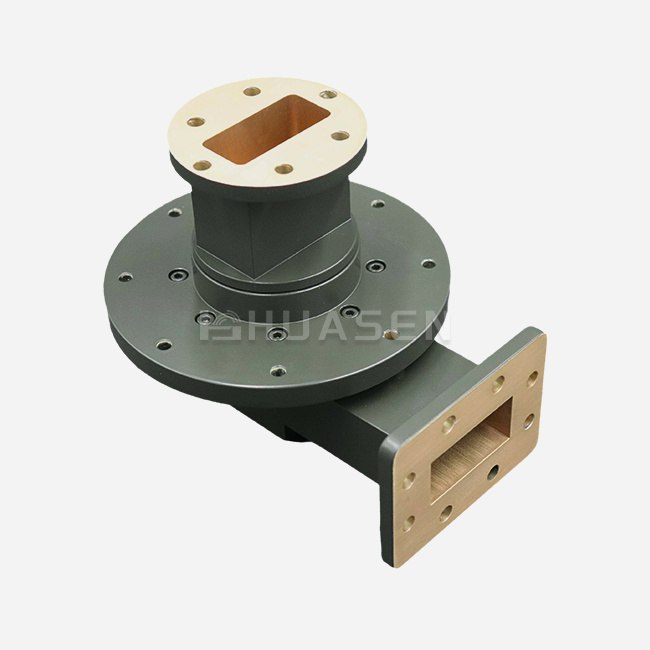
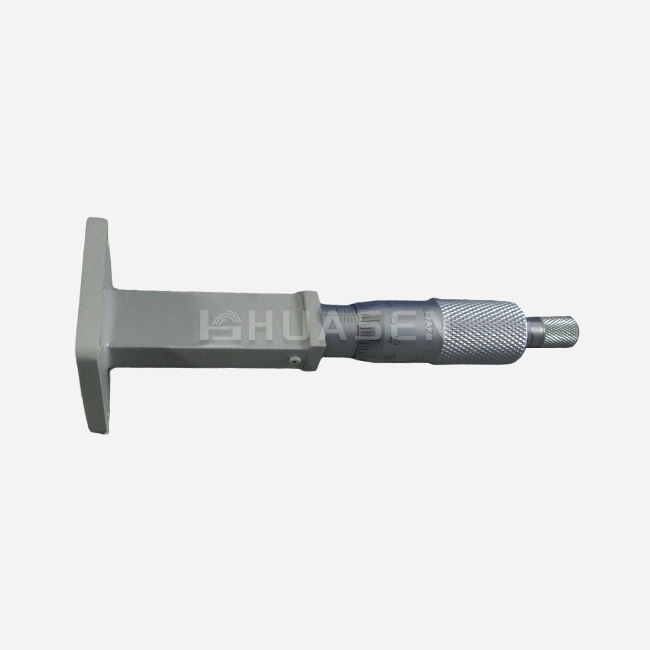
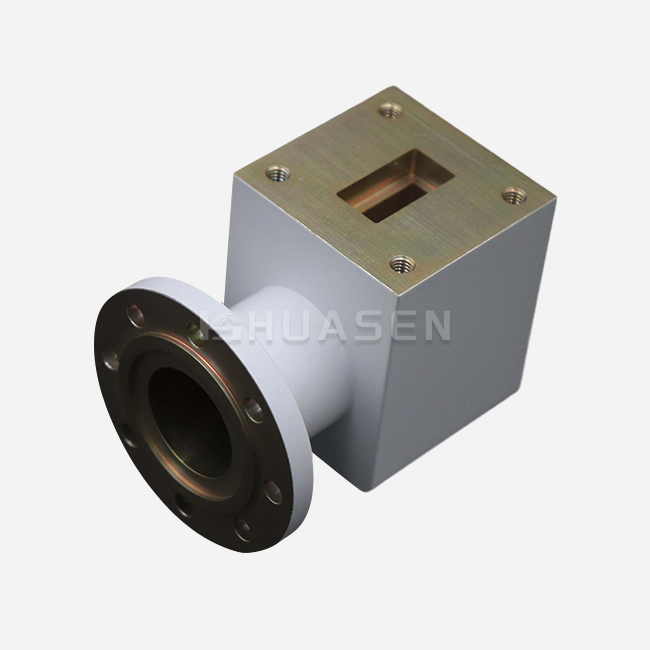
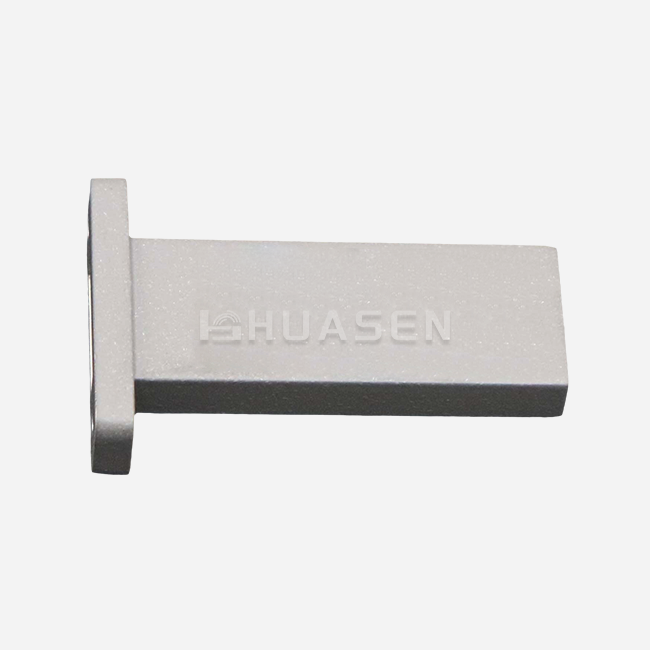
The most common type is an open-ended waveguide probe, which can tell the difference between two polarizations better than 35 dB and keep the phase stable over a wide bandwidth. Low radar cross-section profiles on these probes keep them from coupling with the AUT too much.
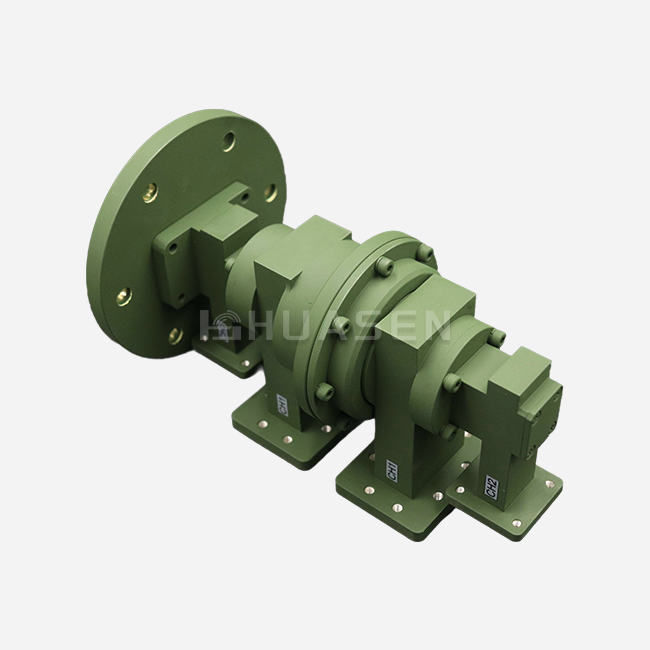
Dual-polarization probes pick up two different types of fields at the same time, which cuts measurement time in half for systems that need full polarimetric characterization. Broadband versions cover octave or multi-octave frequency ranges, which means that probe swaps are not needed during multi-band testing. This is a big plus for labs that are testing parts from L-band to Ka-band.
Vector network analyzers are directly connected to passive probes, which are made up of waveguide structures or resonant antennas that have been carefully machined. Active probes have low-noise amplifiers built in, which makes them more sensitive when testing low-power devices or at frequencies where cable losses are too high.
Comparing Near-Field Probes to Far-Field Measurement Solutions
Technical Distinctions and Trade-Offs
For far-field measurements, the distance between the two sources must be greater than 2D²/λ, where D is the antenna aperture diameter, and λ is the wavelength. At millimeter-wave frequencies, test ranges of tens of meters are needed for even moderately sized antennas. Multipath reflections, atmospheric absorption, and precipitation are some of the environmental factors that make testing outside more difficult.
Near-field probes get around these problems by working inside, in controlled environments. Stable temperature, controlled humidity, and RF shielding make sure that measurements can be taken again and again and can be traced back to international standards. The trade-off is that near-to-far-field transformations take more time to compute, but modern processors can do these calculations in real time.
Measurement uncertainty budgets are another difference. Near-field systems have to deal with probe positioning errors and truncation effects at scan boundaries, while far-field systems have to deal with antenna alignment errors and range reflections. These uncertainties can be reduced by following the IEEE 1720 guidelines and properly calibrating the antenna near-field measurement probe. This gives confidence intervals that are good for certification testing.
Evaluating Passive Versus Active Probe Architectures
Passive probes are easy to use and reliable, as they don't need any outside power and are very stable over time. Their frequency range goes from below GHz to below terahertz, and they use standard waveguide sections with return loss better than 1.2:1 VSWR. Because of these features, passive probes, along with the measurement probe, are the best choice for calibration labs that need measurements that can be traced back to NIST.
Active probes improve dynamic range by amplifying signals that are received before they are lost in transmission. This feature is helpful for figuring out what kind of antenna it is or when scanning large areas where cable runs cause a lot of signal loss. Managing batteries or external power supplies adds to the complexity, and measurement uncertainty analyses must take amplifier noise figures into account.
Industry-Leading Solutions
Probe portfolios from well-known companies cover frequencies from 400 MHz to 110 GHz. Their orthogonal feed designs (WOEWP series) provide cross-polarization isolation of more than 25 dB across waveguide bands. On the other hand, their coaxial symmetric dipole configurations (COECP) are good for low-frequency uses where space is limited.
Back reflections are kept to a minimum with waveguide termination feeds (WOEWPE), which is important for time-domain measurements and transient analyses. Dual-polarization probes (WOEWDP) make it easier to test circularly polarized satellite antennas and GPS/GNSS systems, which need to sample orthogonal fields at the same time for axial ratio verification.
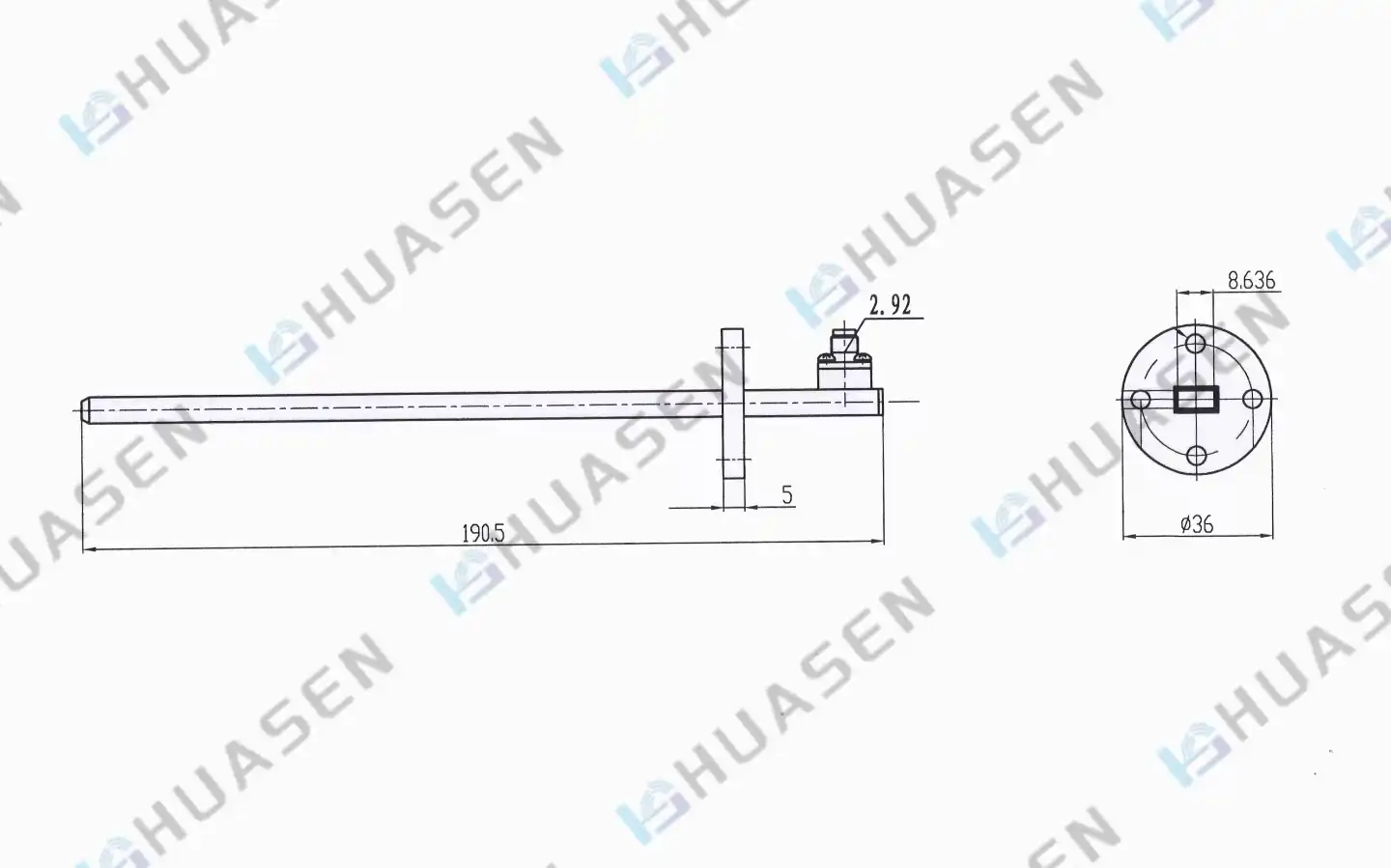
Standard connectors let these probes connect to each other. There are K-type connectors for frequencies up to 40 GHz, SMA-K variants for small installations, and precision 2.92 mm connectors that cover frequencies up to 50 GHz. Standardization like this makes it easier to connect to existing test equipment and makes sure that measurement chains from different vendors work together.
Procurement Guide: Acquiring the Right Antenna Near-Field Measurement Probe
Critical Selection Parameters
Coverage for frequencies is the most important thing. Base station designers who work with the FR1 and FR2 bands (below 6 GHz and 24–50 GHz) need probes that can work in both of these ranges without having to be switched out mechanically. Satellite integrators working in the Ka-band (26.5-40 GHz) or Q/V-bands need waveguide probes with very tight tolerances for size to make sure mode purity.
The measurement floor is directly affected by the sensitivity specifications of the antenna near-field measurement probe. Probes with low-loss dielectrics and optimized aperture designs can find sidelobe structures 60–70 dB below the main beam. This is important for radar systems that need to suppress sidelobes very strongly to get rid of clutter.
Cross-polarization discrimination affects how well dual-polarized and circularly polarized systems can measure things. Specifications greater than 30 dB across operational bandwidths keep orthogonal field components from messing up co-pol measurements. This keeps data integrity for applications that need it, like weather radar and SATCOM terminals that are sensitive to polarization.
In test chambers with limits, mechanical form factors are important. Probes with thin profiles are less likely to cause blockages, and probes with precision mounting interfaces make sure that the position is always the same. Robotic scanner payloads and positioning accuracy are affected by weight, especially in spherical scanning systems that collect data quickly.
Budgeting and Volume Purchasing
The prices are different depending on the frequency range, bandwidth, and level of customization. Broadband probes that can work with both single and dual-polarization frequencies may cost a lot more than standard waveguide probes that only work with one band. OEMs and system integrators can get volume discounts from manufacturers or authorized distributors when they buy a lot of probes for parallel test stations.
Lifecycle costs go beyond the cost of the initial purchase. Total ownership calculations should include the cost of calibration services, which are usually needed once a year for lab-grade probes. High-throughput testing facilities can plan their budgets better with the help of extended warranty programs that cover mechanical damage or connector wear.
Ordering Channels and Customization
When you buy directly from manufacturers, you can get engineering help while the specifications are being made. Technical sales teams work with customers to make probe designs that fit non-standard frequency allocations, special environmental needs, or unique interface requirements. This path works well for R&D labs that are making new antenna architectures and need custom diagnostic tools.
Authorized distributors make it easier to ship standard catalog items by keeping regional stock on hand and shipping quickly. They also combine probes, positioners, absorbers, and software from different vendors into one package, which makes the buying process easier for turnkey chamber installations.
Lead times for stock items are a few weeks, while lead times for custom-engineered probes with proprietary features are a few months. By sharing project timelines early on, manufacturers can set aside production space and make sure that delivery times work with chamber commissioning schedules.
Best Practices and Future Trends in Antenna Near-Field Measurements
Optimizing Measurement Accuracy
Controlling the environment is the basis of accurate diagnostics. Changes in temperature cause changes in the sizes of both the measurement probe and the AUT, which leads to phase errors. Keeping the temperature of the chamber stable within ±2°C helps keep measurements accurate. Controlling humidity keeps millimeter-wave parts from condensing when they are working at very low temperatures or in tests that change the temperature of the parts.
Long-term accuracy is ensured by regular calibration against standards that can be tracked. Checking the phase centers and gain patterns of an antenna near-field measurement probe every three months with reference antennas finds drift from handling or exposure to the environment. Customers who need test reports that are ISO 17025 certified will have more faith in you if you keep track of your calibration history.
Strong file management and version control for measurement configurations are examples of data integrity practices. Along with RF data, automated scanning systems should record environmental factors like temperature, humidity, and positioning errors. This lets corrections be made after processing and gives certification bodies a way to check the data.
Emerging Technological Advancements
Using artificial intelligence speeds up the defect diagnosis process by spotting unusual field distributions that could be signs of manufacturing flaws or assembly mistakes. With machine learning models trained on historical datasets, antenna performance can be predicted from partial scans, which cuts down on test time without losing any of the information.
As things get smaller, near-field diagnostics can be used for on-wafer antenna probing and testing at the package level. Chip-scale antennas for 6G research, IoT devices, and imaging sensors are made up of micro-probes that work above 100 GHz. These changes make advanced diagnostics available in more places than just RF labs, like semiconductor factories and contract manufacturers.
The development of multi-band probes addresses the growing number of frequency allocations. Single instruments that cover the C-band to the W-band eliminate the need for a lot of different instruments in laboratories that serve a wide range of customers. Real-time bandwidth adaptation is possible with reconfigurable probe arrays that use MEMS switching or electronic tuning, but this technology is still being studied.
Parallel measurement architectures, in which probe arrays sample multiple points at the same time, are an improvement on automated scanning. This parallelism cuts down on the time it takes to acquire electrically large antennas, which is a big help for aerospace companies that have to qualify satellite payloads on short notice.
Conclusion
Near-field measurement probes have changed the way RF diagnostics is done by making it possible to get lab-level accuracy in a reasonable amount of time and space. Their ability to describe large MIMO arrays, satellite reflectors, and phased arrays without needing long outdoor ranges directly solves the problems that telecom companies, aerospace contractors, and defense integrators face in their daily work. As wireless systems move toward higher frequencies and more complex architectures, the antenna near-field measurement probe will remain an essential tool in the RF engineering community because of its accuracy, efficiency, and adaptability.
FAQ
1. How do near-field probes improve RF diagnostics compared to far-field methods?
Near-field probes measure electromagnetic field distributions at close range. This lets tests be done in small, soundproof rooms, no matter how big the antenna is. Because of this closeness, there is no need for outdoor ranges that are kilometers long, and the spatial resolution is also better. The method finds small problems, like failed elements in phased arrays, that far-field measurements average over the whole aperture, which could hide important problems.
2. What criteria determine selection between passive and active probe designs?
Passive probes are best for uses that need high stability, a large bandwidth, and NIST-traceable calibration for certification testing. Active versions of the antenna near-field measurement probe are more sensitive because they have built-in amplification. This is helpful for low-power devices, long cable runs, or measurements at frequencies where transmission line losses lower signal-to-noise ratios. The decision is also affected by the budget and the difficulty of the calibration.
3. Can manufacturers provide customized probe solutions for specialized frequencies?
Engineers from reputable suppliers can make probes that work with non-standard frequency assignments, special polarization schemes, or harsh environmental conditions. Customization includes making mechanical interfaces, connector types, and form factors that fit certain test fixtures. Including technical sales teams early on in the planning process makes sure that the project is a good fit and that lead times for custom solutions are reasonable.
Partner with Huasen Microwave for Precision RF Diagnostics
Huasen Microwave Technology makes near-field measurement tools that are trusted by research institutions, aerospace contractors, and leaders in telecommunications around the world. Our wide range of probes, which includes orthogonal feed (WOEWP), waveguide termination feed (WOEWPE), dual-polarization (WOEWDP), and broadband variants (WBOEWP), works from 0.49 GHz to 112 GHz and has cross-polarization isolation of more than 25 dB. As a well-known company that has been making Antenna Near Field Measurement Probe solutions for thirty years, we can give your projects the technical support, calibration data, and custom engineering they need. Contact our team at sales@huasenmicrowave.com to talk about your specific diagnostic needs, get more information about our products, or set up a time to see them in action. We can speed up the time it takes to develop antennas by giving you accurate, high-performance measurement tools.
References
1. Balanis, Constantine A. Antenna Theory: Analysis and Design. 4th ed. Wiley, 2016.
2. Hansen, Jesper E., ed. Spherical Near-Field Antenna Measurements. IET Electromagnetic Waves Series, 1988.
3. IEEE Standard 1720-2012. IEEE Recommended Practice for Near-Field Antenna Measurements. Institute of Electrical and Electronics Engineers, 2012.
4. Joy, Edward B., and David T. Paris. "Spatial Sampling and Filtering in Near-Field Measurements." IEEE Transactions on Antennas and Propagation 20.3 (1972): 253-261.
5. Yaghjian, Arthur D. "An Overview of Near-Field Antenna Measurements." IEEE Transactions on Antennas and Propagation 34.1 (1986): 30-45.
6. Newell, Allen C., and Gregory F. Hindman. "Quantifying the Effect of Position Errors in Planar Near-Field Measurements." AMTA Symposium Proceedings, 2007.
Send Inquiry