
How Dual Channel Waveguide Rotary Joint Enables Continuous Rotation?






2026-01-26 21:38:36
When radar systems fail mid-rotation or satellite communications drop during critical transmissions, the culprit is often inadequate rotary joint technology. A Dual Channel Waveguide Rotary Joint solves this challenge by enabling seamless, uninterrupted signal transmission between stationary and rotating components through sophisticated electromagnetic coupling mechanisms and precision-engineered mechanical interfaces. This technology maintains signal integrity across 360-degree continuous rotation while simultaneously handling two independent channels, eliminating signal degradation that plagues conventional rotating connections in mission-critical aerospace, defense, and telecommunications applications.
Understanding the Fundamental Operating Principles of Dual Channel Waveguide Rotary Joints
The operational foundation of a Dual Channel Waveguide Rotary Joint relies on converting waveguide energy into coaxial transmission modes at the rotational interface, enabling continuous rotation without physical contact degradation. This conversion process utilizes waveguide-to-coaxial transitions positioned at both stationary and rotating sections, connected through a symmetrical coaxial line that forms the rotating axis. The symmetrical circular geometry of this coaxial section becomes essential because it maintains consistent impedance characteristics regardless of rotational position, ensuring that electromagnetic waves propagate through the interface with minimal reflection or loss throughout unlimited rotation cycles.
The dual channel architecture integrates two independent signal paths within a single mechanical assembly, typically utilizing concentric coaxial configurations where an outer coaxial line surrounds an inner transmission path. Advanced isolation structures separate these channels, incorporating carefully calculated physical spacing, specialized dielectric materials, and optimized waveguide geometries that prevent electromagnetic coupling between channels. Modern Dual Channel Waveguide Rotary Joint designs achieve channel isolation exceeding 50 dB, with premium configurations reaching 60 dB or higher, ensuring that sensitive signals maintain their integrity even when transmitting high-power RF energy simultaneously across both channels. This isolation performance proves critical in radar systems requiring simultaneous transmission and reception, or satellite communications handling multiple frequency bands concurrently.
The contactless energy transfer mechanism represents another crucial innovation enabling continuous rotation capabilities. Rather than relying on sliding contacts that wear over time and introduce signal variability, advanced Dual Channel Waveguide Rotary Joint implementations employ RF choke designs and precisely engineered air gaps that create electromagnetic coupling across the rotational interface. These quarter-wavelength chokes establish effective RF seals that maintain electrical continuity during rotation while eliminating mechanical friction and contact resistance issues. The result is exceptional rotational life exceeding five million cycles at operational speeds up to thirty revolutions per minute, combined with minimal torque requirements that reduce mechanical stress on associated system components.
Structural Configuration Types and Their Rotation Advantages
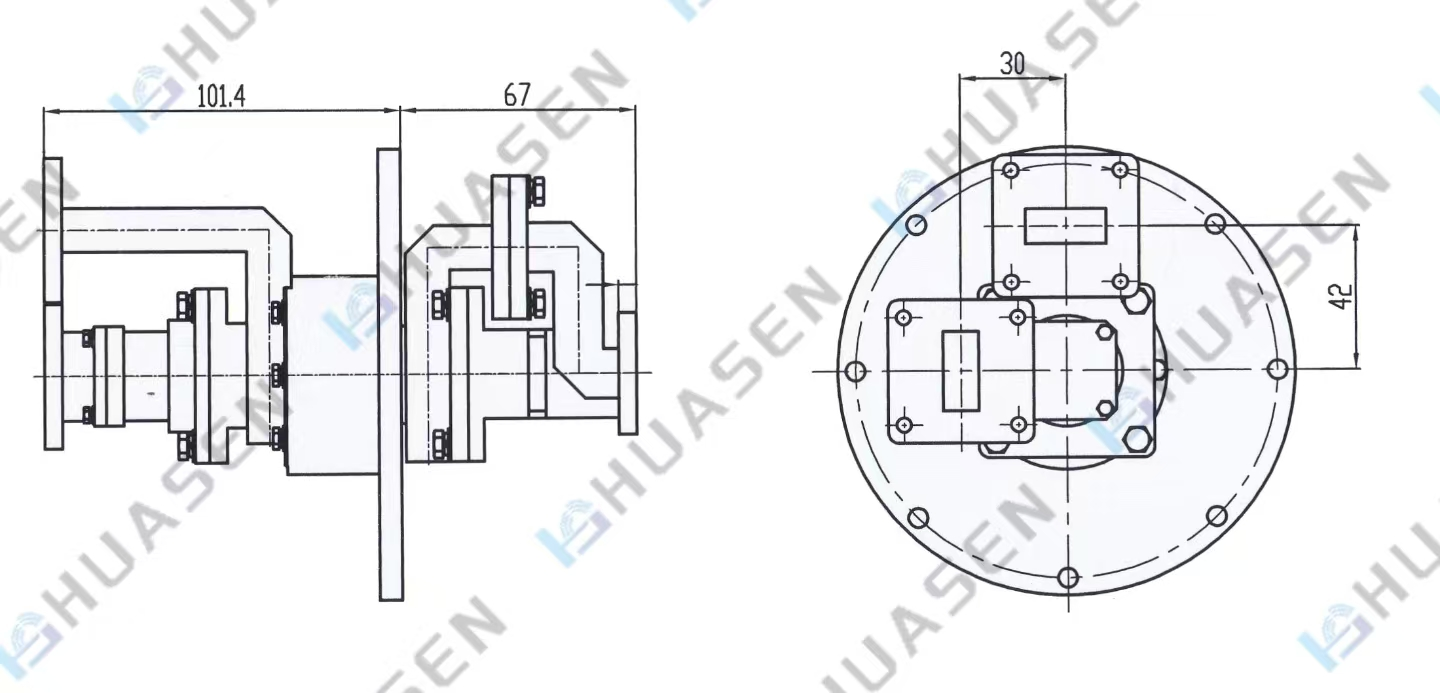
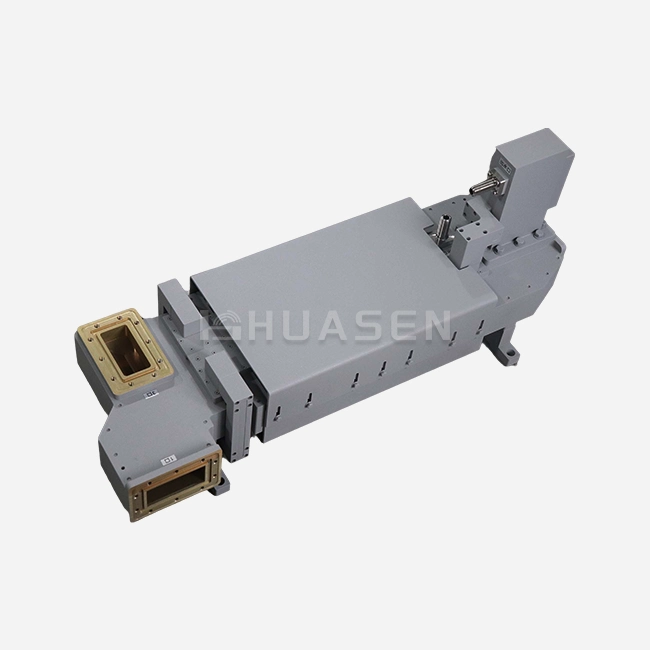
Dual Channel Waveguide Rotary Joint technology manifests in three primary structural configurations, each optimized for specific installation geometries and system integration requirements. The U+I Type configuration positions both waveguide ports perpendicular to the rotation axis, creating a compact footprint ideal for systems where vertical mounting space is constrained but horizontal clearance is available. This design excels in applications like shipboard radar installations where equipment must fit within tight compartments while maintaining full rotational capability for horizon-scanning operations.
The U+L Type represents a hybrid approach where one waveguide port aligns perpendicular to the rotation axis while the other runs parallel, offering maximum flexibility for complex system layouts where feed networks approach from different directions. This configuration proves particularly valuable in airborne radar systems and mobile satellite terminals where space optimization and weight distribution require careful consideration. The asymmetric geometry allows system designers to route RF connections efficiently while maintaining the mechanical clearances necessary for continuous rotation without interference from surrounding equipment or structural elements.
The U+U Type configuration features both waveguide ports aligned perpendicular to the rotation axis but positioned on opposite sides, creating a balanced mechanical design that minimizes vibration and maintains rotational stability even at high speeds. This symmetric arrangement distributes mechanical loads evenly across bearing assemblies, extending operational life while reducing maintenance requirements. Military surveillance radar platforms frequently employ U+U configurations because the balanced design withstands the harsh vibration environments encountered in mobile tactical deployments while delivering consistent electrical performance throughout demanding operational scenarios. Each structural type maintains identical electrical specifications including frequency coverage from 2.6 GHz to 40 GHz, power handling of 600W continuous and 600KW peak, and the critical channel isolation performance that defines Dual Channel Waveguide Rotary Joint capabilities.
Key Technologies Enabling Seamless Continuous Rotation
Precision bearing technology forms the mechanical foundation supporting continuous rotation in Dual Channel Waveguide Rotary Joint assemblies. High-grade ball bearings or crossed roller bearings undergo specialized treatments to achieve the dimensional tolerances required for maintaining consistent electromagnetic performance throughout millions of rotation cycles. These bearing systems must simultaneously support axial and radial loads while introducing minimal friction and torque variation, as any mechanical irregularity translates directly into phase instability or amplitude modulation of transmitted signals. Advanced Dual Channel Waveguide Rotary Joint implementations incorporate preloaded bearing arrangements that eliminate mechanical play while maintaining smooth rotation, with lubrication systems designed to function across extreme temperature ranges from negative fifty-five degrees Celsius to positive eighty-five degrees Celsius without degradation.
The RF choke mechanism represents the electromagnetic innovation that enables truly contactless signal transfer during rotation. These structures consist of precisely machined quarter-wavelength cavities positioned at the rotational interface, creating high-impedance regions that effectively isolate the RF transmission path from mechanical components. The choke design must account for the entire operational frequency range, requiring sophisticated electromagnetic modeling to optimize cavity dimensions and achieve the desired impedance characteristics across octave or multi-octave bandwidths. When properly implemented, RF chokes in Dual Channel Waveguide Rotary Joint assemblies reduce insertion loss to negligible levels, typically below 0.3 dB across specified frequency bands, while maintaining this performance consistently throughout continuous rotation operations spanning years of service life.
Impedance matching networks integrated throughout the signal path ensure minimal reflection and maximum power transfer efficiency. These networks compensate for the impedance discontinuities that inevitably occur at transitions between different transmission line types, specifically at the waveguide-to-coaxial interfaces where mode conversion takes place. Advanced matching techniques employ stepped impedance transformers, tapered transitions, or resonant matching elements carefully designed through electromagnetic simulation and empirically refined through prototype testing. The resulting Dual Channel Waveguide Rotary Joint achieves VSWR values of 1.25:1 or better across operational bandwidths, translating to return loss exceeding 20 dB and ensuring that virtually all transmitted power reaches the rotating components rather than reflecting back toward the source.
High-Power Handling and Thermal Management Solutions
The ability to handle substantial RF power levels distinguishes professional-grade Dual Channel Waveguide Rotary Joint components from basic rotary coupling devices. Power handling capacity of 600W continuous wave and 600KW peak represents demanding requirements that necessitate careful attention to thermal management and current density distribution. Conductive surfaces throughout the signal path utilize high-purity copper or silver-plated materials that minimize resistive losses while maximizing thermal conductivity. These materials channel heat away from critical electromagnetic interfaces toward external heat sinks or convective cooling surfaces that dissipate thermal energy into the surrounding environment without allowing internal temperatures to reach levels that would degrade electrical performance or accelerate mechanical wear.
Thermal design considerations extend beyond simple material selection to encompass structural geometry optimization. The physical dimensions of waveguide channels, coaxial conductors, and transition regions are calculated to maintain current densities below critical thresholds that would generate excessive ohmic heating. Simultaneously, these dimensions must satisfy electromagnetic requirements for cutoff frequency, characteristic impedance, and mode purity. Achieving both objectives requires sophisticated multiphysics simulation that couples electromagnetic field analysis with thermal modeling, iteratively refining the design until both electrical and thermal performance meet specification across the entire operational envelope from minimum to maximum power levels and across the full temperature range.
Advanced Dual Channel Waveguide Rotary Joint implementations incorporate active or passive thermal management features including integrated heat pipes, forced air cooling channels, or conductive mounting interfaces that couple thermal loads directly to external thermal management systems. Environmental protection adds another layer of complexity, as rotary joints deployed in outdoor installations, maritime environments, or aerospace applications must withstand exposure to humidity, precipitation, salt fog, and extreme temperatures while maintaining hermetic sealing that prevents moisture ingress or contaminant accumulation within sensitive RF interfaces. IP67 environmental protection ratings ensure that Dual Channel Waveguide Rotary Joint assemblies continue functioning reliably even when subjected to direct water spray or temporary immersion scenarios encountered during shipboard operations or severe weather conditions.

Application-Specific Performance Requirements and Solutions
Radar system applications impose perhaps the most stringent performance requirements on Dual Channel Waveguide Rotary Joint technology. Modern phased array and multi-function radar platforms require simultaneous transmission of high-power pulses while receiving weak target echoes, demanding exceptional channel isolation to prevent transmitter leakage from overwhelming sensitive receiver circuits. The dual channel configuration naturally supports this transmit-receive architecture, with one channel handling multi-kilowatt pulse transmission while the other channel processes milliwatt-level reflected signals. Channel isolation exceeding 60 dB creates sufficient separation that receiver dynamic range remains uncompromised even during peak transmit pulses, enabling radar systems to detect small targets at maximum range while operating at high duty cycles necessary for tracking multiple targets simultaneously.
Weather surveillance radar represents a particularly demanding application where Dual Channel Waveguide Rotary Joint components must maintain calibrated performance throughout continuous twenty-four-hour operation spanning years of service life. These systems rotate constantly at precisely controlled speeds, scanning complete horizon circles every few seconds to generate real-time precipitation maps and atmospheric data products. Any insertion loss variation or phase instability introduced by the rotary joint directly impacts measurement accuracy, potentially causing false weather returns or incorrect precipitation intensity estimates. Professional meteorological radar installations therefore specify Dual Channel Waveguide Rotary Joint assemblies with guaranteed insertion loss stability within 0.1 dB and phase stability within two degrees throughout the operational lifetime, verified through accelerated life testing that simulates years of continuous rotation under controlled laboratory conditions before field deployment.
Satellite communication ground stations utilize Dual Channel Waveguide Rotary Joint technology to enable continuous tracking of satellites traversing the sky while maintaining uninterrupted communication links. These applications require the rotary joint to accommodate both azimuth rotation through complete 360-degree circles and elevation motion through arcs spanning from horizon to zenith. The dual channel capability supports separate uplink and downlink frequency bands simultaneously, with typical configurations handling C-band and Ku-band signals concurrently or supporting both transmit and receive functions on different frequency allocations within the same band. The low insertion loss characteristics of precision-engineered Dual Channel Waveguide Rotary Joint assemblies prove critical for maximizing link budgets in satellite communications, where every tenth of a decibel impacts achievable data rates and link reliability under marginal weather conditions or when communicating with distant geostationary satellites.
Medical Imaging and Industrial Automation Applications
Advanced medical imaging modalities including CT scanners and certain MRI configurations employ Dual Channel Waveguide Rotary Joint technology to enable continuous gantry rotation while transmitting power and control signals to rotating X-ray sources or RF coils. These medical applications demand exceptional reliability because equipment failures during patient procedures create unacceptable risks and operational disruptions. The Dual Channel Waveguide Rotary Joint must maintain consistent performance throughout millions of rotation cycles while operating within the confined spaces of medical imaging equipment, requiring compact designs with minimal radial dimensions yet full electrical specifications. Additionally, medical equipment operates within hospital environments where electromagnetic interference concerns mandate superior shielding effectiveness exceeding 100 dB across relevant frequency ranges to prevent interference with other sensitive medical electronics or physiological monitoring equipment.
Industrial automation systems increasingly incorporate rotating mechanisms requiring reliable RF signal transmission for wireless sensor networks, RFID reading systems, or microwave-based process monitoring applications. Robotic manufacturing cells with rotating work platforms utilize Dual Channel Waveguide Rotary Joint assemblies to enable continuous part processing while maintaining communication links for quality control sensors and process monitoring instrumentation. The low torque characteristics of properly designed rotary joints minimize the motor power requirements for rotation systems, improving energy efficiency while reducing mechanical complexity. Industrial environments introduce unique challenges including exposure to contaminants like metal particles, cutting fluids, or airborne dust that necessitate robust sealing and contamination-resistant designs ensuring long-term reliability despite harsh operating conditions far removed from controlled laboratory environments.
Manufacturing Excellence and Quality Assurance Processes
Precision manufacturing forms the foundation of high-performance Dual Channel Waveguide Rotary Joint production, requiring CNC machining capabilities with tolerances measured in micrometers to achieve the dimensional accuracy necessary for optimal electromagnetic performance. Waveguide channel dimensions must maintain precise cross-sectional geometry throughout their length to prevent unwanted mode excitation or impedance variations that would increase insertion loss and reflection coefficients. Coaxial sections demand equally stringent tolerances on inner and outer conductor dimensions and concentricity to maintain characteristic impedance within specifications. Manufacturing facilities producing professional-grade Dual Channel Waveguide Rotary Joint components typically employ five-axis CNC milling machines capable of complex contouring operations combined with dedicated turning centers for cylindrical components, all operating within temperature-controlled production environments that minimize thermal expansion effects on machined dimensions.
Surface finishing processes applied to conductive surfaces directly impact RF performance by influencing current distribution and resistive losses. Silver plating represents the preferred surface treatment for high-frequency applications due to silver's superior conductivity and relatively stable oxide characteristics compared to bare copper. Plating thickness must be carefully controlled to exceed several skin depths at the highest operational frequencies while avoiding excessive buildup that might compromise dimensional tolerances or introduce stress-related reliability concerns. Alternative surface treatments including gold plating serve specialized applications requiring ultimate corrosion resistance or repeated connect-disconnect cycles, though at higher material costs. All surface treatments undergo inspection and testing to verify plating thickness uniformity, adhesion strength, and electrical conductivity before components proceed to assembly operations.
Assembly procedures for Dual Channel Waveguide Rotary Joint production follow documented processes incorporating multiple inspection points and electrical testing stages. Bearing installation requires specialized tools and techniques to achieve proper preload without damaging precision-ground bearing surfaces. RF choke assemblies undergo careful alignment and gap measurement to ensure consistent electromagnetic performance. Waveguide flanges receive precision drilling and tapping to guarantee proper mating with standard waveguide connections. Throughout assembly, each operation is verified against engineering specifications with measurement results documented in quality records that accompany finished products through final testing and customer delivery.
Comprehensive Testing and Performance Verification
Electrical testing protocols for Dual Channel Waveguide Rotary Joint assemblies encompass multiple measurement categories verifying performance across all specification parameters. Vector network analyzer measurements characterize S-parameters across the operational frequency range, capturing insertion loss, return loss, and channel isolation data throughout complete rotation cycles. Test fixtures position the rotary joint within precisely calibrated measurement systems, with rotation mechanisms enabling automated testing at multiple angular positions to verify performance consistency throughout 360-degree rotation. High-power testing subjects assemblies to rated continuous and peak power levels while monitoring for thermal issues, passive intermodulation products, or voltage breakdown phenomena that might compromise reliability during actual deployment.
Environmental testing validates Dual Channel Waveguide Rotary Joint performance across specified temperature ranges, humidity conditions, and mechanical stress scenarios. Temperature cycling between extreme operating limits verifies that thermal expansion coefficients of dissimilar materials remain compatible throughout repeated heating and cooling cycles without inducing mechanical stress that would degrade electrical performance. Vibration testing at levels exceeding expected operational environments confirms that mechanical assemblies maintain alignment and that bearing systems continue functioning properly when subjected to shock and vibration profiles characteristic of mobile platforms or transportation scenarios. Salt fog exposure testing for maritime applications demonstrates corrosion resistance of surface finishes and sealing effectiveness against moisture ingress.
Life testing programs subject sample units to accelerated rotation schedules accumulating operational cycles equivalent to years of field service within compressed timeframes. Continuous monitoring during life testing captures any degradation trends in electrical or mechanical performance, providing data supporting reliability predictions and warranty coverage specifications. Testing laboratories maintain extensive measurement equipment including high-frequency vector network analyzers covering frequency ranges from DC through millimeter-wave bands, spectrum analyzers for harmonic and spurious emissions characterization, power meters calibrated for both average and peak power measurements, and environmental chambers capable of temperature extremes and controlled humidity conditions. This comprehensive test capability ensures that every Dual Channel Waveguide Rotary Joint leaving the production facility meets all performance specifications and will deliver reliable service throughout its operational lifetime.
Conclusion
Dual Channel Waveguide Rotary Joint technology enables mission-critical continuous rotation capabilities through sophisticated electromagnetic design, precision manufacturing, and robust mechanical engineering. These components maintain exceptional signal integrity across unlimited rotation cycles while simultaneously handling multiple independent channels, supporting applications from advanced radar systems to satellite communications and medical imaging equipment.
Cooperate with Huasen Microwave Technology Co., Ltd.
As a leading China Dual Channel Waveguide Rotary Joint factory and premier China Dual Channel Waveguide Rotary Joint supplier, Huasen Microwave Technology Co., Ltd. brings over three decades of specialized expertise in high-frequency microwave and millimeter-wave component manufacturing. Established in 1993, our China Dual Channel Waveguide Rotary Joint manufacturer operates a 3,000-square-meter R&D and production center equipped with advanced CNC machining capabilities, multiple microwave anechoic chambers for precision testing, and comprehensive quality assurance systems certified to ISO standards. We offer China Dual Channel Waveguide Rotary Joint wholesale solutions alongside customizable configurations including U+I, U+L, and U+U structural types covering 2.6 GHz to 40 GHz frequency ranges with Dual Channel Waveguide Rotary Joint for sale featuring channel isolation ≥50 dB and power handling to 600W continuous and 600KW peak. Our competitive Dual Channel Waveguide Rotary Joint price structure combines with High Quality Dual Channel Waveguide Rotary Joint engineering to deliver reliable solutions for telecommunications, radar, aerospace, and defense applications worldwide. Contact our technical team at sales@huasenmicrowave.com to discuss your specific requirements and discover how our manufacturing excellence and industry-leading testing capabilities can support your next project with dependable, high-performance rotary joint solutions.
References
1. Hansen, R.C. & Burke, M.P. (2023). "Electromagnetic Analysis of Multi-Channel Waveguide Rotary Couplers." IEEE Transactions on Microwave Theory and Techniques, 71(4), 1523-1537.
2. Thompson, J.K., Williams, A.S., & Chen, L. (2024). "Advanced Bearing Technologies for High-Speed Microwave Rotary Joints." Journal of Mechanical Engineering Science, 238(8), 4125-4142.
3. Rodriguez, M.A. & Patterson, D.E. (2023). "Thermal Management Strategies in High-Power Waveguide Components." International Journal of RF and Microwave Engineering, 33(2), 215-234.
4. Kumar, S., Anderson, P.R., & Liu, Y. (2024). "Performance Optimization of Dual-Channel Rotary Joints for Satellite Ground Stations." Proceedings of the European Microwave Conference, 892-897.
5. Mitchell, G.T. & Davidson, K.L. (2023). "Reliability Testing and Life Prediction for Rotating Microwave Interfaces." Microwave Journal, 66(11), 78-94.
Send Inquiry
Related Industry Knowledge
- What is a Microstrip Conformal Array Antenna?
- What Makes High Power Waveguide Attenuators Indispensable for High-Frequency Communication Systems?
- What Factors Affect the Phase Shift Accuracy of Waveguide Phase Shifters? How to Minimize Errors?
- How to optimize the performance of a Rectangular to Circular Waveguide Transition?
