Why Use a Corrugated Conical Horn Antenna as a Feed?






2026-06-24 21:05:00
The balanced HE11 hybrid mode, which results in uniform beam patterns with almost no cross-polarization, is produced by corrugated conical horn antennas, making them excellent feed elements. This one-of-a-kind feature gets rid of the pattern distortion that happens in smooth-walled horns, giving you better spillover efficiency and phase center stability over a wide range of bandwidths. Their rotationally uniform radiation properties make them essential for reflector systems that need the highest gain-to-noise temperature ratios and the least amount of sidelobe contamination in places like precision measurement and satellite communications.
Understanding the Corrugated Conical Horn Antenna
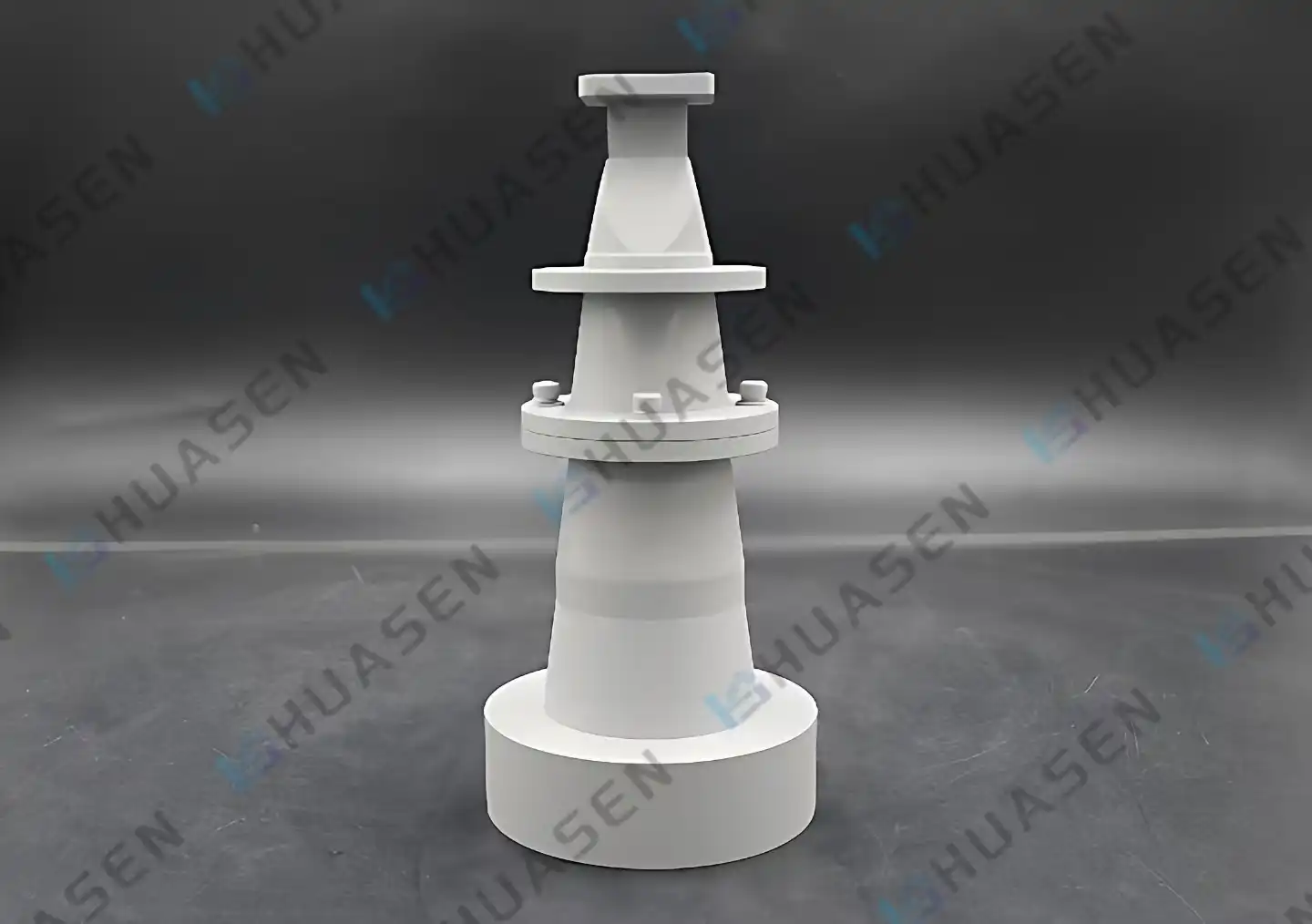
The corrugated conical horn antenna is a big step forward in the design of feed systems. Its inside is made up of precisely machined circumferential lines that are placed at exact intervals along the conical flare. The depth of these corrugations is usually between λ/4 and λ/2. They create a reactive border condition that changes the way electromagnetic waves travel compared to designs with smooth walls.
The Hybrid Mode Advantage
Traditional horn antennas have different transverse electric (TE) and transverse magnetic (TM) modes, which make the beam patterns irregular and the cross-polarization levels high. The corrugated structure helps the proper hybrid mode activation, especially the HE11 mode. In this mode, the beamwidths in both the E-plane and the H-plane are the same, which is called true circular symmetry. At Huasen Microwave, our designs show that the E-H plane beam normalization is accurate to within ±5° at the -15dB contour. This directly addresses the need for uniform radiation patterns across all azimuthal angles.
Frequency Coverage and Impedance Performance
These days, feed systems need to cover a lot of frequencies. From L-band frequencies around 1.76 GHz to millimeter-wave bands up to 300 GHz, corrugated feed horns work well. This ability to grow makes system design easier for programs that use more than one frequency reservation. The impedance matching is also very good, with voltage standing wave ratio (VSWR) values below 1.30 when the whole bandwidth is used. VSWR performance below 1.06 is reached through narrowband improvements, which ensure minimal reflected power and maximum transmission efficiency.
Structural Precision Matters
Due to the large-angle horn shape and precision corrugated slot structures, very close production tolerances are needed. Changes in slot width and depth greater than ±0.01mm can lower the clarity of the hybrid mode, which has a direct effect on the radiation performance. Standard circular waveguide measurements range from Φ2.388 mm through Φ3114.58 mm, so the interface is compatible with a wide range of systems. The electrical performance stays the same across the entire operating range.
Advantages of Using Corrugated Conical Horn Antennas in B2B Applications
Signal quality and system dependability are always a problem for organizations that set up satellite ground stations, radar sites, and telecommunications infrastructure. The choice of feed horn has a direct effect on the general performance of the system, making it an important purchase decision.
Superior Sidelobe Suppression
In reflector-fed systems, sidelobe levels show how much unwanted energy travels in the wrong way or picks up disturbance from sources nearby. Sidelobe levels in smooth-walled horns are usually about -20 to -25 dB below the main beam peak. Sidelobe reduction of corrugated feed horns is often higher than -35 dB, which makes it much harder for satellite earth stations to pick up noise from sources on Earth. This trait is necessary to keep the gain-to-noise temperature (G/T) performance high in detection systems and lower interference to nearby satellites while communication is going on.
Enhanced Cross-Polarization Isolation
In dual-polarized communication systems, channel capacity and signal-to-noise ratio are affected by the uniformity of the polarization. Cross-polarization isolation is often better than 35 dB across the working bandwidth, thanks to the balanced hybrid mode that is built into corrugated designs. Modern 5G backhaul lines and satellite phone networks use advanced modulation methods and frequency reuse techniques that work with this performance level. System designers gain from less crosstalk between orthogonal polarization channels, which lets them get better spectral efficiency without having to add more complexity to the filtering.
Phase Center Stability Across Bandwidth
The phase center is located where the circular wavefronts coming from the feed receiver seem to start. In wideband systems, changes in phase center with frequency cause focal point shifts in relation to the reflector shape. This makes the aperture less efficient and introduces beam pointing mistakes. Corrugated horn designs have very stable phase centers that stay in the same place within millimeters across octave bandwidths. This stability is very important for satellite communication nodes that need to point the beam precisely and for radio astronomy applications that depend on stable beam shapes for accurate measurements.
These benefits can be directly linked to real benefits for buying teams that are looking at corrugated conical horn antennas. Satellite companies can get better link rates without having to increase the size or power of the transmitters or reflectors. A test range makes quieter areas that are better for measuring radio patterns. Radio astronomy equipment can pick up weaker messages because there is less ground noise. The working reliability in difficult environmental conditions—from marine sites that are corroded by salt spray to aerospace platforms that have to deal with extreme temperatures—makes the value proposition even stronger for businesses that need stable performance over the long term.
Comparing Corrugated Conical Horns with Other Horn Antenna Types
Knowing the changes in performance between different types of horn antennas helps you make smart purchasing choices that meet the needs of your system.
Performance Against Smooth Conical Horns
Smooth conical horns are easy to make and have lower unit costs, which makes them a good choice for projects that need to stay within a budget. But because they don't have any corrugations, they can't handle the balanced hybrid mode. Pattern imbalance between E-plane and H-plane beamwidths can reach 20–30% in most designs, which makes reflector lighting less effective. Cross-polarization values drop to -20 dB or less, which makes them less useful in systems with two different polarizations. For uses like satellite tracking antennas, precision radar feeds, and measurement standards where pattern circularity and polarization purity have a direct effect on mission success, the corrugated conical horn antenna is worth the extra money because it works better electrically.
Pyramidal and Rectangular Horn Comparison
Pyramidal horns are most often used when linearly polarized radiation with a controlled beamwidth is needed in planes that are not parallel to each other. Because their rectangular aperture shape makes different E-plane and H-plane patterns, they can't be used for circular reflector lighting that needs even coverage. When the opening sizes are the same, the gain levels are about the same for both pyramidal and corrugated forms, but the pattern quality is very different. The spherical symmetry of the corrugated conical horn gets rid of the coma lobes and makes the light taper better, which means that the aperture is more efficient when feeding parabolic mirrors. The complexity of the system also works in favor of corrugated designs, since their rotating symmetry makes installation less sensitive to polarization alignment issues.
Impact on System Performance
System-level gains are caused by better pattern symmetry, fewer sidelobes, and better cross-polarization separation working together. When compared to similar systems with smooth-walled feeds, satellite earth stations with corrugated feeds usually have 0.5 to 1.5 dB better G/T performance. This improvement directly lowers the amount of power that the satellite needs, which lowers running costs or lets smaller, cheaper ground connections be used. Radar systems work better when the angle precision is better, and there is less clutter disturbance. Bigger quiet zones and better field uniformity are achieved by compact antenna test ranges. This lowers measurement error and allows testing of bigger devices.
How to Choose and Procure the Right Corrugated Conical Horn Antenna?
To choose the right feed horns, you need to carefully compare their technical specs to the needs of the application.
Critical Selection Parameters
The most important thing to think about is frequency matching. Make sure that the operating band matches the system's assignments and that the maker gives you measured radiation patterns for the whole frequency range. Gain needs come from figuring out the link price and the shape of the reflector. Higher gain feeds result in smaller beamwidths, which could leave large reflectors dark or cause too much spillover on small reflectors. To get the most out of an aperture, you need to fit the feed beamwidth to the reflector's f/D ratio. For parabolic dishes, you should aim for edge lighting of about -10 to -12 dB.
Dimensions have an effect on mechanical assembly. The total length, throat diameter, and aperture diameter all have to fit within the space envelopes that are available. Specifications for mounting interfaces, such as flange designs, waveguide compatibility, and connection standards, make sure that new equipment can connect to current systems correctly. Ratings for the surroundings are very important for operations that take place outside or in harsh conditions. Check that the temperature range, resistance to humidity, defense against corrosion, and ability to withstand shaking meet the requirements for placement. MIL-STD-810 environmental testing procedures are often required for military and aircraft use.
Supplier Evaluation Criteria
Manufacturers with a good reputation keep detailed technical records that include observed S-parameters, radiation patterns at different frequencies, and phase center location data. Before making big purchases, ask for sample pattern cuts and VSWR readings. Certification compliance shows that the product is made well and follows the rules. Check to see if the product has ISO 9001 quality control certification, RoHS compliance for European markets, and the right military standards for security uses.
During system integration, sellers are set apart by the level of technical help they offer. Having access to design help, electromagnetic modeling support, and custom modification services makes goods from catalogs much more valuable. Delivery times have an effect on project plans, especially for high-frequency designs that need special machining. Set clear standards for lead times and make sure that the supplier can meet your high-volume production needs if you plan to launch in stages.
Procurement Strategy Considerations
Different sellers and frequency bands have very different pricing systems. Millimeter-wave systems cost more because they have to be made with tighter precision. Ask for thorough quotes that include unit costs, tooling fees for unique designs, and schedules for bulk discounts. In addition to the buy price, the total cost of ownership includes work for integration, testing, verification, and upkeep throughout the product's lifecycle. Higher-quality feeds that work better with electricity and last longer in harsh environments often provide better long-term value, even if they cost more at first.
Customization needs often come up in specific apps. Manufacturers who offer modification services, such as custom flange patterns, specific polarization angles, built-in alignment features, or unique frequency improvements, give customers more options than standard stock items. Set up the ability to customize early on in the buying process to avoid delays or poor system performance for your corrugated conical horn antenna.
Maximizing Value Through Corrugated Conical Horn Antenna Integration
Integrating things correctly makes sure that feed systems work as expected for as long as they are used.
Installation Best Practices
The correctness of mechanical balance has a direct effect on how well a system works. Place corrugated feeds so that the phase center is exactly where the reflector focus point is. Misalignment of even a few millimeters causes phase mistakes across the lens, which lowers gain and makes sidelobes bigger. During assembly, use laser measuring tools and precise alignment fixtures. In linearly polarized systems, both polarization direction and orientation need to be taken into account. Before finalizing, make sure that the movement of the feed line is in line with the needed polarization angle.
To keep modes from getting mixed up, waveguide links need to be carefully thought out. Make sure the mating edges fit together flat, with no gaps or angles that aren't right. The right torque specs stop both under-tightening (which can damage the electrical contact) and over-tightening (which can bend the flange). Weather sealing keeps outdoor systems dry and stops water from getting in, which lowers the performance of dielectrics and speeds up rust.
Lifecycle Management Strategies
Inspection programs that are planned ahead of time find problems before they affect activities. A visual inspection can find physical harm, the start of rust, or loose mounting hardware. Periodic VSWR readings are used to check the electrical performance and show any decline that needs fixing. Protective coats on the outside should be kept up as directed by the maker. Internal areas that are silver-plated or gold-plated usually don't need much care, but they should be kept clean and free of rust and contamination.
Use provider support services to make operations last longer. As technology improves, many makers offer services like recalibration, refurbishment, and update options. Building ties with technical support teams makes it easier to solve problems quickly when they come up. Troubleshooting and future upgrades are easier when as-built setups, measured performance baselines, and upkeep records are written down.
Future-Proofing Infrastructure
The development of digital messaging technology keeps speeding up. By buying high-quality corrugated conical horn antennas that can handle a wide range of bandwidths, you can set up your infrastructure for future improvements in frequency sharing and modulation schemes. Because corrugated shapes have better electrical properties, they can meet new needs for faster data rates and stronger interference rejection. Longer service lives and technology update cycles are made possible by mechanical sturdiness. This maximizes return on investment across multiple system generations.
Conclusion
In conclusion, for uses requiring symmetric beam patterns, little cross-polarization, and excellent sidelobe suppression, corrugated conical horn antennas are the best feed option. In satellite communications, radar systems, and precision test environments, their balanced hybrid mode function gives them measured performance gains. The wide frequency range, high VSWR performance, and long-lasting outdoor durability meet important B2B buying needs in the defense, aerospace, and telecoms industries. By choosing these feed systems, businesses can stay ahead of the competition thanks to better signal quality, less interference, and long-term operating dependability. The investment is also worth it because the systems work better and cost less to own.
FAQ
Q1: What frequency ranges do corrugated conical horn antennas cover?
There is a very large frequency range for these feed horns, from 1.76 GHz to 300 GHz. The dimensions of the corrugation change equally with wavelength, so the electrical performance stays the same across all frequency ranges. Custom designs make certain bands work better for things like L-band satellite communications, X-band radar systems, Ka-band 5G backup lines, and millimeter-wave test equipment.
Q2: How do I determine the correct feed horn size for my reflector?
The feed horn beamwidth should match the f/D ratio of your reflector, which is the focal length divided by the diameter. The -10 dB beamwidth of the feed should shine on the edge of the reflector at a level 10 to 12 dB below the beam peak. This narrowing makes the opening work better while keeping spillover under control. Manufacturers list beamwidths for different frequencies, which lets you make the right choice based on the shape of your reflector.
Q3: Can corrugated horns withstand outdoor environmental conditions?
Good designs use materials and finishes that don't break down in bad weather. Make sure the maker tells you the right operating temperature ranges, humidity levels, and corrosion protection for the place where the product will be installed. Coatings that are made to prevent salt spray are useful for marine use. Designs that pass the MIL-STD-810 environmental tests show that they can handle the high and low temperatures, vibrations, and shocks that are common in aircraft and mobile systems.
Partner with Huasen Microwave for Superior Feed Solutions
Since 1993, Huasen Microwave has focused on making precise microwave and millimeter-wave parts. We have become a reliable maker of corrugated conical horn antennas for demanding uses in the defense, aerospace, and telecommunications industries. Because our engineering team is skilled at both electromagnetic modeling and precise manufacturing, they can deliver feed systems with measured performance data that confirms specs across the full working bandwidth. The basic product line covers frequencies from 1.76 GHz to 300 GHz, has a VSWR below 1.30 across the whole band, and offers customization services to meet the specific needs of each system. As part of quality control, coordinate measuring machines check the key corrugation shape, and full anechoic chamber patterns are fully characterized. Technical support includes everything from the first design meeting to long-term service support and help with integration. Get in touch with our applications engineering team at sales@huasenmicrowave.com to talk about your feed system needs and get thorough specs, measured performance data, and quotes that fit your project's timeline and budget.
References
1. Clarricoats, P.J.B. and Olver, A.D. (1984). Corrugated Horns for Microwave Antennas. London: Peter Peregrinus Ltd.
2. Granet, C., James, G.L., Bolton, R., and Moorey, G. (2004). "A Smooth-Walled Spline-Profile Horn as an Alternative to the Corrugated Horn for Wide Band Millimeter-Wave Applications." IEEE Transactions on Antennas and Propagation, 52(3), 848-854.
3. Love, A.W. (1976). "Some Highlights in Reflector Antenna Development." Radio Science, 11(8-9), 671-684.
4. Olver, A.D., Clarricoats, P.J.B., Kishk, A.A., and Shafai, L. (1994). Microwave Horns and Feeds. New York: IEEE Press.
5. Pisano, G., Maffei, B., and Ade, P.A.R. (2008). "Design and Testing of Corrugated Feedhorns for the CLOVER Experiment." Proceedings of SPIE, 7020, 70201H.
6. Thomas, B.M.A.C. (1978). "Design of Corrugated Conical Horns." IEEE Transactions on Antennas and Propagation, 26(2), 367-372.
Send Inquiry