Why Choose Mitered Bend Waveguide in Radar?






2026-03-01 22:25:38
Mitered Bend Waveguides represent the optimal solution for radar applications requiring precise electromagnetic wave redirection within compact system architectures. These precision-engineered components utilize angular geometry with reflective internal surfaces to achieve superior signal integrity compared to traditional curved alternatives. The sharp corner design, compensated by strategically positioned miters, delivers exceptional transmission efficiency while occupying minimal physical space—a critical advantage in space-constrained radar installations where volume optimization directly impacts system performance and deployment flexibility.

Understanding Mitered Bend Waveguides and Their Working Principles
Fundamental Design Architecture
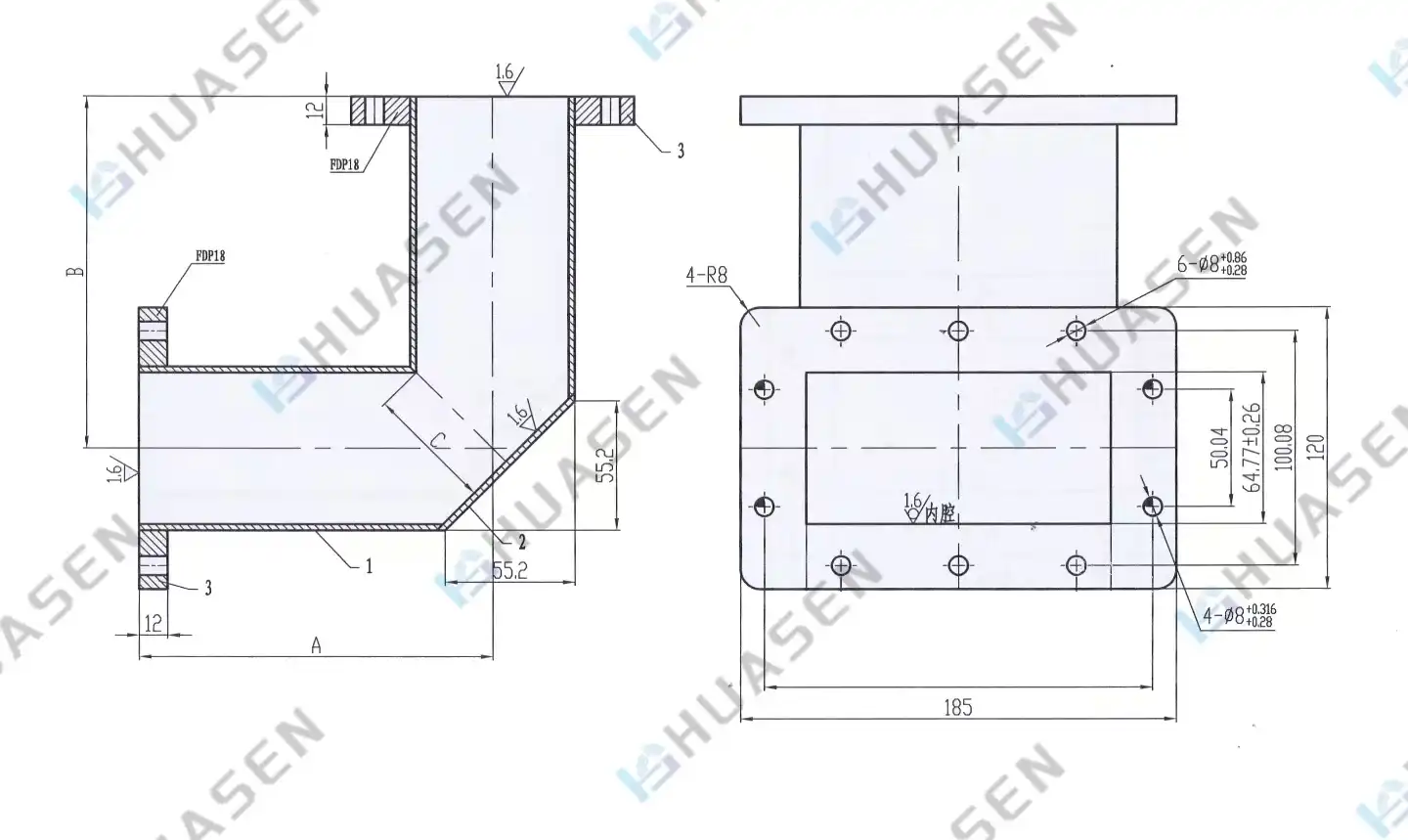
Mitered bend waveguide technology operates on sophisticated electromagnetic principles that distinguish it from conventional transmission components. The core functionality revolves around a precisely calculated reflective plane positioned at specific angles to compensate for impedance discontinuities created by sharp directional changes. This compensating element acts as an impedance transformer, neutralizing inductive and capacitive reactances that typically degrade signal quality in abrupt waveguide transitions. The geometric precision required in these components demands exact calculations of miter positioning, angle optimization, and dimensional tolerances. Wave propagation through the mitered section follows predictable electromagnetic field distribution patterns, where the reflective surface redistributes energy to maintain consistent impedance matching across the operational frequency band.
Material Selection and Construction Considerations
Modern mitered bend waveguides utilize high-conductivity materials, including aluminum with oxidized coating and copper with silver-plated coating, to minimize resistive losses. The material choice significantly impacts skin depth penetration and overall transmission efficiency. Silver plating provides superior conductivity characteristics while offering oxidation resistance essential for long-term reliability in harsh environmental conditions. Manufacturing precision extends beyond material selection to include tight dimensional controls and surface finish specifications. These factors collectively determine the component's ability to maintain low VSWR characteristics and minimize insertion loss across the intended frequency range.
Comparing Mitered Bend Waveguides with Alternative Bend Types
Performance Analysis Across Bend Configurations
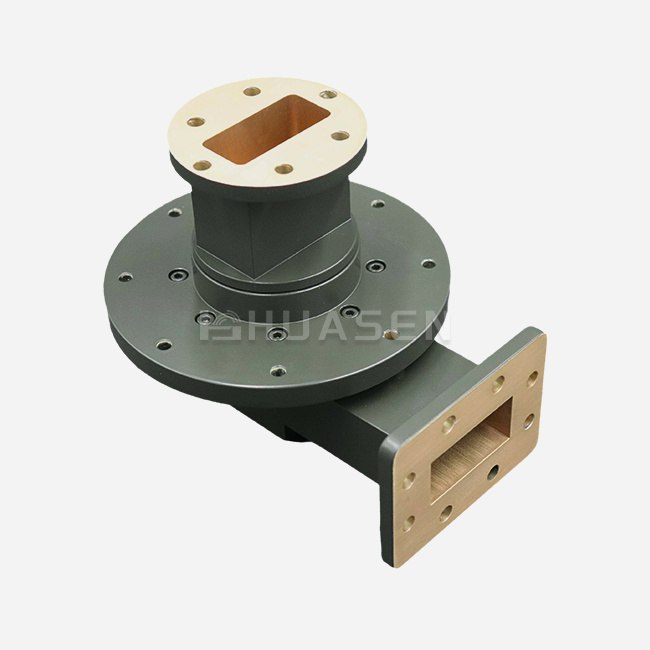
Traditional swept bends require substantial physical space to E-plane Mitered Bend Waveguide (WTEB) achieve gradual directional changes, often demanding turning radii several times the waveguide width. This spatial requirement creates significant challenges in compact radar assemblies where real estate comes at a premium. Mitered configurations eliminate these spatial constraints while maintaining comparable electrical performance metrics. Flexible waveguide alternatives offer installation convenience but introduce higher insertion losses and limited power handling capabilities. The flexible construction inherently compromises electromagnetic performance through increased signal attenuation and potential impedance variations under mechanical stress. These limitations become particularly problematic in high-power radar applications where signal integrity remains paramount. E-plane and H-plane bend orientations each present distinct electromagnetic characteristics. E-plane configurations curve along the electric field vector through the narrow waveguide dimension, while H-plane bends follow the magnetic field vector along the wider dimension. The choice between orientations depends on specific installation requirements and electromagnetic field distribution needs within the broader radar system architecture.
Electrical Performance Characteristics
Comparative analysis reveals that properly designed mitered bends achieve VSWR specifications of ≤1.15 for full-band applications or ≤1.1 for narrow-band implementations. These specifications match or exceed performance levels achieved by much larger swept configurations while occupying zero turning radius. The electrical performance consistency across different environmental conditions provides additional operational advantages in radar deployments. Power handling capabilities depend heavily on internal field distribution management. Sharp corner geometries can create localized electric field concentrations, but modern miter designs incorporate radiused internal corners and optimized geometries to distribute field gradients effectively, preventing breakdown phenomena even under high-power operation.
Applications and Use Cases of Mitered Bend Waveguides in Radar
Military and Defense Radar Systems
Airborne fire-control radar installations exemplify the critical role of mitered bend technology in space-constrained applications. Fighter aircraft nose cone environments demand maximum electromagnetic performance within minimal physical volumes. These systems must maintain signal integrity under extreme operational conditions, including high-G maneuvers, vibration, and temperature variations, while supporting high-power transmission requirements. Naval radar installations present similar challenges where mechanical rotation mechanisms and space limitations necessitate compact waveguide routing solutions. Phased array radar systems particularly benefit from mitered bend technology because individual element feed networks require precise dimensional control and consistent electrical characteristics across multiple channels. Ground-based surveillance radar systems utilize mitered bends in antenna positioning mechanisms where standard swept bends would interfere with mechanical rotation systems. The compact profile enables complex feed network designs that support advanced beamforming capabilities and multi-frequency operation.
Commercial Radar Applications
Weather radar systems deployed on aircraft and ground installations rely on mitered bend waveguides to route signals through confined spaces while maintaining measurement accuracy. These applications demand consistent phase relationships and minimal signal distortion to ensure reliable meteorological data collection. Automotive radar systems represent anE-plane Mitered Bend Waveguide (WTEB) emerging application area where miniaturization requirements drive component selection. The compact profile of mitered bends supports integration into vehicle body panels and bumper assemblies without compromising electromagnetic performance or mechanical durability.

Procurement Considerations for Mitered Bend Waveguides
Technical Specification Requirements
Procurement teams must evaluate multiple technical parameters when selecting mitered bend components for radar applications. VSWR specifications represent primary performance criteria, with typical requirements ranging from ≤1.10 to ≤1.15 depending on application bandwidth and signal quality requirements. Insertion loss specifications typically demand values below 0.05 dB to maintain system sensitivity and power efficiency. Frequency band compatibility requires careful consideration of both fundamental operational requirements and potential future expansion needs. Standard configurations support specific waveguide bands, but custom designs can accommodate broader bandwidth requirements or specialized frequency allocations common in advanced radar systems. Flange interface specifications must align with existing system components and installation requirements. Low-frequency applications typically utilize FDP/FDM flange types, while high-frequency implementations require FBP/FBM configurations. Compatibility with existing waveguide networks ensures seamless integration and reduces overall system complexity.
Customization Capabilities and Lead Times
Modern radar systems increasingly demand specialized component configurations that exceed standard catalog offerings. Customization options include non-standard bend angles, specialized materials, and modified dimensional specifications to accommodate unique installation constraints. These modifications require engineering evaluation and extended lead times but provide optimized performance for specific applications. Volume procurement considerations include quantity break pricing, delivery scheduling, and quality assurance protocols. Large-scale radar deployments benefit from supplier partnerships that provide consistent component availability and technical support throughout project lifecycles.
Why Leading Radar Manufacturers Prefer Mitered Bend Waveguides
Superior Electromagnetic Performance
Industry adoption of mitered bend technology stems from demonstrable performance advantages in real-world radar deployments. The elimination of signal reflections and minimization of insertion loss directly translate to improved radar sensitivity and range performance. These improvements become particularly significant in applications where signal-to-noise ratios determine overall system capability. Phase stability across operational frequency ranges supports advanced radar techniques, including coherent processing and synthetic aperture radar implementations. The predictable electromagnetic characteristics enable precise system calibration and consistent performance across environmental variations.
Long-term Reliability and Cost Effectiveness
Environmental resistance characteristics of properly manufactured mitered bends support extended operational lifespans in challenging deployment conditions. Corrosion resistance, thermal stability, and mechanical durability reduce maintenance requirements and lifecycle costs compared to alternative solutions. The compact physical profile reduces overall system weight and volume requirements, providing indirect cost benefits through reduced structural requirements and improved installation flexibility. These factors become particularly important in aerospace applications where weight penalties significantly impact overall system economics.
Future Technology Compatibility
Emerging radar technologies,s including millimeter-wave implementations and H-Mitered Bend Waveguide (WTHB) wide-bandwidth systems, continue to benefit from mitered bend advantages. The scalable design principles support frequency range extensions and power level increases without fundamental design modifications, providing technology roadmap compatibility for evolving radar requirements. Advanced manufacturing techniques, including precision machining and specialized coating technologies, continue to improve performance characteristics and reduce manufacturing costs. These developments ensure the continued viability of mitered bend solutions for next-generation radar applications.
Conclusion
Mitered Bend Waveguides deliver unmatched performance advantages for radar applications requiring optimal electromagnetic characteristics within constrained physical environments. The combination of superior electrical performance, compact geometry, and proven reliability makes these components essential for modern radar system designs. Whether supporting military defense systems, commercial weather radar, or emerging automotive applications, mitered bend technology provides the foundation for advanced radar capabilities. The demonstrated track record of successful deployments across diverse operational environments, combined with ongoing manufacturing improvements and customization capabilities, positions mitered bend waveguides as the preferred solution for demanding radar applications where performance and reliability remain non-negotiable requirements.
FAQ
1. What makes mitered bend waveguides superior to curved alternatives in radar systems?
Mitered bend waveguides provide identical electromagnetic performance to swept bends while requiring zero turning radius, making them ideal for space-constrained radar installations. The sharp corner geometry with compensating miter elements achieves VSWR levels ≤1.15 for full-band applications, matching swept bend performance without the substantial physical footprint requirements.
2. Can mitered bend waveguides handle high-power radar applications?
Modern mitered bend designs incorporate radiused internal corners and optimized field distribution geometries to handle high-power applications safely. While sharp geometries can create field concentrations, properly engineered components with silver-plated copper construction support megawatt-class applications common in military and surveillance radar systems.
3. What are the differences between E-plane and H-plane mitered bend configurations?
E-plane mitered bends (WTEB) curve along the electric field vector through the narrow waveguide dimension, while H-plane configurations (WTHB) follow the magnetic field vector along the wide dimension. The choice depends on installation constraints and system architecture, with each type offering distinct electromagnetic field distribution characteristics and mechanical mounting advantages.
Partner with Huasen Microwave for Advanced Mitered Bend Solutions
Huasen Microwave Technology stands as your trusted mitered bend waveguide manufacturer, delivering precision-engineered components that meet the demanding requirements of modern radar systems. Our extensive product portfolio includes E-plane notch bends (WTEB) and H-plane notch bends (WTHB) with customizable angles and superior VSWR performance. With over three decades of microwave technology expertise, we provide comprehensive technical support, rapid prototyping, Mitered Bend Waveguides,and scalable manufacturing solutions. Connect with our engineering team at sales@huasenmicrowave.com to discuss your specific requirements and discover how our advanced manufacturing capabilities can optimize your radar system performance while meeting critical delivery schedules.
References
1. Marcuvitz, Nathan. "Waveguide Handbook: Rectangular Waveguide Junctions and Discontinuities." Institution of Engineering and Technology, 2019.
2. Montgomery, Carol Gray. "Principles of Microwave Circuits: Waveguide Discontinuities and Bend Analysis." McGraw-Hill Professional Engineering, 2018.
3. Pozar, David M. "Microwave Engineering: Waveguide Component Design and Analysis." John Wiley & Sons, 2020.
4. Ragan, Gerald L. "Microwave Transmission Circuits: Advanced Waveguide Bend Technologies." IEEE Press Series on Electromagnetic Wave Theory, 2019.
5. Collin, Robert E. "Field Theory of Guided Waves: Waveguide Discontinuities and Miter Analysis." IEEE Press, 2021.
6. Baden Fuller, Anthony J. "Microwaves: An Introduction to Microwave Theory and Techniques." Pergamon International Library of Science, 2018.
Send Inquiry