Why Choose a Yagi Antenna for Directional Coverage?






2026-06-24 21:05:01
Using a Yagi antenna for linear coverage gives you the best signal focus, high gain, and interference avoidance, all of which are necessary for point-to-point communication links in tough industrial settings. RF energy is focused into a narrow beam by the Yagi-Uda design. This makes sure that signals can be sent reliably across VHF, UHF, and microwave bands. System designers, original equipment manufacturers, and procurement managers in radar, satellite, and telecommunications can use this antenna layout to get accurate signals at a low cost. The Yagi antenna is a tried-and-true way to get better directional performance in complex RF environments, whether you're building 5G backhaul networks, marine communication systems, or wireless test sets.
Understanding Yagi Antennas: Design Principles and Functional Benefits
The Core Architecture of Yagi-Uda Arrays
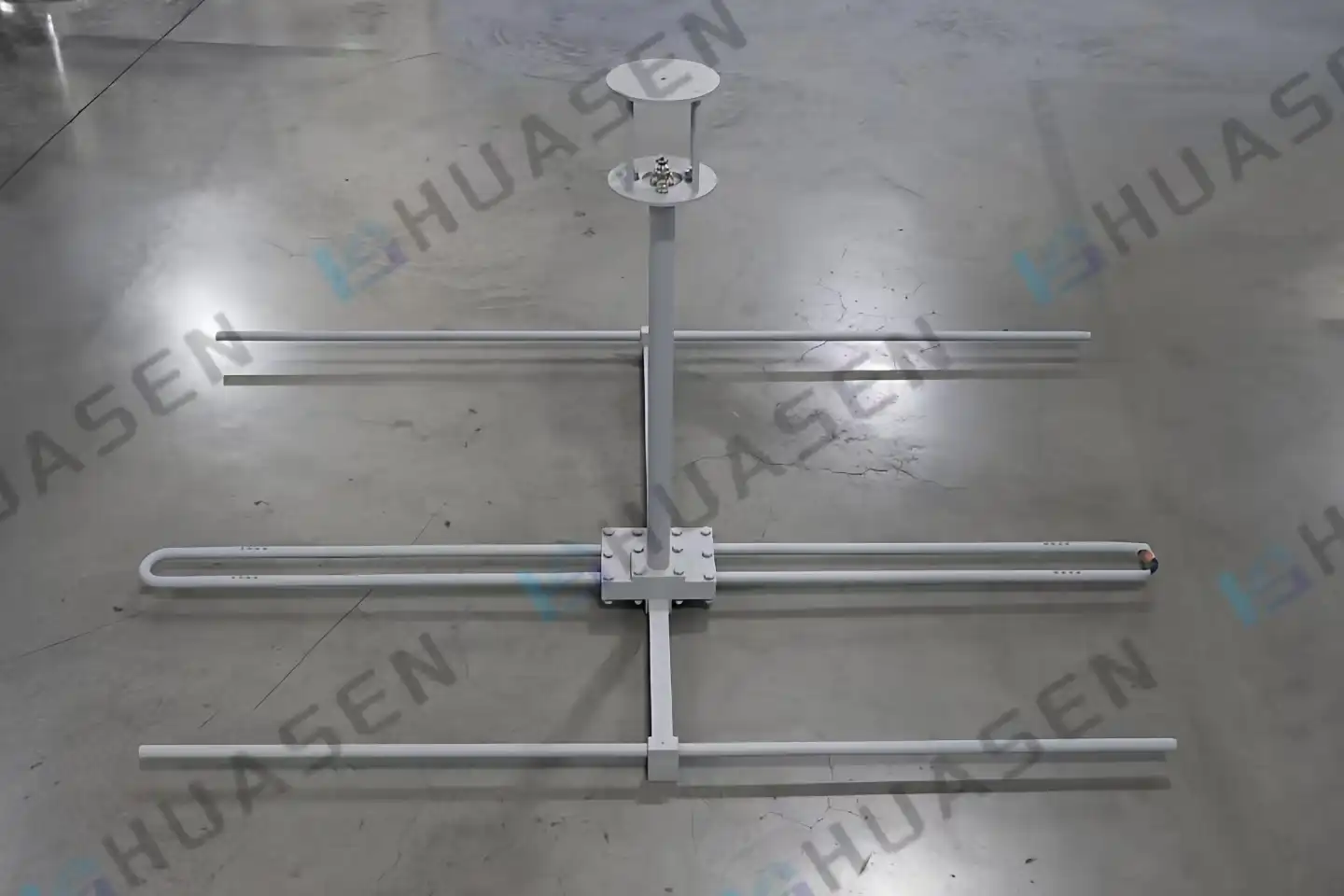
A driven element, a single reflector, and several directors arranged along a boom make up the Yagi antenna. It sends out directed radiation. The driven element sends or gets RF energy, the reflector sends messages forward, and the leaders focus the beam very tightly. This arrangement of parasitic elements makes high front-to-back ratios and focused gain without using active amplification. The Yagi design directs energy exactly where it's needed, lowering lost power and interference from unwanted directions. This is in contrast to omnidirectional dipoles, which send energy in all directions. While parabolic dishes have higher gain, they need to be placed more precisely and take up more space. Log-periodic antennas, on the other hand, have a wider bandwidth but lower peak gain. The Yagi antenna is the best choice for apps that need a moderate bandwidth and strong directionality because it has the best mix of gain, size, and cost.
Radiation Pattern Characteristics and Polarization Control
The way RF energy moves around in space is controlled by radiation patterns. Yagi antennas have narrow main lobes (usually 35° to 60° beamwidth) and no side lobes. This makes sure that signals are focused on target receivers and off-axis noise is thrown away. This directivity is very important in crowded bandwidth areas where interference from other channels is common. Signal compatibility and multipath resistance are affected by polarization, which can be linear, horizontal, vertical, or circular. The dual-polarized Yagi antenna (DCP+DA) from Huasen Microwave can work in both linear and circular polarization modes. This lets you use MIMO and polarization variety from 200 MHz to 2500 MHz (customizable from 30 MHz to 5800 MHz). This adaptability handles situations where signal fading happens because of a mismatched polarization or multiple-path transmission, protecting link costs in changing conditions.
Frequency Adaptability and B2B Application Versatility
Modern Yagi designs can work with a lot of different frequency bands because they optimize element length and build them in modules. The Tri-band Yagi Standard Gain Antenna (SGABM) from Huasen has a set gain of 5.3 dB and a bandwidth of 10% across VHF and UHF bands. It is perfect for RF measurement labs and testing conditions in the field. The flexible design lets frequency bands be changed quickly without having to replace the whole antenna. This makes inventory management easier for system developers working on multi-band projects. Mobile backhaul links need stable 5G/6G connectivity, marine communications need buildings that can handle salt, and radar systems need to be able to handle a lot of power. The antenna can be used for both electronic countermeasures and broadcast television. In electronic countermeasures, frequency agility protects against jamming threats, and in broadcast television, effective signal delivery across varied landscapes is still important.
Comparing Yagi Antennas to Other Antenna Types for Directional Coverage
When choosing directional antennas for different operational situations, making smart purchasing choices is helped by understanding the trade-offs between efficiency. Dipole antennas are easy to use and can send signals in any direction, but they don't have the strength or directionality needed for point-to-point links over long distances. Their figure-eight radiation pattern sends energy in the wrong way, so they can't be used for focused communication where blocking interference is important. Omnidirectional antennas help base stations that need coverage in all directions, but they can't focus signal strength along specific azimuths, which reduces range and makes the signal more susceptible to noise.
Log-periodic antennas have a very wide bandwidth that often spans several octaves. This makes them useful for broad tracking and spectrum analysis. However, they usually have lower gain than Yagi antennas at any given frequency, and their bigger size makes placing them more difficult in tight spaces. Panel antennas have a modest gain and a small size that make them good for indoor use. However, their beamwidth is often too wide for precise point-to-point tasks that need high angular resolution.
Parabolic reflector antennas have the best gains (20–40 dBi), but they need to be mounted on strong buildings and be perfectly aligned mechanically. Wind loads become big, so towers need to be strong and realigned often after bad weather. While satellite dish antennas work great for geostationary satellite links, they are not useful for ground-based applications that need to be set up quickly or operate from a mobile location. The Yagi antenna is perfect because it has a gain of 3 to 12 dBi (depending on the number of elements), is light, doesn't block much wind, and can be set up in less than 15 minutes for flexible versions. Because of these factors, Yagi antennas are great for short-term test sets, quick deployment situations, and long-term installations where heavier options can't be used because of structure load limits.
How to Select the Best Yagi Antenna for Your Application
Defining Technical Requirements and Performance Criteria
Before buying something, it's important to be clear about the operating frequency, needed gain, and acceptable beamwidth. A Wi-Fi bridge that works at 2.4 GHz needs different element spacing than one that works at 900 MHz. Use the Friis transmission equation to figure out the link budget and the minimum antenna gain that is needed to close the communication path with enough fade margin. Think about the polarization needs: horizontal polarization lowers ground reflection disturbance on flat ground, while vertical polarization works well in cities with tall buildings. Cross-polarization isolation is very important for MIMO systems. Huasen's Dual-Polarized Yagi antenna gets more than 20 dB isolation between orthogonal ports, making sure that separate data streams don't interfere with each other for the fastest speed.
Evaluating Environmental Constraints and Mechanical Integration
As much as electrical performance affects the choice of antenna, physical placement limits do too. Rooftop posts have limits on how much wind they can handle. A small Yagi antenna with less wind surface area keeps the structure from being overloaded during storms. Marine uses need materials that don't rust. Aerospace-grade 6063-T5 aluminum alloys with anodization greater than 12 microns can withstand salt spray according to ASTM B117 standards. Extreme temperatures change the performance of RF devices by making materials expand and dielectric constants shift. Environmental stress testing is done on Huasen's antennas to make sure they can work from -40°C to +70°C without losing performance. For system integration, the connections must work with each other. For example, SMA, N-type, and K-type connectors all work with different frequency bands and power levels. Drone-mounted systems can only hold so much weight, so designs have to be very light. Huasen's modular Yagi antennas have small profiles without losing electrical performance, so they can be used in both vehicles and aircraft.
Sourcing Strategies and Supplier Evaluation
To find trustworthy Yagi antenna suppliers, you need to look at their production skills, quality certifications, and the security of their supply chains. OEM customization is better for large-scale deployments because it lets antenna settings fit the needs of each system instead of causing designers to make compromises around off-the-shelf goods. Ask for specific test results, such as VSWR plots, radiation patterns, and measures of port isolation. Check that the product meets the requirements of the appropriate standards, such as MIL-STD-810 for military use, ISO 9001 for quality management, and RoHS for environmental protection. Huasen Microwave Technology has been making high-frequency microwave and millimeter-wave parts since 1993, so they have 30 years of experience with radio frequency (RF). The company has strict quality control procedures that are carried out using a Vector Network Analyzer to check port-to-port separation, anechoic chamber testing to check radiation patterns, and Passive Intermodulation testing for cellular apps. When negotiating a bulk purchase, you should talk about unit prices, shipping times that work with project plans, warranty terms that go beyond standard periods for mission-critical deployments, and the availability of expert help for installation problems and performance optimization.
Installation, Tuning, and Troubleshooting for Optimal Yagi Antenna Performance
Mounting Best Practices and Environmental Considerations
If an antenna works as well as it should or starts to work less well because of mistakes that could have been avoided, it all depends on how well it was installed. For standard linear polarization, mount Yagi antennas so that the boom is flat on the ground and the elements are straight up and down. To reduce ground echoes and near-field distortions, raise the antenna at least one wavelength above any nearby objects. To set up clear lines of sight in urban valleys, place antennas above roofline clutter. Guy wires help keep tall masts stable, but they also add conductive parts that can change the way radiation patterns work. To fix this, run the guy wires at angles that aren't resonant and break them up every half-wavelength with insulation. Using butyl rubber tape to weatherproof connection joints stops water from getting in, which raises VSWR and speeds up corrosion. In coastal sites, weep holes need to be checked once a year to make sure that salt doesn't build up. In desert settings, UV-resistant boom materials are needed to keep the structures from breaking down in the hot sun.
Alignment Procedures and Gain Optimization
To get the most gain, the antenna needs to be perfectly lined up with the target device. While you move the antenna up and down and side to side, use a spectrum analyzer or field strength meter to check the strength of the signal you are receiving. To boost the signal, make small changes and only fix the mounting hardware after you're sure it's in the right place. Even a small misalignment of 10 degrees can lower the gain by 3 dB or more, based on the beamwidth. Tuning means changing the lengths and spacings of the elements so that they vibrate exactly at the working frequency. The Standard Gain Yagi antenna (YAG) from Huasen is set for certain frequency bands when it leaves the plant, but small changes may need to be made in the field. To raise the resonant frequency, slightly shorten the elements. To drop the resonance, slightly lengthen elements. Check the VSWR with a VNA to make sure it stays below 1.5:1 over the whole working bandwidth.
Resolving Common Performance Issues
Signal interference shows up as high noise floors or brief link drops. Spectrum analysis can help you find sources that are interfering. Then, you can move the antenna so that the sources are in the null regions of the radiation pattern. Damage from ice loading or wind shaking can loosen the links between the elements, which lowers the antenna's tuning. Four times a year, check the joints between the elements and the booms and replace any bolts that are rusted. As supporting structures settle or guy wires stretch, misalignment happens slowly over time. For fixed placements, check the alignment every six months using GPS coordinates and bearing measures to get back to the original position. As much as antenna gain hurts link budgets, cable losses hurt them even more. Use low-loss transmission lines that are right for the frequency and power levels, and make cable runs as short as possible. Use 50-ohm dummy loads to close off empty ports on dual-polarized antennas to stop resonance and signal echoes that aren't wanted.
Practical Applications and Case Studies of Yagi Antennas in B2B Environments
Telecommunications Infrastructure and 5G Backhaul Networks
Mobile network providers use Yagi antennas to connect cell towers to main networks through microwave backhaul lines. Using Huasen's Dual-Polarized Yagi antennas working at 2.4 GHz, a European phone company improved the coverage of rural base stations. Dual-polarization made it possible to use 2x2 MIMO, which increased data speed from 50 Mbps to 100 Mbps without using more airwaves. The narrow beamwidth (which could be changed from 35° to 60°) cut down on disturbance from nearby microwave links working in the crowded ISM band. This made the link more stable during times of high traffic. Due to the flexible design, installation took less than 15 minutes per site, which cut down on the cost of tower crews for 200 base station updates. Because the antennas didn't block much wind, older towers didn't need to be strengthened structurally. This saved money on technical studies and avoided delays in getting permits.
Maritime Communications and Vessel-to-Shore Links
Commercial shipping groups need to be able to communicate reliably with coastal control posts more than 50 kilometers away. A marine operator in Southeast Asia set up Yagi antennas for VHF data links that help send weather data and information about automatic identification systems. The antennas' corrosion-resistant design could withstand being exposed to salt spray for a long time, and their 9 dBi gain increased the range of safe transmission by 40% compared to older omnidirectional antennas. Other ships using the same channels didn't interfere as much because they were directional. This made sure that important safety messages got to the right people without being held up by overcrowding.
RF Testing and Laboratory Calibration Environments
Calibrated Yagi antennas are used as standards by instrument makers and study institutions to check how well RF devices work. The Tri-band Yagi Standard Gain Antenna (SGABM) from Huasen is used by a North American defense contractor to measure radar cross-sections and check out electronic warfare systems. The 10% bandwidth and set gain of 5.3 dB make reference measures the same across VHF and UHF bands. This makes it possible to get repeatable test results that are important for quality assurance documentation. The antenna's steady electrical properties across temperature changes make sure accurate measurements are made in an environmental room, where the device's performance must be checked from -40°C to +85°C. Because they are small, they can be installed in small, echo-free chambers without affecting pattern measures with unwanted reflections from the walls of the room.
Conclusion
In testing, maritime, aircraft, and telecommunications, Yagi antennas provide measurable gains, interference rejection, and cost-effectiveness for directed coverage. Parasitic element arrays that concentrate beams with high front-to-back ratios overcome some of the point-to-point gearbox systems' biggest issues. Yagi antennas are the greatest because they combine electrical performance, mechanical ease, and low cost. Huasen Microwave offers regular gain and dual-polarized MIMO variants. With adjustable frequency ranges, rapid deployment, and weather durability, these solutions fulfil a wide range of B2B demands thanks to strong quality control standards developed over 30 years of RF product manufacturing.
FAQ
Q1: What frequency ranges do Yagi antennas cover effectively?
By optimizing element length, Yagi antennas can work over a wide frequency range, from 30 MHz to 5800 MHz. Huasen's product line includes types made for special uses in the VHF (30–300 MHz), UHF (300–3000 MHz), and microwave bands. For lower frequencies, the parts need to be longer, and the booms need to be bigger. For higher frequencies, smaller versions are possible that can be used for mobile installations.
Q2: How does gain affect directional coverage performance?
Gain and beamwidth are directly related. Antennas with higher gain produce smaller beams that concentrate energy over longer distances but need to be perfectly aligned. A 3 dBi Yagi antenna has wider coverage angles and is better for moderately long-distance links. On the other hand, a 12 dBi model has a longer range and is better for point-to-point uses where precise targeting is possible. When setting the gain, you should weigh the link budget needs against the accuracy of the alignment.
Q3: Can Yagi antennas be customized for specialized applications?
Customization helps with particular operating needs like non-standard frequencies, specific polarization configurations, and mechanical mounting connections. Huasen Microwave offers OEM solutions that are custom-made for each customer. They do this by figuring out the best element spacing, boom lengths, and link types to make system integration go smoothly. Custom designs are tested with the same strict methods as regular goods to make sure they work well.
Partner with Huasen Microwave for Precision Directional Antenna Solutions
For over 30 years, Huasen Microwave Technology has been making high-quality Yagi antennas that are designed to work perfectly. As a reliable Yagi antenna maker that works with the defense, aerospace, and telecommunications industries around the world, we offer designs that can be changed to fit your exact frequency, gain, and weather needs. Our Dual-Polarized Yagi antennas allow MIMO applications with proven >20 dB port separation, and their modular design lets them be set up quickly in tough field situations. Every purchase comes with full technical support, from figuring out the link budget to helping with installation and optimizing after rollout. The ability to place bulk orders ensures low prices without lowering quality standards, which have been proven by ISO 9001 and MIL-STD compliance testing. Email our engineering team at sales@huasenmicrowave.com to talk about your directional coverage needs and get full specs that are made just for your project. Find out why the world's top system designers choose Huasen for their mission-critical RF communication needs.
References
1. Balanis, Constantine A. Antenna Theory: Analysis and Design. Fourth Edition. Wiley, 2016.
2. Kraus, John D. and Marhefka, Ronald J. Antennas: For All Applications. Third Edition. McGraw-Hill, 2002.
3. Stutzman, Warren L. and Thiele, Gary A. Antenna Theory and Design. Third Edition. Wiley, 2012.
4. IEEE Standard Definitions of Terms for Antennas. IEEE Std 145-2013. Institute of Electrical and Electronics Engineers, 2014.
5. Volakis, John L. Antenna Engineering Handbook. Fourth Edition. McGraw-Hill Education, 2007.
6. Pozar, David M. Microwave Engineering. Fourth Edition. Wiley, 2011.
Send Inquiry