What is the Normal Bandwidth Range of Log Periodic Antenna?






2026-03-23 22:40:25
Log periodic antennas typically operate across frequency ranges spanning 2:1 to 40:1 ratios, Log Periodic Antenna with most commercial units covering 10:1 bandwidth ratios effectively. The normal bandwidth range extends from as low as 30 MHz to as high as 18 GHz, depending on the specific design parameters and construction methodology. Modern log periodic antenna designs achieve consistent performance across these wide frequency spans through carefully calculated element spacing and geometric scaling factors that maintain stable impedance matching and radiation patterns throughout the operational spectrum.
Understanding the Bandwidth of Log Periodic Antennas
The bandwidth capabilities of log periodic antennas stem from their unique geometric design principles that create frequency-independent performance characteristics. Unlike conventional antenna designs that resonate at specific frequencies, log periodic antennas utilize a series of dipole elements arranged according to logarithmic scaling relationships that enable broad frequency coverage.
Fundamental Design Parameters Affecting Bandwidth
The scaling factor (τ) represents the most critical parameter determining bandwidth range in log periodic antenna design. This factor controls the geometric relationship between adjacent elements, typically ranging from 0.7 to 0.95 for optimal performance. Lower τ values produce wider bandwidths but require more elements to maintain consistent gain across the frequency range. The spacing factor (σ) works in conjunction with τ to establish the phase relationships between elements, directly influencing the antenna's ability to maintain stable radiation patterns across its operational bandwidth. Element dimensions follow precise mathematical relationships that ensure each dipole resonates at its designated frequency while contributing to the overall bandwidth performance. The longest element determines the low-frequency cutoff, while the shortest element establishes the high-frequency limit. This systematic approach allows engineers to predict and control the exact bandwidth characteristics during the design phase.
Typical Frequency Coverage Ranges
Professional-grade log periodic antennas commonly achieve bandwidths spanning 30 MHz to 1 GHz for television and communication applications, while specialized designs can extend coverage from 80 MHz to 18 GHz for military and aerospace systems. Microstrip implementations, LPA such as those developed by specialized manufacturers, demonstrate exceptional bandwidth capabilities while maintaining compact form factors suitable for space-constrained installations. The relationship between physical size and bandwidth performance creates practical constraints that influence design decisions. Larger antennas can accommodate greater frequency ranges, while compact designs must balance bandwidth against size requirements. Modern manufacturing techniques enable the production of log-periodic antennas that achieve remarkable bandwidth performance within increasingly smaller packages.

Key Performance Characteristics Influencing Bandwidth
The effectiveness of log periodic antennas across their operational bandwidth depends on several interconnected performance characteristics that determine signal quality and transmission efficiency. Understanding these factors helps procurement professionals make informed decisions about antenna selection for specific applications.
Radiation Pattern Stability Across Frequencies
Pattern stability represents a fundamental advantage of log periodic antenna designs, maintaining consistent directional characteristics across the entire operational bandwidth. The end-fire radiation pattern remains relatively constant, providing predictable coverage patterns that simplify system planning and deployment. This stability results from the logarithmic scaling relationships that ensure only a small subset of elements actively participates in radiation at any given frequency. The active region concept explains how log periodic antennas maintain pattern consistency. As frequency changes, the active region shifts along the antenna structure, but the geometric relationships remain constant due to the logarithmic scaling. This mechanism ensures that beamwidth, gain, and polarization characteristics remain within acceptable tolerances across the bandwidth.
Impedance Matching and VSWR Performance
Consistent impedance matching across the bandwidth distinguishes log periodic antennas from many other broadband antenna types. Well-designed log periodic antennas maintain VSWR values below 2:1 across their entire operational range, ensuring efficient power transfer and minimal reflection losses. The impedance characteristics result from the careful design of the feed system and element interconnections. The feed system design plays a crucial role in maintaining consistent impedance across the bandwidth. Traditional wire-based log periodic antennas use alternating connections between elements to create the necessary phase relationships, while microstrip designs integrate the feed structure into the substrate layout. Both approaches can achieve excellent impedance matching when properly implemented.
Gain Variations and Frequency Response
Gain variations across the operational bandwidth typically LPA r remain within 2-3 dB for quality log periodic antenna designs, providing consistent signal levels across different frequencies. The gain characteristics result from the interaction between multiple elements and the selective activation principle that governs log periodic operation. Peak gain values typically range from 5-9 dB, depending on the specific design parameters and the number of elements incorporated. The frequency response characteristics also influence the practical bandwidth utilization in real-world applications. While the antenna may exhibit acceptable VSWR across a wide frequency range, the usable bandwidth often depends on gain variations and pattern stability requirements specific to each application. Understanding these relationships helps users optimize antenna selection for their particular requirements.
Applications and Practical Use Cases of Log Periodic Antennas
Log periodic antennas serve diverse industries where broadband frequency coverage and reliable performance across challenging environments prove essential. These applications demonstrate the practical value of the bandwidth characteristics that make log periodic designs attractive for complex communication and measurement systems.
Television and Broadcasting Applications
Television reception represents one of the most visible applications for log periodic antennas, where their ability to cover VHF and UHF bands with a single antenna simplifies installation and reduces costs. The bandwidth capabilities enable reception of channels spanning 54-806 MHz without requiring separate antennas for different frequency ranges. Broadcasting facilities utilize high-power log periodic antennas for transmission applications where broadband coverage ensures compatibility with multiple channel allocations. The transition to digital broadcasting has increased demand for antennas with consistent performance across allocated spectrum blocks. Log periodic antennas excel in these applications because their stable radiation patterns and impedance characteristics maintain signal quality across all assigned channels. This reliability has made them preferred choices for both professional broadcasting facilities and consumer reception installations.
Radar and Electronic Warfare Systems
Military and aerospace applications leverage the broadband capabilities of log periodic antennas for radar systems that must operate across multiple frequency bands. Electronic warfare applications particularly benefit from the wide bandwidth coverage that enables simultaneous monitoring and countermeasure deployment across threat frequency ranges. The pattern stability ensures consistent angular accuracy regardless of the operating frequency. Airborne radar systems incorporate log periodic antennas where space constraints demand compact designs with broadband capabilities. The lightweight microstrip implementations provide significant advantages in weight-sensitive applications while maintaining the bandwidth performance required for multi-mode radar operations. These antennas support both surveillance and targeting functions within a single integrated system.
Test and Measurement Equipment
RF test labs use log periodic antennas to test emissions and measure electromagnetic compatibility. Broadband coverage means that multiple antenna changes are not needed during test runs. The steady gain and pattern features make measurements repeatable over a wide frequency range. This makes tests more efficient and results less uncertain. Log periodic antennas are used in spectrum tracking applications to gather information about signals and find interference in all telecommunication bands. Broadband coverage means that tracking can go on all the time, without gaps in frequency coverage that can happen with narrowband antenna systems. This feature is very important for making sure that regulations are followed and for improving the network.
Procurement Considerations for Log Periodic Antennas with Desired Bandwidth
Selecting appropriate log periodic antennas requires careful lpda antenna evaluation of bandwidth requirements against performance specifications and environmental constraints. Procurement professionals must balance technical performance with cost considerations while ensuring long-term reliability and supplier support capabilities.
Bandwidth Specification and Performance Requirements
To avoid becoming obsolete too soon, bandwidth needs should take into account both current needs and the ability to grow in the future. The given frequency range needs to include all operating frequencies with enough room for changes in the environment and wear and tear. There should be acceptable limits for VSWR, gain variation, and pattern stability across the necessary bandwidth in the performance specifications. Operating factors in the environment have a big effect on bandwidth performance and long-term dependability. Changes in temperature can impact the dielectric properties of microstrip designs. In wire-based designs, wind loading can cause mechanical stress that can change the space between elements. These things should be included in the procurement specs to make sure that the antenna works the same way for as long as it is used.
Quality Standards and Certification Requirements
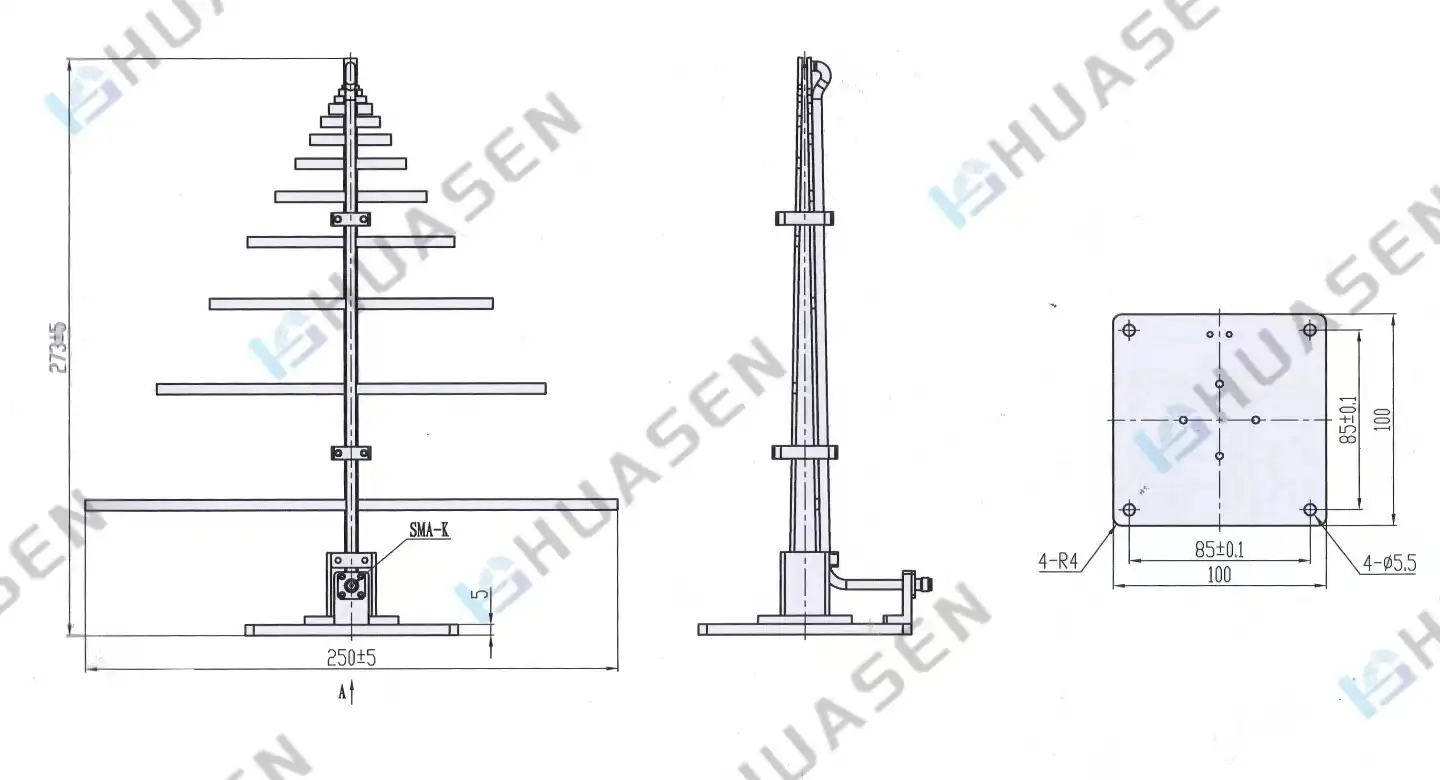
Following the appropriate military and commercial standards makes sure that quality and performance are always the same. The MIL-STD specifications cover testing needs in different environments, while the commercial standards are more focused on RF performance factors and safety issues. Certification needs are different for each product and area, so it's important to pay close attention to the procurement process. Quality control methods used during manufacturing have a direct effect on how well bandwidth works and how reliable it is over time. The impedance and frequency response are affected by the tolerances of the dimensions, and the environmental longevity is affected by the quality of the material. Reputable makers use thorough testing methods to make sure that the product works across the whole bandwidth before shipping it. When a supplier is being evaluated, it should be emphasized that they offer technical support and customization options that meet the needs of a particular application. Manufacturers with a lot of experience can give you good advice on choosing antennas and integrating systems, and they can also make changes to meet your specific needs. This support is especially helpful when you need bandwidth that isn't available in normal products. The Log Periodic Microstrip Antenna from Huasen Microwave shows how advanced their manufacturing skills are. It covers frequencies from 400 MHz to 18 GHz and comes in small sizes as 75x118 mm. The beamwidth can be changed from 35° to 125°, and the interfaces are all the same. This makes it easy to use in a variety of situations, and the gain stays between 5 and 9 dB across the operating bandwidth. These specs show the amounts of performance that can be reached in modern designs for log periodic antennas.
Conclusion
Log periodic antennas have very high bandwidths that meet the growing need for high-speed transmission and measurement tools in many different fields. The normal frequency range for bandwidth is between 2:1 and 40:1, lpda antennaand modern designs can cover from 30 MHz to 18 GHz, based on the needs and the way they are built. Knowing how design parameters, performance characteristics, and application requirements relate to each other helps you make smart procurement choices that keep costs low and system effectiveness high. As manufacturing methods and materials continue to change, bandwidth performance and form factor optimization will get even better for future uses.
FAQ
1. What factors determine the maximum achievable bandwidth in log periodic antenna designs?
The maximum bandwidth depends primarily on the scaling factor (τ), the number of elements, and construction constraints. Lower scaling factors enable wider bandwidths but require more elements to maintain consistent performance. Physical size limitations and manufacturing tolerances also influence the practical bandwidth limits that can be achieved in real-world implementations.
2. How does bandwidth performance compare between wire-based and microstrip log periodic antennas?
Wire-based designs typically achieve wider bandwidths due to fewer dielectric losses and construction constraints, while microstrip implementations excel in compact applications with bandwidths up to 40:1. Microstrip designs offer superior environmental protection and manufacturing repeatability, making them preferred for high-volume applications despite some bandwidth limitations compared to wire-based configurations.
3. What bandwidth degradation can be expected over the antenna's operational lifetime?
Well-constructed log periodic antennas experience minimal bandwidth degradation when operated within specified environmental limits. Temperature cycling and UV exposure may affect dielectric properties in microstrip designs, while corrosion can impact impedance matching in wire-based antennas. Regular maintenance and proper environmental protection help preserve bandwidth performance throughout the operational lifetime.
4. How do environmental factors affect bandwidth performance in outdoor installations?
Environmental factors such as ice loading, wind-induced vibration, and temperature variations can temporarily shift the operational bandwidth and degrade performance. Proper mechanical design and environmental protection minimize these effects, while regular inspection and maintenance help identify issues before they significantly impact system performance.
Partner with Huasen Microwave for Superior Log Periodic Antenna Solutions
Huasen Microwave Technology stands ready to support your broadband antenna requirements,Log Periodic Antenna,with three decades of engineering excellence and manufacturing expertise. Our Log Periodic Microstrip Antenna technology delivers proven bandwidth performance from 400 MHz to 18 GHz while maintaining compact form factors and reliable operation across demanding environments. Contact our technical team at sales@huasenmicrowave.com to discuss your specific bandwidth requirements and discover how our comprehensive antenna solutions can optimize your system performance. Visit huasenmicrowave.com to explore our complete product portfolio and experience the quality that has established us as a trusted log periodic antenna supplier to industries worldwide.
References
1. Isbell, D. E. (1960). "Log Periodic Dipole Arrays." IRE Transactions on Antennas and Propagation, 8(3), 260-267.
2. Carrel, R. L. (1961). "The Design of Log-Periodic Dipole Antennas." IRE International Convention Record, 9, 61-75.
3. Butson, P. C. and Thompson, G. T. (1973). "A Note on the Calculation of the Gain of Log-Periodic Dipole Antennas." IEEE Transactions on Antennas and Propagation, 21(1), 105-106.
4. Hall, P. S. (1988). "Microstrip Log-Periodic Dipole Array." Electronics Letters, 24(17), 1043-1044.
5. Mushiake, Y. (1996). "Self-Complementary Antennas: Principle of Self-Complementarity for Constant Impedance." Springer-Verlag London Limited, Chapter 8: Log-Periodic Antennas.
6. Balanis, C. A. (2016). "Antenna Theory: Analysis and Design, Fourth Edition." John Wiley & Sons, Chapter 12: Frequency Independent Antennas, Log-Periodic Antennas.
Send Inquiry