Waveguide Straight Section Design and Tolerance Guide






2026-04-20 22:25:25
The waveguide straight section is the most important part of building microwave and millimeter-wave systems because it ensures that signals are sent reliably. To get the best performance across frequency bands from 0.32 GHz to 220 GHz, this precision-engineered part needs close attention paid to its dimensions, the material used, and the way it is made. Knowing how internal shape, surface finish, and temperature expansion work together will help you keep your system's low VSWR, low insertion loss, and high power handling—all of which are important for radar installations, satellite uplinks, and 5G infrastructure deployments.
Why Dimensional Precision Determines System Performance?
Cutting off frequency and resistance of a straight waveguide are directly controlled by its internal cross-sectional measurements. Even very small differences from the allowed ranges can change the working frequencies, raise the reflection coefficients, and weaken the signal integrity all along your transmission line.
For rectangular waveguides to work, the "a" dimension (broad wall) and "b" dimension (narrow wall) must be measured exactly. For bands above 18 GHz, limits are usually set within ±0.001 inches (±0.025 mm) by industry standards like EIA RS-261. At millimeter-wave bands, where wavelengths get very short, the standards for tolerance get even stricter. To keep mode conversion and too much loss from happening, a WR-28 waveguide working at 26.5-40 GHz needs broad wall accuracy within ±0.0005 inches.
Using dual-ridge straight waveguide designs makes things more complicated. In order to get ultra-wide bandwidth coverage, the ridge height and spacing distance must stay in exact proportions. Manufacturing differences bigger than 2% can make the frequency response less stable, leading to resonance peaks that hurt antenna gain and polarization performance in front-end base station uses.
Coordinate measuring tools (CMMs) with a precision of less than a micron check that the dimensions are correct during production. Reputable makers use statistical process control and take samples from every production batch to show that the capability indices (CPK) are higher than 1.67. This strict quality framework makes sure that systems integrators get parts that meet MIL-DTL-85 standards without having to pay a lot of money for expensive repairs after delivery.

Material Selection and Surface Treatment Strategies
Choice of material has a big effect on electricity efficiency, weight limits, and longevity in harsh environments. Because it has a good strength-to-weight ratio, aluminum alloy 6061-T6 is used a lot in aircraft and satellite communication. But because aluminum is only 61% as conductive as copper, other steps need to be taken to make up for it.
Silver coating improves electrical performance by making a very conductive layer on the surface. The skin's depth concentrates the flow of current at microwave frequencies. Plating thickness is usually between 0.0002 and 0.0005 inches. It is put on using electroplating methods that make sure there is even coverage inside complicated shapes. Gold finishing is better at resisting rust for outdoor and marine radio systems, but it costs more to do.
OFHC copper, which stands for "Oxygen-Free High-Conductivity," is the best choice for checking electronics and lab instruments. Its almost-theoretical conductivity cuts down on insertion loss, which is very important for describing low-noise amplifiers or making accurate RF readings. Copper's lower density doesn't matter much in tabletop applications where temperature safety is more important than weight.
The standard for surface roughness is just as important. Microscopically small flaws in the internal wall finish below 32 micro-inches RMS stop electromagnetic waves from being scattered. Precision grinding and electropolishing are the only ways to get surfaces that are mirror-like for millimeter-wave test systems that work above 110 GHz.
Anodization processes keep metal surfaces from rusting without making them thicker. Type II anodizing makes a protected layer that is 0.0001-0.001 inch thick and keeps the dimensions accurate while letting you use color coding to find specific frequency bands. This is helpful for handling large waveguide supplies.
Thermal Expansion Compensation in Long Runs
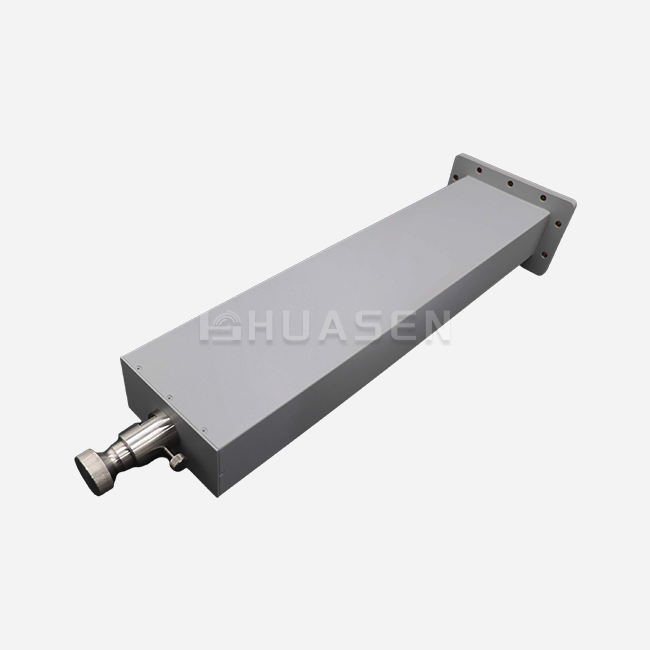
Long straight waveguide sections, such as Waveguide Straight Section, which are common in uplinks from satellites to earth stations and in radar tower sites, can be hard to keep cool. Aluminum's thermal expansion rate (13.1 µin/in/°F) causes changes in size at very high and very low temperatures, which could throw off systems that were carefully designed to work together.
Engineers use a variety of methods to reduce risks. Long runs are broken up into small pieces that are joined together by thermally adjusted flanges. These connectors have spring-loaded parts that keep the electricity flowing while allowing for differential growth. Other methods use hybrid materials with custom expansion factors, but they are more expensive to buy.
Thermal stability is proven by studies that change the temperature. The temperature of the parts is changed 50 times between -40°C and +85°C, and VNA readings are used to track the VSWR shift. High-quality parts have return loss changes that are less than 0.1 dB across the whole temperature range. This is important for keeping link costs in spaceships or airplanes that are not under pressure.
Inflatable straight waveguide technology solves problems with heat by being bendable. The walls of these specialist units are curved, which lets them expand without affecting their RF performance. Pressurizing with dry nitrogen or SF6 gas keeps the structure stiff while it's working and increases its power-handling capacity by stopping voltage breakdown at high elevations.
Flange Design and Interface Compatibility
The junction between waveguide sections represents a critical vulnerability. Improperly mated flanges introduce impedance discontinuities that radiate energy, generate passive intermodulation products, and degrade system noise figures.
Cover-gasket (CPR) flanges dominate pressurized systems. The cover flange features a raised rectangular boss that compresses into a matching gasket flange recess, creating both an RF seal and hermetic pressure boundary. Precision machining ensures the boss profile matches waveguide internal dimensions within 0.0005 inches, preventing step discontinuities that would reflect signals.
Choke flanges eliminate the need for precise contact across the entire flange face. A quarter-wavelength groove machined into one flange creates a high-impedance trap at the operating frequency, concentrating RF current flow through a narrow annular contact region. This design forgives minor flange warping while maintaining excellent return loss performance—particularly valuable in field-deployed systems subject to vibration and mechanical stress.
Alignment pins prevent rotational misalignment during assembly. Dowel pins positioned with ±0.0002 inch tolerance ensure internal waveguide axes align coaxially, preventing mode conversion at interfaces. Torque specifications—typically 35-45 inch-pounds for standard WR-series flanges—balance adequate sealing pressure against flange deformation.
Interface planarity inspection uses precision surface plates and feeler gauges. Acceptable flatness tolerances range from 0.0005 inches for laboratory-grade components to 0.002 inches for ruggedized field equipment. Electronic countermeasures and communications security systems demand the tighter specifications to prevent signal leakage that adversaries might exploit.
Power Handling and Voltage Breakdown Considerations
High-power radar and broadcasting applications push straight waveguide components toward their fundamental limits. Peak power handling depends on internal electric field strength, which must remain below the breakdown threshold of the propagating medium.
Unpressurized air-filled waveguides typically withstand peak fields of 3 MV/meter at sea level. This threshold decreases at altitude as air density drops, limiting power capacity in drone-mounted radar systems. Pressurization with dry air at 15 PSI doubles power handling capacity. Sulfur hexafluoride (SF₆) pressurization—common in high-power transmitters—triples capacity but requires sealed construction and specialized handling procedures.
Internal sharp edges and surface contaminants create localized field concentrations that trigger premature breakdown. Radiused internal corners with minimum 0.010-inch radii distribute fields more uniformly. Vapor degreasing followed by ultrasonic cleaning removes machining residues and fingerprint oils that could carbonize under high RF power, creating conductive paths.
Multipactor discharge represents another power limitation mechanism. Secondary electron emission from internal walls creates avalanche ionization under specific power-frequency combinations. Silver-plated surfaces exhibit lower secondary emission coefficients than bare aluminum, raising multipactor thresholds. Surface treatments incorporating titanium nitride coatings further suppress this phenomenon in critical base station and spacecraft applications.
Thermal management becomes paramount at sustained high power levels. Skin depth confines current flow to surface layers, generating I²R heating. Aluminum's superior thermal conductivity (compared to stainless steel) dissipates this heat more effectively, preventing thermal runaway. External cooling fins or forced-air circulation maintain acceptable operating temperatures during continuous transmission cycles.
Custom Length Requirements and Fabrication Techniques
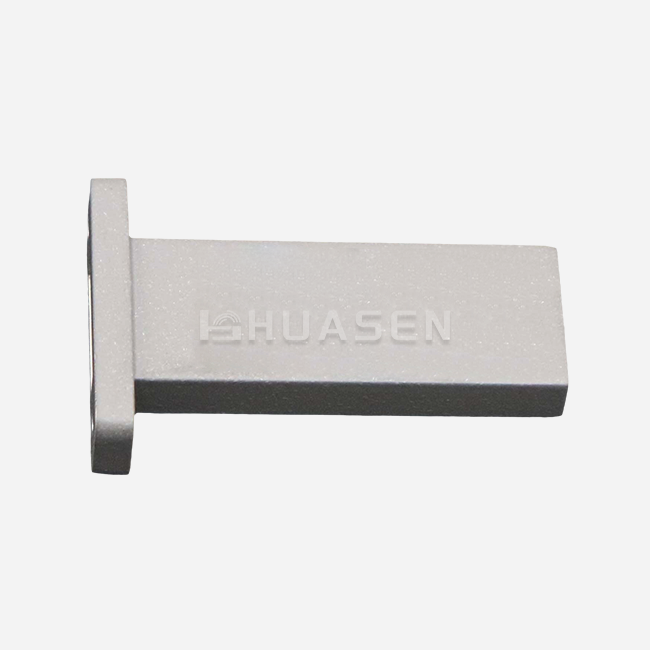
Standard catalog offerings rarely match system integration requirements perfectly. Adjustable lengths from 0.1 to 2000 mm accommodate diverse installation geometries—from compact millimeter-wave modules to extensive broadcast antenna feeds.
Short sections below 10 mm pose unique manufacturing challenges. End flange thickness consumes significant proportions of overall length, requiring specialized thin-flange designs. Electrical length must account for flange capacitance, which becomes non-negligible at these dimensions. Electromagnetic simulation tools predict phase shift and impedance effects, guiding dimensional adjustments that compensate for end effects.
Extended sections exceeding 500 mm demand attention to mechanical rigidity. Waveguide walls must resist deflection under their own weight, which could alter internal dimensions and degrade VSWR. Structural reinforcement ribs—positioned at voltage minimum points to avoid field disruption—provide stiffening without introducing significant loss penalties.
Precision cutting operations utilize CNC milling centers with automatic tool wear compensation. Coolant flood systems prevent thermal distortion during machining. Subsequent deburring operations remove microscopic edge irregularities that could initiate voltage breakdown. Flange mounting surfaces undergo secondary surface grinding to achieve specified flatness tolerances.
Brazing operations join flanges to waveguide bodies, creating hermetic seals capable of holding vacuum or pressure. Silver-copper eutectic alloys flow at controlled temperatures, wetting both surfaces without excessive fillet formation that would intrude into the RF path. X-ray inspection verifies braze joint integrity, particularly critical for aerospace applications where repair access proves impossible after installation.
Dimensional verification follows fabrication. CMM probing maps internal cross-sections at multiple positions along the length, generating statistical distributions that confirm conformance to tolerance bands. Network analyzer measurements characterize VSWR and insertion loss across the specified frequency range, with data provided as part of component certification packages.
Quality Assurance Protocols for Mission-Critical Applications
Laboratory users, instrument manufacturers, and research institutions demand traceability and documentation exceeding typical commercial standards. Certificate packages include material composition verification through spectroscopy, dimensional inspection reports with actual measurements, and full two-port S-parameter data at ambient and temperature extremes.
Passive intermodulation (PIM) testing identifies nonlinear junctions that generate spurious signals. Two high-power carriers excite the component while sensitive receivers monitor third-order and fifth-order intermodulation products. PIM performance below -160 dBc ensures compatibility with sensitive base station receivers operating in duplexed configurations.
Vibration qualification validates mechanical integrity for airborne and vehicular installations. Components undergo sinusoidal sweeps from 5 to 2000 Hz at acceleration levels reaching 15 G, followed by random vibration profiles matching MIL-STD-810 specifications. Post-test RF measurements on a straight waveguide confirm that vibration exposure caused no performance degradation—critical for maintaining communications links during maneuvers or turbulence.
Salt fog exposure testing evaluates corrosion resistance for maritime communications applications. 1000-hour exposures to 5% salt spray at 35°C simulate years of coastal deployment. Protective coatings and plating systems must prevent oxide formation that increases contact resistance at flange interfaces.
Lot traceability systems link each manufactured component to raw material heat numbers, production dates, operator identifications, and inspection records. This documentation chain enables root cause analysis should field failures occur while satisfying ISO 9001 and AS9100 quality management requirements that defense contractors and aerospace prime manufacturers mandate.
Conclusion
Achieving optimal waveguide system performance demands attention to dimensional precision, material properties, and fabrication quality that extends beyond basic mechanical tolerances. The interplay between internal geometry, surface treatments, and interface design directly impacts insertion loss, VSWR, and power handling capacity across your operating bandwidth. By partnering with experienced manufacturers who maintain rigorous quality controls and offer extensive customization capabilities, system integrators gain the component reliability essential for mission-critical communications infrastructure, radar installations, and research instrumentation.
Partnering with Huasen Microwave for Precision Waveguide Solutions
Huasen Microwave stands as a leading Waveguide Straight Section manufacturer with three decades of expertise serving telecommunications, radar, and aerospace sectors. Our advanced fabrication capabilities deliver custom lengths with tolerances exceeding industry standards, supported by comprehensive technical assistance from initial design consultation through post-delivery calibration support. Contact our engineering team at sales@huasenmicrowave.com to discuss your specific system requirements—our responsive service ensures optimized component specifications, competitive pricing, and reliable delivery schedules that keep your projects on track.
References
1. Marcuvitz, N. (1986). Waveguide Handbook: Electromagnetic Wave Theory and Applications. Institution of Electrical Engineers, London.
2. Ragan, G.L. (1965). Microwave Transmission Circuits: MIT Radiation Laboratory Series Volume 9. Dover Publications, New York.
3. Pozar, D.M. (2011). Microwave Engineering, Fourth Edition. John Wiley & Sons, Hoboken, New Jersey.
4. Montgomery, C.G., Dicke, R.H., and Purcell, E.M. (1948). Principles of Microwave Circuits: MIT Radiation Laboratory Series Volume 8. McGraw-Hill, New York.
5. Saad, T.S. (1971). Handbook of Microwave and Millimeter-Wave Waveguide Components. Artech House, Norwood, Massachusetts.
6. IEEE Standards Association (2003). IEEE Standard 1785-2003: Standard for Rectangular Metallic Waveguides and Their Interfaces. Institute of Electrical and Electronics Engineers, Piscataway, New Jersey.
Send Inquiry