Waveguide Sliding Short Design Tips for Accurate Tuning






2026-05-11 22:14:42
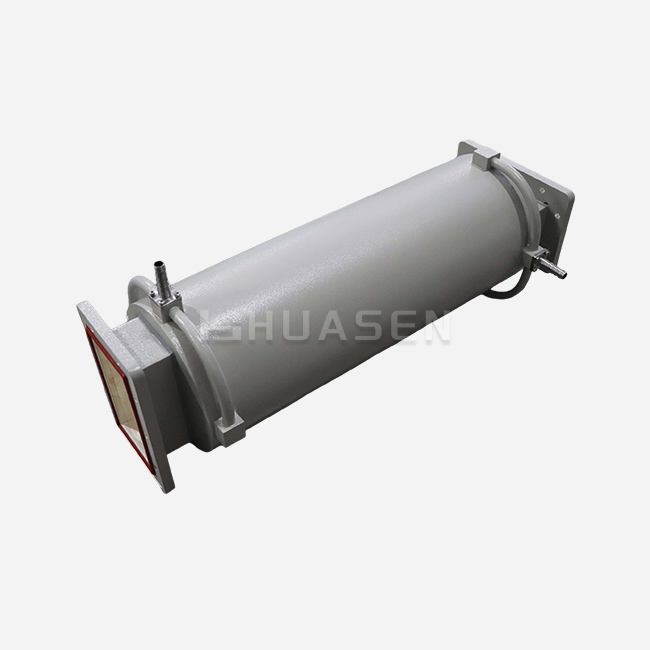
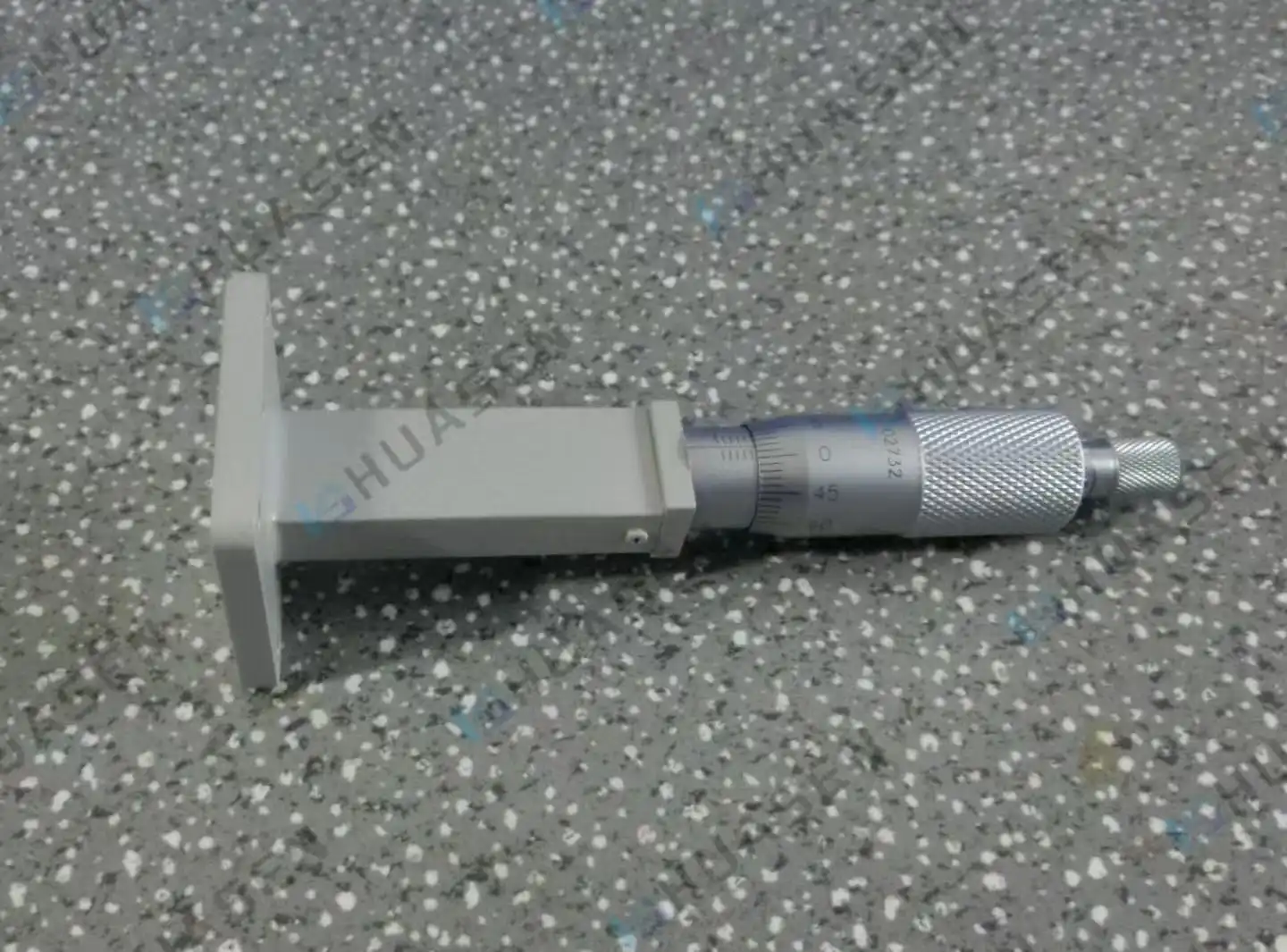
To get accurate results in microwave testing, you need parts that have consistent, reliable reflection properties. A Waveguide Sliding Short does just that; it's an adjustable way to end the circuit, and the position of the plunger determines the reflection phase. Engineers can fine-tune impedance matching, calibrate vector network analyzers, and make high-frequency circuits work better by mechanically changing the location of the shorting plane. The Huasen Microwave waveguide sliding short works with frequencies from 0.32 GHz to 112 GHz and has a VSWR of less than 50. It can be adjusted to slide between 10 mm and 300 mm, making it useful for dynamic tuning in radar, aerospace, and telecommunications systems.
Understanding Waveguide Sliding Shorts and Their Role in Accurate Tuning
Waveguide Sliding Short units are very precise tools that are used in RF and microwave settings where controlling signal reflection is very important. In contrast to fixed terminations, these parts have a plunger that can move along the longitudinal axis of the waveguide. This changes the electrical length between the measurement plane and the short circuit. This feature lets engineers precisely change the phase of reflected signals, which is very important for calibrating test equipment or figuring out what the device being tested is.
How does the Sliding Mechanism Work?
The main part that does the work is a conductive plunger that slides inside the waveguide housing. The reflected signal has a shorter electrical path when it is closer to the input port. By moving the plunger farther away, this path gets longer, which changes the phase relationship between the waves that come in and the waves that bounce back. These days, designs use either contacting (choke) or non-contacting (non-contacting) plungers. RF choking structures create a virtual short without physical wall contact in choke configurations, while contacting designs make a direct metal-to-metal connection with waveguide walls. This gets rid of friction wear and contact resistance variations that hurt repeatability.
Construction Elements for Optimal Functionality
A lot of different engineering features go into making high-performance sliding shorts. To stop parasitic modes and make sure single-mode propagation occurs, the waveguide housing keeps tight tolerances on its dimensions. The precision bearings or guide rails in the plunger assembly make sure that the travel is smooth and doesn't wobble. Fine-resolution positioning is done by a micrometer drive mechanism, which usually works with 0.01 mm increments or smaller. In versions that don't touch, the RF choke design uses quarter-wave slot structures to trap RF energy. This creates a short circuit at the plunger face, where the physical contact happens and where the current flow is least.
Practical Advantages in Testing Environments
When compared to fixed standards, designs that can be adjusted have a lot of operational benefits. During TRL (Thru-Reflect-Line) calibration procedures for vector network analyzers, the sliding short acts as the reflect standard in several places. This lets the calibration algorithms be checked, and error terms be extracted. These parts are used in mechanical impedance tuners in load-pull measurement systems. They give amplifiers and transistors programmable impedances while they are being characterized. Sliding shorts are used to change resonant frequencies and coupling factors without taking the system apart for cavity resonator tuning in radar and industrial heating applications.
Core Design Principles for High-Precision Waveguide Sliding Shorts
To make a waveguide sliding short that works well in a wide range of frequencies and environments, you need to pay close attention to the material you choose, the mechanical tolerances, and the electromagnetic factors. How these factors work together determines if the part meets strict requirements for VSWR, power handling, and long-term stability.
Material Selection for Durability and Low Loss
Copper or aluminum alloys that don't contain oxygen are usually used for the waveguide housing and plunger, including the waveguide sliding short. Copper is a better conductor and has less surface resistance, which lowers the insertion loss in the path before the short. Aluminum is lighter than other materials used in aerospace applications, and it still works well after being silver-plated on the inside. Choosing the right plating affects both RF performance and environmental resistance. Silver plating is very good at conducting electricity, but it needs protective coatings in corrosive environments. Gold plating, on the other hand, doesn't rust and has a slightly higher surface resistance. The micrometer assembly and guide mechanisms are made of brass or stainless steel so they can be adjusted many times without breaking down.
Mechanical Precision and Repeatability
Electrical performance is directly affected by how accurate the dimensions are. To keep cutoff frequency shifts and impedance changes from happening, waveguide cross-sections must stay within ±0.025mm of each other. To keep VSWR from dropping, the plunger must stay perpendicular to the waveguide axis within ±0.1 degrees. If it moves out of whack, uneven field distributions will happen. Bronze bushings or linear ball bearings are used in bearing systems, depending on the level of vibration and the frequency of adjustments needed. Ultra-smooth ball bearing systems work best for lab instruments, while bushings that can handle dirt better may be better for units that are used in the field.
Frequency Range Optimization
For each waveguide band, certain size requirements must be met. The X-band unit (8.2-12.4 GHz) uses WR-90 waveguide and is 22.86 mm × 10.16 mm on the inside. The Ka-band version (26.5-40 GHz) uses WR-28 and is 7.11 mm × 3.56 mm on the inside. The choke groove depth and spacing change in a way that depends on the wavelength, which is usually a quarter of a wavelength at the center frequency of the band. Huasen Microwave covers a wide range of frequencies, from 0.32 GHz to 112 GHz, by making sure that they have separate designs for each standard waveguide size. This way, they can always provide the best performance.
Fixed Versus Adjustable Terminations
Because they are strong and don't move, fixed shorts have better VSWR performance (often better than 60:1) and can handle more peak power. They work great in situations where a permanent endpoint at a known reference plane is needed. Adjustable sliding shorts give up a little VSWR performance (usually 50:1) but give you more options for measuring in multiple positions, tuning procedures, and calibration sequences. Whether the application needs the highest reflection coefficient or the most operational flexibility affects the choice of what to buy. System integrators who are making reconfigurable test stations, like sliding designs better than fixed designs for high-power loads that are only used for one purpose.
Practical Tips to Optimize Waveguide Sliding Short Performance
To get the most accuracy out of a waveguide sliding short, you need to know how to set it up correctly, be aware of common mistakes, and do regular maintenance. When handled incorrectly or left to accumulate contaminants that change RF characteristics, even high-end components don't work as well as they should.
Step-by-Step Tuning Procedures
Setting the plunger's electrical zero reference is the first step in calibrating it. Set the plunger all the way in and connect the sliding short to a calibrated vector network analyzer. Take note of the micrometer reading and write down the S11 phase response.
Moving the plunger forward slowly, usually in 1 mm steps, and recording the phase at each spot. The phase should move in a straight line with distance, turning around once every half-wavelength of travel. If there are deviations from linearity, it means that there is mechanical binding or internal contamination that needs to be fixed.
Common Adjustment Errors to Avoid
For load-pull tuning to work, impedance synthesis must happen at certain frequencies. Watch the real-time Smith chart trajectories while moving the plunger to get the reflection phase you want. Covering complex impedance regions is possible by combining several tuning elements, such as probes and sliding shorts. Save tuner configurations that work well so that they can be used again and again in production testing.
When you tighten the micrometer drive too much, you damage the lead screw threads and the alignment of the plunger. To stop backlash, only apply enough torque, which is usually finger-tight plus a quarter turn. When the position changes quickly, mechanical shocks can happen that can move internal parts. During important measurements, move the plunger slowly, no more than 5 mm per second.
Maintenance and Inspection Best Practices
Temperature differences in the environment change the sizes of things, which affects the length of an electrical current in the waveguide short. After moving the part from one environment to another, give it 30 minutes to cool down and stabilize its temperature. If you skip this settling period, the measurement in the reflection phase will be off by several degrees.
A visual inspection once a month finds new problems before they get in the way of performance. Take off the plunger assembly and check the waveguide walls for damage like corrosion, contamination, or broken parts. Use lint-free swabs that have been wet with isopropyl alcohol to clean the inside surfaces. Never put lubricants on RF surfaces because they attract dust and change the dielectric properties. Look closely at the choke grooves to see if there is any buildup of debris or damage to the plating.
Evaluating and Selecting the Best Waveguide Sliding Short for Your Needs
When making a procurement decision for a waveguide sliding short, you have to weigh technical requirements, the supplier's abilities, and the total cost of ownership. Figuring out how various factors influence the performance of a system helps choose parts that meet operational needs and stay within the budget.
Critical Technical Specifications
VSWR is a measurement of how well the device reflects power that comes in. Values higher than 50:1 make sure that less than 0.04% of the energy that hits the short goes through it, which meets the standards for precise calibration. How much power a device can handle depends on the breakdown voltage at choke gaps and how fast heat can be lost in lossy mechanisms. Good units can handle CW power up to kilowatts and peak pulse power up to megawatts, which helps with testing amplifiers and tuning radars.
Some mechanical specifications are the total travel distance, the accuracy of the position, and the amount of force that must be applied. Longer travel ranges (200–300 mm) allow for phase changes at multiple wavelengths for TRL calibration at lower frequencies. In load-pull systems, fine resolution (0.01 mm) makes impedance synthesis more accurate. Low-force adjustment mechanisms make it easier to integrate motorized automation and keep operators from getting tired during manual tuning sessions.
Supplier Landscape and Customization Options
Different strengths are available from established suppliers. Keysight Technologies charges a lot because it focuses on metrology-grade performance that can be traced back to national standards. Pasternack offers fast delivery of catalog items that can be used for testing a wide range of things. Companies like Huasen Microwave stand out by offering a wide range of customization options, such as changing the types of flanges, the distances of travel, or the frequency responses to fit specific system architectures. This adaptability is very helpful when adding parts to a test infrastructure that doesn't have standard interfaces or limited space.
Customization goes beyond mechanical aspects. Plating choices are based on the environment. For example, marine communication systems need finishes that don't rust, while laboratory instruments focus on being able to conduct electricity well. Motorized drive retrofits turn manual units into tuners that can be controlled from a distance for automated test sequences. Certification packages, such as MIL-STD qualification and ISO compliance documentation, meet the needs of buyers in the aerospace and defense industries.
Procurement Considerations and ROI
Prices per unit range from a few hundred dollars for basic WR-90 models to several thousand dollars for millimeter-wave models with more features. Volume discounts usually start at five units, and for annual agreements, discounts of 15 to 25 percent can be negotiated. Lead times range from 8 to 12 weeks for custom configurations that need special tools to stock items that can be shipped right away.
Warranty terms should be carefully read. Standard coverage protects against defects for one year, while extended programs offer mechanical guarantees for three years and support for life with calibration. Minimum order quantities affect the flexibility of prototyping. Suppliers who accept single-unit orders allow risk-free testing, while those who require batch minimums are better for mass production.
Ownership costs for the Waveguide Shorts include the price of the item, how often it needs to be calibrated, and the labor needed to keep it in good shape. A better-quality waveguide short with more stable mechanics may be worth the extra cost because it needs to be calibrated less often and lasts longer. The real economic value can be found by figuring out the annualized cost per measurement cycle.
Conclusion
Waveguide Sliding Short tools remain essential for professionals who need to control reflections precisely in microwave systems. To get the most out of them, you need to understand how they were designed, from choosing the right materials and mechanical tolerances to the right way to adjust them and do regular maintenance. When engineers know how the position of the plunger affects the reflection phase, they can make measurements that are more accurate than those possible with fixed components. This is true whether they are calibrating network analyzers, characterizing high-power amplifiers, or tuning resonant cavities. The important thing is to choose devices that have the right frequency coverage, mechanical resolution, and environmental durability and to work with suppliers that can offer technical support and customization options. By using the optimization strategies described here, companies can improve the repeatability of tests, lower uncertainty budgets, and speed up development cycles for use in defense, aerospace, and telecommunications.
FAQ
1. Can a single unit cover multiple waveguide bands?
Because of cutoff frequency limits and mode propagation characteristics, physics limits each waveguide to a certain waveguide size. A WR-62 device can only work between 12.4 and 18 GHz, while WR-28 hardware is needed for Ka-band applications. Organizations that need to be able to work with more than one frequency range must keep separate units for each range. This makes sure that they can get the best performance without any problems.
2. What determines power handling limits?
Most of the time, peak power capacity is limited by breakdown voltage at RF choke gaps, not by heat loss. The maximum field intensity before an arcing event is set by the gap spacing and dielectric strength of any insulating material. CW power limits are set by how much heat can be generated in lossy contact points or plating resistance. In high-quality designs, kilowatt-level operation is possible with good thermal management.
3. How does the choke design affect measurement precision?
Choke plungers that don't touch each other get rid of the contact resistance changes that cause phase noise in designs that do touch. The quarter-wave slot structure makes a virtual short at the plunger face while physical contact happens at a current null point. This stops the formation of wear debris. This design keeps the VSWR performance the same after millions of adjustment cycles, which is very important for automated test systems that need to be able to repeat things over and over again.
Partner with Huasen Microwave for Your Precision Tuning Solutions
Picking the right waveguide sliding short supplier can affect the success of a project, from making the prototype to putting it into production. Huasen Microwave has been making RF components for 30 years and can offer waveguide sliding shorts from 0.32 GHz to 112 GHz with VSWR ≥ 50 performance and travel distances that can be changed up to 300 mm. Our engineering team works directly with customers to create custom flange configurations, make sure that plunger designs work best in different environments, and speed up delivery times for programs that need to be completed quickly.
Volume procurement programs offer low prices without sacrificing quality. Discounts start at five units, and the terms are flexible enough to accommodate both development purchases and production commitments. Every shipment comes with electrical test data and reports on the dimensions, which ensures that ISO-compliant quality systems can track the goods. Technical support goes beyond the sale and includes help with application engineering, calibration, and troubleshooting.
Email our team at sales@huasenmicrowave.com to talk about your specific tuning needs. Huasen Microwave is ready to be your trusted manufacturer, whether you need a standard catalog item sent to you right away or a solution that is made just for you and your exact needs. To start your evaluation right away, ask for detailed product catalogs, specification sheets, and bulk pricing.
References
1. Pozar, David M. Microwave Engineering (4th Edition). Wiley, 2011.
2. Collin, Robert E. Foundations for Microwave Engineering (2nd Edition). Wiley-IEEE Press, 2001.
3. Marks, Roger B. "A Multiline Method of Network Analyzer Calibration." IEEE Transactions on Microwave Theory and Techniques, vol. 39, no. 7, 1991, pp. 1205-1215.
4. Rumiantsev, Andrei and Nick Ridler. "VNA Calibration." IEEE Microwave Magazine, vol. 9, no. 3, 2008, pp. 86-99.
5. Basu, Srabanti and Leonard Hayden. "An SOLR Calibration for Accurate Measurement of Orthogonal On-Wafer DUTs." IEEE MTT-S International Microwave Symposium Digest, 1997, pp. 1335-1338.
6. Engen, Glenn F. and Cletus A. Hoer. "Thru-Reflect-Line: An Improved Technique for Calibrating the Dual Six-Port Automatic Network Analyzer." IEEE Transactions on Microwave Theory and Techniques, vol. 27, no. 12, 1979, pp. 987-993.
Send Inquiry