Waveguide Sliding Load Setup and Operation Guide






2026-06-01 22:31:36
How accurate your high-frequency readings are depends on how well you set up a Waveguide Sliding Load. This precise microwave device has an absorbing element inside a waveguide section that can be changed manually. This lets engineers change the reflection phase angles while keeping the reflection magnitude the same. For the fitting to go smoothly, the flanges must be lined up, the micrometre must be calibrated, and the surroundings must be stable. Knowing the steps involved, from initial placement to measurement processes, will make sure that your calibration methods produce results that meet metrology standards. This guide walks you through every important step you need to take to get the best performance and most accurate measurements.
Understanding Your Waveguide Sliding Load Architecture
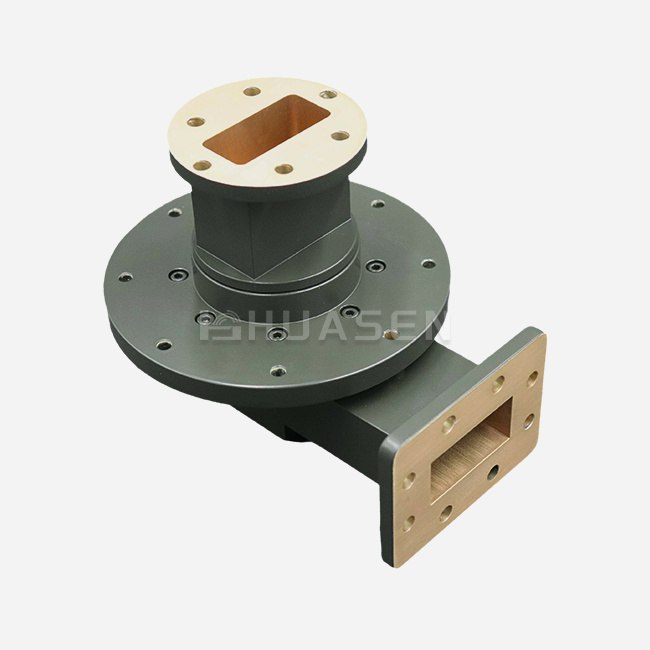
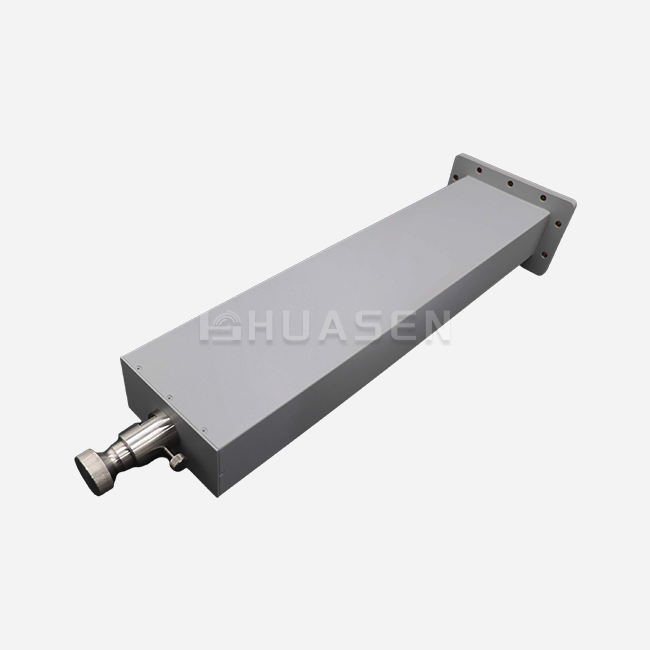
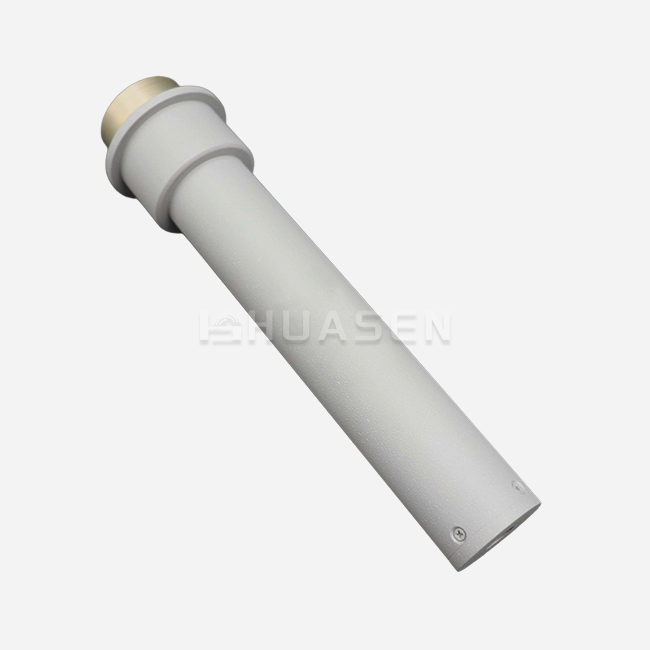
The way a moving load is built on the inside has a direct effect on how accurate measurements are. The device has a curved absorbing element that is placed on precise rails that let it move along the waveguide transmission line. This part usually has silicon carbide or special ferrite materials in it that are made to get rid of RF energy while keeping the same electrical properties throughout the trip range.
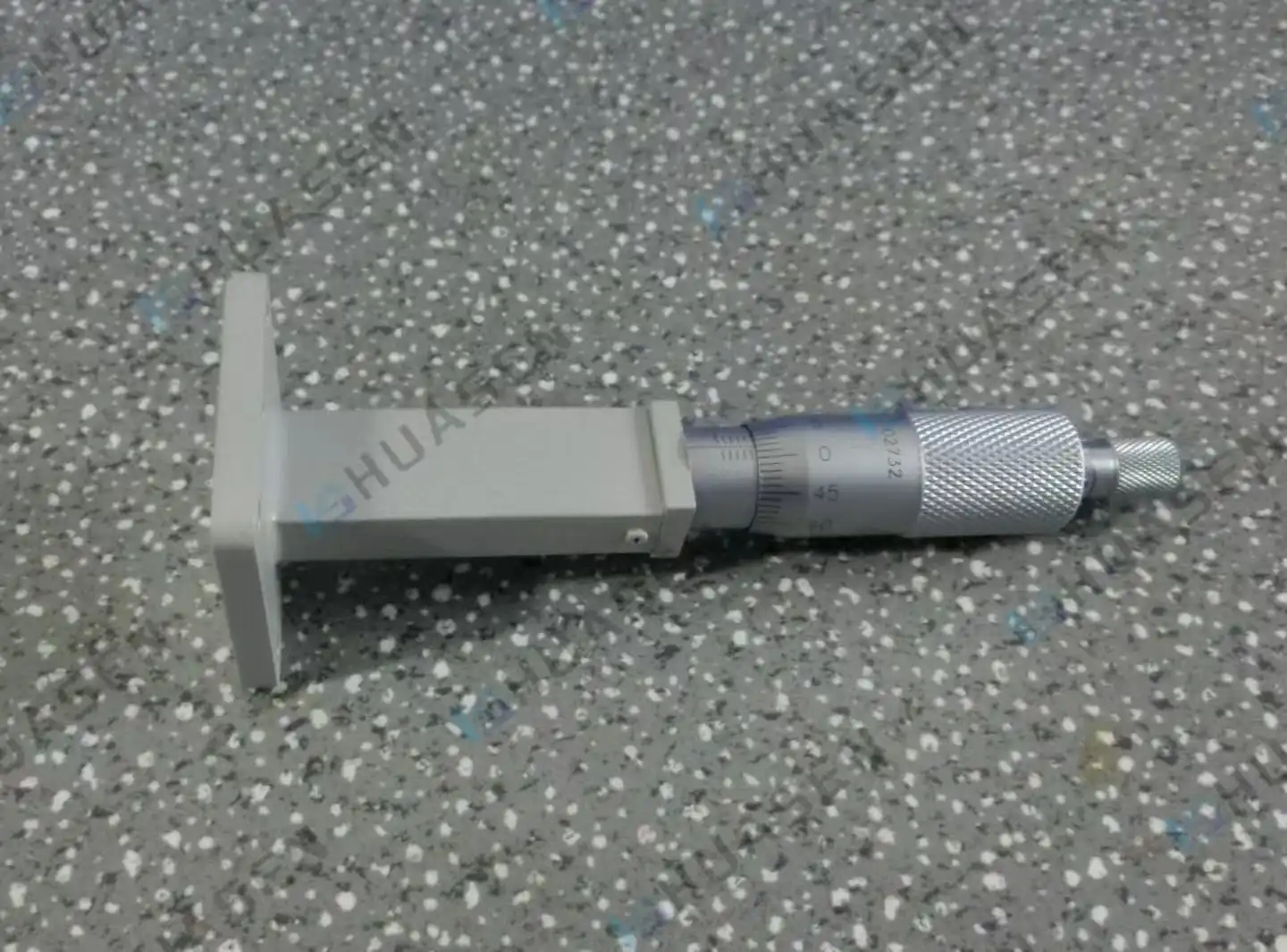
The most important part of working dependability is the mechanical placement system. High-quality units have digital micrometres with a precision of 0.01 mm, which lets you get the same positional accuracy every time. Any feedback when changing direction adds phase mistakes that mess up the calibration maths, so the drive system must have zero pushback.
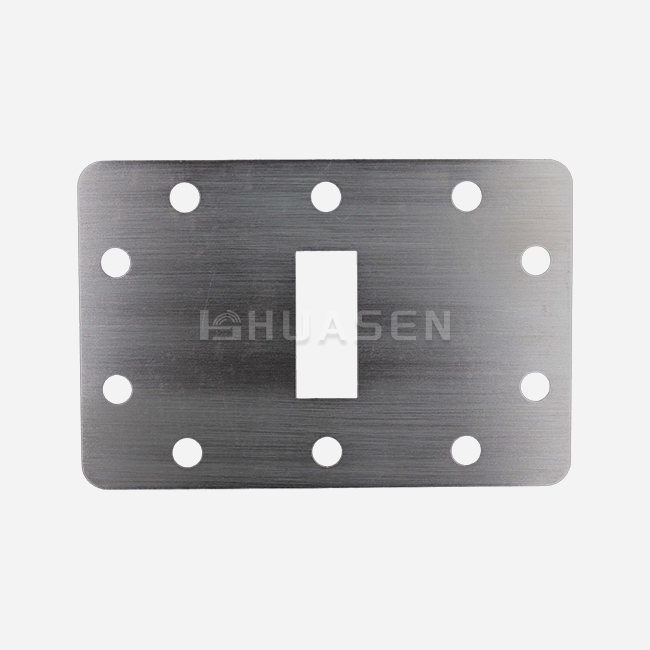
A good waveguide plate is more important than many engineers think. For planarity and concentricity, the mounting surface must meet the requirements of MIL-DTL-3928. Surface flaws leave gaps of air that change the characteristic impedance at the joint. This causes measurement errors that sliding load methods can't fix.
How the inside of a waveguide wall is treated depends on the frequency band of the waveguide termination. X-band and Ku-band devices usually have silver plating, but Ka-band and higher millimetre-wave units need gold plating to keep the effects of surface roughness to a minimum. These coats stop rusting, which over time lowers performance and is especially common in labs where air levels change often.
Pre-Installation Inspection Procedures
Before mounting your waveguide sliding load, conduct a thorough visual examination. Inspect both flanges under magnification for scratches, burrs, or contamination. Even microscopic debris can create return loss variations that undermine calibration validity. Clean flanges using lint-free wipes moistened with isopropyl alcohol, then allow complete evaporation before assembly.
Check the micrometre mechanism for smooth operation across the entire travel range. The carriage should glide without binding or lateral movement. Gently rotate the micrometre knob through multiple cycles, feeling for rough spots or resistance changes. Document the mechanical zero position—the point where the absorbing element just begins to enter the waveguide section.
Verify that the waveguide band matches your test system frequency range. A WR-90 unit covers X-band (8.2-12.4 GHz), while a WR-28 unit addresses Ka-band (26.5-40 GHz). Using a sliding load outside its design frequency produces unreliable reflection coefficients that fail circle-fitting algorithms in your vector network analyser.
Environmental acclimation prevents thermal drift during measurements. Allow the device to stabilise at laboratory temperature for at least two hours after removing it from storage. Temperature gradients within the waveguide structure alter the electrical length, introducing phase errors during the sliding sequence.
Mounting and Connection Best Practices
Position your test setup on a vibration-isolated surface. Mechanical disturbances during measurement cycles cause positional variations that appear as noise in your calibration data. Laboratory optical tables or dedicated instrument racks provide adequate stability for metrology applications.
Align the sliding load flange with your test port carefully before applying torque. Cross-threading or misalignment damages the precision interface permanently. Insert alignment pins if your flange design includes them, ensuring proper angular orientation before engaging fasteners.
Apply mounting torque according to waveguide termination band specifications. Under-torquing leaves gaps that vary with mechanical stress, while over-torquing deforms flanges and creates permanent impedance discontinuities. Use a calibrated torque wrench—typically 8-12 inch-pounds for smaller waveguide bands, scaling up to 25-30 inch-pounds for WR-90 and larger sections.
Support the sliding load body independently to prevent gravitational stress on the flange joint. Unsupported units can flex during micrometre adjustment, introducing lateral movement of the absorbing element that violates the constant-magnitude reflection requirement. Use adjustable brackets or foam supports positioned beneath the load housing.
Operational Sequence for Calibration Measurements
Configure your vector network analyser for the appropriate calibration algorithm. The "sliding load" or "unknown through" methods require the instrument to collect reflection data at multiple positions, then perform circle-fitting mathematics to determine the effective reference plane.
Establish your initial measurement position with the absorbing element fully retracted. This starting point provides the baseline phase reference for subsequent measurements. Record the micrometre reading as Position Zero in your measurement log.
Advance the micrometre in equal increments that span at least one-half wavelength at your lowest operating frequency. This distance ensures a complete 360-degree phase rotation necessary for accurate circle fitting. A typical sequence uses seven positions evenly distributed across the available travel range.
Pause briefly after each position change before triggering measurements. The mechanical settling time prevents transient vibrations from corrupting data. High-precision work benefits from 5-10 second stabilisation intervals between positions.
Monitor the reflection coefficient magnitude as you progress through positions. Ideally, the magnitude remains constant while only the phase rotates. Magnitude variations exceeding 0.02 dB indicate mechanical problems—lateral element movement, flange stress, or waveguide wall irregularities requiring corrective action.
Troubleshooting Common Setup Challenges
Erratic reflection magnitude during sliding suggests mechanical misalignment. Disconnect and inspect the flange joint for contamination or damage. Re-clean both surfaces thoroughly and remount with careful attention to alignment and torque specifications.
Poor circle-fit residuals in your VNA calibration with the Waveguide Sliding Load indicate positioning errors. Verify micrometre backlash by approaching each position from the same rotational direction. Eliminate hysteresis by always advancing the micrometre forward during measurement sequences.
Temperature-dependent drift appears as gradual magnitude changes over extended measurement sessions. Improve laboratory climate control or reduce measurement duration. Allow longer thermal stabilisation periods if the device was recently transported or stored at different temperatures.
Unexpected ripple patterns in frequency sweeps point to multiple reflections within the waveguide assembly. Check that the absorbing element provides adequate attenuation—typically exceeding 20 dB one-way. Insufficient absorption allows energy to reflect from internal discontinuities behind the element.
Maintenance and Long-Term Performance Preservation
Establish a regular calibration schedule for your waveguide sliding load. Metrology laboratories typically validate performance annually using reference standards traceable to national measurement institutes. This verification confirms that mechanical wear has not degraded positional accuracy or reflection stability.
Inspect flange surfaces before every use, even with careful handling. Metal-to-metal contact generates microscopic wear particles that accumulate and degrade connection quality. Clean flanges become standard practice before each measurement session.
Store the device in a controlled environment with stable humidity. Corrosion of internal plating degrades performance irreversibly in millimetre-wave bands where surface roughness becomes electrically significant. Desiccant storage containers provide protection in humid climates.
Document mechanical characteristics periodically. Record the force required to advance the micrometre and note any changes suggesting lubricant degradation or wear. Early detection of mechanical deterioration prevents calibration failures during critical measurement campaigns.
Advanced Applications in System Characterisation
Directional coupler verification exploits the sliding load's phase rotation capability. The ripple test technique reveals true directivity by separating the coupler's inherent performance from the termination's return loss. This application demands exceptional reflection stability—magnitude variations below 0.01 dB across the travel range.
Source stability testing subjects amplifiers and oscillators to controlled phase mismatches. By varying the load position, engineers map stability contours without requiring complex mechanical tuners. This approach proves particularly valuable for high-power klystron and magnetron characterisation, where electronic tuners cannot handle the power levels.
Impedance tuning applications leverage the sliding load as a precision phase shifter. Research laboratories developing adaptive matching networks use the device to introduce calibrated mismatches, validating control algorithms under realistic VSWR conditions.
Conclusion
Proper setup and operation of waveguide sliding loads transform measurement accuracy in high-frequency RF testing. The mechanical precision, flange quality, and operational discipline outlined in this guide enable you to extract maximum performance from these sophisticated calibration instruments. Attention to alignment procedures, environmental stability, and maintenance practices ensures long-term reliability. When your applications demand exceptional measurement certainty—whether calibrating vector network analysers, characterising directional couplers, or testing amplifier stability—mastering sliding load methodology becomes indispensable. The investment in proper technique yields dividends through reduced measurement uncertainty and enhanced confidence in your test results.
Partner with Huasen Microwave for Precision RF Solutions
Huasen Microwave manufactures metrology-grade Waveguide Sliding Load products engineered for demanding calibration environments. Our devices deliver reflection stability better than 0.01 dB across the full travel range, supported by MIL-STD compliant flanges and precision micrometre mechanisms. As an experienced waveguide sliding load manufacturer, we provide customisation for specific frequency bands, power handling requirements, and interface specifications. Contact our engineering team at sales@huasenmicrowave.com to discuss your measurement challenges and explore tailored solutions.
References
1. Rytting, D. (2001). Network Analyser Error Models and Calibration Methods. Microwave Measurement Techniques Symposium Proceedings, National Institute of Standards and Technology.
2. Engen, G.F. & Hoer, C.A. (1979). Application of an Arbitrary Six-Port Junction to Power-Measurement Problems. IEEE Transactions on Instrumentation and Measurement, Volume IM-28, Number 4.
3. Warner, F.L. (1977). Microwave Attenuation Measurement. Institution of Electrical Engineers Monograph Series 19, Peter Peregrinus Ltd., London.
4. Somlo, P.I. & Hunter, J.D. (1985). Microwave Impedance Measurement. IEE Electrical Measurement Series 2, Peter Peregrinus Ltd., Stevenage.
5. Bryant, G.H. (1988). Principles of Microwave Measurements. IEE Electrical Measurement Series 5, Peter Peregrinus Ltd., London.
6. Fantom, A. (1990). Radio Frequency and Microwave Power Measurement. IEE Electrical Measurement Series 7, Peter Peregrinus Ltd., London.
Send Inquiry