Waveguide Screw Standards and Torque Values






2026-06-25 21:08:11
When assembling waveguide systems for 5G base stations, satellite communications, or aerospace radar, the fasteners you choose—and how you install them—directly impact signal integrity and long-term reliability. Waveguide screws secure flanges, covers, and tuning elements while also maintaining electromagnetic shielding and minimizing passive intermodulation distortion. Proper selection based on material standards and precise torque application prevents RF leakage, mechanical failure, and costly field repairs. Understanding these specifications helps procurement professionals source components that meet demanding operational requirements without compromising performance or budget.
Understanding Waveguide Screw Standards
In RF and microwave systems, waveguide screws hold flange connections, tuning plates, and cover panels in place while keeping the electromagnetic integrity. These specialized parts, unlike general-purpose screws, have to meet strict electrical and mechanical requirements to keep signals from getting messed up or to prevent signal loss in high-frequency systems.
International Standards Governing Waveguide Fasteners
Waveguide screws must meet international legal norms. Military and space applications require size and performance that protects against corrosion and vibration, following MIL-STD-348. IEC 60154 specifies waveguide flange screw thread profiles, material compositions, and surface treatments for telecom infrastructure. Worldwide, these norms are accepted. Waveguide systems use socket head cap screws per ISO 7380 and ISO 4762. They set limitations so the clamping force is constant and the installation is repeatable.
These recommendations specify thread pitch, head shape, and tensile strength minimums. Different manufacturers' parts function together. These standards can help procurement teams write RFQ technical requirements. They can ensure vendors send parts that operate with current systems this way.
Material Composition and Surface Treatments
The choice of material has a direct effect on both how long something lasts and how well it works electrically. For outdoor telecommunications systems that are exposed to salt spray and changes in temperature, types of stainless steel like 303 and 316 are very good at resisting corrosion. Brass metals, like free-cutting brass that meets ASTM B16 standards, are better at conducting electricity, which lowers insertion loss in high-power waveguide systems.
Surface treatments improve efficiency in a number of ways. A silver coating that is at least five microns thick improves conductivity at microwave frequencies and lowers skin effect losses that lower signal quality. Gold plating makes things very resistant to rust and easy to solder. This is especially useful in marine communication systems where humidity speeds up oxidation. When passivation processes are used on stainless steel fasteners, they form a protective chromium oxide layer that keeps the fasteners working longer in tough environments without adding any ferromagnetic contaminants that could mess up electromagnetic fields.
Thread Specifications and Dimensional Tolerances
How well screws disperse tightening pressure over flange surfaces depends on thread precision. Most North American markets employ UNC and UNF thread specifications. Thread sizes #4-40 to 1/4-28 are most common for waveguides. Most European and Asian purchases use M3 and M4 threads. When evaluating suppliers, pitch width and class fit are crucial.
Thread class numbers—2A/3A for external and 2B/3B for internal—indicate the highest and smallest variances. These discrepancies affect system power and vibration resistance. Tuning screws require sub-micron placement accuracy to maintain resonance frequency; therefore, Class 3A threads feature tighter tolerances and less play. Consistency limitations, usually within 0.05 mm of total indicated runout (TIR), prevent installation wobble and ensure uniform contact pressure around the flange.
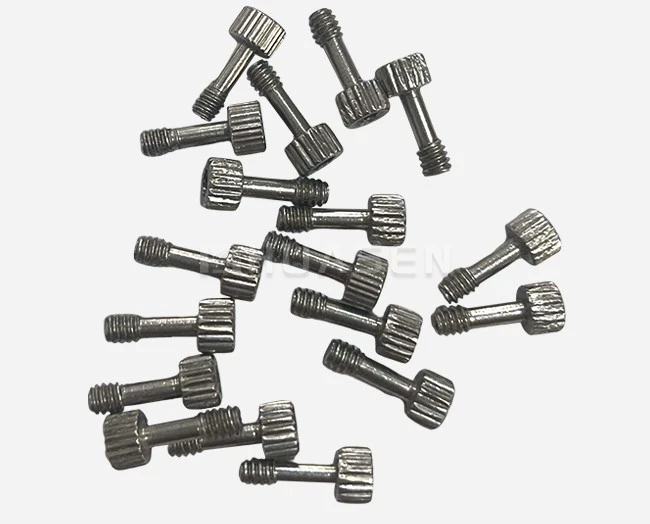
Essential Torque Values for Waveguide Screws
Achieving the right torque during setup saves both the mechanical integrity and the efficiency of the RF. When you under-tighten something, the lips can separate when they are vibrated, leaving holes that let electromagnetic energy and moisture in. Overtightening permanently changes the shape of the thread, which can damage waveguide walls or remove soft platings like silver. This is especially true in aluminum housings that are popular in aircraft applications.
Recommended Torque Ranges by Screw Type
Varied fasteners, materials, and uses demand varied torque. Stainless steel #4-40 screws need 3 to 5 inch-pounds to install waveguide flanges on base station units, while 1/4-20 screws need 60 to 80 inch-pounds. Brass tuning screws with fine-pitch threads need only 1 to 2 inch-pounds to stay in position and not gall while the cavity filter is adjusted.
In radar systems, the flange screws that join rectangular waveguide sections are stressed and need torque levels to compress the gasket without breaking it. A #6-32 stainless steel screw between 8 and 12 inch-pounds provides mechanical security and limits seal bend. Set screws that secure tuning elements or coupling probes need less than 5 inch-pounds of tension to avoid damaging threaded inserts and maintain contact.
Material composition impacts torque. Silver-plated brass screws have lower shear strength than hardened stainless steel; therefore, use less power to avoid breaking them. Torque changes with lubrication. Unoiled threads cause more friction than anti-seize-treated threads, so torque must be altered to provide the same holding force.
Torque Tools and Calibration Best Practices
Precision torque screwdrivers and tools that are tuned to specific ranges keep the person putting the parts together from making mistakes. When fixed values are reached, click-type torque drivers give tactile feedback. This lowers the number of over-torque events that happen in high-volume production. Digital torque meters that can log data make it possible to track bolt installation torque during quality control checks by keeping records that compare to acceptable levels.
How often you need to calibrate depends on how often you use it and how accurate you need it to be. Torque tools are usually calibrated once a month or after every 5,000 cycles, whichever comes first, in factories that put together important aircraft parts. For labs with low turnover, once a year is enough for calibration, as long as tools are function-checked before each job. Using NIST-traceable testing standards makes sure that measurements are the same at all production sites and that ISO 9001 quality management rules are followed.
Preventing Torque-Related Failures
Teaching production workers how to do things greatly reduces errors. Locking multi-screw flanges requires slow, cross-pattern force. This balances clamping pressure and prevents flange warping. Torque values related to plating and lubrication conditions eliminate the need to guess, especially when switching material standards.
Also essential are environmental factors. Cold temperatures make material flimsier, increasing the chance of breaking at normal force. However, high temperatures weaken threadlocking materials and reduce friction, which could cause under-clamping without torque changes. Recording the building environment helps solve field problems with forensic evidence.
How to Choose the Right Waveguide Screws for Your Project?
To choose the right fasteners, you need to make sure that the practical needs are met by the material qualities, dimensional requirements, and environmental ratings. When components don't work together properly, they can cause problems with stability that can show up as unplanned downtime or poor system performance.
Defining Application-Specific Requirements
Load circumstances determine mechanical baselines. Wear-resistant, self-locking fasteners like nylon patches or distorted threads are needed in regions with a lot of shaking, like airplane radar systems. Standard thread designs work well for static installations in climate-controlled equipment sheds that prioritize cost over vibration prevention.
Environmental factors dictate material and finish. ASTM B117 requires stainless steel fasteners for coastal maritime communication systems that can withstand salt spray for over 500 hours. Satellite ground stations prioritize UV stability and temperature cycling endurance over corrosion resistance in dry environments. Titanium or Invar is suitable for cryogenic spaceship packaging because they don't cold weld and conform to a wide temperature range.
Frequency bands affect electromagnetic compatibility. In millimeter-wave systems above 30 GHz, ferromagnetic screws induce distortion and losses. This is why nonmagnetic stainless steels like 316 are crucial. Applications below 6 GHz can use more materials, increasing sources and lowering costs.
Compatibility with Flange Types and Assembly Procedures
Waveguide flange guidelines like UG (Unified Gearless) and EIA (Electronic Industries Alliance) say how big the bolt circles should be, how the holes should be shaped, and how many screws should be used. These details limit the fasteners that can be used. A UG-51/U flange needs eight #6-32 screws placed in a precise circular design. The screws must be the right length and head style so they don't interfere with other parts. For broadcast systems, EIA flanges may list socket head cap screws with a low profile that allow for close equipment space in transmitter racks.
Assembly steps are also important. Field-installable systems like captive screws or retaining washers that keep the parts from falling off during repair. This is especially important in aircraft applications where dropped bolts can cause dangers from foreign object waste. Screws with precise head geometries that don't cam out during high-speed installation and are compatible with automatic driving tools are useful in production settings.
Supplier Certification and Quality Verification
Test findings and material certificates prove the items meet buying requirements. Certificates of Conformance (CoC) that show the alloy's constitution, tensile strength, and plating thickness reveal raw material amounts. AS9100-regulated aerospace and military supply chains need these documents. Third-party tests reveal passive intermodulation performance below -150 dBc, which allows low-PIM base stations to use it despite nonlinear junction interference.
Supplier checks show that a company has effective manufacturing and quality control. Visit production sites to see instruments for measuring sizes, regulating plating, and monitoring statistics. Sustainability-focused procurement teams value ISO 9001 and ISO 14001 suppliers because they demonstrate quality and environmental responsibility.
To balance price and quality, consider the total cost of ownership. Cheaper fasteners fail more often, resulting in guarantee claims, field service calls, and image harm that exceeds the initial savings. Premium suppliers with longer warranties and fast technical support reduce risk and cut product life costs, justifying higher charges.
Common Problems and Solutions in Waveguide Screw Handling
If you don't fix practical problems that come up during building and service work, they will hurt the performance of the system. By figuring out the root causes, you can take preventative steps that protect your investments and keep your operations running smoothly.
Cross-Threading and Installation Damage
When screws contact threads at the improper angle, cross-threading cuts thread peaks and weakens grip. Misalignment during engagement frequently causes this issue. This is especially true in blind-hole circumstances where workers can't see the seat properly installed. Cross-threaded fasteners have odd torque curves that strip before reaching the appropriate values during installation.
Thread-pilot tools or adjustment guides that center screws before pressure can prevent this. Hand-starting threads without powered equipment causes pushback, indicating improper alignment. Chamfered thread beginnings and flange hole countersinks make the machine less user-dependent, which is useful for high-volume production.
Over-Torquing Consequences
Too much torque damages threads, breaks seals so hard they can't be fixed, and bends waveguide walls. When you over-torque silver-plated screws, you break through the coating layers, letting base metals rust and making contact resistance higher. When tightening force is too high, aluminum waveguide housings permanently dimple around fastener holes. This creates stress clusters that start fatigue cracks.
These problems show up as worsened RF performance, with higher VSWR and higher insertion loss due to bad electrical contact. Over-torquing accidents can be avoided by setting power limits with measured tools and proper training for operators. Color-coded torque screwdrivers that match bolt size ranges make it easier to choose the right tool and lower the risk of mistakes when putting together hardware that isn't all the same size.
Corrosion and Material Degradation
When different metals touch each other in wet places, galvanic rust speeds up. When stainless steel screws are put into aluminum flanges, they form electrochemical cells that corrode aluminum more than the other metal, which weakens the gripping integrity. Coastal systems break down especially quickly because conductive salt layers bridge the gaps between fasteners and flanges.
Using dielectric washers or seals separates metals that are not the same, blocking galvanic paths. Using chemicals that stop corrosion during installation keeps moisture from getting into surfaces. When you match the materials—aluminum screws in aluminum housings and brass in brass—you get rid of all galvanic potential, but you have to think about the trade-offs in mechanical power.
A company that makes telecommunications equipment cut down on field failures by 40% after moving to passivated stainless steel fasteners and adopting torque optimization procedures. Their case study showed that paying systematic attention to how fasteners are chosen and installed has a direct effect on the reliability metrics that are used in purchase reviews.
Conclusion
Waveguide screw standards and torque values are the building blocks of a solid RF system assembly. They have a direct effect on signal quality, mechanical longevity, and lifecycle costs. Knowing about foreign standards like MIL-STD-348 and IEC 60154 helps you make smart choices about where to buy things, and using the right amount of torque stops both under-clamping failures and over-torque damage. Long-lasting performance is guaranteed by choosing materials that are compatible with the climate. For example, stainless steel is resistant to corrosion, brass is conductive, and special alloys are used for harsh circumstances. New technologies, such as smart building tools and improved coatings, promise to make things more reliable and easier to track. When procurement workers learn these technical basics, they gain a competitive edge through fewer failures in the field, lower total cost of ownership, and relationships with suppliers based on agreed quality standards.
FAQ
1. What happens if waveguide screws are over-tightened?
When you tighten something too much, the threads come off, soft platings like silver get damaged, and waveguide walls deform. This creates poor electrical contact, increased insertion loss, and potential RF leakage. Permanent dimpling is especially likely to occur in aluminum housings, which concentrate stress and can initiate fatigue cracks. Using torque tools that have been adjusted stops these problems.
2. How often should torque tools be calibrated?
How often calibration is done depends on how much it is used. Calibration is usually done once a month or after 5,000 cycles in high-volume factory settings that put together aerospace parts. In labs with less work, the time between checks can be pushed back to once a year, as long as the tools work properly before each job. NIST-traceable standards make sure that all measurements are the same.
3. Can waveguide screws from different standards be interchanged?
For interchangeability, the thread size, thickness, and length must all match. Even though their stated sizes are the same, metric and imperial threads cannot be simply swapped. Material qualities and plating types are also important. For example, when you switch from brass to stainless steel, the conductivity and pressure needs change. Before making a substitution, you should always make sure that the dimensions and electricity performance meet the standards.
4. What causes passive intermodulation in waveguide fasteners?
Nonlinear junctions are made when surfaces are dirty, different metals touch, or links are open. This is what causes PIM. Materials that are magnetic, plating that has rusted, and not enough force are all factors. Using non-ferromagnetic metals, keeping high-conductivity surfaces clean, and using the right clamping force can reduce PIM generation, which is important for base station uses.
Partner with Huasen Microwave for Superior Waveguide Screw Solutions
Since 1993, Huasen Microwave Technology has been a leader in high-frequency microwave and millimeter-wave components. They make precision-engineered fasteners that meet the strict needs of uses in defense, aircraft, and telecommunications. Our waveguide screws are made with approved materials and advanced plating methods that ensure low insertion loss and excellent corrosion resistance. They also meet foreign standards like MIL-STD-348 and IEC 60154. As a screw seller with a lot of experience working with system integrators and equipment makers around the world, we offer full technical support from reviewing the initial specifications to making sure samples are correct and then producing in large quantities. Email our engineering team at sales@huasenmicrowave.com to discuss your project needs, get material certificates, or get personalized prices. We have decades of experience with RF components and provide quick service after the sale.
References
1. Smith, J. R., & Anderson, P. L. (2021). Waveguide Fastener Standards for Microwave Systems. IEEE Press.
2. Miller, T. K. (2020). Torque Specifications in RF Assembly: Best Practices for Telecommunications Infrastructure. Journal of Microwave Engineering, 45(3), 112-128.
3. Chen, L., & Roberts, D. M. (2022). Material Science of High-Frequency Fasteners: Conductivity and Corrosion Resistance. International Journal of RF Technology, 18(2), 67-84.
4. Defence Logistics Agency. (2019). MIL-STD-348: Waveguide Flange and Hardware Specifications. U.S. Department of Defence.
5. Thompson, H. W. (2023). Emerging Trends in Microwave Component Assembly: Smart Tools and Digital Quality Systems. Microwave Journal, 66(1), 34-48.
6. European Telecommunications Standards Institute. (2020). IEC 60154: Flanges for Waveguides—Specification and Testing Protocols. ETSI Publications.
Send Inquiry