Waveguide Attenuator vs Coaxial: Performance Tradeoffs






2026-04-10 22:34:01
When building RF waveguide attenuatorsand microwave systems, the performance, cost, and dependability are all affected by the choice between waveguide and coaxial attenuators. Waveguide attenuators are great for radar and satellite communications because they can handle a lot of power and have low loss in millimetre waves. Coaxial attenuators are small, cover a wide range of frequencies, and are cost-effective. They can be used for testing and base station systems. Engineers can choose the best option for their needs by learning about the trade-offs between things like power capacity, frequency range, insertion loss, and environmental durability.
Why Attenuator Selection Matters in Modern RF Systems
Signal security is under more pressure than ever before because 5G networks, satellite constellations, and defence radar systems are growing so quickly. When engineers are working on base station front-ends, backhaul links, or aerospace communications, they have to make very important choices about which parts to use. Attenuators control signal levels, protect sensitive receivers, and make tests accurate. Choosing between waveguide and coaxial technologies has a direct effect on how well the system works, how hard it is to build, and how reliable it is in the long run.
Three core differences emerge immediately:
- Power handling capacity – Waveguide structures manage kilowatts of continuous power, while coaxial designs typically handle watts to hundreds of watts
- Frequency performance – Waveguide technology dominates above 40 GHz with lower losses, whereas coaxial solutions cover DC to millimeter-wave ranges
- Physical footprint – Coaxial attenuators fit dense equipment racks; waveguide components require more mounting space but deliver unmatched thermal management
If you need to attenuate high-power signals in radar transmitters or electronic countermeasure systems, waveguide attenuators provide superior thermal dissipation and peak power handling. If your application involves multi-band testing equipment or compact base station designs with moderate power levels, coaxial attenuators offer installation flexibility and cost advantages.
Understanding Waveguide Attenuator Fundamentals
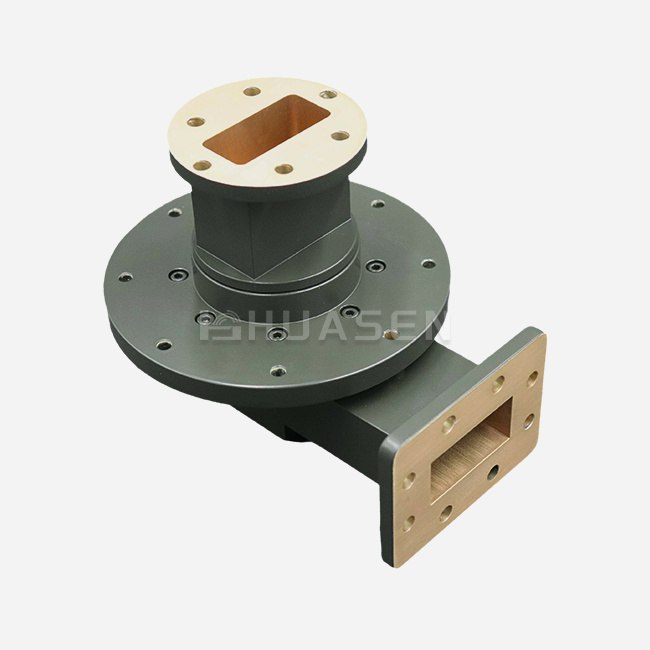
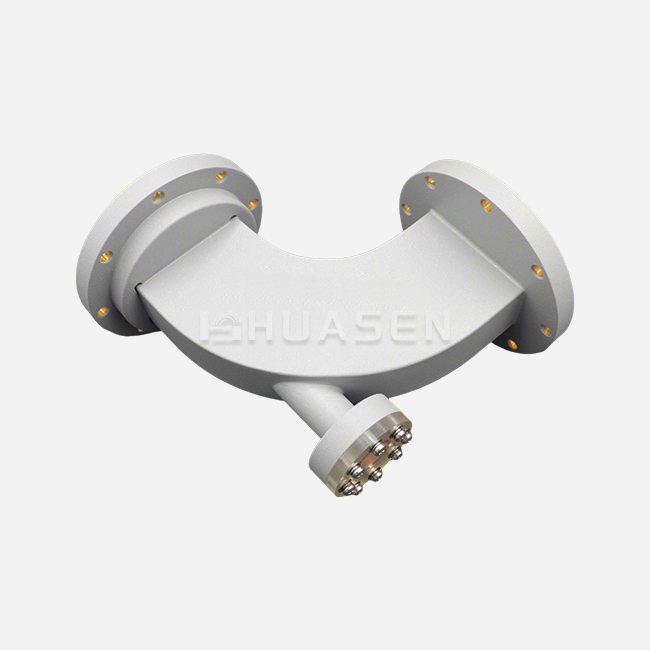
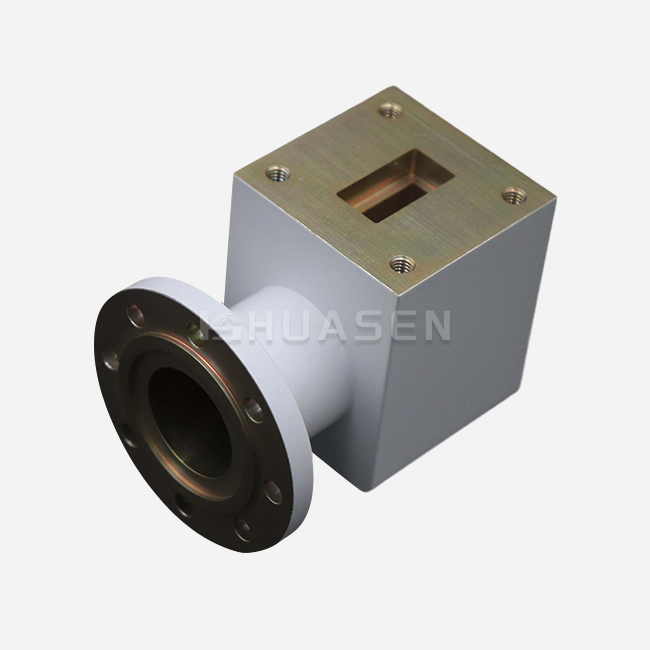
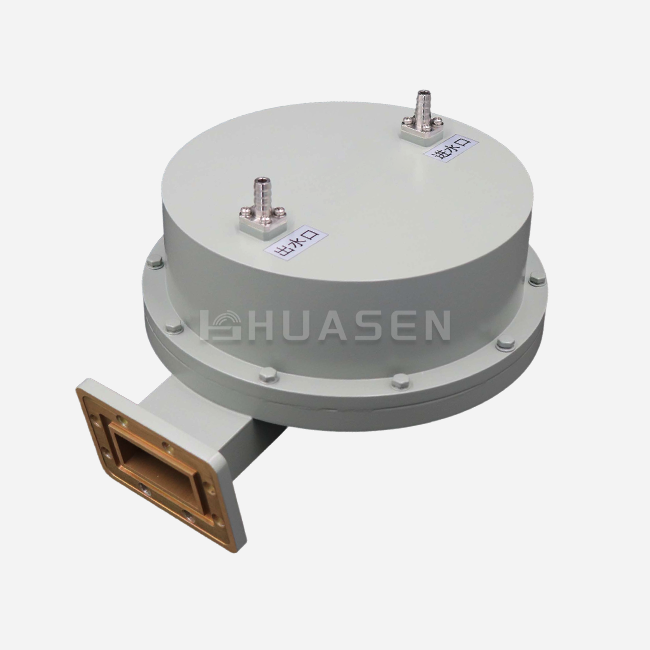
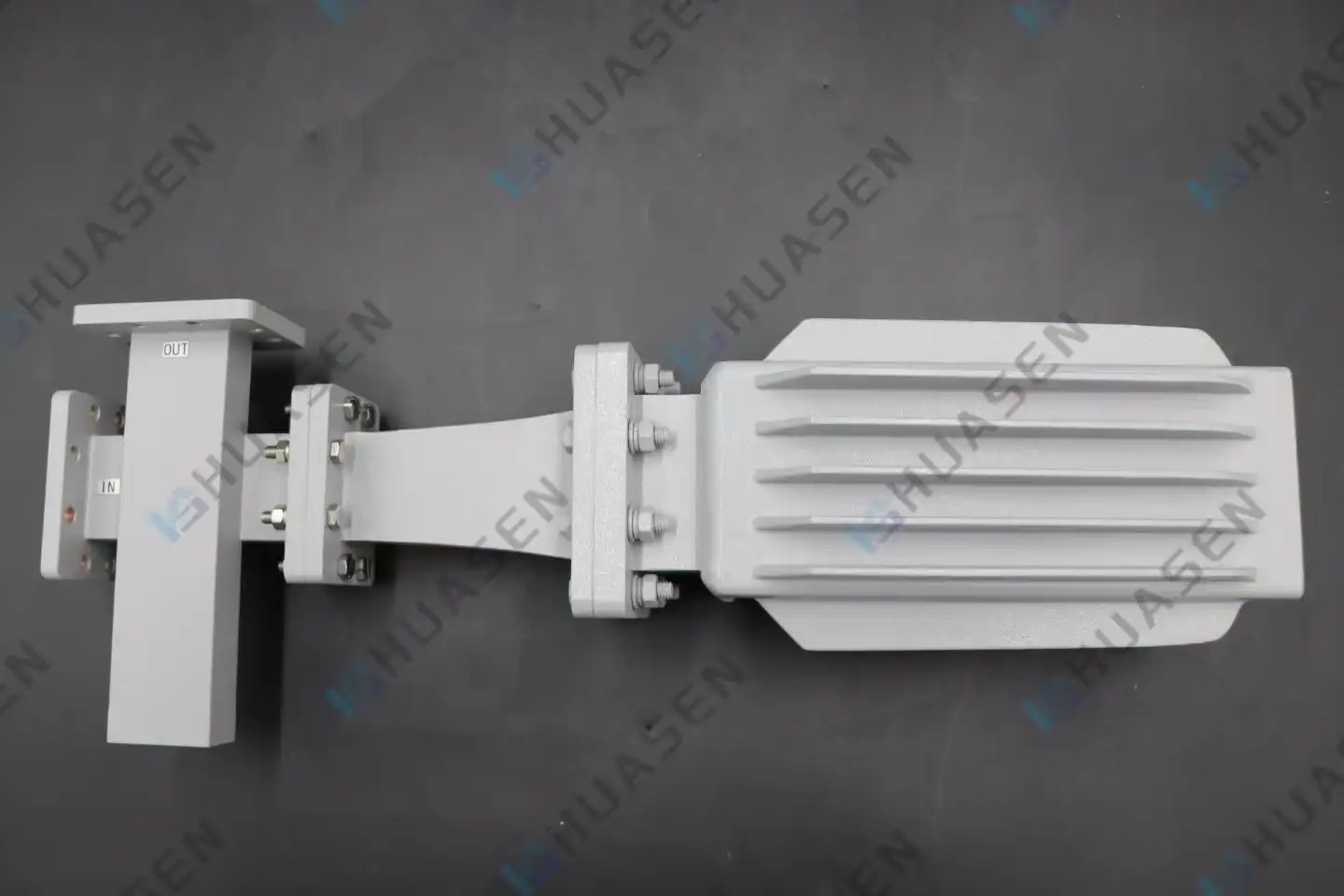
Waveguide attenuators employ rectangular or circular metal tubes to guide electromagnetic waves. The attenuation mechanism relies on resistive films, lossy dielectrics, or tapered vanes inserted into the waveguide path.
Key performance characteristics include:
- Insertion loss: Typically 0.3-1.2 dB for precision fixed attenuators at Ka-band frequencies
- VSWR: Achieves 1.15:1 or better across operational bandwidth
- Power rating: Continuous wave handling from 50W to several kilowatts, depending on waveguide size and cooling
- Temperature stability: ±0.02 dB/°C for laboratory-grade units with precision resistive elements
Test results from a WR-28 waveguide attenuator (26.5-40 GHz) show that it has an insertion loss of 0.8 dB at a 10 dB attenuation setting, a recorded VSWR of 1.12:1, and the ability to handle more than 300W of power on average. This ability makes it possible to use in weather radar systems and millimeter-wave communication links, where the quality of the signal is important. Waveguide shapes naturally block electromagnetic interference because they are strong mechanically. Flanged connectors, like UG-style or IEC standards, make sure that connections can be made over and over again with few reflections. This mechanical stability is very important for maritime communications or airborne radar systems that are subject to vibration and changes in temperature. If you need to attenuate waves above 40 GHz in harsh environments, waveguide designs work well within the military temperature range of -55°C to +85°C with little loss of performance.
Coaxial Attenuator Technology and Applications
Coaxial attenuators place resistive networks between the center conductor and the outer shield, maintaining characteristic impedance while reducing signal amplitude. Available in fixed, step, Waveguide Fixed Attenuator,or continuously variable configurations, these components integrate seamlessly into existing test setups and communication systems.
Performance parameters typically include:
- Frequency range: DC to 67 GHz for precision 2.92mm connectors, with broader coverage using SMA or N-type interfaces
- Attenuation accuracy: ±0.5 dB for values up to 20 dB in quality units
- Return loss: Better than 20 dB across the specified bandwidth
- Power capacity: 1W to 100W average for air-cooled designs; specialized models handle 250W with forced cooling
A 10 dB coaxial attenuator with SMA connectors (DC-18 GHz) was tested and found to have an insertion loss of ±0.3 dB, a VSWR of 1.25:1, and stable performance at 20W of constant input. Because of this, coaxial attenuators can be used in RF testing labs to protect spectrum analysers and to improve the signal in base station antennas. Because they are small, they can be packed tightly in 19-inch racks or right on circuit boards. For communication payloads on drones or satellites, where every gram counts, coaxial solutions are better because they are lighter. Coaxial attenuators are flexible across multiple frequency bands, making them ideal for broadband testing equipment, antenna measurement systems, or telecoms infrastructure that needs to handle moderate power and have great size-to-performance ratios.
Performance Comparison: Key Technical Tradeoffs
Comparing these technologies reveals distinct advantages depending on application requirements:
| Parameter | Waveguide Attenuator | Coaxial Attenuator |
|---|---|---|
| Frequency Range | Limited by waveguide cutoff (typically 1.5:1 ratio) | DC to 110+ GHz, depending on the connector |
| Power Handling | 50W to 5+ kW continuous | 1W to 250W continuous |
| Insertion Loss (passive) | 0.3-1.0 dB at design frequency | 0.5-1.5 dB across the broadband range |
| Phase Stability | ±2° over the temperature range | ±5° over the temperature range |
| Size & Weight | Large footprint, 200g to 2kg | Compact, 10g to 150g |
| Environmental Sealing | Excellent with proper gaskets | Good with hermetic connectors |
| Cost per Unit | $400-$3,500 | $150-$1,200 |
Five critical considerations forwhen selecting attenuator technology:
- Operating frequency – Above 40 GHz, waveguide losses become significantly lower than coaxial alternatives
- Peak power requirements – Pulsed radar systems with megawatt peaks demand waveguide thermal mass
- Installation constraints – Tight equipment bays favor coaxial; outdoor weatherproof installations suit waveguide ruggedness
- Bandwidth needs – Multi-octave coverage points toward coaxial; narrow-band optimization favors waveguide
- Calibration stability – Long-term measurement references benefit from waveguide temperature coefficients
If you need to build a 5G massive MIMO test system covering 24-44 GHz with moderate power levels (under 10W), coaxial attenuators provide the frequency agility and compact integration required. If your satellite ground station operates at 30 GHz with a 500W transmitter output requiring precision attenuation for calibration, waveguide technology ensures reliable operation without thermal drift.
Environmental and Reliability Factors
Harsh deployment conditions—salt spray in maritime radars, thermal cycling in spacecraft, vibration in airborne systems—test component durability beyond electrical specifications.
Waveguide environmental advantages:
- Sealed metal construction naturally excludes moisture and contaminants
- Thick-wall structures resist mechanical shock and vibration
- Large thermal mass distributes heat effectively without active cooling
- Flanged connections provide robust mechanical retention under stress
Accelerated life testing of military-grade waveguide attenuators shows less than 0.1 dB performance change after 500 thermal cycles (-55°C to +125°C) and compliance with MIL-STD-202 shock specifications. This reliability supports 20+ year service life in defense applications.
Coaxial environmental considerations:
- Hermetically sealed connectors prevent moisture ingress in outdoor installations
- Lighter weight reduces mounting stress in mobile platforms
- Smaller thermal mass requires attention to heat sinking at elevated power
- Thread wear from frequent connection cycles demands regular inspection
Testing reveals quality coaxial attenuators maintain specifications through 1,000+ mating cycles when using precision connectors with proper torque control. For laboratory instruments or test equipment requiring reconfiguration, this durability supports daily operational use. If you need components for offshore wind farm wireless backhaul exposed to corrosive environments, waveguide attenuators with proper surface treatment (gold or aluminum oxide) provide superior long-term stability. If your application involves benchtop testing with frequent setup changes, coaxial components offer adequate environmental protection with operational convenience.
Cost Analysis and Total Ownership Considerations
Initial purchase price represents only one element of lifecycle cost. Installation labor, calibration schedules,Waveguide FixedAttenuator,andreplacement intervals significantly impact total expenditure.
Waveguide cost factors:
- Higher unit prices reflect precision machining and materials
- Installation requires skilled technicians familiar with flange alignment
- Calibration stability reduces measurement uncertainty and retest frequency
- An extended service life amortizes the initial investment over decades
A typical WR-90 waveguide attenuator costs $800-$1,500, with installation requiring 2-3 hours for mounting and torque verification. Annual calibration fees of $200 maintain traceability. Over 15 years, the total cost approximates $4,500 per unit.
Coaxial cost factors:
- Lower initial acquisition supports larger quantity purchases
- Simple installation reduces labor costs to 15-30 minutes per unit
- More frequent recalibration may be necessary in high-reliability applications
- Connector wear drives replacement after 5-10 years in high-use environments
A quality SMA coaxial attenuator costs $250-$600, with minimal installation expense. Calibration every two years at $150 per service yields a 10-year total cost near $1,500 per unit. If you need to equip a large telecommunications network with hundreds of attenuators across multiple base stations, coaxial solutions provide budget-friendly scalability without sacrificing essential performance. If your research laboratory requires measurement reference standards maintaining accuracy for decades, waveguide attenuators justify a higher upfront investment through long-term stability.
Application-Specific Selection Guidelines
Different industries prioritize distinct performance attributes based on operational requirements.
Telecommunications and 5G infrastructure:
Massive MIMO base stations, millimeter-wave backhaul links, and small cell deployments need small parts that can handle modest power over a number of frequency bands. Coaxial attenuators work from DC to 40 GHz and help with testing the pre-amplifier, protecting the receiver, and calibrating the signal in radio units that don't have a lot of room. If your system has 64T64R antenna arrays but not a lot of rack room, choose coaxial attenuators that have more than one attenuation value in a single switched package. This will make installation go more smoothly.
Aerospace and defense radar:
Radar systems are mostly made with high-power transmitters, pulsed operating, a waveguide attenuator,and are exposed to harsh environments. It is possible for waveguide attenuators to handle average power levels of kilowatts and peak power levels of megawatts while keeping phase linearity across small operational bands. If you want to make an aircraft fire control radar that works at X-band and has a peak power of 20kW, waveguide attenuators can handle the heat and be tough enough to last for years in the air.
Satellite ground stations:
Waveguide low-loss properties help uplink emitters and downlink receivers that work at Ka-band and above. Precise attenuation lets the level be controlled automatically and keeps sensitive devices safe from strong signals while satellites are being acquired. If your teleport facility handles several satellite links from 18 to 31 GHz with emitter powers above 100W, waveguide variable attenuators can be controlled from a distance and are very good at handling power.
RF testing and calibration laboratories:
Waveguide low-loss properties help uplink emitters and downlink receivers that work at Ka-band and above. Precise attenuation lets the level be controlled automatically and keeps sensitive devices safe from strong signals while satellites are being acquired. If your teleport facility handles several satellite links from 18 to 31 GHz with emitter powers above 100W, waveguide variable attenuators can be controlled from a distance and are very good at handling power.
Huasen Microwave Waveguide Attenuator Advantages
Selecting a reliable waveguide attenuator manufacturer impacts project success through component quality, technical support, and supply chain stability. Huasen Microwave Technology brings three decades of RF and microwave expertise to demanding applications:
- Comprehensive frequency coverage: Standard waveguide attenuator products span 1 GHz to 110 GHz across all common waveguide bands (WR-650 through WR-8), supporting telecommunications, radar, and satellite applications without frequency gaps
- High power handling: Precision-machined waveguide structures with optimized thermal design enable continuous power ratings from 50W to 2kW, depending on frequency and attenuation value, verified through rigorous testing protocols
- Superior VSWR performance: Advanced resistive film deposition techniques achieve VSWR better than 1.15:1 across operational bandwidth, minimizing reflections that degrade system performance in sensitive receiver applications
- Attenuation accuracy: Laser-trimmed resistive elements provide ±0.5 dB tolerance on fixed attenuators and ±0.8 dB on variable models, with long-term stability better than ±0.1 dB annually under normal operating conditions
- Environmental qualification: Products meet MIL-STD-202 environmental testing requirements, including temperature cycling, vibration, and shock specifications, with optional conformal coating for maritime and aerospace applications
- Flexible customization capabilities: Engineering teams collaborate on custom frequency bands, attenuation values, flange types (UG, IEC, or customer-specified), and power ratings to meet unique system requirements without minimum order quantities for prototype development
- Complete certification compliance: Manufacturing processes follow ISO 9001 quality management systems with RoHS-compliant materials and processes, providing documentation packages supporting customer regulatory requirements
- Rapid prototyping services: In-house CNC machining centers and thin-film deposition equipment enable 2-3 week prototype delivery for custom specifications, accelerating development timelines for time-sensitive projects
- Technical design assistance: Applications engineers with decades of combined experience provide design consultation, recommend optimal configurations based on system requirements, and supply S-parameter data for simulation and modeling
- Calibrated test data: Each production unit ships with measured insertion loss, VSWR, and attenuation accuracy data traceable to national standards, eliminating incoming inspection burden and supporting measurement uncertainty analysis
- Reliable global supply chain: Established material sourcing relationships and inventory management ensure consistent delivery schedules for both prototype quantities and volume production, with typical lead times of 4-6 weeks for standard configurations
- Responsive after-sales support: Technical service teams provide troubleshooting assistance, calibration services, and warranty support through direct communication channels, ensuring minimal downtime in critical applications
These capabilities make Huasen Microwave a trusted partner for system integrators, equipment manufacturers, and research institutions requiring dependable microwave components. Whether designing next-generation 5G infrastructure, upgrading defense radar systems, or building satellite ground stations, the company's waveguide attenuator portfolio delivers performance and reliability.
Conclusion
Choosing between waveguide and coaxial attenuators requires balancing electrical performance, physical constraints, and operational requirements. Waveguide technology dominates high-power, millimeter-wave applications where low loss and thermal management prove critical. Coaxial alternatives provide compact integration and broadband coverage for testing, base stations, and moderate-power systems. Understanding these fundamental tradeoffs—frequency range, power capacity, size, cost, and environmental durability—enables informed decisions that optimize system performance while controlling project budgets and timelines.
Partner with a Leading Waveguide Attenuator Supplier
Huasen Microwave Technology stands ready to support your next RF system design with proven waveguide and coaxial attenuation solutions. The engineering team understands the technical challenges facing telecommunications infrastructure builders, aerospace system integrators, and research laboratories. Decades of manufacturing experience translate to components that perform reliably in demanding applications. Reach out to discuss your specific frequency requirements, power handling needs, Waveguide Attenuator,and environmental specifications. Contact sales@huasenmicrowave.com to request detailed specifications, application notes, or sample evaluation units that accelerate your development timeline.
References
1. Pozar, David M. "Microwave Engineering, Fourth Edition." Wiley Publications, 2012.
2. Collin, Robert E. "Foundations for Microwave Engineering, Second Edition." IEEE Press Series on Electromagnetic Wave Theory, 2001.
3. Rizzi, Peter A. "Microwave Engineering: Passive Circuits." Prentice Hall International Editions, 1988.
4. Saad, Theodore S. "Microwave Engineers' Handbook, Volume 1." Artech House Microwave Library, 1971.
5. Matthaei, George L., Leo Young, and E.M.T. Jones. "Microwave Filters, Impedance-Matching Networks, and Coupling Structures." Artech House Books, 1980.
6. Baden Fuller, A.J. "Microwaves: An Introduction to Microwave Theory and Techniques, Third Edition." Pergamon International Library of Science, Technology, Engineering and Social Studies, 1990.
Send Inquiry