Troubleshooting of Gain Fluctuation in Standard Gain Horn Antenna






2026-03-08 21:54:21
Gain fluctuation troubleshooting in standard gain horn antenna systems represents a critical challenge for RF engineers and system integrators working with precision measurement equipment. This comprehensive issue affects measurement accuracy across EMC testing environments, satellite communications, and radar applications. Understanding the root causes of gain instability—from mechanical tolerances and environmental factors to connector degradation—enables engineers to maintain consistent antenna performance. Effective troubleshooting combines systematic diagnostic approaches with preventive maintenance strategies, ensuring reliable operation in demanding applications where measurement precision directly impacts system performance and regulatory compliance.
Understanding Gain Fluctuation in Standard Gain Horn Antennas
Gain fluctuation in horn antennas occurs when the antenna's directivity and power transfer efficiency vary unexpectedly from its theoretical or calibrated values. This phenomenon poses significant challenges in metrology applications where measurement uncertainty must remain within strict tolerances.
Technical Causes of Gain Instability
The electromagnetic performance of horn antennas depends heavily on precise geometric relationships between aperture dimensions, flare angles, and throat transitions. Manufacturing tolerances in these critical dimensions can introduce gain variations across the operating frequency range. Surface roughness on internal walls affects current distribution patterns, particularly at millimeter-wave frequencies where skin depth becomes comparable to surface irregularities. Temperature-induced thermal expansion represents another significant factor affecting gain stability. Aluminum construction materials exhibit thermal expansion coefficients that can alter aperture dimensions by several micrometers across typical operating temperature ranges. This dimensional change translates directly into phase center shifts and gain variations, especially noticeable in precision measurement applications requiring sub-decibel accuracy. Environmental conditions,s including humidity, atmospheric pressure variations, and mechanical vibrations,s contribute to gain fluctuation through multiple mechanisms. Moisture infiltration can alter the dielectric properties near the antenna aperture, while mechanical stress from mounting systems may introduce subtle deformations affecting the electromagnetic field distribution.
Common Scenarios Leading to Gain Instability
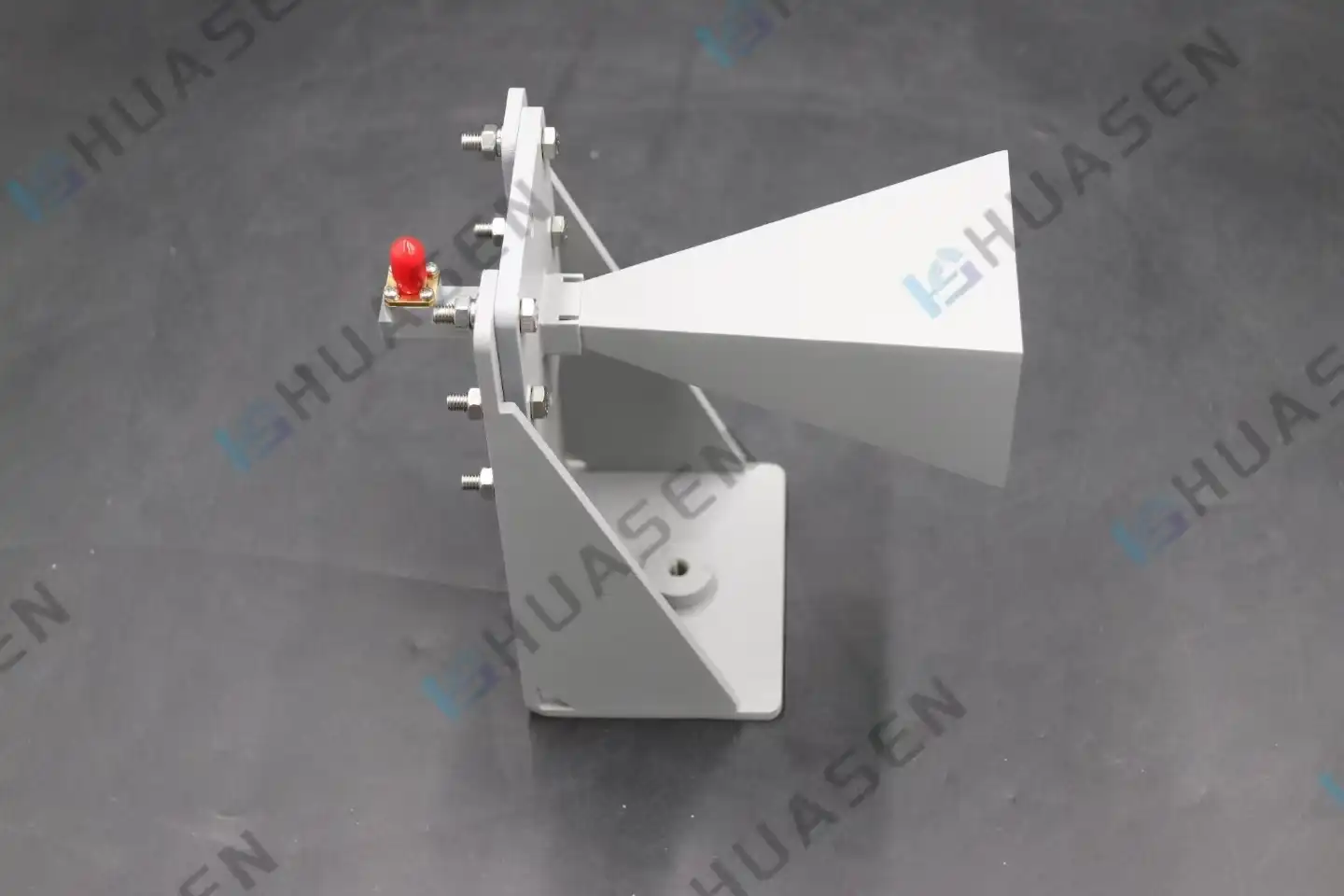
Installation misalignments frequently cause apparent gain fluctuations during antenna range measurements. Angular misalignment as small as 0.5 degrees can introduce significant measurement errors when interpreting gain performance. Connector issues, including impedance discontinuities at waveguide flanges and coaxial interfaces, create standing wave patterns that manifest as frequency-dependent gain variations. Cable flexure and connector wear represent ongoing maintenance challenges in test environments. Repeated connection cycles gradually degrade contact surfaces, introducing variable insertion losses that appear as gain instability during system operation. These effects become particularly pronounced at higher frequencies, where contact resistance sensitivity increases substantially.
Systematic Approach to Troubleshooting Gain Fluctuation
Effective gain fluctuation diagnosis requires a methodical approach combining measurement techniques with root cause analysis. This structured methodology enables engineering teams to identify problems quickly and implement targeted corrective actions.
Five-Step Diagnostic Process
The troubleshooting process begins with precise problem identification using calibrated test equipment. Vector network analyzers provide a comprehensive characterization of return loss, insertion loss, and phase response across the operating frequency range. Spectrum analyzers reveal spurious responses and harmonic content that may contribute to apparent gain variations. Cause analysis involves systematic evaluation of environmental factors, mechanical integrity, and electrical performance. Temperature logging during extended measurement sessions helps identify thermal correlation with gain drift. Mechanical inspection focuses on flange alignment, mounting stability, and internal surface condition assessment. Environmental factor evaluation includes atmospheric condition monitoring and electromagnetic interference assessment. Nearby metallic objects or changing environmental conditions can introduce unwanted reflections that affect apparent antenna gain measurements. Comprehensive shielding effectiveness evaluation ensures measurement repeatability. Hardware verification encompasses connector inspection, cable testing, and calibration standard validation. High-quality calibration standards provide reference points for identifying system-level versus antenna-specific performance issues. Regular connector torque verification prevents gradual degradation of RF connections.
Real-World Case Studies and Preventive Measures
A telecommunications equipment manufacturer experienced intermittent gain fluctuations during 5G base station testing. Investigation revealed thermal cycling effects on aluminum horn antenna assemblies, standard gain horn causing aperture dimension variations exceeding design tolerances. Implementation of temperature-compensated measurement protocols and improved thermal management resolved the stability issues. Aerospace applications frequently encounter vibration-induced gain variations during flight testing. Proper mounting techniques using vibration-isolating hardware and regular connection integrity verification minimize these effects. Establishing baseline measurements under controlled conditions provides reference data for field performance validation. Regular maintenance schedules incorporating connector cleaning, torque verification, and performance trending enable proactive identification of developing issues. Documentation of environmental conditions during measurements helps establish correlation patterns between external factors and antenna performance variations.
Comparing Standard Gain Horn Antennas to Alternative Antenna Types for Stability
Horn antenna configurations offer distinct advantages in gain stability compared to other antenna types commonly used in measurement applications. Understanding these comparative benefits guides informed procurement decisions for critical test environments.
Performance Analysis Across Antenna Types
Pyramidal horn antennas demonstrate superior gain stability compared to biconical designs due to their well-defined aperture field distribution and minimal frequency-dependent geometry effects. The theoretical predictability of horn antenna gain enables more accurate calibration and long-term stability assessment compared to empirically characterized broadband antennas. Standard gain horn designs operating from 30 MHz to 300 GHz maintain consistent directivity patterns across their designated frequency ranges. This stability contrasts favorably with log-periodic antennas, which exhibit inherent gain variations due to their frequency-dependent active region behavior. Parabolic reflector antennas, while offering high gain, suffer from surface accuracy sensitivity and feed positioning criticality that can introduce significant measurement uncertainties. The linear polarization characteristics of horn antennas provide excellent cross-polarization discrimination, typically exceeding 25 dB. This performance enables accurate polarization-sensitive measurements without the correction factors required for other antenna types. Biconical antennas, commonly used for EMC testing, exhibit more variable polarization purity across their operating bandwidth.
Selection Criteria for Specific Applications
EMC compliance testing applications benefit from horn antenna frequency selectivity and high power handling capability. The ability to generate high-intensity, uniform field strengths with predictable characteristics makes horn antennas ideal for immunity testing according to IEC 61000-4-3 standards. Their narrow beamwidth concentrates RF energy effectively, reducing test chamber requirements compared to broadband alternatives. Antenna range calibration applications require the absolute accuracy and theoretical predictability that horn antennas provide. The gain-transfer method relies on precise knowledge of reference antenna characteristics, making horn antennas the preferred choice for primary calibration standards. Their mechanical stability and environmental resilience support long-term calibration interval requirements. Partnering with established manufacturers ensures access to comprehensive technical support, calibration services, and quality assurance programs. Reputable suppliers provide NIST-traceable calibration data, dimensional verification reports, and ongoing technical consultation to maintain measurement system integrity throughout the antenna lifecycle.
Best Practices for Installation, Calibration, and Maintenance to Minimize Gain Fluctuation
Proper installation techniques, calibration protocols, and maintenance procedures form the foundation of stable horn antenna performance. These practices directly impact measurement repeatability and long-term system reliability.
Installation and Mounting Solutions
Precise antenna alignment requires mechanical mounting systems that maintain positional stability under varying environmental conditions. Rigid mounting structures minimize vibration transmission and thermal expansion effects that can introduce alignment errors. Kinematic mounting systems enable repeatable positioning while accommodating thermal cycling without inducing mechanical stress. Environmental control measures include temperature regulation, humidity management, and electromagnetic shielding implementation. Climate-controlled test environments reduce thermal expansion effects and moisture-related performance variations. Proper RF shielding prevents external interference from affecting measurement accuracy and antenna characterization. Connector interface preparation involves careful flange cleaning, proper torque application, and contact surface inspection. Waveguide flange connections require flat, clean surfaces to prevent RF leakage and impedance discontinuities. Regular torque verification ensures consistent connection quality throughout the operational lifecycle.
Calibration Protocols and Standards Compliance
Industry-standard calibration procedures follow established protocols,s including IEEE 149 and ANSI C63.5 guidelines. These standards specify measurement techniques, uncertainty analysis methods, astandard gain horn,and documentation requirements for antenna calibration programs. Compliance with these standards ensures measurement traceability and international recognition of calibration results. Regular calibration intervals depend on application requirements and environmental exposure conditions. Laboratory environments typically support 3-5 year calibration cycles, while field applications may require annual verification to maintain measurement confidence. Interim performance checks using stable reference standards help identify developing issues between formal calibration events. Leading antenna suppliers provide comprehensive technical support, including calibration services, measurement uncertainty analysis, and application engineering consultation. This support enables users to optimize their measurement systems and maintain compliance with evolving industry standards. Regular firmware updates and calibration coefficient refinements ensure continued accuracy throughout the antenna's operational life.
Routine Inspection and Preventive Maintenance
Visual inspection procedures focus on mechanical integrity, surface condition, and connector wear assessment. Internal surface inspection using borescopic techniques reveals corrosion, contamination, or physical damage that may affect electromagnetic performance. Regular documentation of inspection findings enables trending analysis and proactive maintenance scheduling. Electrical performance monitoring involves periodic return loss measurements, gain verification, and pattern stability assessment. Automated test systems can perform routine performance checks and alert operators to developing issues before they impact measurement accuracy. Statistical analysis of performance trends helps establish predictive maintenance schedules. Connector maintenance programs include cleaning protocols, replacement schedules, and performance verification procedures. High-frequency connections require specialized cleaning techniques and materials to maintain surface conductivity and dimensional accuracy. Regular replacement of wear items prevents gradual performance degradation that might otherwise go unnoticed.

Procurement and Buying Guide: Securing Standard Gain Horn Antennas That Ensure Minimal Gain Fluctuation
Strategic procurement decisions significantly impact long-term antenna performance and measurement system reliability. Understanding evaluation criteria, supplier qualifications, and technical specifications enables informed purchasing decisions that minimize the total cost of ownership.
Supplier Evaluation and Technical Specifications
Assessing a supplier's credibility means looking at their technical know-how, manufacturing skills, and quality control systems. ISO 9001 certification shows that a company is dedicated to quality processes, and ISO/IEC 17025 certification shows that a company knows how to measure things correctly for testing services. The skills and qualifications of technical staff have a direct effect on the quality of the product and the ongoing assistance for customers. Product certifications, such as MIL-STD compliance, RoHS compliance, and frequency authorisation documents, make sure that the product meets all regulations and is safe for the environment. These certificates lower the risk of buying things and help companies with their sustainability efforts while also making sure that the products can be used for what they were made for. Verification of the manufacturing process includes the ability to check dimensions, track materials, and validate electromagnetic models. Precision machining for higher frequencies, copper silver brazing for best conductivity, and aluminium arc welding for structural integrity are some of the advanced manufacturing methods that make sure that product quality and performance are always the same.
Pricing Analysis and Lead Time Considerations
The original purchase price, calibration services, technical support, and long-term maintenance needs should all be included in the cost analysis. Negotiating volume discounts on prices can save you a lot of money when you buy a lot of items at once. This is because the product specs stay the same, no matter how many items you buy. Standardising on common frequency ranges and connector interfaces makes managing supplies easier and makes the system less complicated overall. Finding the best delivery time means balancing the need for customisation with the quantity of stock. Delivery times are usually faster for standard configurations with common frequency ranges and gain levels. On the other hand, custom specifications may require longer manufacturing schedules. Setting up a framework to deal with qualified suppliers can cut down on the time it takes to get things for future needs. Customisation options let you get the best performance for your specific needs, like expanding the frequency range, creating custom mounting interfaces, or improving environmental protection. Working closely with standard gain horn antenna makers with a lot of experience makes sure that custom solutions keep the performance and calibration tracking needed for precise measurement tasks.
Conclusion
To figure out why horn antenna systems' gain changes, you need to know a lot about electromagnetics, the surroundings, and systematic ways to diagnose problems. Correct installation methods, standard horn antenna regular maintenance plans, and strategic relationships with suppliers all work together to make a resolution that works. The organised methods shown help engineering teams keep measurements accurate while causing as few problems as possible with operations. To be successful, you need to take precautions, set up strong calibration processes, and work with manufacturers who have a lot of experience and know what precision measurement applications need.
FAQ
1. What causes the most common gain fluctuations in horn antennas?
Temperature-induced thermal expansion represents the primary cause of gain fluctuation in horn antenna systems. Aluminum construction materials expand and contract with temperature variations, altering critical aperture dimensions and affecting electromagnetic field distribution. This effect becomes particularly pronounced in outdoor installations or environments with significant temperature cycling.
2. How often should horn antennas undergo calibration verification?
Calibration verification intervals depend on application criticality and environmental exposure. Laboratory environments typically support 3-5 year calibration cycles, while field applications may require annual verification. Interim performance checks using stable reference standards help identify developing issues between formal calibration events, ensuring continued measurement confidence.
3. Can environmental conditions permanently damage horn antenna performance?
Severe environmental exposure, including corrosion, mechanical impact, or contamination, can permanently affect horn antenna performance. However, proper environmental protection and regular maintenance typically prevent permanent damage. Most environmental effects are reversible through appropriate cleaning, reconditioning, or component replacement procedures.
4. What accuracy can be expected from properly maintained horn antennas?
High-quality horn antennas with proper maintenance typically achieve gain accuracy within ±0.5 dB across their operating frequency range. This accuracy depends on proper installation, environmental control, and regular calibration verification. Advanced designs with precision manufacturing can achieve even tighter tolerances for critical measurement applications.
5. How do connector issues affect apparent antenna gain?
Connector degradation introduces variable insertion losses and impedance discontinuities that manifest as frequency-dependent gain variations. Poor connector contact, corrosion, or mechanical wear can cause measurement uncertainties exceeding the antenna's inherent accuracy specifications. Regular connector maintenance and replacement prevent these issues from affecting measurement results.
Contact Huasen Microwave for Premium Standard Gain Horn Antenna Solutions
Huasen Microwave Technology delivers industry-leading horn antenna solutions with exceptional gain stability and measurement accuracy. Our standard gain horn antenna manufacturer capabilities span frequencies from 30 MHz to 300 GHz, featuring precision construction with a ±0.5 dB accuracy guarantee. With over 30 years of RF engineering expertise, standard gain horn antennawe provide comprehensive technical support, NIST-traceable calibration services, and rapid delivery from our extensive stock inventory. Contact our engineering team at sales@huasenmicrowave.com to discuss your specific measurement requirements and discover how our proven antenna solutions can enhance your test system performance and measurement confidence.
References
1. EEE Standard 149-2021, "IEEE Standard Test Procedures for Antennas," Institute of Electrical and Electronics Engineers, New York, 2021.
2. Johnson, R.C. and Jasik, H., "Antenna Engineering Handbook, Fourth Edition," McGraw-Hill Professional, New York, 2007, Chapter 15: Standard Gain Horn Antennas.
3. Balanis, C.A., "Antenna Theory: Analysis and Design, Fourth Edition," John Wiley & Sons, Hoboken, New Jersey, 2016, pp. 678-724.
4. ANSI C63.5-2017, "American National Standard for Electromagnetic Compatibility - Radiated Emission Measurements in Electromagnetic Interference (EMI) Control," American National Standards Institute, Washington D.C., 2017.
5. Milligan, T.A., "Modern Antenna Design, Second Edition," John Wiley & Sons, Hoboken, New Jersey, 2005, Chapter 12: Horn Antenna Calibration and Measurement Techniques.
6. IEC 61000-4-3:2020, "Electromagnetic compatibility (EMC) - Part 4-3: Testing and measurement techniques - Radiated, radio-frequency, electromagnetic field immunity test," International Electrotechnical Commission, Geneva, Switzerland, 2020.
Send Inquiry