
Top Manufacturers of High-Speed Digital Phase Shifters






2026-05-29 22:00:36
When buying precise RF components for telecommunications infrastructure or aircraft radar systems, choosing the proper digital phase shifter manufacturer is crucial. Due to its microsecond-level switching rates and high repeatability, high-speed digital phase shifters have altered beamforming networks in 5G base stations and active electronically scanned arrays (AESA). They work consistently in difficult operational conditions thanks to logic-driven designs, unlike analogue components that suffer from thermal drift and control voltage sensitivity. Leading manufacturers in this domain use novel semiconductor technology and strict quality standards to service satellite communications and defence applications, where component dependability affects mission success.
Understanding Digital Phase Shifters and Their Role in High-Speed Applications
A digital phase shifter is an RF/microwave device that changes the transmission phase angle of incoming signals using discrete digital commands. This difference is crucial in current systems. Switched delay lines, reflection-type networks, or vector modulators controlled by TTL or CMOS logic interfaces convert binary signals into exact phase changes.
Core Operating Principles
These components divide 360-degree phase rotation into quantised steps based on bit resolution. The 6-bit gadget has 64 phase states and 5.625-degree resolution, whereas the 8-bit version offers 1.4-degree increments. The switching mechanism uses semiconductor technology like GaAs FETs, PIN diodes, or MEMS devices to route signals through digital state-specific delay routes.
Critical Performance Metrics
System designers assess these devices using numerous criteria. Phase correctness is the degree to which the actual phase shift matches the required value, often between ±2 and ±5 degrees of RMS inaccuracy. Signal power budgets are affected by insertion loss, which ranges from 3 to 8 dB depending on frequency and bit count. Modern solid-state designs can switch in 20 to 500 nanoseconds, making switching speed critical in time-division duplex and quick beam steering systems.
Advantages Over Analogue Solutions
Several voltage-tuned phase shifter issues are eliminated by digital systems. They resist control signal noise, interface directly with FPGAs and integrated CPUs, and perform well at severe temperatures. Phased array antennas require stability to track thousands of digital phase shifters without calibration drift.
Applications across numerous high-frequency areas drive demand. In 5G massive MIMO base stations, these components enable dynamic beamforming to route millimetre-wave energy to user equipment while minimising interference. Defence radar systems direct beams electronically across vast angular ranges without mechanical movement, using hundreds of digital phase shifters per antenna panel. Satellite terminals aboard ships and planes use quick phase adjustment to retain signal lock during platform motion and attitude changes.
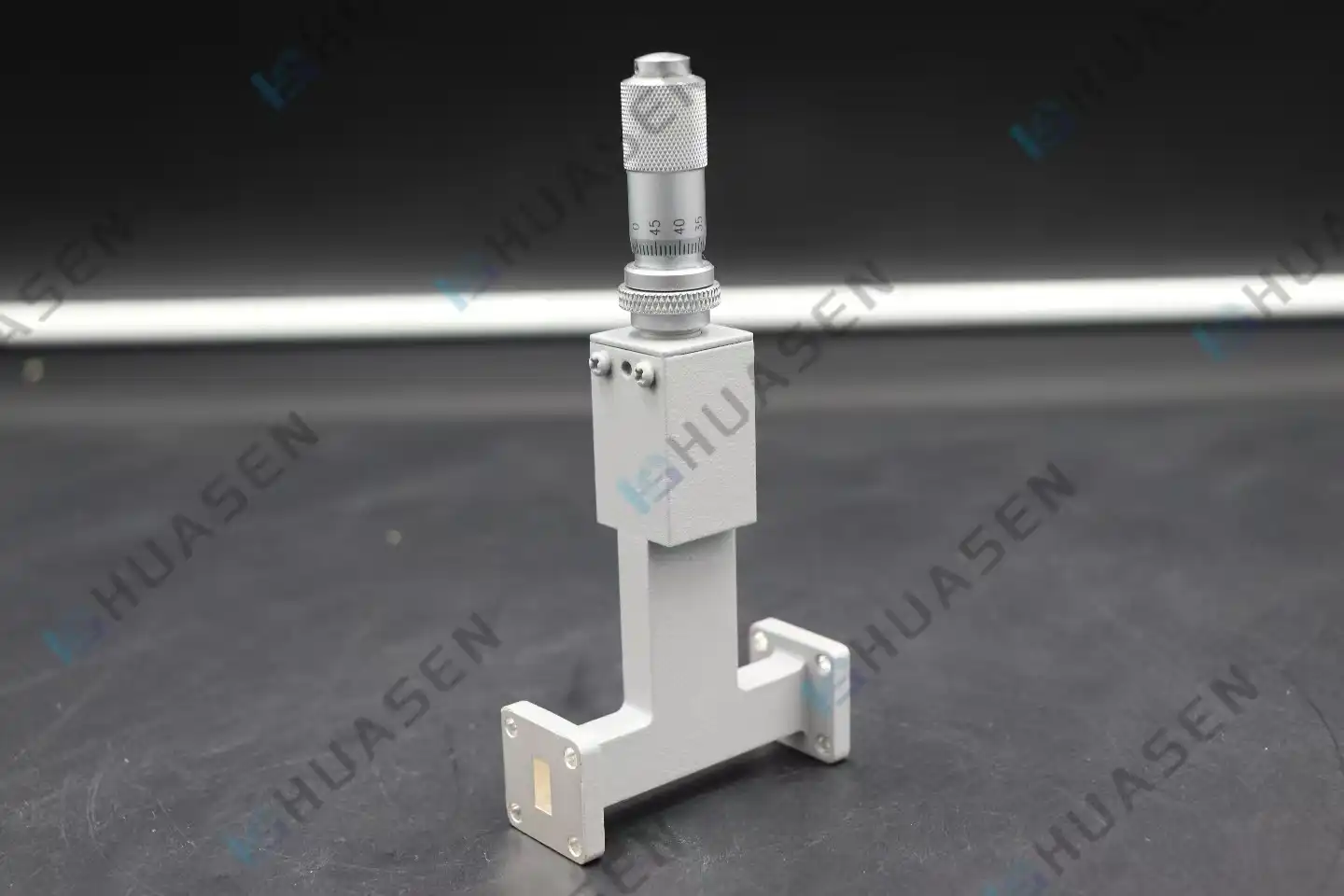
Top 5 Manufacturers of High-Speed Digital Phase Shifters
Several producers of electronically controlled phase components have dominated the worldwide industry with decades of RF research and scale manufacturing. Each has procurement advantages.
Mini-Circuits
Off-the-shelf availability and extensive product data are Mini-Circuits' hallmarks. Their digital phase shifter lines provide 4-bit to 8-bit resolution from DC to 26 GHz. The firm excels at quick prototyping, shipping engineering samples within days and offering clear bulk pricing. In array applications, their RTP series devices handle amplitude modulation problems with TTL-compatible control interfaces and minimal insertion loss variance between phase states.
Analogue Devices
Integrated digital phase shifters, gain control, and digital interfaces on single chips are this semiconductor giant's speciality. Their ADAR series targets 5G infrastructure and aeronautical active antenna systems. Analogue Devices prioritises power efficiency and thermal performance for base station modules operating at high temperatures. The company's technical documentation includes beam simulation models and S-parameter datasets to speed system integration.
MACOM Technology Solutions
For defence and satellite communication, MACOM specialises in high-power handling and wideband performance, including digital phase shifters. The MAPS series uses patented GaN semiconductor technologies for enhanced linearity and power compression. These devices accept +30 dBm input power while preserving phase precision, making them appropriate for radar transmit beamforming. Custom engineering from MACOM supports tailored designs for certain frequency bands and environmental conditions.
Qorvo
Qorvo targets space-constrained unmanned aerial vehicles and phased array modules with small form factors and low DC power consumption. Under 5 mm² surface-mount packages, their QPxxxx series combines phase shift capabilities with driver amplifiers. The company's superior packaging allows high-density board layouts for large-aperture antenna arrays. Qorvo's supply chain follows ISO 9001 and automotive quality standards.
Texas Instruments
Texas Instruments supplies precise digital phase shifters for test instruments and communication system calibration, despite its semiconductor scope. For laboratory and industrial test equipment, their systems prioritise phase resolution and repeatability above frequency. Instrument makers seek decades-long component availability, like the company's global distribution network and product lifetime agreements.
These manufacturers serve distinct market niches with unique technological skills and business methods. They provide devices from sub-1 GHz to 40 GHz, milliwatts to tens of watts, and from bare die to ruggedised modules that exceed MIL-STD environmental specifications.
Comparing Digital Phase Shifters Across Leading Brands
Understanding supplier performance and commercial terms helps procurement teams. This comparative framework shows system success and ownership cost criteria.
Performance Benchmarks
Phase accuracy standards distinguish significant differences. ADAR1000 from Analogue Devices has a ±2.8-degree RMS error at 10 GHz, whereas MAPS-010144 from MACOM has ±3.5 degrees spanning a 6-18 GHz bandwidth. Mini-Circuits' premium series has an insertion loss fluctuation of ±0.4 dB, whereas budget-conscious alternatives have ±1.2 dB. This creates unwanted amplitude modulation. These changes affect array sidelobe levels and SNR.
Switching speeds separates apps. For frequency-hopping radar and rapid beam tracking, Qorvo's GaN-based devices switch phase states in under 100 nanoseconds. Texas Instruments' accurate tools take 1-2 microseconds but have excellent phase stability in steady state.
Design Integration Flexibility
Mini-Circuits modular devices with SMA connections and parallel control buses are easy to integrate into PCBs. They fit system integrators that value quick prototyping and field replaceability. Analogue Devices and Qorvo favour mixed-function single-chip solutions that save board space and component count but need specialised interfaces.
MACOM waveguide-compatible modules target high-power applications with coaxial losses. These ruggedised assemblies exceed MIL-STD-810 stress and vibration criteria for aerospace certification, unlike commercial kits.
Commercial Considerations
Pricing reflects market position and volume. Mini-Circuits discloses unit costs from single pieces to 10,000+ volumes, with breaks at 100 and 1,000 units. Analogue Devices prefers big infrastructure deployments with unique annual pricing. Standard Mini-Circuits parts are in stock, but bespoke MACOM modules take 12-16 weeks.
Semiconductor shortages have elevated supply chain dependability. Diversified fabrication alliances and inventory buffers improve delivery certainty. Defence contractors and critical infrastructure operators prefer Qorvo's dual-source substrate materials with Texas Instruments' in-house production and Waveguide Phase Shifter for risk mitigation.
How to Choose the Right Digital Phase Shifter Manufacturer for Your Business?
Successful component selection connects technical specifications to application needs and considers supplier capabilities that impact project deadlines and lifecycle costs.
Aligning Specifications With System Demands
Set operational parameters from your link budget and antenna design. To maintain output power, a 5G base station beamforming network at 28 GHz with ±45-degree steering range requires digital phase shifters with low insertion loss for 24-30 GHz. An airborne radar requiring ±60-degree instantaneous coverage may favour quick switching above absolute phase precision for faster target acquisition.
The environment adds limits. Temperature-compensated components are needed for outdoor telecommunications equipment, which operates from -40°C to +65°C. Salt fog corrosion requires hermetically sealed packaging and conformal coating compatibility for maritime satellite terminals.
Evaluating Supplier Responsiveness
Evaluations reveal technical support quality. Circuit simulation is accurate when manufacturers give measured S-parameter files instead of datasheets. Before mass manufacturing, sample programmes with realistic minimum order numbers validate prototypes. Some providers help improve board layouts and control sequencing using application engineering.
Customisation distinguishes strategic partners from catalogue providers. In-house design teams help with non-standard frequency ranges, speciality packaging, and integrated assembly. While component vendors lack modification resources, MACOM and Analogue Devices have bespoke engineering departments.
Navigating Procurement Channels
Direct manufacturer purchases are best for high-volume programmes above 5,000 units, where contractual price and supply agreements justify administrative costs. Authorised distributors like Richardson RFPD and Digi-Key fulfil smaller orders faster and integrate logistics across numerous component types. Standard product lead times can drop from weeks to days with distributor stock buffers.
Minimum order numbers impact prototype costs. Mini-Circuits supports single-unit orders for design validation. Other providers have 25- or 50-piece minimums that raise upfront expenditure but reflect production lot economics.
Technical troubleshooting, failure analysis, and long-term availability are part of after-sales support. Defence programmes lasting decades need manufacturers to ensure component availability or provide electrically compatible migration routes to next-generation systems.
Future Trends in High-Speed Digital Phase Shifters and Supplier Innovation
New technologies and market needs are changing digital phase shifter designs and production methods, enabling performance gains and new applications.
Advanced Semiconductor Technologies
Silicon-germanium (SiGe) techniques reduce power consumption and increase operating frequencies over 100 GHz. E-band satellite backhaul and 77-81 GHz automobile radar are enabled by these technologies. Gallium nitride advances enable multi-watt power management and direct transmit beamforming without amplification.
Integration densities rise with 3D packaging and chiplets. Multi-layer assemblies stack RF components vertically to save space and preserve performance. This downsizing allows millimetre-wave phased arrays with half-wavelength element spacing.
Smart Control Interfaces
Manufacturers incorporate microcontrollers in digital phase shifter modules, including waveguide phase shifter types, to ease system integration. These intelligent devices offload host system computation by accepting high-level beam-steering commands instead of raw bit patterns. SPI replaces parallel control buses, lowering pin counts and allowing longer cable lengths in distributed antenna layouts.
Digital calibration tables in non-volatile memory account for manufacturing and temperature changes. Field tweaks using user-accessible calibration processes maintain product performance.
Enhanced Customer Experience
Online configuration tools enable engineers to enter criteria and get part suggestions with performance estimations. Analogue Devices' web-based beam calculator recommends digital phase shifter options depending on array geometry and coverage goals. Interactive S-parameter viewing and comparison are available on Qorvo's digital datasheet platform.
Supply chain transparency solutions track manufacturing and shipping milestones via client portals. Real-time inventory insight helps procurement teams prepare for component availability, lowering schedule risks.
These advancements remove obstacles to sophisticated beamforming technology, increasing industries beyond aerospace and military to include industrial automation, autonomous cars, and smart infrastructure.
Conclusion
Selecting top high-speed digital phase shifter manufacturers entails combining technical performance, commercial terms, and supplier capabilities with your application needs. Mini-Circuits, Analogue Devices, MACOM, Qorvo, and Texas Instruments demonstrate experience in catalogue availability and bespoke aerospace solutions. Higher frequencies, integration, and intelligent control interfaces expand beamforming system possibilities in 5G networks, satellite communications, and radar platforms. To meet immediate project needs and long-term reliability requirements, successful procurement strategies evaluate phase accuracy, insertion loss, environmental specifications, and supplier responsiveness.
FAQ
1. What distinguishes high-speed digital phase shifters from standard versions?
High-speed variants enable time-division duplex systems and frequency-hopping radar beam steering with switching times under 100 nanoseconds. Standard devices may take several microseconds to settle, slowing beam tracking. GaAs and GaN FETs transition faster than PIN diodes due to semiconductor technology.
2. How does bit resolution impact phased array performance?
Quantisation lobes in antenna radiation patterns decrease with higher bit counts. Six-bit resolution (5.625-degree steps) suppresses sidelobes to -20 dB, while a 4-bit digital phase shifter produces 22.5-degree steps that produce sidelobes 13 dB below the main beam. Though expensive and complicated, 6-bit or 8-bit devices are useful for low radar cross-section or interference-rejection applications.
3. Can these components handle high RF power in transmit arrays?
Internal technology manages power. MEMS-based digital phase shifters and waveguides allow transmit beamforming with +30 to +40 dBm continuous power. Before compression, standard GaAs solid-state devices are limited to +20 dBm. Datasheets specify input power causing 1 dB gain compression as the upper operational threshold, P1dB.
Partner With Huasen Microwave for Your Phase Shifter Requirements
The complexities of RF component procurement require expertise beyond datasheets and specifications. Huasen Microwave offers technical consultation tailored to your system architecture based on three decades of microwave engineering experience and direct access to leading digital phase shifter manufacturers. Our team selects, validates, and manages telecom, aerospace, and defence components and supply chains. We streamline the procurement process from inquiry to production delivery for standard catalogue devices or customised MIL-STD environmental solutions. Contact our engineering team at sales@huasenmicrowave.com to discuss project requirements, datasheets, quotations, and custom digital phase shifter designs. We ensure your beamforming networks and phased array systems receive components that meet performance and delivery expectations as a reliable high-frequency component supplier.
References
1. Hansen, R.C. (2009). Phased Array Antennas, 2nd Edition. John Wiley & Sons, New Jersey.
2. Bahl, I.J. (2016). Control Components Using Si, GaAs, and GaN Technologies. Artech House, Massachusetts.
3. Mailloux, R.J. (2017). Electronically Scanned Arrays. Synthesis Lectures on Antennas, Morgan & Claypool Publishers.
4. Skolnik, M.I. (2008). Radar Handbook, 3rd Edition. McGraw-Hill Education, New York.
5. Agrawal, V.K. & Jain, P.C. (2015). "Design and Analysis of Digitally Controlled Phase Shifters for Phased Array Applications." IEEE Transactions on Microwave Theory and Techniques, 63(6), pp. 1876-1887.
6. Chang, K. & Hsieh, L.H. (2018). Microwave Ring Circuits and Related Structures, 2nd Edition. John Wiley & Sons, New Jersey.
Send Inquiry
You may like
