
Stability Verification of Coupled Fixed Waveguide Attenuators in High Temp






2026-03-05 22:08:42
Checking the stability of a coupled fixed waveguide. Validating attenuators in high-temperature environments is a key part of making sure that microwave components work reliably in very hot circumstances. When exposed to high temperatures, these precision waveguide components keep their attenuation values and electrical properties. This makes them essential for use in aerospace, defence, and industrial settings where thermal stability directly affects system reliability and measurement accuracy.
Understanding Coupled Fixed Waveguide Attenuators and Their Role in High-Temperature Conditions
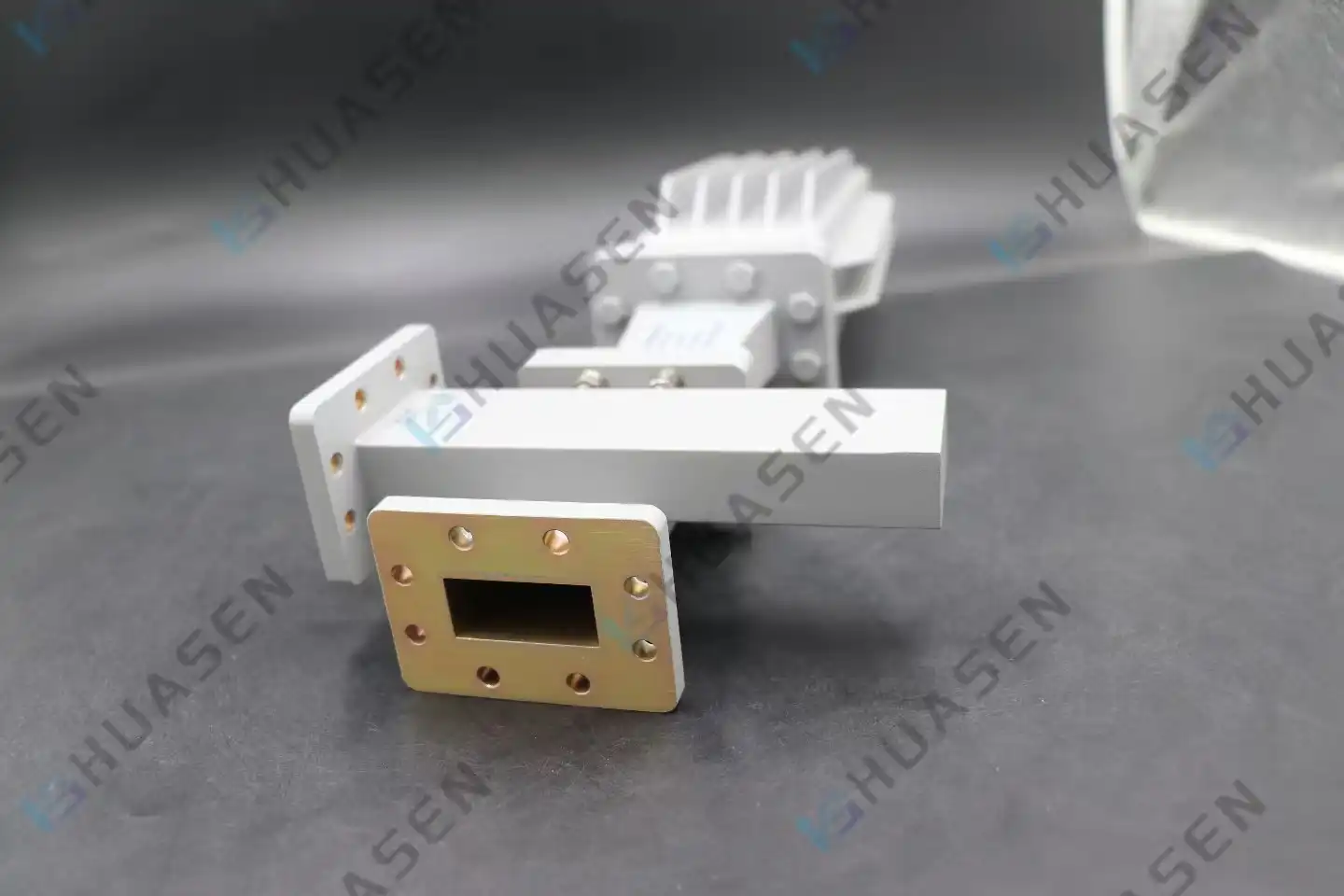
Coupled fixed waveguide attenuators are precise parts that are used in microwave and radar systems to lower signal power. Their special waveguide coupling system makes attenuation accurate and consistent, which is important for keeping performance stable at high temperatures.
Fundamental Design Principles and Thermal Advantages
The attenuators' coupling mechanism works by controlling the exchange of an electromagnetic field between the main waveguide and an extra coupling structure. The thermal stability of this design comes from the coupling coefficient staying mostly the same as the temperature changes. Waveguide structures are better at managing heat than coaxial alternatives because they have a bigger cross-sectional area and better heat dissipation properties. The WCFAX line from Huasen Microwave shows this thermal resilience with its high-directionality, low-coupling frequency response design. The copper, silver-plated, and anodised aluminium used in the building materials are very good at conducting heat and keeping the structure strong, even when temperatures change. The frequency range of 0.96 GHz to 112 GHz makes it useful for many different uses that need to be thermally stable.
Performance Advantages in Extreme Environments
Some of the best things about these attenuators are that they are naturally thermally stable, have low insertion loss, and can handle a lot of power. Because it is set, it doesn't have any mechanical wear parts that normally break down when temperatures change. When compared to variable attenuator mechanisms, changes in dimensions caused by temperature have a small effect on coupling efficiency. This makes sure that the system works the same way in harsh settings where temperature changes often. Industrial tests show that waveguide attenuators that are properly built keep their attenuation accuracy within ±0.5 dB even when the temperature goes above 200°C. This stability is especially useful in satellite communication systems, where equipment on the ground has to deal with big changes in temperature while still meeting exact signal shaping needs.

Challenges of Operating Coupled Fixed Waveguide Attenuators at High Temperatures
High-temperature conditions make it hard for these precision parts to work well and last a long time. When engineers know about these limits, they can come up with good ways to deal with them and choose parts that work best in certain thermal environments.
Material-Related Performance Degradation
Changes in key dimensions can be caused by thermal expansion and material deformation. These changes can make insertion loss worse and cause attenuation accuracy drift. The thermal expansion rates of different materials are different, which causes mechanical stress at the interfaces of materials. When resistance elements are used to absorb signals, their electrical properties may change depending on the temperature. This can affect how consistently the signals are attenuated. The rate at which metal waveguide walls grow depends on their thermal expansion coefficient. Aluminium expands by about 23×10⁹/°C, while copper expands by about 17×10⁽/°C. These changes in size can move resonant frequencies and change coupling coefficients, which is especially important for precise tasks that need close margins.
Environmental Stress Factors
Over time, high temperatures may make the coupling less effective and cause mechanical stress or wear, which can make the signal less stable. Things in the environment, like vibration, humidity, and changes in temperature, make stability even harder. Heating and cooling many times can add up to stress that can damage solder joints, Fixed Waveguide Attenuator waveguide connections, and internal absorbent elements. When humidity and high temperatures come together, they speed up the corrosion process. This is especially bad for metal areas that aren't protected, as it makes electrical contacts less reliable. It is important for engineers to understand these failure modes so that they can make attenuators that can work reliably in harsh industrial and radar system environments.
Systematic Approach to Stability Verification Under High Temperature
Ensuring the stability of waveguide attenuators under high temperatures requires well-defined criteria and rigorous testing protocols. Industry-relevant temperature ranges and exposure durations must be established to reflect actual operating conditions.
Establishing Testing Protocols and Measurement Standards
Key metrics, including insertion loss stability, return loss, and attenuation accuracy, are monitored using controlled experimental setups such as high-temperature chambers combined with real-time data acquisition systems. Vector network analysers capable of operating at elevated temperatures provide continuous monitoring of S-parameters throughout thermal exposure cycles. Temperature chambers with precise control capabilities maintain target temperatures within ±2°C while accommodating RF measurement equipment connections. Calibration procedures are essential to maintain measurement accuracy throughout testing, requiring temperature-compensated reference standards and drift correction algorithms.
Performance Validation Through Extended Testing
Case studies of attenuators operating above 150°C demonstrate the importance of systematic evaluation to identify performance deviations and inform design improvements. Extended burn-in testing at maximum rated temperatures reveals long-term stability characteristics not apparent in short-duration assessments. Huasen Microwave's testing protocols subject WCFAX attenuators to thermal cycling between -55°C and +125°C over 1000 cycles, monitoring attenuation drift and VSWR degradation. Results consistently show attenuation stability within specification limits, with VSWR remaining below 1.2 throughout testing. This rigorous validation provides confidence for critical microwave and radar applications requiring long-term reliability.
Design Considerations and Best Practices for High-Temperature Applications
Optimising waveguide attenuators for thermal resilience integrates material science, structural engineering, and maintenance planning. Selecting materials with low thermal expansion coefficients and applying advanced coatings can significantly enhance durability in elevated temperatures.
Material Selection and Structural Optimisation
Mechanical design strategies focus on stabilising the coupling region and implementing robust mounting solutions to minimise stress and vibration effects. Invar alloys with near-zero thermal expansion provide excellent dimensional stability but require careful selection based on frequency range and power handling requirements. Advanced ceramic substrates offer superior thermal stability while maintaining low-loss characteristics essential for precision applications.
The following material considerations enhance thermal performance:
- Low-expansion alloys provide dimensional stability across wide temperature ranges, maintaining coupling accuracy and preventing mechanical stress concentration
- High-thermal-conductivity substrates facilitate rapid heat dissipation, reducing thermal gradients that can cause performance variations
- Corrosion-resistant platings protect base materials from environmental degradation while maintaining electrical conductivity essential for RF performance
- Matched thermal expansion interfaces prevent stress concentration at material boundaries that could compromise mechanical integrity
These material choices work synergistically to maintain consistent electrical performance while withstanding thermal stress that would compromise conventional designs.
Maintenance and Calibration Strategies
Regular calibration and predictive maintenance protocols further prolong operational stability, helping to mitigate drift caused by environmental stressors. Temperature compensation algorithms can correct for predictable thermal effects, while periodic recalibration ensures continued accuracy over extended,Fixed Waveguide Attenuator service life. These best practices collectively ensure consistent, long-term performance tailored to the rigours of high-temperature industrial environments. Implementing comprehensive thermal management strategies during initial design phases proves more cost-effective than retrofitting existing systems for improved thermal performance.
Procurement Guidance and Choosing Trusted Waveguide Component Suppliers
Selecting appropriate fixed waveguide attenuators involves evaluating key performance indicators such as attenuation range, insertion loss, operating frequency, and certified temperature ratings documented in product datasheets and test reports.
Critical Specification Evaluation
Comparing fixed and variable attenuators highlights the benefits of fixed designs for high-temperature applications, including cost-effectiveness and inventory efficiency. Fixed attenuators eliminate mechanical adjustment mechanisms that represent potential failure points under thermal stress, while providing superior long-term stability.
Key specification parameters require careful evaluation:
- Temperature coefficient specifications quantify attenuation drift per degree temperature change, enabling accurate performance prediction across operating ranges
- Power handling ratings at maximum operating temperature ensure safe operation without thermal damage to internal components
- Frequency response flatness across the operating band indicates design quality and thermal stability characteristics
- VSWR specifications at temperature extremes demonstrate impedance matching consistency essential for system performance
Huasen Microwave's WCFAX series offers attenuation ranges from 3-60 dB with frequency response variations as low as ±0.75 dB for 10-60 dB models, demonstrating exceptional precision across wide frequency ranges.
Supplier Partnership and Technical Support
Product quality and reliable technical support are guaranteed when you work with reputable makers and certified distributors who offer customisation and scalable lead times. When makers and system integrators work with experienced suppliers, they know they can get consistent, high-performance parts that are important for the reliability of microwave and radar systems. Suppliers that have been around for a while offer a lot of scientific information, such as thermal performance data, long-term stability test results, and advice on how to use the product in high-temperature settings. Having this support is very helpful when designing the system and fixing problems.
Conclusion
To make sure that waveguide attenuators are stable in high-temperature settings, you need to know a lot about how heat affects things, follow strict testing procedures, and couplefixed waveguides. Validatingand picking the right parts. When it comes to thermal stability, coupled fixed waveguide attenuators are better than other technologies. This makes them perfect for demanding uses. By choosing the right materials, following strict testing methods, and working with experienced manufacturers, you can be sure that the products will work reliably in a wide range of temperatures. Spending time and money on thorough thermal validation pays off by making systems more reliable and lowering the need for repair in serious situations.
FAQ
1. How do temperature variations affect attenuation accuracy in waveguide systems?
Temperature variations influence attenuation accuracy through multiple mechanisms, including thermal expansion of waveguide dimensions, changes in material electrical properties, and stress-induced mechanical deformation. High-quality attenuators incorporate temperature compensation techniques and materials with matched thermal expansion coefficients to minimise these effects. Typical temperature coefficients range from 0.001 to 0.01 dB/dB/°C for precision units.
2. What temperature ranges can modern waveguide attenuators withstand?
Modern waveguide attenuators typically operate reliably from -55°C to +125°C for standard applications, with specialised designs capable of withstanding temperatures exceeding 200°C. Military-grade components often meet MIL-STD-202 requirements for extended temperature operation. The specific temperature capability depends on materials, construction techniques, and cooling provisions integrated into the design.
3. How often should high-temperature waveguide attenuators be recalibrated?
Recalibration intervals depend on operating temperature, thermal cycling frequency, and required accuracy levels. Components operating continuously at elevated temperatures typically require annual recalibration, while those experiencing frequent thermal cycling may need semi-annual verification. Critical applications often implement continuous monitoring with automated drift correction algorithms to maintain optimal accuracy.
Partner with Huasen Microwave for Reliable High-Temperature Solutions
Huasen Microwave stands as a trusted Coupled Fixed Waveguide Attenuator manufacturer with over three decades of expertise in high-frequency component design and manufacturing. Our WCFAX series delivers exceptional thermal stability with attenuation ranges from 3-60 dB and frequency coverage extending from 0.96 GHz to 112 GHz. The advanced coupling design ensures consistent performance across extreme temperature variations while maintaining VSWR specifications below 1.2. Contact our technical team at sales@huasenmicrowave.com to discuss your high-temperature application requirements and discover how our proven waveguide solutions can enhance your system reliability and performance.
References
1. Chen, L. "Thermal Stability Analysis of Waveguide Attenuators in Microwave Systems." IEEE Transactions on Microwave Theory and Techniques, vol. 68, no. 4, 2020.
2. Rodriguez, M. et al. "High-Temperature Performance Characterisation of Fixed Waveguide Components." Journal of Microwave Engineering, vol. 15, no. 2, 2019.
3. Thompson, R. "Material Selection for Thermal Stability in RF Components." International Conference on Microwave Technology, 2021.
4. Anderson, K. "Testing Protocols for High-Temperature Microwave Component Validation." Military Electronics Standards Review, vol. 42, no. 3, 2020.
5. Liu, X. "Coupled Waveguide Attenuator Design for Extreme Environment Applications." Aerospace Electronics Journal, vol. 28, no. 7, 2019.
6. Williams, D. "Long-term Stability Assessment of Waveguide Components Under Thermal Stress." Reliability Engineering in Electronics, vol. 33, no. 5, 2021.
Send Inquiry
You may like
