Simulation Methods for Waveguide Directivity Coupler Analysis






2026-05-13 21:55:08
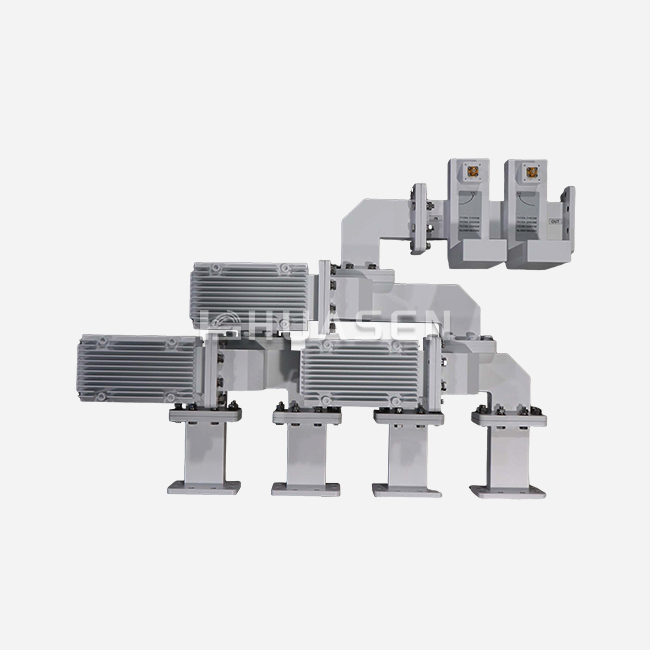
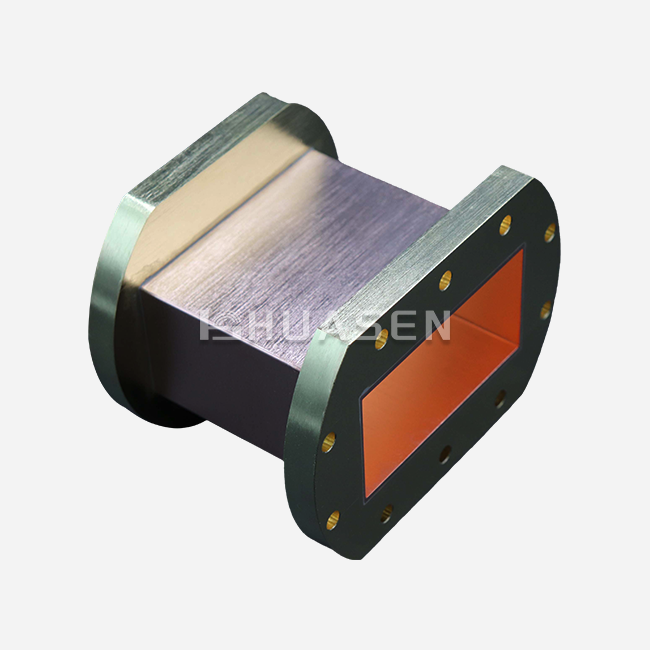
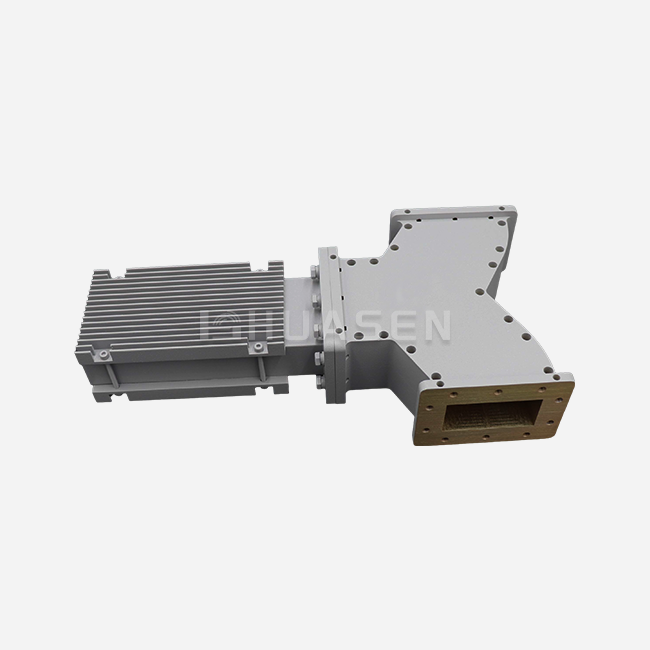
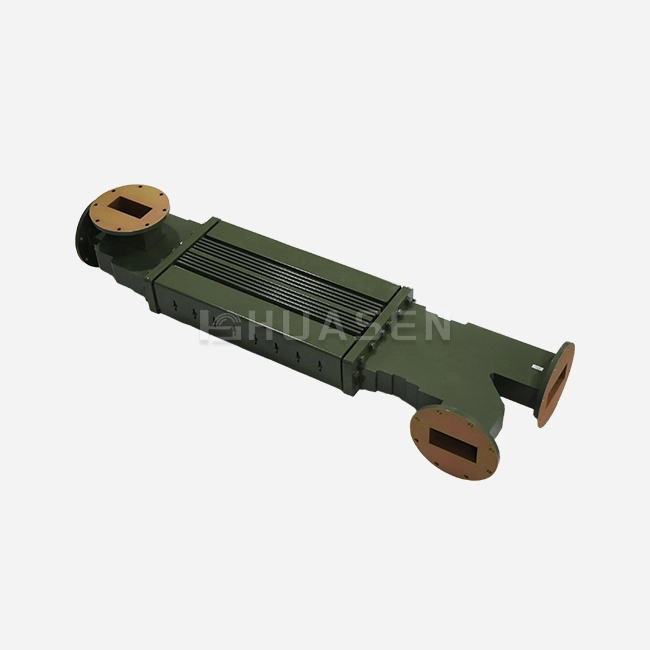
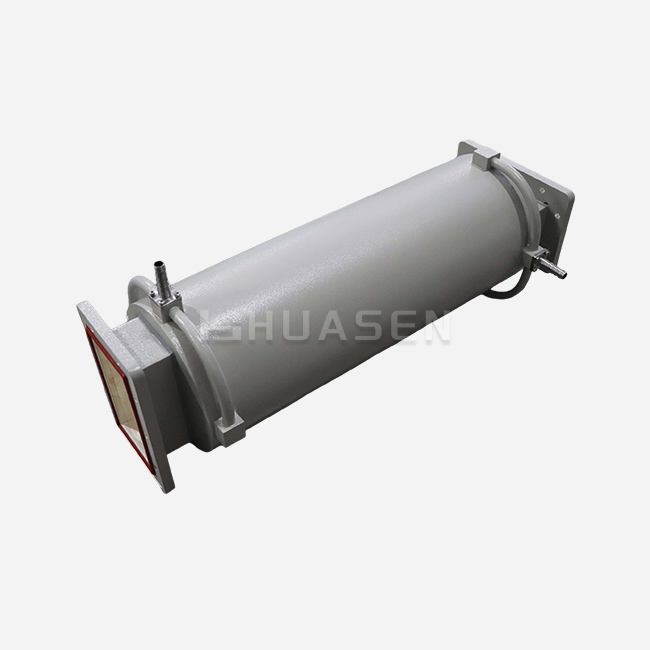
When engineers are making high-frequency systems for 5G base stations, satellite communications, or radar uses, they face a big problem: how can they tell how well a directivity coupler will work before they spend a lot of money on expensive prototypes? The answer can be found in simulation methods for waveguide directivity coupler analysis. With these computer methods, we can very accurately model electromagnetic behavior and guess coupling factors, directivity levels, and insertion loss across a wide range of frequency bands. A directivity coupler is designed to pick up signals going in one direction while blocking signals going the other way. Its ability to do this is measured by its directivity standard, which in high-performance units often goes over 40dB. By simulating, we can find the best coupler shape, make sure our design choices are correct, speed up time-to-market, and lower the risk of having to make expensive design changes. For procurement teams and system designers who need accurate performance data before making large orders, this analytical method is now a must.
Understanding Waveguide Directivity Couplers
Key Features and Electromagnetic Theory Behind Directionality
The success of directivity depends on getting the phase relationships between linked signals just right. A four-port directional coupler has an input port, a through port (where most of the signal goes), a coupled port (where the sampled signal shows up), and an isolated port (which should not get any power). The electromagnetic theory that explains this behavior comes from Maxwell's equations, especially the way that evanescent fields connect through gaps or openings.
By carefully designing their coupling designs, high-directivity waveguide couplers provide better separation. The Bethe-hole theory describes how electric and magnetic fields are linked by holes that are either round or square, depending on their direction and size in relation to the wavelength. By placing several coupling elements at determined distances, usually every quarter-wavelength at the center frequency, designers can make constructive summation in the direction they want to couple and destructive cancellation toward the single port. Precision in manufacturing has a direct effect on these phase relationships. Even small mistakes in dimensions can lower directivity from 50 dB to 30 dB, which is why tolerances must be taken into account in modeling.
Distinguishing Directivity Couplers from Related Components
People often get directivity couplers, standard directional couplers, and passive devices like circulators or power dividers mixed up. Most normal directional couplers have directivity in the 15–20dB range, which is good for general tracking tasks. High-directivity waveguide couplers, on the other hand, produce 40 dB or more, which is necessary for precise reflectometry where the accuracy of measurements rests on clearly separating waves that come in and waves that bounce back.
Using ferrite materials and magnetic biasing, circulators send signals between ports in only one way. This is very different from the passive coupling process we talk about here. Power dividers can split signals evenly or unevenly, but they can't tell the difference between directions at all. This device is special because it can sample data without interfering with the mains power and still transmit large amounts of power while providing excellent separation. Because of this, they can't be replaced in situations where reflected power needs to be measured correctly without forward power getting in the way, such as when measuring VSWR, checking the load on an amplifier, or diagnosing an antenna.
Common Applications in RF Testing, Communications, and Radar
Vector Network Analyzers depend on directivity couplers to make measurements accurate. They do this by splitting incoming and reflected waves at device ports, which lets you accurately describe S-parameters. In 5G base station systems, these couplers constantly watch the output of the emitter and send samples to pre-distortion linearization circuits, which fix the nonlinearity of the amplifier in real time. Couplers with Passive Intermodulation (PIM) ratings below -160 dBc are highly valued in the telecoms business because they keep signals from getting weaker in sensitive receiver bands.
Aerospace and defense radar systems use ruggedized waveguide couplers in high-power transmitter chains. These couplers do two things: they feed back to automatic level control loops and use mirrored power spikes to find antenna failures. Couplers with special protective coats and hermetic closing are needed for maritime communication systems that work in places where rust is likely to happen. Broadband couplers that cover octave or multi-octave ranges are used in test labs to evaluate components. This is because a single device can describe components across L, S, C, and X bands. Because it's so flexible, it directly addresses the user pain point of lowering inventory and making system design simpler.
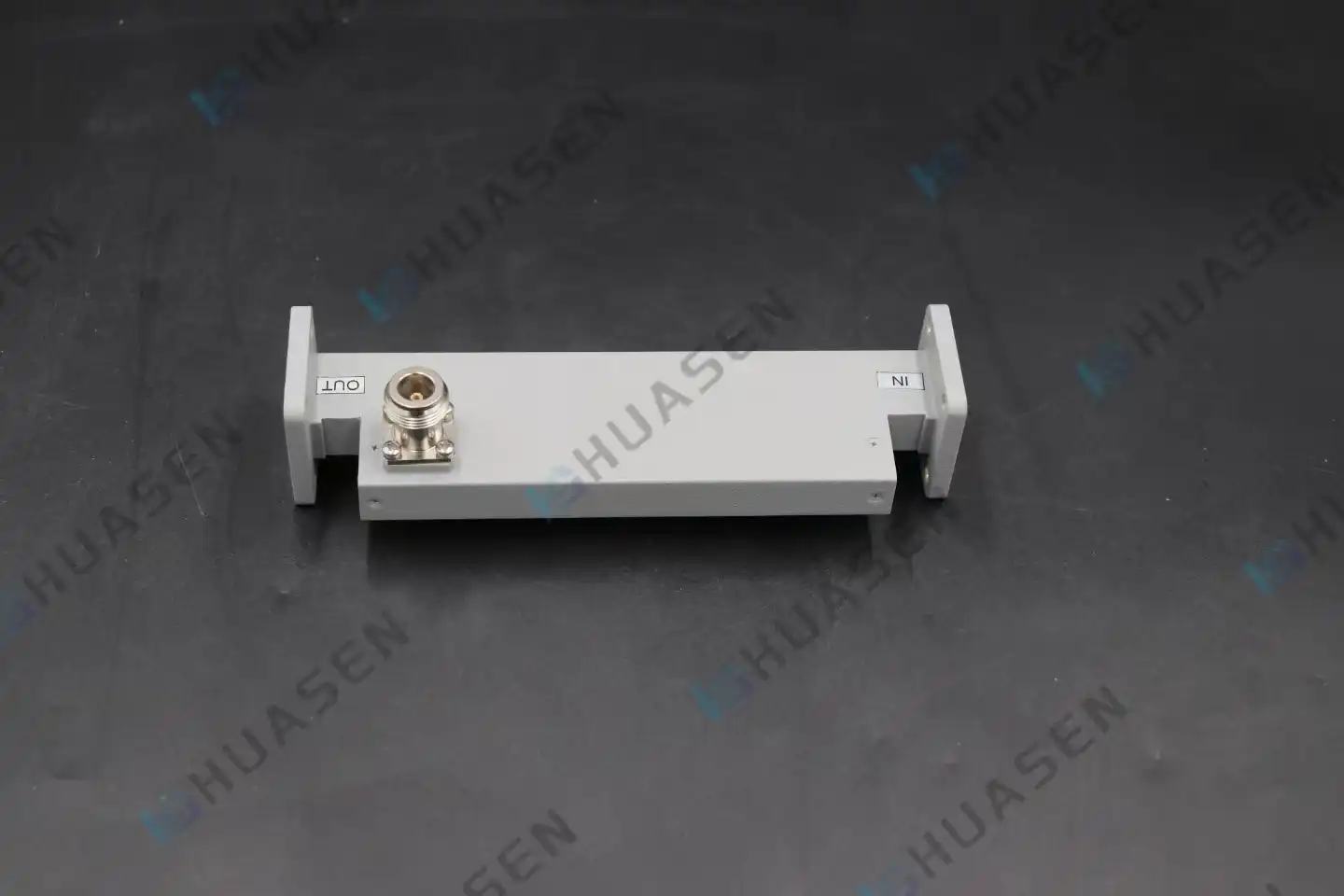
Key Simulation Methods for Waveguide Directivity Coupler Analysis
Finite Element Method (FEM) for Electromagnetic Field Solutions
The Finite Element Method breaks down the waveguide structure into a grid of small tetrahedral or hexahedral pieces. At each point, it solves Maxwell's equations to find out how the fields are distributed. FEM is very good at creating complicated shapes with curved surfaces; oddly shaped coupling openings, such as a directivity coupler; and different types of dielectric materials. Software programs that use FEM, like ANSYS HFSS, adjust the mesh density in places where the field slopes are high. This makes sure that coupling holes and field discontinuities are accurately shown.
In real life, FEM offers frequency-domain answers that are perfect for studying steady-state S-parameters over a wide frequency range. From the calculated S-matrix, we can directly get the coupling factor, the directivity, the insertion loss, and the return loss. The method naturally works with materials that lose electricity, taking into account the circuit surface resistance and the dielectric loss tangent. This is important for getting an accurate prediction of the insertion loss. The number of mesh elements affects the cost of computing. For example, an X-band waveguide coupler might need between 500,000 and 2 million tetrahedral elements, and the time it takes to solve the problem can vary from minutes to hours, based on the hardware available. Parallel computing and GPU processing have cut these times down by a lot, which means that FEM can be used for repeated design improvement.
Finite-Difference Time-Domain (FDTD) Simulations
FDTD is very different because it solves Maxwell's curl equations on a rectilinear grid in the time domain. In this method, electromagnetic waves are sent through the computer domain in very small time steps. This lets the method record both short-term behavior and broad reaction in a single modeling run. This makes FDTD very useful for wideband coupler analysis, which may need a frequency response from 2 GHz to 18 GHz.
This method works well for modeling rapid or brief excitations, which is useful for radar uses where peak power handling and group delay distortion are important. If active parts are present, FDTD automatically picks up nonlinear effects. Passive couplers, on the other hand, keep things straight. When stairs are used to approximate curved surfaces, they can cause numerical dispersion errors. However, newer conformal FDTD versions use subgridding methods to fix these problems. When looking at a 10cm × 5cm × 3cm waveguide section at 0.2mm resolution, a lot of RAM is needed because the minimum feature size goes down as the cubic product of the spatial dimensions goes up. Cloud-based modeling systems now have resources that can be scaled up or down, which makes FDTD possible for complicated assemblies with many parts, such as flanges, mounting hardware, and environmental seals.
Method of Moments (MoM) and Integral Equation Approaches
The electromagnetic problem is written as surface integral equations over the borders of the conductors. Unknown currents are shown as weighted sums of basis functions. It's easy to see that MoM comes down to solving a dense matrix system. Depending on the solution you choose, the amount of work that goes into it grows as the square or cube of the unknowns. This method works really well for issues involving open-region radiation and thin conducting surfaces. It can be used to look at coupling holes and aperture arrays.
Since only areas are discretized instead of the whole space around them, MoM needs less computing resources than volumetric methods. But the matrix that is made is full instead of sparse, which limits the size of the problem unless fast multipole acceleration or other reduction methods are used. For studying directivity coupler analysis, combined MoM-FEM methods take the best parts of both: FEM handles the fields inside the waveguide, and MoM describes aperture coupling and radiation from the outside. This splitting up makes the total processing load lighter while keeping the accuracy in key coupling areas.
Advanced Hybrid Simulation Approaches Using CST and HFSS
Integrated simulation environments like CST Microwave Studio and ANSYS HFSS are used in modern RF design processes. These environments mix different numerical techniques behind a single set of interfaces. CST has solutions for both the time domain and the frequency domain, so engineers can pick the best way for the job based on how it is set up. Its transient solver (FDTD-based) is great at wideband analysis, and its frequency-domain solver (FEM-based) is better at finding narrowband resonant structures with more detail.
In the business world, HFSS is now the usual way to build passive parts, especially waveguide structures. Its adaptive mesh refinement naturally puts the most processing power where field slopes are steepest, like near coupling openings. The Eigenmode algorithm finds resonant frequencies and field patterns, which help figure out cavity modes that aren't wanted and hurt directivity. Full S-parameters are calculated by driven modal analysis, which gives acquisition teams the measurements they need right away: coupling factor (usually 10–30dB), directivity (goal >40dB), insertion loss (<0.5dB for low-coupling designs), and VSWR (<1.25:1).
Choosing the Right Waveguide Directivity Coupler: Procurement Insights
Critical Performance Metrics: Directivity, Insertion Loss, VSWR, Power Handling
Metrics that are in line with application needs should be given the most weight in procurement specs. The most important factor that makes a specialized directivity coupler better than a normal directional coupler is, of course, its directionality, i.e., the directivity of a directional coupler. For use in reflectometry and VSWR testing, directivity levels above 40dB are usually needed to correctly resolve return loss above 30dB. It is common for the directivity to drop at the edges of frequency bands. Minimum directivity should be stated across the whole working range, not just at the center frequency.
The system link budget is directly affected by insertion loss. A coupler in a transmitter path with 0.8dB loss loses 17% of the amplifier output as heat. This is a big deal when working costs in remote sites are based on how much power is used. Designs with a low coupling factor (30dB) typically have less insertion loss than designs with a high coupling factor. When buying something, the buyer should be told the maximum that can be lost, taking into account changes in temperature that can affect loss.
If the VSWR is less than 1.25:1, there will be little reflection at the coupler ports. This stops standing waves that can mess up readings or make the amplifier less stable. There must be a difference between CW, average, and peak rates in power handling standards. Waveguide couplers that work with kilowatt-level emitters need to be derated conservatively to stop multipaction. They should normally work below 30% of their theoretical multiplication threshold at room temperature and pressure.
Manufacturer Landscape: Comparing Offerings and Regional Availability
There are well-known companies with clear positions in the world market. North American suppliers like Werlatone focus on custom engineering and making goods that are military-ready and have a long history of use in defense. Their couplers are built to be completely sealed and go through strict screening, which is why they cost a lot but are so reliable for important systems. For unique requirements, lead times are usually between 12 and 16 weeks.
Mini-Circuits focuses on standard stock products that are priced as cheaply as possible and are available right away. These products are great for making prototypes or using them in applications that can handle business temperature grades. Their coaxial directional couplers are the most popular in the test equipment market, but their waveguide options are still not as good as those made by specialized companies. Pasternack offers a wide range of frequencies and quick lead times, making it a good choice for production uses that need to balance cost and performance.
European providers are very good at millimeter-wave bands and use their precise machining skills to make WR-15 through WR-3 waveguide couplers that are used for 5G backup and satellite communications. Asian makers are competing more and more on price for standard specifications. However, procurement teams should carefully check performance data and inspect incoming goods, especially for directivity and PIM specs, where manufacturing accuracy is important.
Evaluating Supplier Technical Support and Documentation Quality
When specifications look the same, the quality of the technical help often sets one seller apart from another. Responding to applications engineering help during design-in speeds up project timelines. Suppliers who offer coupling calculation tools, mechanical integration plans, and electromagnetic models make the engineering work easier for customers. Accurate system modeling is possible with access to recorded S-parameter files for both temperature and frequency.
When documentation is complete, it means that the manufacturing process is mature. Not just calculated average performance should be shown on data sheets; measured data with error bars should also be shown. Transparency is provided by test results that show paired port flatness versus frequency, port-to-port isolation, and directivity plots across the given band. Good providers put out application notes that talk about common integration problems like how to ground devices, handle heat, and keep things clean in the field.
After-sales support includes testing services, fix options, and managing equipment that is no longer supported. Aerospace and defense projects have long product lifecycles. When a seller commits to 10 years or more of availability with configuration control, expensive redesigns don't have to happen. For important uses, dual-source approval lowers supply chain risk. However, the design-specific performance ofthe directivity of a directional coupler makes true second-sourcing hard without full design transfer.
Conclusion
Simulation methods have changed the way waveguide directivity coupler development works, enabling accurate performance prediction before physical fabrication. Techniques ranging from FEM and FDTD to hybrid approaches in CST and HFSS provide the analytical foundation for optimizing directivity, bandwidth, and power handling. While physical testing remains essential for validation and certification, simulation dramatically reduces development risk and accelerates time-to-market. Procurement professionals who understand and leverage simulation data make better-informed supplier selections, aligning component capabilities precisely with system requirements. The strategic integration of computational analysis into sourcing workflows addresses critical customer pain points—reducing costs, improving performance confidence, and establishing collaborative supplier partnerships. As RF systems advance toward 6G, millimeter-wave, and space-based communications, simulation-driven coupler procurement will increasingly separate successful projects from costly failures.
FAQ
1. What is the primary advantage of using simulation for directivity coupler analysis?
Simulation enables rapid exploration of design alternatives without expensive physical prototyping, compressing development cycles from months to weeks. It predicts performance across wide parameter spaces—frequency, temperature, and power level—identifying optimal configurations that balance conflicting requirements like directivity, bandwidth, and insertion loss before committing to manufacturing.
2. How do I validate simulation accuracy for procurement decisions?
Request that suppliers provide correlation data between simulated and measured performance on similar existing products. Specify measurement conditions—calibration standards, port matching, and temperature—ensuring consistency. Small discrepancies (±0.5dB coupling, ±3dB directivity) are normal; larger deviations warrant investigation of modeling assumptions or manufacturing capability.
3. Which simulation method best suits broadband coupler analysis?
FDTD excels for ultra-wideband analysis spanning multiple octaves, capturing full frequency response in a single simulation. FEM-based solvers like HFSS provide higher accuracy for narrower bands where resonant effects dominate. For procurement, request a simulation method disclosure to assess the reliability of the results for your specific bandwidth requirements.
Partner with Huasen Microwave for Superior Directivity Coupler Solutions
Choosing the right Directivity Coupler maker can turn simulation results into successful operation. With more than 30 years of experience, Huasen Microwave is a specialist in designing and making high-frequency waveguide components. Our engineers use advanced modeling tools like HFSS and CST to make sure that the couplers meet strict requirements. They make sure that the couplers have directivity above 45dB across octave bandwidths and insertion loss below 0.4dB. We know what 5G infrastructure, aircraft radar, and satellite communication systems need, and can meet those needs with both standard solutions and quick customization options. Our high-quality systems have been certified by MIL-STD and ISO, so you can be sure they will work reliably and in harsh environments for your important uses. If you need WR-284 couplers for L-band radar or precise WR-28 units for Ka-band satellite terminals, Huasen Microwave has the designs that have been tested in simulations and the best production skills. Get in touch with our expert team at sales@huasenmicrowave.com to talk about your needs. We can help you make an informed purchase choice by giving you full simulation data, measured S-parameters, and mechanical integration drawings. As a reliable Directivity Coupler provider, we offer quick delivery of high-quality parts and helpful customer service after the sale.
References
1. Collin, R.E., "Foundations for Microwave Engineering," IEEE Press Series on Electromagnetic Wave Theory, 2nd Edition, 2001.
2. Pozar, D.M., "Microwave Engineering," 4th Edition, John Wiley & Sons, 2012.
3. Mongia, R., Bahl, I., and Bhartia, P., "RF and Microwave Coupled-Line Circuits," Artech House, 1999.
4. Marcuvitz, N., "Waveguide Handbook," IEE Electromagnetic Waves Series 21, Peter Peregrinus Ltd., 1986.
5. Sorrentino, R. and Bianchi, G., "Microwave and RF Engineering," John Wiley & Sons, 2010.
6. Rizzi, P.A., "Microwave Engineering: Passive Circuits," Prentice Hall International Editions, 1988.
Send Inquiry