Selecting Variable Waveguide Attenuator for RF Benches






2026-05-08 21:40:36
Choosing the right waveguide attenuator for your RF test bench demands careful consideration of frequency coverage, power handling, and attention precision. Variable waveguide attenuators enable dynamic signal amplitude control from 0.96 GHz to 112 GHz, supporting attenuation ranges up to 30 dB with power capabilities spanning 10 W to 4000 W. These adjustable components eliminate the need for multiple fixed attenuators, streamlining test configurations for satellite communications, radar calibration, and 5G/6G system validation while maintaining low VSWR and insertion loss across operational bandwidths.
Understanding Variable Waveguide Attenuators: Principles and Applications
Waveguide attenuators work by letting controlled signals get absorbed into metal channels that carry electromagnetic waves. Unlike coaxial alternatives that use resistive center conductors, these devices use absorbing elements that are mechanically adjusted. These are usually resistive vanes or rotary absorbers that extend into the electric field region to dissipate signal energy proportionally.
Core Operating Principles
The attenuation characteristic is set by the adjustment mechanism. In flap-type designs, a calibrated resistive blade is inserted into the cross-section of the waveguide. This blade absorbs energy in a way that depends on how deep it is inserted. Because they are mechanically simple, they are small and cheap, but the phase shift changes as the attenuation goes up. By changing the polarization angle of the electromagnetic wave, rotary vane configurations attenuate it by making the input and output sections have different polarizations. This method keeps the phase relationship stable, which makes it perfect for uses that need stable phase relationships across different attenuation settings.
When working above 18 GHz, when coaxial cables have losses that are too high (more than 3 dB per meter), engineers choose waveguide structures. Since there is no center conductor, there is better heat dissipation, which allows continuous operation at kilowatt power levels without thermal breakdown. This feature solves a major problem in high-power radar testing: the equipment has to be able to handle peak power bursts of more than 10 kW.
Essential Application Contexts
These attenuators are used by satellite ground stations to make it seem like it's raining while the link budget is being checked. Engineers can test how well a modem works with weak signals without having to physically move the antennas by changing the attenuation from 0 to 30 dB. This method cuts down on the cost of testing while providing consistent measuring conditions that the weather can't provide.
To keep the receiver from getting too busy with close-range returns while still being sensitive to faraway precipitation echoes, weather radar calibration requires precise control of the power level. Technicians can describe the receiver's dynamic range across the full 80 dB range that is common in Doppler weather systems by using variable control.
Drone communication links that use Ka-band (26.5-40 GHz) have to deal with strict size and weight limits, making it impossible to use big fixed attenuators. Multiple fixed values are replaced by a single adjustable unit, which lowers the payload mass and gives the flexibility needed for measuring antenna patterns and checking link margins during flight testing.
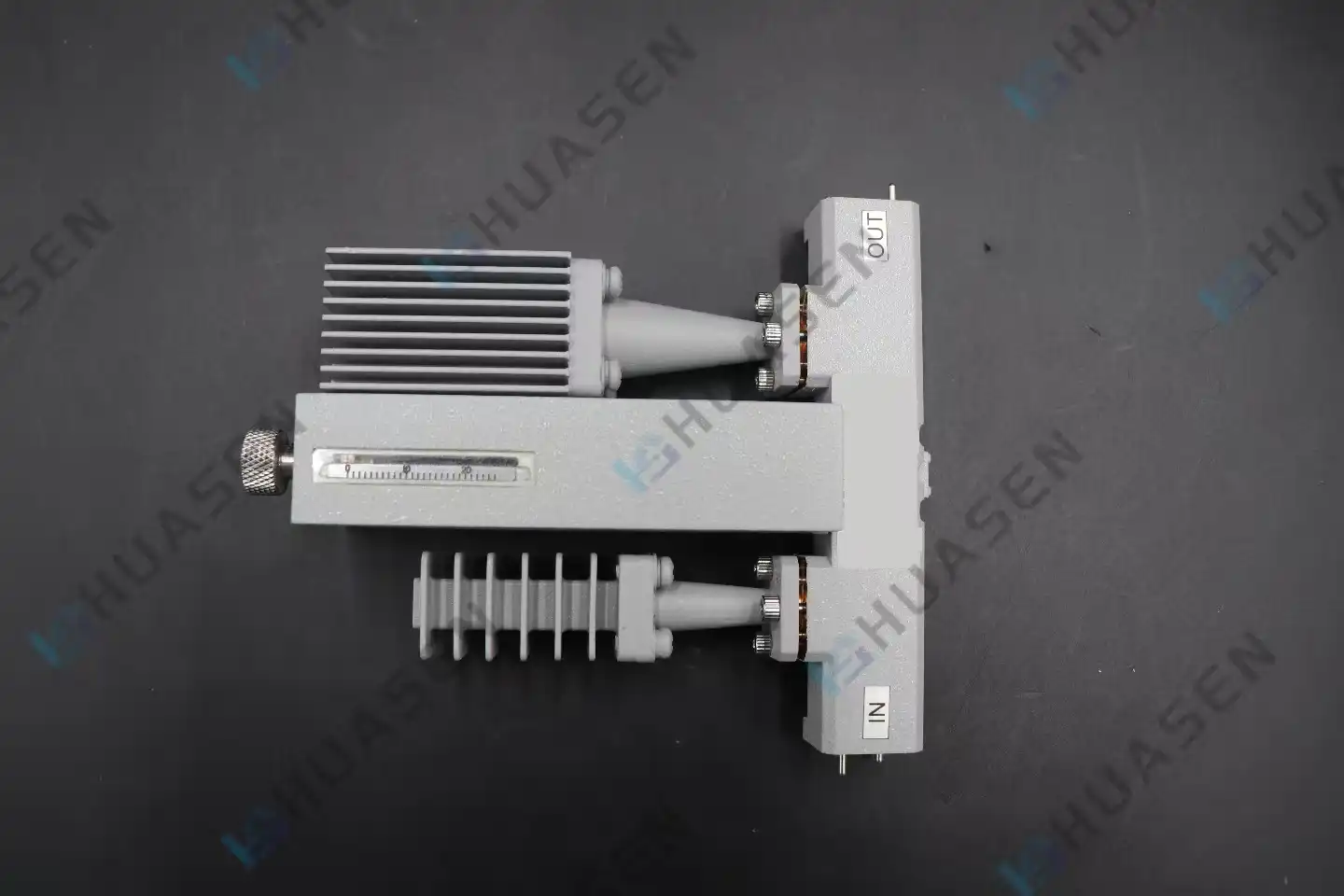
Comparing Variable Waveguide Attenuators: Making an Informed Choice
To choose the right attenuation equipment, you have to weigh the trade-offs between performance and operational needs. The comparison looks at frequency coverage, power handling, insertion loss, and the fineness of the adjustments.
Frequency Coverage and Bandwidth Considerations
From 0.96 GHz to 112 GHz, devices work across L-band to W-band assignments, though most units only cover one waveguide band at a time. WR-10 flanges can handle W-band (75–110 GHz) at 5% bandwidth, while WR-90 flanges can handle X-band (8.2-12.4 GHz) at 10% fractional bandwidth. This smaller fractional bandwidth at millimeter-wave frequencies is caused by the way waveguides cut off waves, which brings higher-order modes closer to the operating range of the fundamental mode.
System integrators that work with more than one frequency band have to buy separate units for each range, which makes their inventory more complicated. There are broad-coverage coaxial options, but they can't handle as much power. For example, a coaxial attenuator that can handle 10W of continuous power is very different from waveguide versions that can handle 4000W of average power. This 400-fold difference is very important for characterizing high-power amplifiers when signal levels are higher than 60 dBm.
Power Handling and Thermal Management
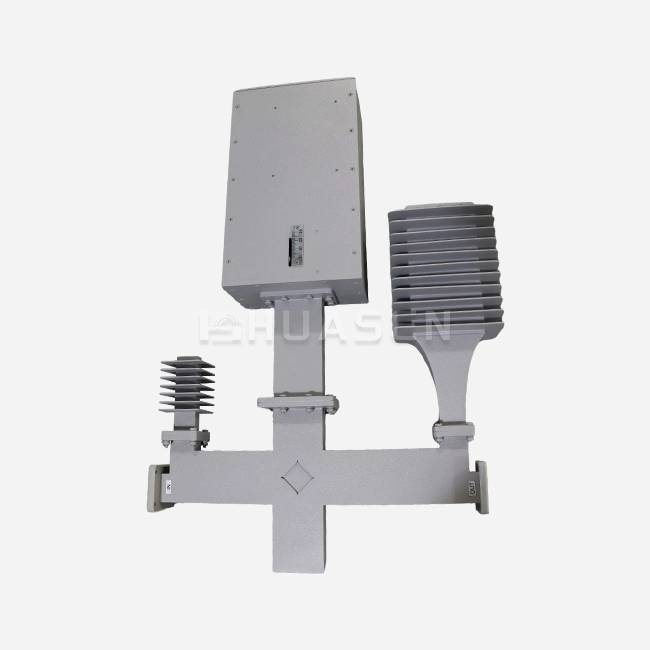
Power ratings ranging from 10W to 4000W are based on the materials used in the absorbing elements and how well they are integrated with the heat sinks. Standard resistive card designs can handle moderate power and are good for testing receivers, including in a variable waveguide attenuator. Ceramic-based absorbers with active cooling can be used for applications that involve the transmitter path. When pulsed radar is used, where instantaneous power can reach 100 kW even though average levels are low, peak power handling becomes very important.
Duty cycle limits are set by the thermal time constant of the absorbing element. To keep the material from breaking down, continuous wave operation must be lowered to 500 W for a ceramic vane with a 50-second thermal time constant that can handle 10% duty cycle pulsed operation at 10 kW peak. To avoid field failures, the specifications for the purchase must make it clear what the average and peak power needs are.
Insertion Loss and VSWR Performance
Insertion loss at a zero attenuation setting means that the signal is naturally getting weaker because of flange discontinuities and internal reflections. When the value is less than 0.3 dB, it means the performance is excellent. A value of 0.8 dB is fine for applications where the extra loss can be justified by the measurement uncertainty budget. Return loss greater than 20 dB (VSWR < 1.22:1) guarantees less than 1% reflected power, which keeps the signal's integrity during precise measurements.
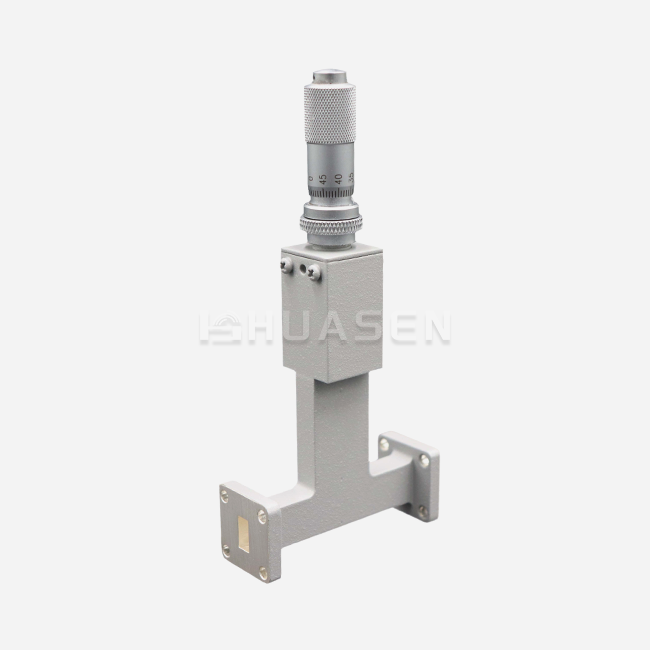
Attenuation accuracy of within ±0.5 dB across the adjustment range makes it possible to repeat tests reliably. Micrometer-driven mechanisms offer a resolution of 0.01 dB, which is useful for tasks like measuring antenna gain, where a 0.1 dB error has a direct effect on system margin calculations. Digital readouts with calibration tables make up for changes in attenuation that happen with frequency in flap-type designs.
Installation, Maintenance, and Design Considerations for Optimal Performance
The reliability of measurements and the life of equipment are directly affected by how well attenuation components are integrated into test configurations. The operational success depends on the installation steps, regular maintenance schedules, and mechanical design factors.
Installation Best Practices
Aligning the flanges stops signal leakage and keeps the low VSWR requirements. For waveguides WR-90 and bigger, the flanges are made of FDP (flat-plate dowel pins), which need to be rotated within 0.5 degrees to keep the electrical continuity across the junction. The recommended torque is between 10 and 25 inch-pounds, depending on the size of the flange. Tightening too much changes the cutoff frequency and lowers the return loss of the waveguide.
When radars are installed outside, they need to be sealed off from the environment because water can corrode the silver-plated surfaces and cause insertion loss to rise by 0.5 dB or more over time. When installed correctly, FUGP (flat gasket under pressure) flanges with O-ring seals offer IP65 ingress protection, meeting the needs for environmental adaptability in both maritime and airborne applications.
In high-power applications, the way the device is mounted affects how well it handles heat. When absorbing elements are mounted vertically and placed so that there are convective airflows, the operating temperature drops by 15 to 20°C compared to when they are mounted horizontally, where heat builds up. Using thermal imaging during the initial burn-in testing ensures that the equipment can handle the heat properly before putting it to use.
Routine Maintenance Requirements
The mechanical drive mechanism needs to be checked for backlash of more than 0.02 dB on a regular basis. This can be seen as an attenuation setting hysteresis between adjustments for increasing and decreasing levels. On threaded surfaces of micrometer barrels, dust and oxidation build up. This can be fixed by cleaning them once a year with isopropyl alcohol and using dry lubricants that work in RF environments.
To keep the conductive surface from getting pits from arcing, flange contact surfaces need to be cleaned before every installation cycle. Alcohol-wet lint-free swabs get rid of oxidation without scratching gold or silver plating. When looked at closely under a microscope, pitting or discoloration is seen. This means that the absorbing element has been exposed to too much power and needs to be replaced.
Using a vector network analyzer to check the calibration with a waveguide variable attenuator makes sure that the attenuation accuracy stays within the limits even after transporting or thermal cycling. For aerospace and defense contractors, a calibration certificate with measurement uncertainty statements that can be tracked back to NIST standards is proof that they meet the requirements of ISO and MIL-STD.
Design Integration Factors
Standard 19-inch rack widths make it hard for waveguides to run through rack-mounted test systems because of the size of the packaging. Right-angle bends and waveguide twists work around space limitations without affecting the electrical performance. However, each break adds 0.1 to 0.2 dB of insertion loss, which builds up over complex configurations.
When the temperature outside is higher than 40°C, forced-air cooling or liquid-cooled cold plates are needed for thermal management in multi-kilowatt applications. When figuring out how to sink heat, you have to think about both convective and radiative transfer modes. Black anodized surfaces are 30% more efficient at radiative transfer than bare aluminum.
When flange contacts aren't perfect, they can create slot antennas that radiate at test frequencies. This is called RF leakage suppression. Leakage is reduced by 60 dB or more by conductive gaskets and waveguide-beyond-cutoff sections. This meets the FCC Part 15 radiated emission limits in lab settings.
Procurement Guide: Buying the Right Variable Waveguide Attenuator for Your Business
Strategic sourcing of precision RF parts strikes a balance between technical requirements, the supplier's abilities, and the overall cost of ownership. A procurement manager has to look at the qualifications of the vendor, how flexible they are with customization, and the infrastructure for support after delivery.
Supplier Evaluation Criteria
Established manufacturers show their dependability by having decades of experience in the field and customer references from the defense, communications, and aerospace industries. Since 1993, Huasen Microwave has had a 30-year track record that shows they have the engineering depth to handle complex customization requests while keeping production consistent for large orders. Certification compliance is very important when selling to main contractors who need MIL-STD-790 testing for shock and vibration resistance or RoHS compliance for deployment in Europe. Supplier quality management systems that are ISO 9001-certified make it possible to keep track of everything from the receipt of raw materials to the final test data packages. Being clear about lead times helps with planning projects where 12–16 week delivery cycles for customized frequency bands or specialized flange types determine when to buy things. Standard configurations from suppliers can be delivered in two to four weeks for WR-90 and WR-62 X-band and Ku-band units used in high-volume applications.
Customization Capabilities
About 70% of applications can be met by standard catalog items. However, new needs in 6G research at E-band (71–86 GHz) or small unmanned systems require custom solutions. Customization options include non-standard frequency ranges that cover multiple waveguide bands with stepped transitions, unique flange types that work with legacy equipment, and tough packaging for environments with airborne vibrations that are faster than 10G. Power handling changes have been made to allow testing of high-power transmitters. These changes include bigger absorbing elements and built-in heat exchangers, which raise the continuous ratings from 500W to 4000W. These changes lead to lead times 16 to 20 weeks longer, but they solve important problems when commercial alternatives aren't available. Prices for custom configurations are usually 1.5x to 3x standard unit costs, but this depends on how complicated the engineering is and how many are being made. When you buy 20 or more units at once, the price per unit drops by 15 to 25 percent, and you can be sure that you'll get what you need when there are shortages of parts for specialized materials like precision ceramics.
Technical Support Infrastructure
Pre-sales engineering consultation helps define specifications that meet the needs of the application without over-specifying parameters that make costs go up for no reason, such as for a waveguide variable attenuator. Applications engineers with a lot of experience can turn system-level performance goals into component specifications and tell the difference between applications that need 0.2 dB precision and those that only need 0.5 dB accuracy. Sample evaluation programs let you test things on a bench before committing to large quantities for production, including waveguide variable attenuators. This lowers the technical risk in mission-critical programs. Samples come with calibration data that shows the measured S-parameters for different frequencies and attenuation settings. This makes it easier to add them to measurement uncertainty budgets that are already in place. After the delivery, there is troubleshooting help, recalibration services, and obsolescence management for defense platforms where product lifecycles are longer than 15 years, as well as support for waveguide variable attenuators. Repair times are cut down by regional service centers, and exchange programs provide temporary replacements during service intervals to keep operations running as smoothly as possible.
Conclusion
In RF test setups that need to be able to control signals in different ways and handle a lot of power, variable waveguide attenuators are essential tools. To make the right choice, you need to compare the frequency coverage, power ratings, and attenuation accuracy to the needs of the application. Precision during installation and regular maintenance ensures that measurements stay accurate throughout their useful lives. Long-term project success in tough aerospace, telecommunications, and defense uses depends on strategic procurement that balances supplier capabilities, customization flexibility, and support infrastructure.
FAQ
1. How does frequency range affect waveguide attenuator selection?
Through cutoff characteristics, frequency determines waveguide size. For example, WR-90 flanges cover the X-band, while WR-28 covers the Ka-band. Each waveguide standard works over an area that is about 40% of the frequency range of its design. For devices that work with frequencies between 0.96 GHz and 112 GHz, you need more than one unit with different waveguide sizes.
2. What distinguishes rotary vane from flap attenuators?
Through polarization rotation, rotary vane designs keep the phase shift constant across all attenuation settings. This makes them ideal for phase-sensitive tasks like beamforming calibration. Flap attenuators change the phase, but they are cheaper and come in smaller packages, so they can be used for power level control where phase consistency is not important. The 0–30 dB range is reached by both.
3. How frequently does calibration verification become necessary?
For labs with stable temperature and humidity, once a year is enough for calibration. Field-deployed systems that are used in harsh environments need to be checked every six months. Any mechanical shocks during transport or visible damage to the flanges mean that the equipment needs to be recalibrated right away before it can be used again. Calibration certificates show that the uncertainty of measurements can be traced back to national standards.
Partner with Huasen Microwave for Your Attenuation Solutions
Huasen Microwave makes waveguide attenuation parts that are precisely engineered to work with RF test applications from the L-band to the W-band frequencies. We've been making things for 30 years and can make devices that can handle 10W to 4000W of power and have attenuation accuracy within ±0.5 dB across 0-30 dB ranges. Our engineering team is here to help you through the whole process of specifying and buying equipment, whether you need standard X-band configurations or custom E-band solutions for new 6G research. Email our technical sales team at sales@huasenmicrowave.com to talk about your specific needs, get calibration data sheets, or get price quotes for large orders. As a reliable Variable Waveguide Attenuator manufacturer, we help research institutions and system integrators by providing them with high-quality parts, fast delivery, and detailed technical documentation that meets aerospace and defense quality standards.
References
1. Harvey, A. F. (1963). Microwave Engineering. Academic Press, Chapter 8: Waveguide Components and Attenuators.
2. Pozar, D. M. (2011). Microwave Engineering, Fourth Edition. Wiley, Section 7.4: Attenuators and Phase Shifters.
3. Skolnik, M. I. (2008). Radar Handbook, Third Edition. McGraw-Hill, Chapter 3: Transmitters and Receivers.
4. IEEE Standard 261-1996. IEEE Standard Letter Designations for Radar-Frequency Bands.
5. Maury, J. P. (1985). Precision Waveguide Attenuators for Test Applications. Microwave Journal, Vol. 28, pp. 113-122.
6. U.S. Department of Defense (2008). MIL-DTL-3933: Detail Specification for Attenuators, Fixed and Variable, Waveguide.
Send Inquiry