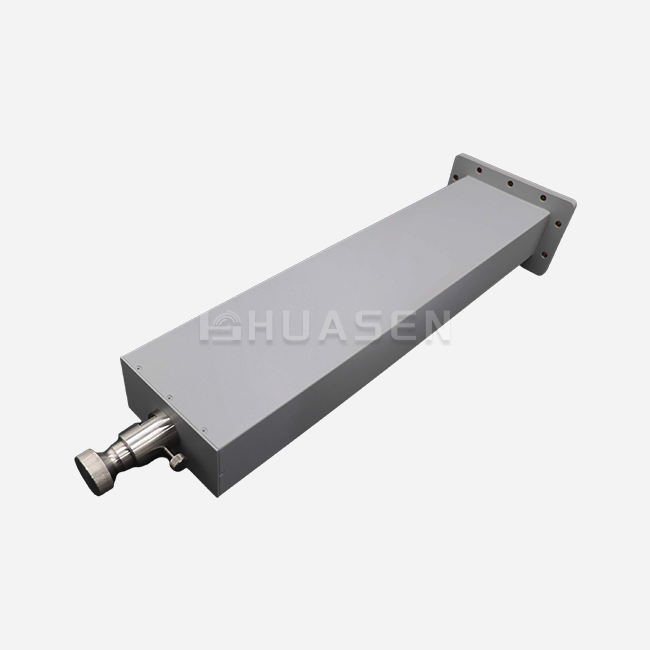
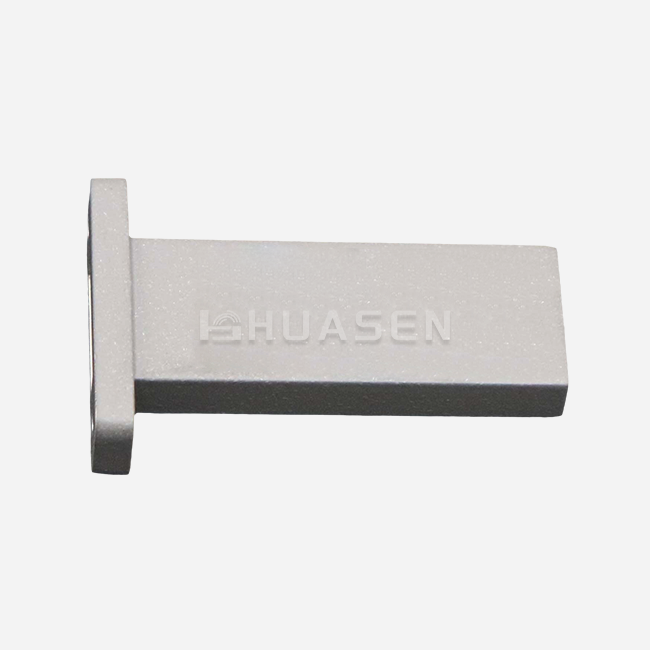
Pyramidal Horn Antenna vs Conical Horn: Technical Review






2026-06-12 22:28:20
Procurement teams must choose between pyramidal horn antennas and conical horn antennas for demanding RF applications. Pyramidal horn antennas' rectangular waveguide-fed construction of pyramidal horn antennas provides high directivity for polarisation-sensitive tests and EMC testing. Conical horns' circular symmetry makes them ideal for broadband applications that need constant radiation patterns across frequency ranges. Understanding these basic distinctions influences base station architecture, satellite ground terminal, and laboratory calibration procurement choices.
Understanding the Fundamentals of Pyramidal and Conical Horn Antennas
Both antennas solve the impedance transformation problem between confined waveguide structures and free space. This change affects VSWR performance, which is critical for signal integrity in high-power transmission systems and sensitive measurement situations. The architectural approach of any design impacts its industrial usefulness.
Pyramidal Horn Design Principles
Pyramidal horn antenna structures have flared apertures from rectangular waveguide inputs in both E and H planes. E-plane beamwidths are smaller than H-plane beamwidths due to dual-plane expansion. For applications demanding linear polarisation purity over 25 dB cross-polarisation isolation, the design offers fine beam shaping. Precision-machined aluminium or copper alloys are chemically passivated to avoid oxidation in outdoor deployments. Careful design can expand operating bandwidths beyond 1.3:1 to 2:1 frequency ratios.
Conical Horn Operating Characteristics
Smoothly expanding circular apertures convert circular waveguide feeds to conical designs. E- and H-plane beamwidths are identical due to rotational symmetry, ensuring constant radiation patterns regardless of polarisation. Antenna range calibration benefits from consistent performance across many polarisations, reducing measurement uncertainty. Conical horns fit wideband communications testing and multi-frequency radar feeds due to their high operational bandwidths, often surpassing 10:1. Though mode converters add insertion loss compared to direct waveguide connections, the circular form simplifies coupling to coaxial transmission lines.
Impedance Matching and Wave Propagation
Both antenna types are acoustic-to-electromagnetic impedance transformers that progressively change waveguide impedance (usually 377 ohms corrected for modal propagation) to free-space impedance. Higher-order mode excitation can decrease pattern purity, but the pyramidal horn antenna design's rectangular cross-section preserves the TE10 mode purity during the transition. Based on feed orientation, conical horns connect TE11 circular waveguide modes to vertically or horizontally polarised signals. Quality impedance matching affects return loss, with well-designed horns having VSWR values below 1.5:1 across operating bands.
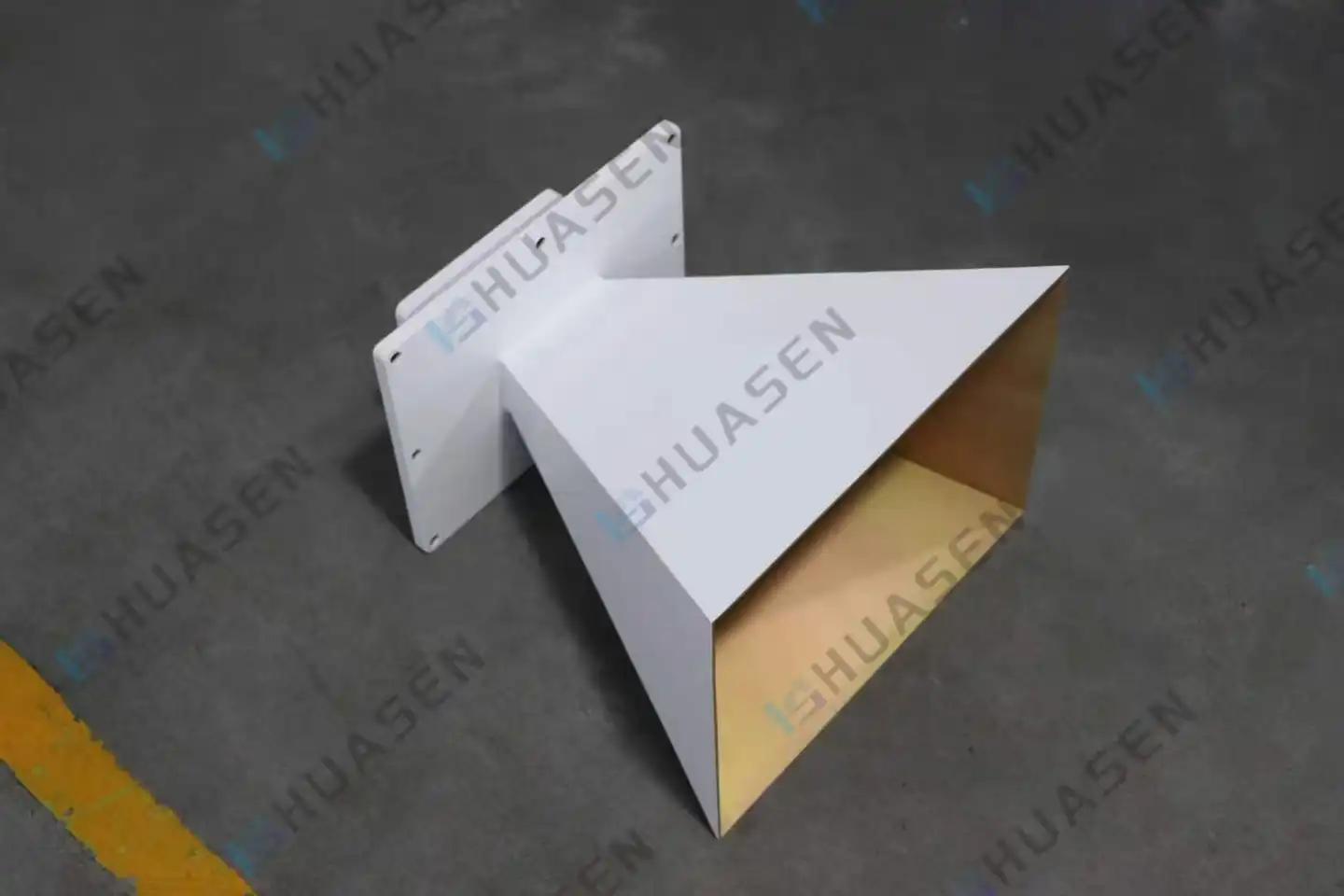
Technical Comparison — Pyramidal Horn Antenna vs Conical Horn Antenna
Performance trade-offs must be weighed against procurement limitations such as customisation delays, certification requirements, and volume deployment's total cost of ownership when choosing between various designs. The following comparison covers system integrator and test laboratory management essentials.
Radiation Pattern and Gain Characteristics
Aperture theory predicts pyramidal horn antenna gains of 10–25 dBi. E-plane beamwidths are 10-20 degrees smaller than H-plane beamwidths, making them suitable for sector coverage in base station testing. Properly built units minimise interference in multi-antenna test settings by keeping sidelobe levels below -20 dB.
Conical horns generate symmetrical patterns with equal gains, but their circular design requires bigger aperture sizes to achieve identical gains. Testing circularly polarised systems or field deployments with unpredictable antenna orientation benefits from the uniform beamwidth. Far-field calculations in compact antenna test ranges are simplified by pattern symmetry, minimising measurement post-processing.
Frequency Coverage and Bandwidth Adaptability
Rectangular waveguide cutoff frequency and aperture phase error buildup at band edges restrict the pyramidal horn antenna bandwidth. Standard designs work well at 40-60% fractional bandwidth. Extended-range variations use dual-mode or ridged waveguide feeds to extend operating ranges to 2:1 ratios through manufacturing complexity and power handling reduction.
Gradual impedance transitions and lower modal dispersion enable broader bandwidths in conical topologies. Wideband conical horns from 2 to 18 GHz are EMC pre-compliance testing workhorses, replacing narrowband instruments. This extensive coverage tackles inventory management customer pain points and streamlines frequency sweep test methods. The trade-off is poorer gain at lower frequencies than narrowband pyramidal horn antenna counterparts.
Structural and Mechanical Considerations
Pyramidal horn antennas need precision milling or electroforming rectangular tapers, popular RF component manufacturing methods. Rectangular mounting flanges match waveguide infrastructure, minimising adaptation hardware. Depending on frequency and gain, tiny drone-mounted radar devices weigh 0.5 to 5 kg.
For complicated profiles, conical production uses spinning, casting, or 3D metal printing. For polarisation alignment, circular mounting interfaces require a rotation adjustment gear, increasing the mechanical complexity of test rigs. Due to increased aperture needs, the weight is 20-30% more than pyramidal horn antenna equivalents with the same gains. Marine-grade aluminium with protective coatings meets IP65 ingress protection for maritime communication facilities and suits pyramidal horn antenna designs.
Applications and Use Cases: When to Choose Pyramidal or Conical Horn Antennas?
Technical specifications must be translated into purchase decisions by evaluating how performance attributes match operational needs. Industry experts know that antenna choice affects project success, maintenance costs, and system upgradeability.
Laboratory and Calibration Environments
ISO 17025-accredited calibration labs use pyramidal horn antennas as reference standards. Their calculable gain reduces antenna measurements' circular reliance, providing traceable secondary antenna characterisation references. Linear polarisation purity favours automated test systems with fixed DUT orientation. Pyramidal horn antennas create field strengths without amplifier saturation for MIL-STD-461 radiated susceptibility assessments at 300W CW.
In pre-compliance EMC screening, engineers sweep 1-18 GHz for emission abnormalities. Conical horns dominate wideband measurement settings. The single-antenna method cuts changeover time and tests manpower expenses. Research organisations studying metamaterials or frequency-selective surfaces prefer conical forms for their consistent lighting across experimental frequencies.
Telecommunications Infrastructure Testing
5G massive MIMO base station validation demands antenna solutions capable of characterising beamforming arrays with 64 or more radiating elements. Pyramidal horn antennas with gain characteristics tailored to sub-6 GHz or mmWave bands (24.25-29.5 GHz) isolate array members during over-the-air testing. The rectangular aperture matches planar array geometries, facilitating anechoic chamber measuring grid alignment.
Test transmitters simulate point-to-point microwave routes for backhaul connection validation using high-gain pyramidal horn antennas. Narrow beamwidths simulate practical link budgets, confirming receiver sensitivity under actual propagation conditions. Multi-band backhaul situations with single antenna apertures for 6 GHz, 11 GHz, and 18 GHz lines value bandwidth above peak gain and use conical alternatives.
Aerospace and Defence Applications
Pyramidal horn antennas are used in radar cross-section measuring ranges for target scattering analysis that needs particular polarisation excitation. Pyramidal horn antenna designs meet military antenna performance envelopes (MIL-STD-810 environmental and MIL-STD-464 electromagnetic environmental impacts) after decades of validation. Established pyramidal horn antenna models have solid supply chains and dependability data that defence contractors demand.
Airborne and shipborne communication systems use mechanically strong, lightweight conical horns due to space and vibration limits. The circular mounting footprint complements radome designs better than rectangular ones. For extensive spectrum coverage in disputed electromagnetic settings, electronic warfare systems use ultra-wideband conical arrays to monitor L through Ku bands simultaneously.
Procurement Guide: Sourcing Quality Pyramidal and Conical Horn Antennas
Technical criteria and practical realities must be balanced in the worldwide RF component supply chain. Experienced procurement managers know that vendor stability and support infrastructure are as important as datasheet specifications in antenna selection.
Pricing Drivers and Market Positioning
Pyramidal horn antennas cost $800 for basic WR-90 X-band devices and $8,000 for precise gain standards with calibration certifications. Custom designs with mounting hardware or environmental protection cost 30-50% more and take 12-16 weeks. Volume orders above 20 units usually receive 15-25% savings; however, minimum order numbers must match project burn rates to avoid obsolescence.
Manufacturing difficulty and bandwidth determine conical horn prices. Narrowband (2:1 frequency ratio) versions cost around $1,200, whereas ultra-wideband (10:1 ratio) units cost $12,000–$18,000. Replacement of three or four narrowband pyramidal antenna units reduces calibration maintenance and simplifies test methods, making the investment cost-effective. Strategic purchasers negotiate frame agreements with suppliers to secure 18-24 month pricing stability for multi-year defence programmes using fixed-price contracts.
Vendor Assessment and Risk Mitigation
Established manufacturers like Flann Microwave, ETS-Lindgren, and ATM Microwave have vast back catalogues with pattern data traceable to prior measurement campaigns, minimising qualification test responsibilities for AS9100 or ISO 9001 customers. New suppliers may provide low prices but require strict incoming inspections, raising quality management expenses.
Lead time dependability distinguishes top vendors from commodity suppliers. Single-source procurement techniques were vulnerable to 2020-2023 global supply chain disruptions, pushing risk-conscious buyers towards dual-source qualifications. US and EU manufacturers provide regional supply chain diversification at higher prices than Asian competitors. Vendor credit reports and payment term discussions prevent mid-programme supplier breakdowns that might disrupt schedules.
Customisation and Engineering Support
About 60% of professional applications use off-the-shelf antennas, allowing room for customisation. Non-standard frequency splits matching permitted spectrum allocations, stronger mounting brackets for shock/vibration situations per MIL-STD-810 Method 514, and increased temperature ratings (-55°C to +125°C) for stratospheric UAV deployments are common modifications. Leading vendors have electromagnetic simulation and fast prototyping applications engineering teams that shorten bespoke design cycles from idea to hardware in 8-12 weeks.
This engineering relationship includes product lifetime support after procurement. Historical test data, pattern cuts, and S-parameter files speed system modelling during upgrades. Sample loan programmes decrease upfront financial exposure while assessing competing technologies, especially when choosing a pyramidal horn antenna or conical structures for new platform advancements.
Advantages and Limitations of Pyramidal vs. Conical Horn Antennas
A balanced evaluation recognises that no antenna design dominates all applications. Procurement specialists should map unique benefits and limits against weighted project needs rather than pursuing theoretical performance optima without practical reality.
Pyramidal Horn Strengths and Constraints
Pyramidal horn antennas thrive in situations requiring the greatest gain within aperture constraints. Through more effective aperture use, rectangular design yields 1-2 dB better gain than circular counterparts of similar aperture areas. Using conventional rectangular waveguide infrastructure avoids adaption losses, maintaining signal power in receiver front-ends and optimising radiated power in transmitters. Precision radar applications that need clean polarisation separation for target scattering matrix measurement do well with linear polarisation purity above 30 dB.
In broadband applications, numerous pyramidal horn antenna units are needed to cover frequency ranges, increasing procurement costs and antenna changing time. The asymmetric beam pattern causes measurement error when the DUT radiation properties change across major planes. Mechanical installation needs precise alignment to minimise polarisation rotation relative to system reference planes, complicating field setting. Conical alternatives weigh less, although compact high-gain variations weigh 3-4 kilos, affecting UAV payload budgets.
Conical Horn Benefits and Trade-offs
Conical antennas cover frequency ranges that need three or four pyramidal horn antenna counterparts, providing unequalled bandwidth. In laboratories serving several product lines, consolidation minimises procurement overhead, simplifies calibration tracking, and speeds test execution. Symmetric radiation decreases pattern orientation uncertainty, which is useful when characterising omnidirectional antennas or when the measurement setup geometry is unknown during proposal phases. Simple feed adjustments provide circular polarisation compatibility for GNSS receiver testing and satellite communication ground segment applications without changing antenna families.
For pyramidal horn antenna gain parameters, the pyramidal antenna’s circular aperture must be bigger, which may clash with space-constrained installations. Peak gain occurs at mid-band frequencies, and performance degrades more gently than pyramidal horn antenna devices near band edges, but never matches optimal narrowband alternatives. Polarisation adjustment techniques increase mounting hardware complexity, introducing high-vibration platform failure hazards. Ultra-wideband models require a thorough total cost of ownership analysis, including operational efficiency advantages, due to 2-3 times greater comparable manufacturing costs.
Conclusion
Technical performance profiles, operational requirements, and procurement limitations determine pyramidal horn antenna or conical horn antenna selection. Pyramidal horn antenna topologies provide higher gain efficiency and integration simplicity in narrowband systems, making them ideal for standards labs, military radar, and telecommunications infrastructure that needs maximum link budget performance. Conical variations are useful in wideband testing, multi-frequency communication systems, and applications where operational flexibility trumps peak performance. Successful procurement techniques include datasheet factors, vendor stability, customisation capabilities, and lifecycle support infrastructure to assess system effectiveness across multi-year deployments.
FAQ
1. What frequency ranges suit pyramidal versus conical horn selections?
Pyramidal horn antennas work well at 40-60% fractional bandwidths, making them ideal for single-band applications like X-band radar (8-12 GHz) or 5G bands (24.25-29.5 GHz). Conical shapes are suited for wideband EMC testing (1-18 GHz) or multi-band satellite terminals with 2:1 to 10:1 frequency ratios. The decision depends on whether your system needs maximum gain in a limited band or acceptable gain across vast frequency spans.
2. How does beamwidth affect measurement accuracy in test scenarios?
Narrower beamwidths concentrate radiated power, increasing measurement sensitivity but requiring precise source-device alignment. Pyramidal horn antennas with 15-degree beamwidths require ±2 degrees of angular positioning for accurate calibration. When characterising antenna arrays, wider conical beamwidths (30-40 degrees) allow relaxed alignment but reduce spatial resolution. Select beamwidth based on test fixture geometry and measurement uncertainty.
3. Can environmental factors influence antenna choice for outdoor deployments?
Protective coatings and IP65-certified construction give both architectures environmental ruggedness. Pyramidal horn antennas with rectangular apertures in horizontal installations may collect water or debris, requiring drains. Conical apertures shed rain vertically. Instead of geometry, material selection (marine-grade aluminium, protective plating) determines corrosion resistance, and both designs can withstand maritime and tropical environments successfully when properly specified.
Partner with Huasen Microwave for Precision Horn Antenna Solutions
Since 1993, Huasen Microwave has designed high-performance Pyramidal Horn Antennas and conical horn antennas for system integrators and test labs in telecommunications, aerospace, and defence. With extensive test data and ISO 9001-certified manufacturing, our precision-machined waveguide components have VSWR below 1.4:1 across operational bands. Our applications engineering team provides technical consultation from initial specification to prototype validation for standard gain horns for laboratory calibration or customised designs meeting frequency allocations and environmental specifications. Volume pricing and expedited production support R&D prototype and production procurement schedules. Discuss your antenna needs with our technical sales team at sales@huasenmicrowave.com and receive detailed quotes from a trusted Pyramidal Horn Antenna manufacturer committed to quality and reliability.
References
1. Balanis, C.A. (2016). Antenna Theory: Analysis and Design, 4th Edition. Wiley.
2. Johnson, R.C. (1993). Antenna Engineering Handbook, 3rd Edition. McGraw-Hill.
3. IEEE Standard 149-2021. IEEE Standard for Antenna Measurements.
4. Olver, A.D., Clarricoats, P.J.B., Kishk, A.A., & Shafai, L. (1994). Microwave Horns and Feeds. IEEE Press.
5 Silver, S. (1984). Microwave Antenna Theory and Design. Peter Peregrinus Ltd.
6. Milligan, T.A. (2005). Modern Antenna Design, 2nd Edition. Wiley-IEEE Press.
Send Inquiry