Parabolic Antenna Design: Reflector Geometry and Gain Explained






2026-03-19 21:55:09
Parabolic antenna design is an important part of modern telecommunications. The shape of the reflector affects how well the system works overall and how well it can focus signals. Because of its mathematical accuracy, a parabolic reflector makes it possible for electromagnetic waves to focus on a single point, which increases signal strength and directionality. Incoming parallel waves are turned into directed energy by this advanced engineering method, which makes it work better than traditional antenna designs. Engineers and purchasing managers who want to find the best communication options for tough industrial uses need to know how the shape of a reflector affects its gain characteristics.
Introduction
Modern communication infrastructure is built around parabolic antennas, which send and receive signals in a focused way that makes high-performance wireless links possible. Because of the complicated link between reflector geometry and antenna gain, these design factors are very important for ensuring reliable data transmission in business and industrial settings. This in-depth study is for procurement managers, RF engineers, system integrators, and original equipment manufacturers (OEMs) who work in global business-to-business markets. It covers the basics of parabolic antennas, strategies for improving designs, and useful procurement advice. Understanding parabolic antenna design is important for more than just technical reasons. To meet the needs of modern communication, we need advanced solutions that combine performance requirements with cost-effectiveness, environmental resilience, and installation flexibility. Choosing and installing the right parabolic antennas can have a big effect on the success of a project and its dependability over time, whether they are used for 5G backup networks, satellite communication links, or radar systems.
Understanding Parabolic Antenna Basics
If you study the math behind parabolic curves, you can see that they naturally direct electromagnetic waves that are traveling in the same direction to a single point. The way parabolic dish antennas work is shown below. Because of this geometric advantage, the antenna turns into a very directional tool that can focus energy sent or signals received, very effectively. Based on the exact mathematical relationship between the shape of the reflector and the focal distance, the parabolic reflector surface sends radio frequency waves in a different direction.
Core Geometric Principles
It is possible to shape parabolic reflectors in a way that makes the focal length (f) directly linked to the reflector's diameter (D) and depth (h). A formula called h = D²/(16f) shows the important ratios that decide how well an antenna works. This mathematical base makes sure that all reflected waves get to the feed horn at the same time. This keeps the signal strong and reduces energy loss as little as possible. These days, parabolic antennas can work in a lot of different frequency bands, from 30 MHz for VHF to over 100 GHz for millimeter-wave systems. A big part of how well an antenna works is how long its wavelength is compared to its width. Reflectors that are bigger than the wavelength, for instance, have better gain and smaller beamwidths. This connection helps engineers guess how antennas will work and create designs that meet specific frequency needs.
Signal Focusing Mechanics
It is the job of the reflector to either focus incoming plane waves at the focal point for reception or change circular wavefronts from the feed horn into plane waves for transmission. Parabolic antennas are very good at aiming because of this. For point-to-point communication links, satellite ground stations, and radar uses that need exact direction and signal concentration, parabolic antennas are very useful. This is because they can send and receive signals in both directions. Things like weather, multipath propagation, and interference sources can all change how well an antenna works. But because parabolic forms are naturally shaped in a certain way, they can't be affected by many types of interference that come from sources outside the main beam pattern. Wide parabolic antennas can be pointed very accurately because their beamwidth is narrow. This keeps nearby sources from interfering with the signal as little as possible.

Reflector Geometry's Impact on Antenna Gain and Performance
Antenna gain, which measures how well an antenna can focus transmitted power in a certain direction compared to an isotropic radiator, is largely determined by the shape of the reflector. The effective aperture area of the parabolic reflector is directly related to the gain measurement, which is usually given in decibels (dBi) compared to an isotropic source. Larger diameter mirrors pick up more electromagnetic energy, which leads to higher gain values that improve link performance and increase the range of communication.
Diameter and Focal Length Relationships
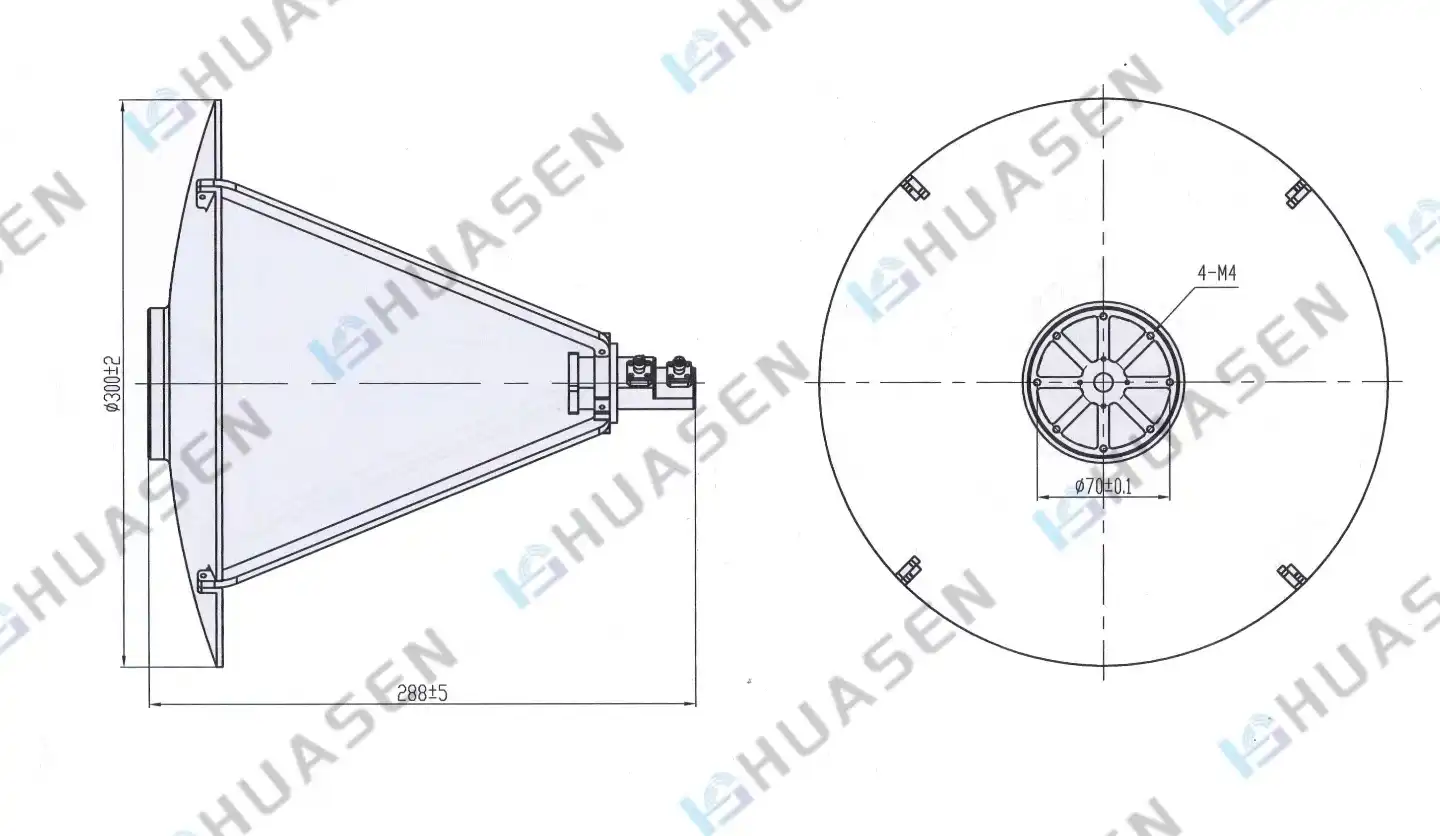
When the diameter of the reflector and parabolic reflector antenna interact, they create different performance traits that affect beamwidth, efficiency, and the needs for mechanical design. When you use shallow parabolic mirrors with long focal lengths, you get wide illumination angles that can fit bigger feed horns. This might make the system more efficient, but it needs more complex mechanical support structures. On the other hand, deep parabolic reflectors with shorter focal lengths can be made in smaller sizes, but they may have problems with edge illumination that lowers their total efficiency. The f/D ratio (focal length to diameter ratio) is an important design parameter that affects many performance aspects. The normal range for f/D ratios is between 0.25 and 0.5, and each number has its own benefits. When the f/D ratio is low, the dishes are deeper, and the lighting angles are wider. When the ratio is high, the profiles are shorter, which may be better for wind loading and mechanical stability.
Surface Precision and Manufacturing Quality
Surface precision standards get tighter at higher frequencies, where small changes from the ideal parabolic curve can have a big impact on how well an antenna works. The RMS surface accuracy standard, which is generally given as a part of the working wavelength, tells us how many differences in manufacturing are okay. Surfaces must be accurate to within ±/20 for high-performance uses, which requires exact ways of making them and checking their quality. What kind of material you use is very important for getting the surface perfection you need and for making sure the product will last in harsh conditions. Mirrors made of aluminium alloy are very good at carrying power and do not rust. What about carbon fibre composites? They don't change size when the weather does. Materials are picked based on what needs to be done, how they will affect the world, and how much they cost.
Feed Horn Alignment and Illumination Efficiency
The antenna's effectiveness and radiation pattern are greatly affected by where the feed horn is placed at the focal point. Accurate alignment makes sure that the reflector surface is properly lit while minimising leakage losses that lower gain and raise side lobe levels. The design of the feed horn needs to make sure that the light is spread evenly across the reflector surface. This is usually done by using a tapered pattern of light that strikes a good mix between efficiency and side lobe performance. The illumination efficiency is the amount of power that the reflector actually uses compared to the total power that the feed horn sends out. The best lighting usually happens when the feed horn shape gives about 10–12 dB edge taper, which means that the power density at the edge of the reflector is 10–12 dB less than the center level. This balance makes the antenna gain as high as possible while keeping the side lobe levels low enough to follow the rules and keep interference to a minimum.
Choosing the Right Parabolic Antenna for Your Business Needs
Selecting an appropriate parabolic antenna requires careful evaluation of multiple technical and commercial factors that align with specific application requirements and budget constraints. The selection process begins with defining performance specifications, including frequency range, gain requirements, environmental conditions, and mechanical constraints. Understanding these fundamental parameters enables procurement managers and engineers to narrow the selection criteria and focus on solutions that meet project objectives.
Technical Specification Analysis
Choosing the frequency band affects many other design choices because each frequency range has its own rules about how it should be transmitted and how it should be regulated. For lower frequency uses, parabolic reflector antenna wider beamwidths and less atmospheric loss are helpful. For higher frequencies, smaller antenna sizes can provide the same gain values. Gain requirements depend on the communication range; longer links need higher gain antennas to keep signal levels at a good level. System link budget calculations for gain requirements must take into account transmitter power, receiver sensitivity, path losses, and desired performance margins. There are clear patterns in the relationship between antenna gain and successful communication range. These patterns let engineers set minimum gain values for different uses. The regulatory environment may also put limits on antenna gain or EIRP (Effective Isotropic Radiated Power), which affects the choice that is made. Environmental factors include wind loads, temperature changes, the effects of rain, and the need for corrosion protection. Coastal sites are exposed to salt spray, which means they need better corrosion protection. On the other hand, mountainous areas may have extreme temperature changes, which means they need materials with low thermal expansion coefficients. Ratings for wind survival are very important for tall tower sites where a mechanical failure could have major safety and financial effects.
Comparative Analysis with Alternative Antenna Types
When compared to other types of antennas, like panel antennas, helical antennas, and array configurations, parabolic antennas have clear benefits. Because parabolic designs have better gain performance, they are perfect for long-distance communication links where weak signal strengths would make other technologies less useful. But because of their size and how they handle wind, big parabolic antennas may not be the best choice for all installation situations. Panel antennas are good for urban areas with limited room or concerns about how they look because they are less affected by wind and are easier to install. However, their limited gain makes them less useful for long-distance links or situations that need the highest level of awareness. The trade-off between electrical performance and mechanical simplicity needs to be carefully thought through based on the needs of the project and the conditions of the place.
Supplier Evaluation and Procurement Strategies
The supplier selection process should evaluate technical capabilities, quality certifications, delivery performance, and long-term support commitments. Established manufacturers with proven track records in demanding applications provide greater assurance of product reliability and performance consistency. Quality certifications such as ISO 9001 and compliance with relevant industry standards demonstrate commitment to manufacturing excellence and process control. Technical support capabilities become increasingly important for custom applications or challenging installation environments. Suppliers offering design assistance, installation training, and comprehensive technical documentation facilitate successful project implementation and reduce deployment risks. The availability of parabolic reflector antenna local support services can significantly impact project timelines and overall cost-effectiveness, particularly for international procurement activities.
Real-World Applications and Case Studies
The versatility of parabolic antennas enables their deployment across diverse commercial and industrial applications, each presenting unique requirements and performance expectations. Telecommunications infrastructure represents the largest market segment, where parabolic antennas support cellular backhaul networks, internet service provider links, and emergency communication systems. The reliability and performance characteristics of these installations directly impact service quality and customer satisfaction for millions of users worldwide.
Telecommunications Infrastructure Applications
Cellular network backhaul applications demand high-capacity links that can support the increasing data traffic generated by modern mobile devices and services. Parabolic antennas enable point-to-point microwave links that provide fiber-like capacity without the expense and complexity of physical cable installation. The directional characteristics of parabolic antennas minimize interference between adjacent links, enabling frequency reuse that maximizes spectrum efficiency in congested environments. Internet service providers leverage parabolic antennas to extend broadband services into rural and underserved areas where traditional infrastructure deployment would be economically unfeasible. The long-range capabilities of high-gain parabolic antennas enable service providers to establish coverage areas spanning hundreds of square kilometers from strategically positioned base stations. This approach democratizes internet access while maintaining the service quality expectations of urban customers.
Satellite Communication Systems
Satellite ground stations rely on large parabolic antennas to establish reliable communication links with orbital platforms operating at distances exceeding 35,000 kilometers. The extreme path losses associated with satellite communications demand maximum antenna gain to achieve acceptable signal levels for data transmission. The tracking capabilities of motorized parabolic antennas enable continuous communication with moving satellites, supporting applications ranging from maritime communications to earth observation data relay. Commercial satellite internet services utilize parabolic antennas to provide broadband connectivity in locations beyond terrestrial infrastructure reach. The recent deployment of low-earth orbit satellite constellations has created new opportunities for smaller parabolic antennas that can deliver high-speed internet services with reduced latency compared to traditional geostationary satellite systems.
Case Study: Optimizing Reflector Geometry for Enhanced Performance
There were capacity problems on a key backhaul link that connected a remote cell tower parabolic antenna to the core network for a big telecommunications company. During times of high traffic, the current 1.2-meter parabolic antenna system worked at full capacity, which could have caused service interruptions for thousands of users. The tech team looked at a number of possible upgrades, such as frequency migration, adding more parallel links, and finding better ways to use the antennas. The chosen answer involved replacing the old antenna with a precise 1.8-meter parabolic reflector whose shape was perfect for the frequency and path characteristics of the operation. The bigger aperture raised the antenna's gain by 3.5 dB, which doubled the link's capacity without needing more spectrum to be allocated or changes to the emitter. The more accurate reflector surface and feed horn design lowered side lobe levels, which made it easier for frequencies to work together with links next to it and increased spectrum efficiency even more. The execution went better than expected, and the upgraded antenna system has enough extra capacity to handle the expected rise in traffic over the next five years. The overall cost of the project stayed much lower than other options, and it provided better long-term value by making things more reliable and simplifying operations. This case shows the big benefits that can be gained by carefully choosing antennas and optimising their shapes.
Conclusion
Modern communication systems depend on being able to optimise the design of parabolic antennas by paying close attention to the shape and gain of the reflectors. To get the best focusing performance, you need to be very good at math. This calls for advanced engineering methods that balance electrical performance with mechanical stability and cost-effectiveness. When buying professionals and system engineers understand these design principles, they can make decisions that will help the project succeed while minimizing problems that will come up in the long run. Communication technologies are always changing, which brings both new possibilities and challenges for parabolic antenna applications. New 5G and 6G systems will need better performance features that push the limits of what is currently possible with radio technology. The next version of parabolic antenna systems will be made up of advanced materials, precise manufacturing methods, and intelligent beam-steering features. These will work together to give demanding uses in the defence, aerospace, and telecommunications industries unmatched performance.
FAQ
1. What factors determine the optimal parabolic antenna size for specific applications?
The optimal antenna size depends on several interconnected factors, including required gain, available installation space, wind loading constraints, and budget considerations. The gain requirement typically drives the minimum diameter specification, as antenna gain increases proportionally with the square of the diameter. Environmental factors such as wind exposure and structural support capabilities may limit the maximum practical size, requiring engineers to balance performance objectives with installation constraints.
2. How does reflector surface accuracy affect antenna performance at different frequencies?
Surface accuracy requirements become increasingly stringent at higher frequencies, where small deviations from the ideal parabolic curve can cause significant performance degradation. The general guideline specifies surface accuracy better than λ/16 for optimal performance, meaning that a 10 GHz antenna requires surface accuracy within approximately 1.9 mm RMS. Lower frequency applications can tolerate greater surface variations without substantial performance impact, enabling more cost-effective manufacturing approaches.
3. What are the key differences between parabolic antennas and alternative high-gain antenna designs?
Parabolic antennas offer superior gain performance and excellent front-to-back ratio characteristics compared to most alternative designs. However, they typically require larger physical dimensions and present greater wind loading challenges than panel or array antennas. The choice between antenna types depends on specific application requirements, with parabolic designs excelling in point-to-point links requiring maximum range and sensitivity, while alternatives may be preferable for space-constrained installations or applications requiring electronic beam steering capabilities.
4. Can parabolic antennas be customized for specialized industrial applications?
Yes, parabolic antennas can be extensively customized to meet specialized requirements, including non-standard frequency bands, unique mounting configurations, enhanced environmental protection, and specific radiation pattern characteristics. Custom solutions may incorporate specialized feed horn designs, dual-polarization capabilities, or integrated filtering systems. The customization process typically involves detailed application analysis and performance modeling to ensure optimal results while maintaining cost-effectiveness and delivery schedules.
Partner with Huasen Microwave for Superior Parabolic Antenna Solutions
Huasen Microwave stands as your trusted parabolic antenna manufacturer, delivering precision-engineered solutions that excel in demanding telecommunications, radar, and aerospace applications. Our three decades of expertise in high-frequency microwave technology enable us to provide custom parabolic antenna designs that meet your exact specifications while maintaining the highest quality standards. Whether you require standard catalog products or specialized custom configurations, our engineering team collaborates closely with clients to optimize reflector geometry and gain characteristics for maximum performance.
Our comprehensive parabolic antenna portfolio spans frequencies from VHF through millimeter-wave bands, featuring precision aluminum reflectors, low-loss feed systems, and robust environmental protection suitable for the most challenging deployment conditions. Each antenna undergoes rigorous testing in our advanced facilities to ensure compliance with international standards and customer specifications. Contact our technical sales team at sales@huasenmicrowave.com to discuss your parabolic antenna requirements and discover how our solutions can enhance your communication system performance while delivering exceptional value and reliability.
References
1. Balanis, Constantine A. "Antenna Theory: Analysis and Design, Fourth Edition." John Wiley & Sons, 2016.
2. Milligan, Thomas A. "Modern Antenna Design, Second Edition." IEEE Press Series on Electromagnetic Wave Theory, 2005.
3. Stutzman, Warren L. and Gary A. Thiele. "Antenna Theory and Design, Third Edition." John Wiley & Sons, 2012.
4. IEEE Standard for Definitions of Terms for Antennas. IEEE Std 145-2013, Institute of Electrical and Electronics Engineers, 2013.
5. Silver, Samuel. "Microwave Antenna Theory and Design." MIT Radiation Laboratory Series Volume 12, Institution of Engineering and Technology, 1984.
6. Olver, A.D., P.J.B. Clarricoats, A.A. Kishk, and L. Shafai. "Microwave Horns and Feeds." IEEE Electromagnetic Waves Series, Institution of Engineering and Technology, 1994.
Send Inquiry