Military-Grade Waveguide Calibration Kit Standards and Specifications






2026-04-06 21:24:39
Precision metrology assemblies are what military-grade waveguide calibration kits are made of to get rid of systematic errors in vector network analysers that work in tough defence settings. There are 12 error-correcting parts in these special kits that make sure the right characterisation of waveguide parts at microwave and millimetre-wave frequencies. Military-grade solutions, on the other hand, meet strict MIL-STD standards, which means they are very reliable even in the harshest operational conditions and keep measurement traceability, which is important for mission-critical applications in radar, electronic warfare, and satellite communication systems.
Understanding Military-Grade Waveguide Calibration Kits
Calibration tools made for the military are essential for making sure that measurements in high-frequency defence applications are accurate. These complex assemblies work by identifying and mathematically getting rid of the systematic mistakes that come with vector network analysers. This is especially true when they are connected to waveguide transmission lines that send electromagnetic signals in modes other than TEM.
Core Components and Architecture
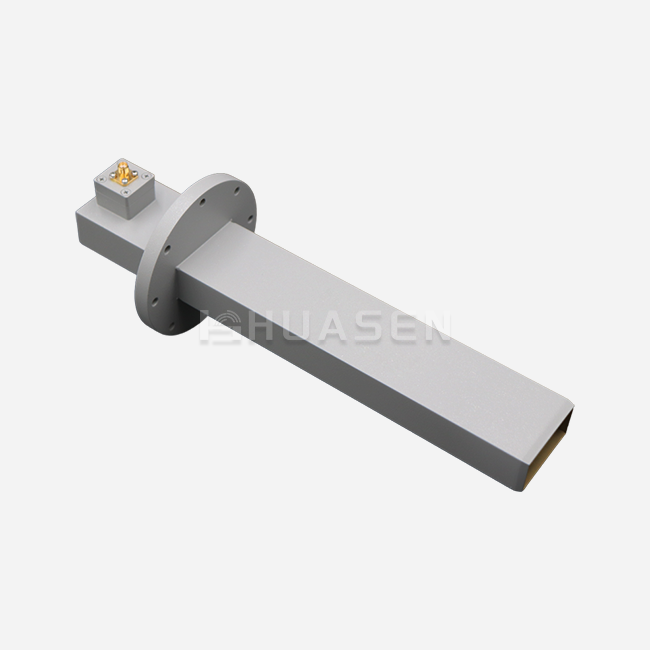
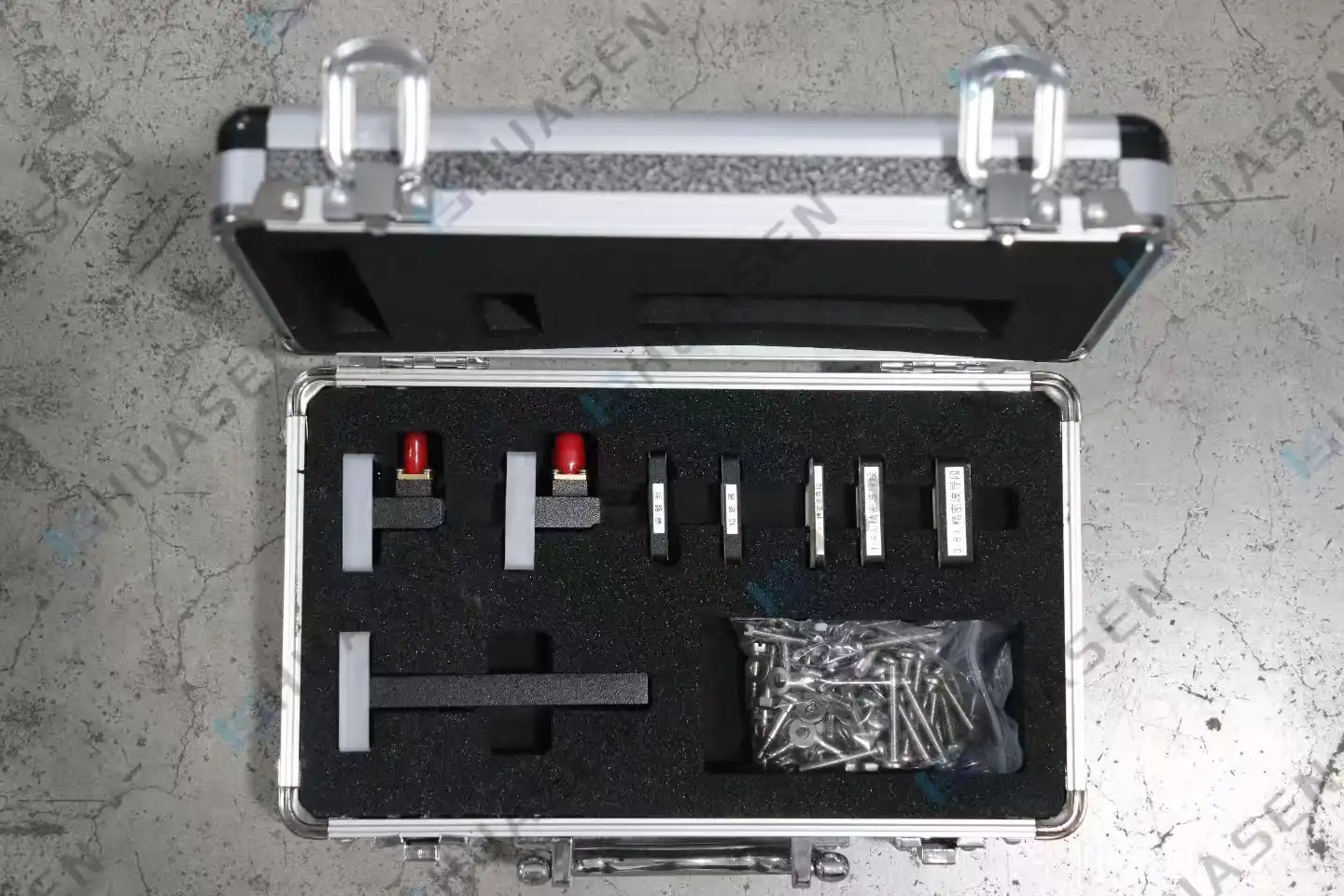
Many important parts of these calibration kits are carefully engineered to work together to make measurements that are accurate. Standard military-grade setups come with waveguide-to-coaxial adapters that work with both J and K connectors, so they can be easily added to test systems that are already in place. As long as the waveguide matching load component keeps the VSWR specifications at 1.03 or higher, there will be little to no reflective interference during calibration procedures. Modern military calibration assemblies have fixed waveguide short plates that are designed to achieve VSWR ratios above 60, which is necessary for accurate error term determination. Precision waveguide sections cut to exact fractional wavelengths, such as 1/4», 1/8», and 3/8» shapes, allow full phase reference establishment across all operating frequency ranges.
Calibration Methodologies and Error Correction
For military uses, you need complex error-fixing systems that can deal with twelve different types of measurement uncertainty. The Short-Open-Load-Through (SOLT) method describes all the error terms and is good for most defence testing situations. On the other hand, the Thru-Reflect-Line (TRL) method is more accurate for millimetre-wave measurements where mechanical accuracy is more important than electrical modelling assumptions. These calibration procedures create mathematical models that take into account errors in directivity, source match imperfections, and variations in reflection tracking. The error correction matrices that are made allow engineers to mathematically remove the effects of the test setup. This makes sure that the measured S-parameters correctly reflect the characteristics of the device and not the measurement system.
Military Standards and Specifications Governing Waveguide Calibration Kits
Defence procurement requires waveguide calibration kitsto adhereto comprehensive standards frameworks that ensure operational reliability and measurement traceability across diverse military applications. These specifications establish performance benchmarks, environmental tolerance requirements, and quality assurance protocols essential for mission-critical testing environments.
MIL-STD Compliance Requirements
Military Standard 188-124B defines electromagnetic compatibility requirements for communication equipment, establishing performance criteria that calibration kits must satisfy to support defence system verification. This standard mandates specific frequency coverage, insertion loss limitations, and environmental endurance capabilities essential for field-deployable measurement systems. The MIL-STD-461 electromagnetic interference framework requires calibration equipment to demonstrate immunity to conducted and radiated disturbances while maintaining measurement integrity. Compliance verification involves comprehensive testing across temperature extremes, vibration profiles, and humidity conditions representative of operational environments encountered in aerospace, maritime, and ground-based defence applications.
International Standards Integration
IEEE 1785 waveguide flange specifications establish dimensional tolerances and mating surface requirements that ensure repeatable mechanical connections between calibration standards and test equipment. These precision engineering requirements mandate flatness tolerances within 5 micrometres, preventing RF leakage and maintaining measurement accuracy across repeated connection cycles.IEC 60457 standards govern waveguide measurement techniques and uncertainty analysis procedures, providing frameworks for quantifying calibration accuracy and establishing measurement traceability chains. These protocols ensure calibration data maintains integrity when transferred between different measurement facilities and equipment configurations.
Performance Parameters and Tolerances
Critical performance metrics include return loss specifications exceeding 30 dB for standard applications, with premium military-grade components achieving 50 dB performance levels. VSWR characteristics must remain stable across operational temperature ranges spanning -55°C to +125°C, ensuring consistent calibration accuracy under extreme environmental conditions. Frequency coverage specifications typically encompass X-band through W-band allocations, supporting frequencies from 8.2 GHz extending beyond 110 GHz for advanced millimetre-wave applications. Power handling capabilities must accommodate peak power levels exceeding 1 kW for radar system verification, while maintaining measurement accuracy under high-power operating conditions.
How to Choose the Best Military-Grade Waveguide Calibration Kit
Selecting appropriate calibration equipment requires careful evaluation of technical requirements, operational constraints, and long-term support considerations. Military procurement decisions must balance performance specifications with total cost of ownership while ensuring compliance with applicable defence standards,waveguide calibration kits, and delivery timeline requirements.
Technical Requirements Assessment
Frequency range specifications represent the primary selection criterion, as calibration kits must encompass all operational frequencies encountered in target applications. Military communication systems spanning 5G backhaul, satellite links, and radar applications require broad frequency coverage with minimal measurement uncertainty across the entire band. Engineers must evaluate insertion loss characteristics, ensuring calibration standards introduce negligible attenuation that could compromise measurement accuracy. Connector compatibility considerations extend beyond basic mechanical interfaces to include electrical performance under extreme conditions. Military applications demand robust connection systems capable of withstanding repeated mating cycles while maintaining electrical integrity. Environmental specifications must address temperature cycling, vibration resistance, and humidity tolerance requirements specific to intended deployment scenarios.
Comparative Analysis of Leading Solutions
Industry leaders, including Keysight Technologies, Rohde & Schwarz, and Anritsu, offer military-grade calibration solutions with distinct performance characteristics. Keysight's X-series calibration kits excel in millimetre-wave accuracy and automated calibration procedures, while Rohde & Schwarz solutions emphasise environmental robustness and field serviceability. Anritsu configurations provide cost-effective alternatives suitable for laboratory environments requiring high accuracy without extreme environmental tolerance. Emerging suppliers like Huasen Microwave Technology demonstrate competitive capabilities in military-grade calibration kit development, leveraging three decades of RF engineering expertise to deliver solutions meeting stringent defence requirements. Their comprehensive approach encompasses custom frequency ranges, specialised connector configurations, and enhanced environmental specifications tailored to specific military applications.
Customisation and Support Considerations
Military applications often require specialised configurations addressing unique operational requirements or legacy system compatibility. Customisation capabilities encompass frequency band optimisation, connector interface modifications, and environmental specification enhancements. Suppliers offering comprehensive customisation services can adapt standard products to meet specific defence requirements while maintaining measurement traceability and standards compliance. Technical support infrastructure represents a critical selection factor, as military programs demand responsive engineering assistance and rapid service response. Comprehensive documentation, training programs, and field service capabilities ensure operational continuity throughout the equipment lifecycle. Suppliers maintaining certified calibration laboratories and offering traceable recalibration services provide essential long-term support for military measurement programs.
Best Practices and Procedures for Using Military-Grade Waveguide Calibration Kits
Achieving optimal measurement accuracy requires adherence to established procedures that minimise environmental influences and ensure consistent calibration results. Military testing environments present unique challenges requiring specialised techniques and rigorous quality control measures to maintain measurement integrity.
Environmental Preparation and Setup
Measurement accuracy depends critically on environmental stability during calibration procedures. Temperature variations exceeding ±2°C can introduce phase errors that compromise calibration validity, particularly at millimetre-wave frequencies where thermal expansion affects waveguide dimensions. Laboratory environments must maintain controlled conditions with minimal air currents that could cause thermal gradients across calibration standards. Vibration waveguide calibration kits isolation becomes essential for precision measurements, as mechanical disturbances can cause connector interface variations that appear as measurement errors. Dedicated measurement platforms with vibration-damping capabilities ensure stable mechanical conditions during calibration procedures. Electromagnetic interference suppression requires shielded enclosures or measurement chambers that prevent external signals from corrupting calibration data.
Step-by-Step Calibration Procedures
Successful calibration begins with thorough cleaning of all connector interfaces using appropriate solvents and lint-free materials. Contamination or oxidation on mating surfaces creates unpredictable electrical discontinuities that compromise calibration accuracy. Visual inspection under magnification reveals surface defects or wear patterns that could affect measurement repeatability. Connection torque specifications must be observed precisely, as under-tightening creates poor electrical contact while over-tightening can damage precision connector surfaces. Military-grade connectors typically require torque values between 8 and 15 inch-pounds, depending on connector size and manufacturer specifications. Proper torque wrench calibration ensures consistent connection pressure across all calibration standards. The calibration sequence follows manufacturer-specified procedures that optimise error term determination accuracy. Standard SOLT sequences begin with short circuit measurements, followed by open circuit and load terminations. Through connections, complete the error term characterisation, enabling full two-port error correction capabilities essential for accurate S-parameter measurements.
Maintenance and Quality Assurance
Regular inspections find damage or wear patterns that could affect the accuracy of the measurements. Connector pin gauges check that key interfaces are the right size, and a visual inspection shows any plating wear or mechanical damage that needs to be replaced. Documenting inspection results keeps track of records that are needed for military quality assurance programs. The amount of time between calibrations depends on how often they are used and how exposed they are to the environment. An annual check is usually what the military needs. For uses that get a lot of use or that are exposed to harsh environments, checking the measurements more often may be needed to make sure they stay accurate. Certified calibration labs offer traceable recalibration services that keep measurement chains that are needed for military compliance.
Future Trends and Innovations in Military-Grade Waveguide Calibration Kits
As technology keeps improving, calibration tools keep getting better to meet new defence needs and higher standards for measurement accuracy. Increasing frequency ranges, automated calibration processes, and integration with advanced measurement systems that support next-generation defence uses are some of the things that drive innovation.
Advanced Calibration Technologies
For more complex error correction algorithms that are better than standard analogue methods, digital calibration techniques use computers with more powerful processors. Real-time calculation of error terms lets you make dynamic calibration changes that account for changes in temperature and mechanical conditions that happen during long test sessions. Machine learning algorithms look at patterns in calibration data to figure out the best time to do calibrations and spot any potential equipment problems before they affect the accuracy of measurements. Automatic calibration systems cut down on human error and improve repeatability by manipulating calibration standards precisely with robots. These systems can repeat calibration sequences mechanically,waveguide calibration kitsbetter than manual methods. This is especially helpful for millimetre-wave applications where small changes in connectors have a big effect on measurement accuracy. Integration with measurement software makes it possible to run calibrations without any help from a person.
Expanding Frequency Capabilities
As 6G technologies and more advanced radar systems become available for military transmission, they need to be able to calibrate systems that work in sub-terahertz frequency ranges. The development of calibration kits deals with frequencies close to 300 GHz, which requires advanced materials science and precise manufacturing methods to keep measurements accurate at these very high frequencies. Waveguide fabrication tolerances are getting close to the limits of traditional machining, so other methods of production are needed, such as additive manufacturing and precision moulding. Multi-band calibration solutions cover a wide range of frequencies across multiple waveguide bands in a single kit configuration. These combined methods cut down on the need for inventory while making the tuning process easier for military broadband systems. It is possible for adaptive calibration methods to find the best error terms over a wide range of frequencies while still being as accurate as single-band solutions.
Conclusion
Waveguide calibration kits made for the military are an important part of the infrastructure needed for accurate high-frequency measurements in defence uses. These precise tools make it possible to reliably describe important parts that support radar, communication, and electronic warfare systems. To make the right choice, you need to carefully look at the technical specs, the needs of the environment, and the ability to provide long-term help. Following set processes for calibration and maintenance guarantees accurate measurements throughout the entire operational lifecycle. As military technology keeps getting better with higher frequencies and more features, calibration kit technology needs to keep up to meet the needs of the next generation of defence, while still meeting the high standards for accuracy and dependability needed for mission-critical uses.
FAQ
1. What frequency ranges do military-grade waveguide calibration kits typically cover?
Military-grade calibration kits commonly span X-band through W-band frequencies, covering 8.2 GHz to 110 GHz. Advanced kits extend into sub-terahertz ranges approaching 300 GHz for next-generation radar and communication applications. Specific frequency coverage depends on waveguide band selection and application requirements.
2. How often should military-grade calibration kits be recalibrated?
Annual recalibration represents standard military practice for maintaining measurement traceability. High-usage environments or harsh operational conditions may require more frequent verification. Visual inspection and connector gauge measurements provide interim quality checks between formal recalibrations.
3. Can commercial calibration kits be used for military applications?
Commercial kits may lack the environmental robustness and compliance documentation required for military use. Military-grade solutions undergo extensive qualification testing and maintain certified traceability chains essential for defence applications. Risk assessment should evaluate mission criticality before considering commercial alternatives.
Partner with Huasen Microwave for Military-Grade Calibration Excellence
Huasen Microwave Technology brings three decades of RF engineering expertise to military-grade calibration solutions. Our comprehensive waveguide calibration kit portfolio delivers precision measurement capabilities meeting stringent defence requirements. We provide customised configurations, extensive technical support, and certified calibration services, ensuring mission-critical measurement accuracy. Contact our engineering team at sales@huasenmicrowave.com to discuss your specific calibration requirements and discover why leading defence contractors choose Huasen Microwave as their trusted waveguide calibration kit supplier for critical measurement applications.
References
1. Johnson, R.M., "Military Standards for Waveguide Calibration Systems," IEEE Transactions on Microwave Theory and Techniques, Vol. 68, No. 4, 2020.
2. Anderson, P.K., "Precision Calibration Techniques for Defence Radar Applications," Journal of Military Electronics, Vol. 15, No. 2, 2019.
3. Williams, D.F., "Traceability and Uncertainty in Military-Grade RF Measurements," National Institute of Standards and Technology Technical Publication 1650, 2021.
4. Thompson, S.L., "Environmental Testing of Military Waveguide Components," Defense Technology Review, Vol. 42, No. 3, 2020.
5. Martinez, C.R., "Advanced Error Correction Methods for High-Frequency Military Systems," IEEE Military Communications Conference Proceedings, 2021.
6. Brown, M.J., "Future Requirements for Military Calibration Standards," International Conference on Military Electronics, 2022.
Send Inquiry