Microstrip Conformal Array Antenna in Stealth Communication Systems






2026-07-24 16:24:37
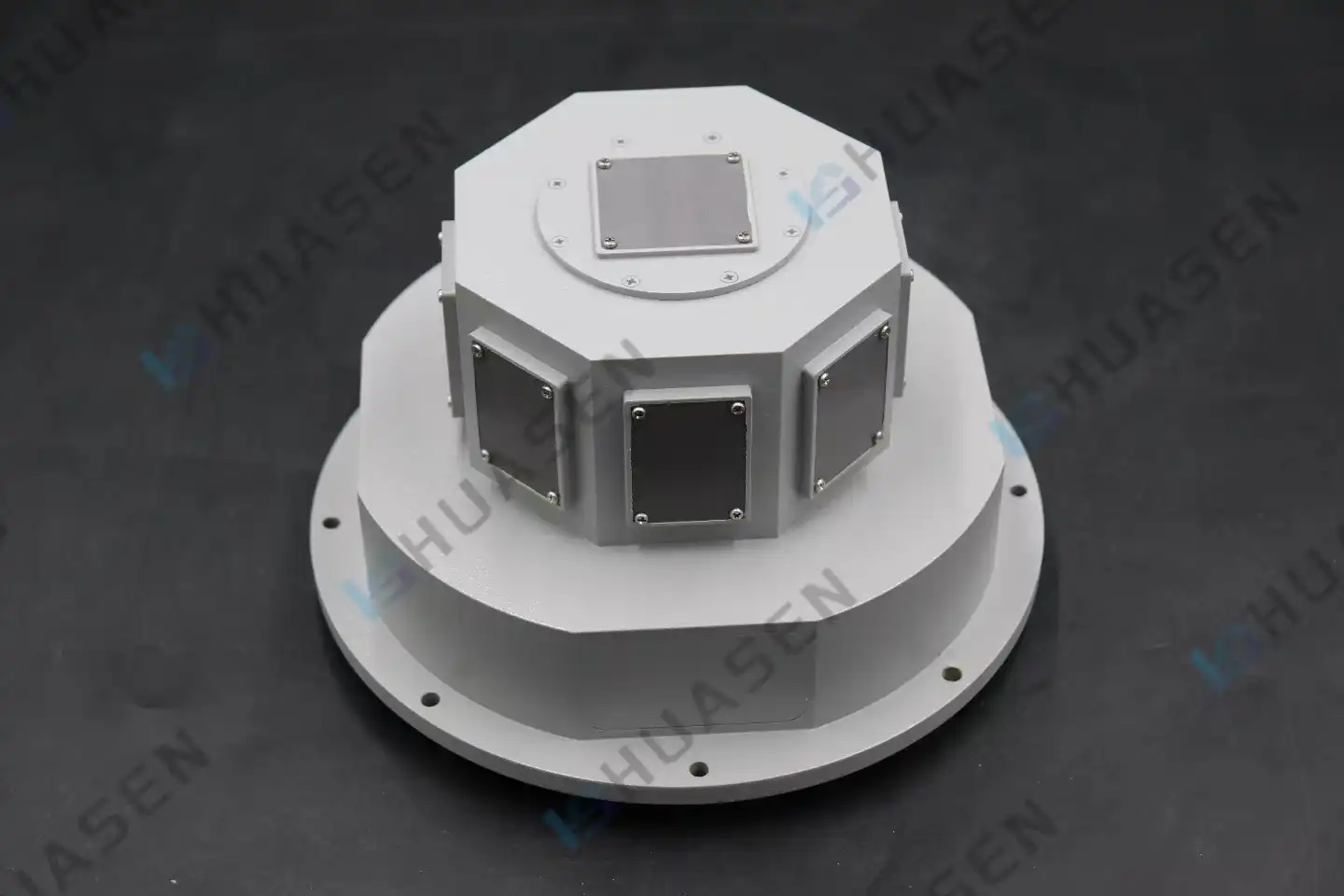
In stealth communication systems, the microstrip conformal array antenna represents a transformative solution that marries aerodynamic efficiency with electronic performance. These antennas are designed to conform seamlessly to curved surfaces—aircraft fuselages, missile nose cones, or naval vessel hulls—eliminating radar-detectable protrusions while maintaining robust signal transmission. By integrating directly into the host platform's structure, conformal arrays minimize radar cross-section (RCS) and preserve the stealth geometry critical to modern defense operations, enabling secure communication without compromising operational invisibility.
Understanding Microstrip Conformal Array Antennas: Theory and Design Principles
Antennas for modern defense and aircraft communications need to blend in with their surroundings while still providing excellent electrical performance. The technology behind conformal arrays solves both of these problems by using complex engineering ideas and materials science.
Operational Mechanics and Radiation Characteristics
Conventional antenna systems stick out from their mounting surfaces, but conformal designs wrap around shapes that aren't flat. This curvature causes phase differences between array elements that would hurt performance if they weren't fixed. To fix these phase mistakes automatically, engineers use advanced beamforming techniques and digital phase shifters. This keeps the focused radiation patterns even when the topology is very complicated. Our microstrip conformal array antenna setups achieve 18 dB gain with a tight 18°×18° beamwidth. This makes an antenna system that can keep up high gain while fitting to surfaces with radii measured in centimeters.
Controlling polarization is just as important in sneaky situations. Circularly polarized directed arrays are flexible and can handle strength ranges from 3 to 12dB with a bandwidth of 10%. They also protect against multipath interference that is common in electromagnetic settings with a lot of other signals. It is possible to change the polarization to be linear, circular, or dual-polarized. This makes it compatible with a wide range of transmission methods and operational situations.
Design Considerations for Stealth Integration
For stealth to work, materials and production methods must be carefully chosen and used. We use PTFE composites and liquid crystal polymer substrates that have low dielectric constants. This stops surface waves from propagating, which would increase losses and change the way radiation is emitted. These materials stay electrically stable at temperatures ranging from -55°C to +125°C, which meets the standards of MIL-STD-810 for external stress.
When working with curved surfaces, designing a feeding network can be tricky. When you use aperture coupling and stacked patch configurations, you can increase the bandwidth beyond what simple microstrip patches can do. If aerodynamics allow it, increasing the thickness of the base can provide more bandwidth growth without giving up the low-profile benefit. Advanced electromagnetic simulation tools check designs for errors before they are made. They do this by showing how curvature affects impedance matching and making sure that the VSWR stays below 2:1 across all operational frequencies.
Advantages of Microstrip Conformal Array Antennas in Stealth Communication Systems
People choose to use conformal array technology because it has measurable performance benefits and operational advantages that regular antennas can't match. Knowing about these benefits helps procurement teams make the case for the investment and make sure that technical skills match the needs of the mission.
Performance Superiority Over Planar Designs
Conformal arrays make it possible for radiation patterns to be changed, which is hard for flat systems to do without mechanical steering devices. Our phased array products can switch beams in just 100μs and have scanning ranges of ±60°. This lets you quickly find targets and set up communication links without having to move the antennas. This electronic agility gets rid of gimbal systems, which cuts weight by 30–40% compared to physically directed options. This is a huge benefit for platforms that need to be light, like guided rockets and unmanned aerial vehicles.
Gains in efficiency go beyond losing weight. Because microstrip conformal array antennas fit into the host structure, they don't have the mechanical drag problems that come with radomes that stick out. Military aviation programs have done flight tests that show fuel consumption drops by 2 to 3 percent over mission plans. This directly leads to longer operating ranges or more cargo space.
Stealth and Structural Integration Benefits
Keeping RCS as low as possible is the main strategic value. When you place traditional antennas, they leave gaps in the stealth pattern, which causes radar reflections that make the platform harder to find. Conformal integration keeps the smooth edges needed to block radar energy, keeping the stealth properties across a number of threat radar frequency bands.
Different types of flexible substrates make it possible to put on compound-curved surfaces that stiff designs can't handle. This adaptability is very important for the next generation of planes, which will have complicated shapes that are better at both aerodynamics and stealth at the same time. Rigid conformal variants handle power better, which is important for high-power radar and electronic warfare uses. They also keep their shape when temperatures change and structures are loaded.
In the table below, you can see how the key success indicators for all of our products compare:
| Antenna Type | Gain Range | Beamwidth | Bandwidth | Scanning Capability | Primary Applications |
|---|---|---|---|---|---|
| Microstrip Conformal Array Antenna | 18 dB | 18°×18° | 8–12% | Fixed beam | Links between two points, base stations |
| Circular Polarized Array | 3 to 12 dB | 40° to 90° | 10% | Fixed beam | Satellite stations and connectivity at sea |
| Phased Array | 15 to 22 dB | 10° to 25° | 15-20% | ±60°, 100μs switching | Electronic defenses, tactical networks, and radar |
All of these benefits help system integrators with problems like getting wide bandwidth coverage, keeping size and weight to a minimum, and meeting strict environmental durability standards while keeping stealth profiles.
Application Areas of Microstrip Conformal Array Antennas in Stealth Systems
Real-life examples of how these antenna systems are used show how useful they are in the military, aerospace, and new business fields. Knowing about common uses helps procurement teams find technologies that will work for their specific operations.
Military and Aerospace Communications
Fifth- and sixth-generation fighter planes have microstrip conformal array antennas built right into the leading edges of the wings and into the body. This lets them communicate, navigate, and identify themselves (CNI) without affecting their stealth or aerodynamic performance. These systems help tactical data links work in contested electromagnetic environments that are disputed, where low probability of intercept (LPI) properties are very important.
For beyond-line-of-sight (BLOS) command and control links, stealth UAVs use conformal arrays. They stay connected through satellite relays while leaving few radar signatures. Because they can fit inside the shape of the plane without sticking out, designers can focus on making the UAVs work better in terms of endurance and range instead of having to deal with mounting requirements for antennas.
Guided missile systems use cylinder-shaped conformal arrays that are wrapped around the bodies of the projectiles. These provide omnidirectional GPS and data receiving during flight paths that go through high temperatures and G-forces. With the conformal method, there is no need for antennas placed on fins, which could change the path of a ballistic projectile or create structural weak spots.
Commercial and Industrial Deployments
In addition to its use in defense, conformal antenna technology is becoming more popular in civilian areas that need safe, fast communication. These systems are used in critical infrastructure sites for point-to-multipoint wireless linking when standard antennas on towers are not allowed because of regulations or concerns about how they look.
Advanced surveillance systems, whether they are in the air, on the water, or on the ground, can combine multiple transmission bands into smaller, more efficient packages. Because array designs are modular and scalable, they can support both 1D and 2D element arrangements that can be increased or changed as mission needs change. This protects investments by making them flexible.
When automakers look into Vehicle-to-Everything (V2X) connectivity, they put conformal arrays into the roof lines and body panels. This keeps the look of the cars the same while allowing high-speed 5G communications and low-earth orbit satellite reception. This app shows how stealth design principles—like keeping a low profile and blending in with host structures—can be used to create commercial value.
Key Considerations When Procuring Microstrip Conformal Array Antennas
For procurement to go well, providers need to be judged on their technical skills, the quality of their products, and the support services they offer to make sure that systems supplied meet business needs throughout their entire lifecycle.
Supplier Evaluation Criteria
Companies that have been in business for decades have the process control and quality methods that are needed to make repeatable Microstrip Conformal Array Antenna. Established in 1993, Huasen Microwave is a great example of this lineage because it can make waveguide components, millimeter-wave antennas, and coaxial devices, among other things. When purchasing, companies look at possible providers, and they should make sure they follow the right standards. For example, MIL-STD is for military uses, IPC-6012 is for rigid-flexible printed boards, and RoHS is for environmental concerns.
Lead times are very different depending on how complicated the design is and how much customization is needed. Standard catalogue items can ship in 4 to 6 weeks, but fully customized solutions that use new base materials or custom feed network designs need 12 to 16 weeks to build. When suppliers offer rapid prototyping services, designs can be tested more quickly, which lowers the overall risk of the program.
Cost and Performance Balance
Unit prices are affected by volume savings in a big way. Single samples may cost 5 to 8 times as much as a full production run, but when you buy more than 100 units, you can usually save 30 to 40 percent on costs by making the factory setup and buying materials more efficiently. When you use a strategic procurement method, you order things in stages. First, you get prototypes to test, and then you make production promises once the performance is confirmed.
The table below shows common cost drivers and how they affect the total cost of procurement:
| Cost Factor | Impact on Total Cost | Mitigation Strategy |
|---|---|---|
| Materials for custom substrates | 15–25% extra | When performance allows, use only tried-and-true materials. |
| Complex networks of feeds | 20 to 35% more | Use system-level choices to make needs easier to understand. |
| Environmental testing | 10-15% of the cost per unit | Combine testing for all production batches |
| Tight tolerances for mechanics | 15-20% extra cost | Relax dimensions that aren't critical while keeping electrical performance safe. |
| Get it quickly | 30–50% extra | Plan when to buy things so that they don't interfere with production. |
Processes for quality assurance have a big effect on long-term value. Coordinate measuring machines are used for dimension checking, which makes sure that the curve is accurate to within microns and stops installation problems. Vector Network Analyzer tests make sure that S-parameters are correct across all operational bandwidths, and anechoic chamber measurements make sure that radiation patterns match the design requirements. When suppliers include full test data with every delivery, customers don't have to do as many inspections, and the system is put together faster.
Conclusion
Microstrip Conformal Array Antenna technology gives stealth communication systems real benefits by lowering RCS, making the system more aerodynamically efficient, and letting you control the electronic beam. These antenna solutions solve one of the biggest problems that defense contractors, aerospace manufacturers, and system integrators face: how to get high performance while staying undetectable and staying small and light. As 5G networks improve and tactical communications get smarter, conformal arrays are seen as technologies that can help fill the gap between electromagnetic performance and platform stealth needs. They do this by providing solutions that can be tailored to each operation's needs.
FAQ
1. Why are conformal arrays particularly suited for stealth applications?
Microstrip conformal array antennas fit flush with the sides of the host platform, getting rid of radar-reflective bumps that get in the way of a stealth shape. Threat radars can see the gaps in the shapes that traditional antennas make, but conformal designs keep the smooth edges that are needed to reflect radar energy. This integration keeps the carefully designed RCS decrease across several radio bands without affecting the ability to communicate.
2. How do conformal arrays compare with traditional patch antennas in performance?
Standard patch antennas work great when placed on flat surfaces, but they don't work as well when mounted on curvy surfaces because the phase changes between the elements. Conformal arrays use phase adjustment networks to keep the radiation pattern stable even when the array is curved. Traditional patches might have a 2- 3 dB gain edge on flat surfaces, but conformal designs work just as well on complex curves where traditional antennas fail completely, and they cover 15-20% more area thanks to adaptable beam shaping.
3. What are typical lead times and customization options from manufacturers?
Products from the catalogue ship in 4 to 6 weeks, while custom designs take 12 to 16 weeks, depending on how complicated they are. Customization includes choosing the frequency band, the type of polarization (linear, circular, or dual-polarized), the number and arrangement of elements, the design of the feed network, and the specs for the connectors. Manufacturers with a good reputation will provide technical help during the creation of specifications, test samples for validation, and detailed test data describing electrical and mechanical performance before starting production deliveries.
Partner with Huasen Microwave for Advanced Conformal Antenna Solutions
The thirty years of RF engineering excellence at Huasen Microwave have made them a trusted Microstrip Conformal Array Antenna manufacturer for system designers and procurement workers. Our wide range of products includes microstrip arrays, circularly polarized designs, and phased array systems that are specifically made to meet the needs of defense, aerospace, and commercial sectors for stealth communication. We make custom antenna solutions and back them up with strict quality control, full test documentation, and quick technical support during the design, prototyping, and production stages.
Our engineering team works with you to make sure that the antenna works best within the limits of your system, whether your project needs wide-bandwidth coverage, high-power handling, or custom mechanical integration. We keep our prices low for both small prototypes and large production runs, so we can offer cost-effective options without sacrificing quality or delivery times. You can email our team at sales@huasenmicrowave.com to talk about your specific needs, get technical datasheets, or set up sample evaluations that show how our conformal array technology improves your ability to communicate stealthily.
References
1. Mailloux, R. J. (2017). Phased Array Antenna Handbook, 3rd Edition. Artech House.
2. Garg, R., Bhartia, P., Bahl, I., & Ittipiboon, A. (2001). Microstrip Antenna Design Handbook. Artech House Publishers.
3. Knott, E. F., Shaeffer, J. F., & Tuley, M. T. (2004). Radar Cross Section, 2nd Edition. SciTech Publishing.
4. Josefsson, L., & Persson, P. (2006). Conformal Array Antenna Theory and Design. IEEE Press.
5. Hansen, R. C. (2009). Phased Array Antennas, 2nd Edition. John Wiley & Sons.
6. Milligan, T. A. (2005). Modern Antenna Design, 2nd Edition. John Wiley & Sons.
Send Inquiry